
Executive Overview
After six agonizing years away from the stage—a period defined by profound personal resilience, grueling medical treatments, and a public battle with stiff-person syndrome—Céline Dion has made a definitive and triumphant return. On Saturday, September 12, 2026, the global icon stepped onto the stage at the Plenitude Arena in Nanterre, just west of Paris, to launch her highly anticipated 26-night residency.
The comeback was nothing short of historic. Performing a marathon 29-song, two-and-a-half-hour set, Dion moved effortlessly from intimate, melancholic French ballads to a jaw-dropping, stripped-down a cappella rendition of her signature global smash, "All by Myself." For the 30,000 rapturous fans packed into the arena—and the millions worldwide following the rollout—the evening served as a living testament to the endurance of the human spirit and the irreplaceable power of one of the greatest voices in music history.
This opening night marks the commencement of an autumn leg that will see Dion perform the first 16 dates of her residency, playing to more than 480,000 total attendees. Demand for tickets reached unprecedented, historic heights, with an access lottery drawing an astonishing nine million hopefuls before selling out every available seat within hours. Graced by an audience that included heavyweights such as Michelle Obama, Oprah Winfrey, Aya Nakamura, and astronaut Thomas Pesquet, Dion’s return was not merely a concert; it was a global cultural watershed moment.
Detailed Chronology: Anatomy of a Historic Opening Night
The anticipation outside the Plenitude Arena in Nanterre was palpable hours before showtime. Security lines stretched for blocks, and the air crackled with a rare mix of nervous tension and overwhelming joy. When the house lights finally dimmed 47 minutes past the scheduled start time, the delay only served to magnify the collective breath held by the 30,000-strong crowd.
Act I: Vulnerability and the French Roots
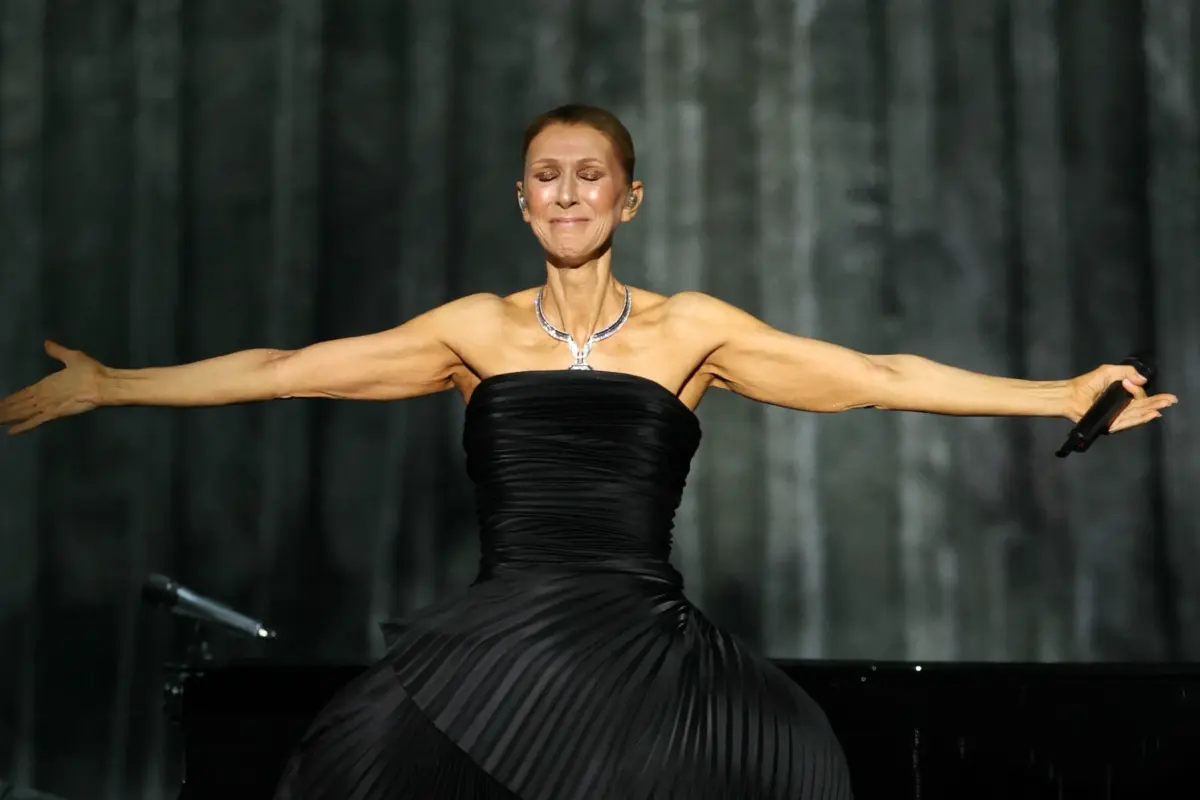
As Dion emerged under a focused wash of warm white light, stripped of unnecessary theatricality or pyrotechnics, the emotional weight of the evening broke over her immediately. Opening with "On Ne Change Pas," the Canadian superstar was visibly moved, shedding tears as the audience erupted into a deafening roar of welcome.
Keeping the staging deliberately spare—relying on a grand, minimalist set design that directed all attention squarely to her instrument—Dion immediately anchored the set in her deep connection to the French language. She leaned heavily into material from D’eux, the legendary 1995 album written by Jean-Jacques Goldman that remains the best-selling French-language record of all time.
Act II: The Theatrical and the Unexpected
As the set progressed, Dion guided the audience through a breathtaking spectrum of genres and emotions. Mid-way through the evening, the atmosphere shifted dramatically into a mirror-ball-lit disco sequence. This was the night’s biggest artistic gamble: tracks like "I Feel Love," "Sweet Dreams," and a sharply reworked, high-energy version of "I’m Alive" revealed a looser, intensely playful side of an artist whom many had pigeonholed strictly as a dramatic balladeer.
Demonstrating the astonishing breadth of her training, Dion later transitioned into classical territory, delivering the opera aria "La Wally" under a canopy of simulated falling snow. She was then joined by a full gospel choir for a soaring, communal preamble that funneled directly into the massive, roof-raising sing-along of "Pour Que Tu M’aimes Encore."
Among the night’s most poignant moments was the live debut of "Dansons," her brand-new 2026 comeback single written once again by longtime collaborator Jean-Jacques Goldman. The night reached its absolute vocal peak, however, when Dion stepped forward alone for an entirely a cappella delivery of "All by Myself," stripping the powerhouse anthem down to pure tone, absolute control, and unyielding emotional resonance.
The final notes faded at precisely 11:14 p.m. local time, bringing a definitive close to a grueling, glorious two-and-a-half-hour sonic journey that silenced any remaining doubts about her recovery.

Supporting Context & Metrics: The Scale of the Comeback
To understand the magnitude of Céline Dion’s return at the Plenitude Arena, one must examine the staggering metrics surrounding the residency and the grueling road that led her here.
The Stiff-Person Syndrome Battle
Dion had not headlined a live concert since she courageously stepped away from the spotlight to publicly disclose her diagnosis with stiff-person syndrome (SPS). A rare, progressive neurological disorder characterized by muscle rigidity and painful spasms, SPS threatened to rob the singer of the very instrument that defined her life’s work.
For years, updates were sparse, focusing on her intensive physical therapy, vocal conditioning, and quiet resilience. Industry insiders and fans alike wondered if the voice that delivered Titanic’s "My Heart Will Go On" would ever grace a stage again. The decision to mount a 26-night residency in Paris—a city and culture that embraced her earliest international successes—underscores her fierce determination to dictate the terms of her legacy.
Box Office Phenomenon and Ticketing Demographics
The commercial reception of the residency shattered expectations and underscored her enduring global pull:
- Total Residency Span: 26 nights.
- Autumn Leg: The first 16 dates will accommodate a cumulative audience exceeding 480,000 ticket-holders.
- Opening Night Capacity: 30,000 fans inside the Plenitude Arena.
- Access Lottery Demand: Over nine million individuals registered for the initial ticket access lottery.
- Sell-Out Velocity: Every available ticket across the initial run was completely secured by fans within hours of going on public sale.
Official Statements and VIP Reactions
The cultural gravity of Dion’s return drew an A-list crowd of international dignitaries, cultural icons, and artists to the Nanterre venue. Former First Lady Michelle Obama and media mogul Oprah Winfrey were spotted in the VIP section visibly moved throughout the evening, alongside French pop sensation Aya Nakamura and French ESA astronaut Thomas Pesquet.
While Dion herself let her performance speak volumes, her team and collaborators have emphasized the deliberate nature of the production. Eschewing the complex, multi-million-dollar pyrotechnics and automated stage machinery of her historic Las Vegas eras, this residency was conceptualized as an intimate conversation between artist and audience.
In pre-show briefings, production leads noted that every creative choice—from the minimalist lighting grid to the sequencing of the 29-song setlist—was curated to protect Dion’s physical stamina while maximizing the visceral impact of her vocal delivery. The gamble paid off manifold, earning unanimous critical praise across European and North American media outlets by Sunday morning.
Future Outlook: What Lies Ahead for the Icon
With the opening night of the Paris residency successfully executed, the immediate future looks both demanding and triumphant for Céline Dion. The artist faces another 15 dates in the current autumn leg, with logistical planning already underway for the remaining 10 shows of the 26-night commitment.
Music industry analysts are already speculating on whether this Paris engagement will serve as the launchpad for a wider global tour. However, given the rigorous physical demands of managing stiff-person syndrome while executing a two-and-a-half-hour vocal masterclass, management has maintained a strictly measured approach. The primary objective remains the health and sustained well-being of the artist, ensuring that each performance is delivered at the absolute pinnacle of artistic excellence.
Saturday, September 12, 2026, will be permanently etched into music history. It was the night Céline Dion did not merely return to the stage—she reclaimed her throne, proved the skeptics wrong, and reminded a watching world why her voice is, and always will be, a singular wonder of the modern world.