
Executive Overview
The opening weeks of an academic year are universally recognized by music educators as a high-stakes operational sprint. While the energy of returning students breathes life back into band halls, choir rooms, and orchestras, August and September routinely demand a crushing administrative toll. Between auditing roster accuracy, configuring Learning Management Systems (LMS), establishing classroom norms, and diagnosing the inevitable technical and physical regression of student skills over summer break, modern music directors often find themselves buried in paperwork rather than leading rehearsals.
In an effort to alleviate this systemic bottleneck, educational technology provider MakeMusic has deployed a comprehensive suite of updates to its flagship platform, MakeMusic Cloud. Engineered specifically to eliminate operational friction, the latest platform updates focus on automating administrative workflows, expanding assessment methodologies, and delivering instant, standards-aligned instructional content.
This rollout represents a significant paradigm shift in how digital tools interface with performing arts education. By bridging the gap between rigorous pedagogical needs and automated backend grading, MakeMusic Cloud aims to return hours of instructional prep time directly to educators, ensuring that the podium remains the primary focus of the music teacher’s day.
Detailed Chronology: The Evolution of Classroom-First Digital Tools
To understand the weight of the recent MakeMusic Cloud updates, one must examine the trajectory of digital instructional tools in performing arts classrooms over the past decade.

Phase One: Digitization of Repertoire (2010–2018)
In the early days of digital sheet music, software primarily served as a digital music stand or an interactive accompaniment player. While revolutionary for individual practice, these platforms operated in isolation from school infrastructure. Teachers were forced to manage separate rosters, manually verify student submissions, and engage in tedious data entry to reconcile platform data with institutional gradebooks.
Phase Two: LMS Integration and Basic Syncing (2019–2023)
As educational institutions universally adopted platforms like Canvas, Schoology, and Google Classroom, the demand for interoperability grew. Early integrations allowed basic rostering, but grade reporting remained a disjointed process. Educators frequently reported spending their Friday afternoons toggling between browser tabs, manually copying assessment scores from music-specific platforms into district-mandated gradebooks.

Phase Three: The Frictionless Ecosystem (Present)
The current suite of MakeMusic Cloud updates marks the arrival of the "frictionless ecosystem" era. By moving past basic rostering into direct, automated grade passback and collaborative co-teaching architectures, the platform addresses the holistic operational realities of running modern music programs.
Key milestones in this latest operational release include:

- Google Grade Passback Integration: Automating the transition of assignment scores directly into Google Classroom gradebooks without human intervention.
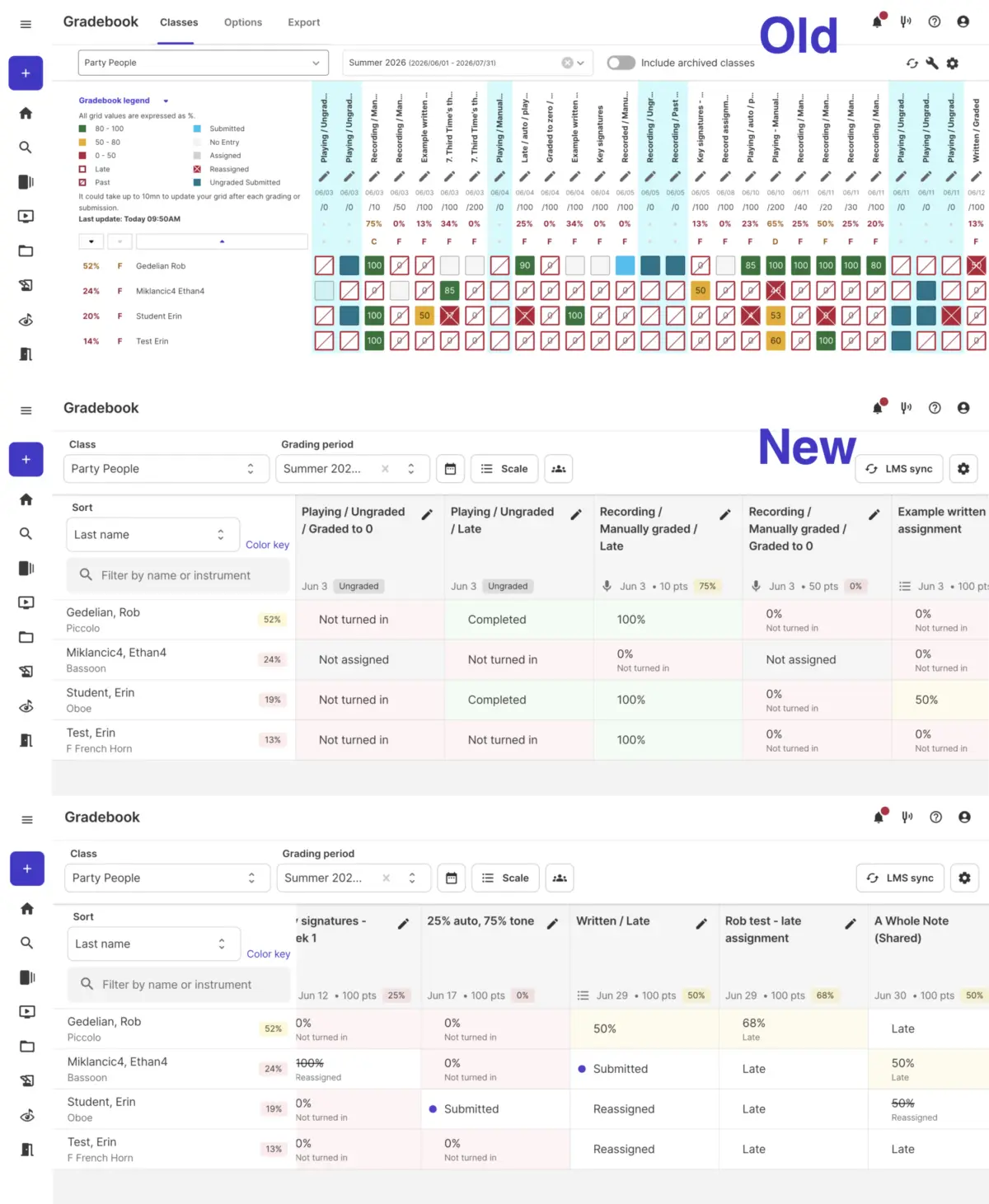
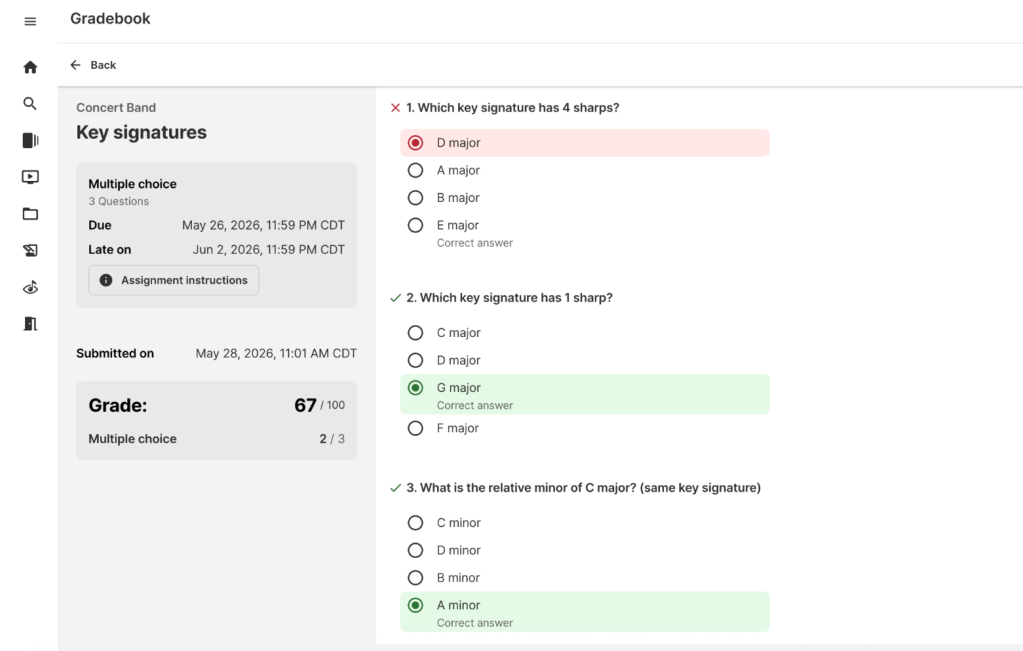
- Gradebook Redesign: Transitioning from dense legacy layouts to visual, analytics-driven interfaces designed for rapid identification of student intervention needs.
- Co-Teaching Architecture: Democratizing classroom management by permitting assistant directors, student teachers, and sectional coaches to assign and grade work simultaneously.
- Multi-Modal Assessment Expansion: Introducing dedicated Audio/Video assignments alongside traditional pitch-and-rhythm tracking, paired with integrated theory worksheets and flexible sight-reading generators.
Supporting Context & Metrics: The Cost of Administrative Burden
The rationale behind MakeMusic’s latest feature deployment is supported by broader educational research regarding teacher burnout and administrative overload. According to national surveys tracking educator workflows, non-instructional tasks—such as grading, data entry, and classroom setup—consume upward of 30% of a teacher’s total weekly working hours. In performing arts fields, where directors often manage multiple large ensembles comprising hundreds of individual students, this administrative weight is disproportionately heavy.
The Mathematics of Modern Music Grading
Consider a high school band director managing 150 students across a concert band, a symphonic band, and a jazz ensemble. If the director assigns a weekly performance test:
- Manual Workflow: Listening to 150 audio recordings (averaging 1 minute each), evaluating pitch and rhythm, recording notes, opening the school LMS, manually typing 150 distinct scores, and reconciling discrepancies consumes approximately 4 to 6 hours every single week.
- Automated Workflow via MakeMusic Cloud: With automated pitch/rhythm assessment scoring, multi-tier gradebook analytics, and direct Google Grade Passback, that same evaluation cycle is compressed. Scores sync in real-time, and video submissions or multiple-choice checks are filtered through intuitive, modern layouts, cutting weekly administrative overhead by an estimated 60% to 75%.
Diagnosing Summer Learning Loss
Beyond grading, the initial weeks of the school year require intensive diagnostic work. Extended breaks inevitably lead to physical and technical regression: embouchure fatigue, altered bow holds, incorrect stick grips, and diminished music literacy.
Traditionally, diagnosing these physical nuances required one-on-one playing tests during class time—a process that paralyzes ensemble pacing and leaves large groups waiting idly. By deploying asynchronous Audio/Video assignments and randomized sight-reading templates mapped to state standards (such as NYSSMA or Texas UIL), directors can capture diagnostic data from all students simultaneously, ensuring that the first live rehearsal is targeted, efficient, and musically rewarding.
Official Statements & Platform Breakdown
MakeMusic’s product development leadership emphasizes that every tool released in this update was designed with direct feedback from active educators.
Streamlining Admin & Grading Workflows
- LMS Integration & Google Grade Passback: The elimination of double data entry is arguably the most requested feature by modern educators. By tightening the connection with Canvas, Schoology, and specifically introducing Google Grade Passback, educators no longer have to manually shuttle grades across platforms. Once a student completes a digital assignment, the data flows directly to the gradebook.
- The Overhauled Gradebook: Designed with a clean, high-contrast, and responsive layout, the new gradebook provides immediate, at-a-glance analytics. Teachers can instantly spot emerging performance trends across sections, isolating which students are mastering early material and which require targeted intervention before the first formal concert cycle.
- Co-Teaching Capabilities: Recognizing that large ensembles are rarely run by a single educator in isolation, the new Co-Teaching feature officially accommodates assistant directors, university student teachers, and specialized sectional coaches. These secondary instructors can now draft assignments, review submissions, and enter grades natively, distributing the workload equitably across the instructional team.
Assessing Playing and Literacy with Ease
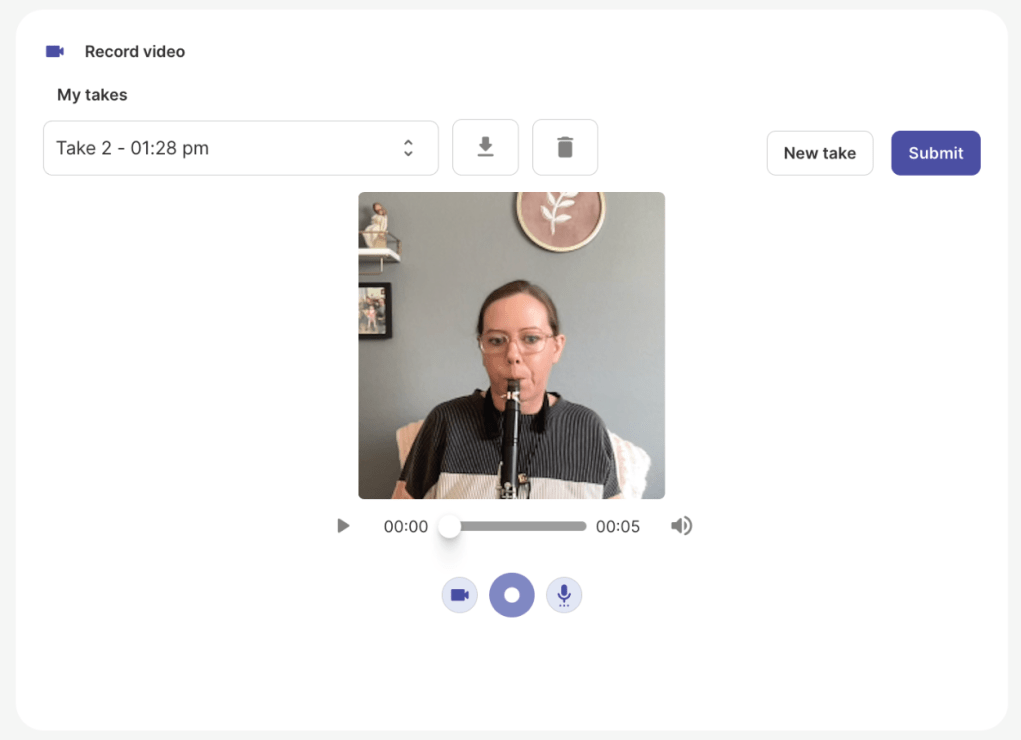
- Audio/Video & Multiple Choice Assignments: While automated pitch and rhythm scoring remain foundational, visual assessment is vital for physical instruments. The dedicated Audio/Video assignment mode allows directors to review posture, hand positioning, and embouchure remotely. Meanwhile, multiple-choice note and symbol recognition quizzes provide instantaneous data on music literacy, proving invaluable for evaluating non-catalog repertoire, marching band stand tunes, or baseline music theory knowledge.
- Integrated Theory Worksheets: To bridge the gap between performance practice and foundational theory, MakeMusic Cloud has embedded ready-to-use theory worksheets directly into the platform, allowing seamless curriculum integration without requiring physical paper distribution and collection.
Instant Content for Day One
- Sight-Reading Templates: Manual creation of sight-reading exercises is notoriously time-consuming. The platform now features expertly crafted templates pre-configured for major educational frameworks like NYSSMA and Texas UIL, as well as popular method books including Sing at First Sight, Habits of a Successful Musician, and Sound Innovations.
- Multi-Book and Playlist Pinning: Long-time platform users will benefit from the ability to pin multiple method books and playlists simultaneously to a single class. Instructors can pair new resources—such as Bethany Main’s Choir Up!—directly alongside established staples like Sing at First Sight or titles from The Foundations Series, keeping primary curriculum materials instantly accessible to students upon login.
Future Outlook: The Next Frontier in Music EdTech
As educational technology continues to evolve, the integration of automated workflows and pedagogical software points toward a future where administrative friction is minimized entirely. Platforms like MakeMusic Cloud are transitioning from passive digital repositories into active pedagogical co-pilots.

Industry analysts predict that upcoming iterations of these platforms will leverage machine learning not only to grade pitch and rhythm, but to provide automated, qualitative diagnostic feedback on tone quality, intonation tendencies, and stylistic phrasing. By offloading the mechanical aspects of data tracking and grading to secure cloud architectures, technology is enabling educators to return to the human core of their profession: cultivating artistic expression, fostering community, and mentoring the next generation of musicians.
For music directors preparing for the demands of the upcoming academic term, the message from software developers and educational veterans alike is clear: leveraging modern administrative automation is no longer a luxury, but an essential strategy for preventing burnout and maximizing instructional impact from day one.