
Executive Overview
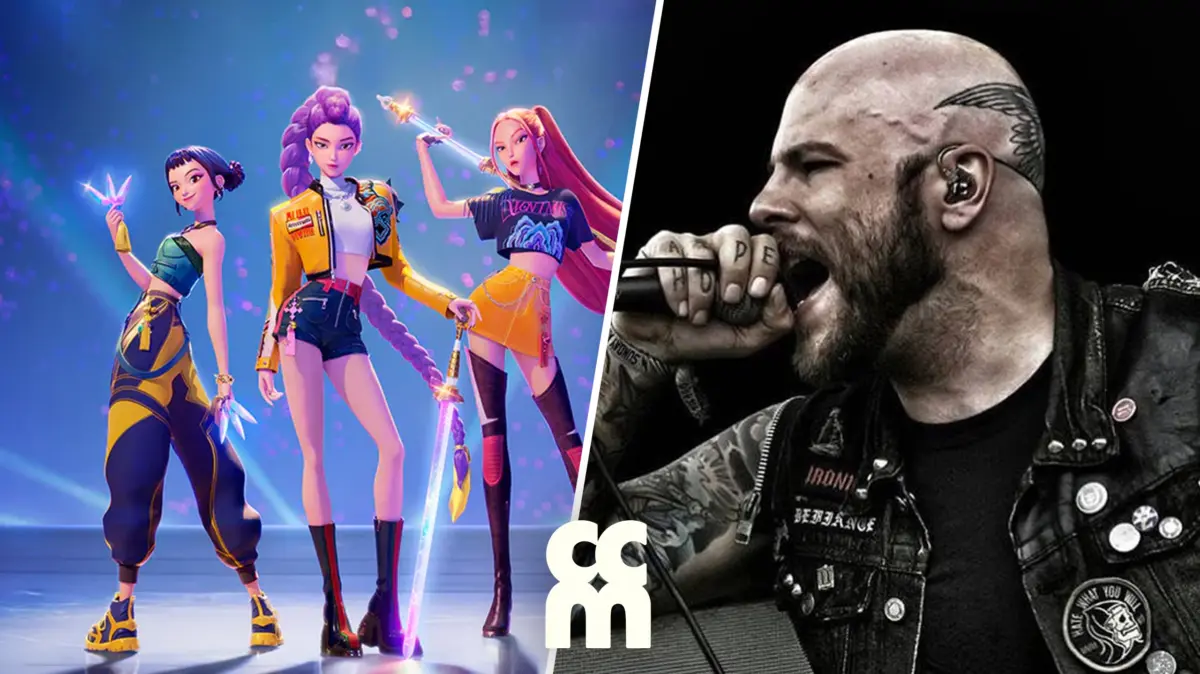
In an intellectual property dispute that reads like a collision of entirely incompatible pop-culture universes, veteran American Christian metalcore band Demon Hunter has initiated federal legal action against streaming behemoth Netflix. Filed through their corporate entity, Hyde Lane, the lawsuit also names Netflix Studios and global concert promoter AEG Presents as defendants. At the heart of the complaint is KPop Demon Hunters, a massively successful animated property that has expanded rapidly from a streaming feature into a global multimedia franchise encompassing music soundtracks, extensive merchandise lines, and an ambitious 150-city international concert tour.
To the casual observer, the headline—Christian metal band sues Netflix over K-pop—triggers immediate levity, conjuring surreal images of corpse-painted musicians locked in a corporate battle with animated pop stars. However, a deep dive past the absurdity reveals a serious, high-stakes legal contest grounded in foundational trademark law. For nearly a quarter-century, Demon Hunter has meticulously cultivated its moniker, building a loyal fan base, releasing critically acclaimed records, and establishing a recognized brand within the heavy music ecosystem.
The band’s core legal argument is straightforward: as the senior user of the "Demon Hunter" trademark, they face severe commercial and reputational threats as a multi-billion-dollar enterprise aggressively occupies the exact same linguistic, merchandising, and live-touring real estate. Complete with genuine consumer confusion—such as a parent accidentally purchasing VIP tickets to a heavy metal show instead of an animated children’s concert—this case highlights the precarious intersection of niche independent legacies and modern corporate brand scaling. As the litigation proceeds through the federal court system, it raises critical questions about trademark dilution, market overlap, and the absolute necessity for independent creators to aggressively defend their intellectual property in an increasingly crowded global marketplace.
Detailed Chronology
The Genesis of a Trademark: 2000–2023
The foundation of this legal dispute stretches back over two decades. Formed in Seattle, Washington, in 2000 by brothers Ryan and Don Clark, Demon Hunter emerged during a transformative era for heavy music. While many of their peers navigated the secular heavy metal underground, Demon Hunter embraced their Christian faith while refusing to be pigeonholed by traditional contemporary Christian music (CCM) industry standards. Characterized by aggressive guitar riffs, melodic hooks, and impassioned, heavy-metal growls, the band carved out a distinct identity.
Over the next twenty-four years, Demon Hunter released a robust catalog of studio albums via labels like Solid State Records, toured internationally, and built a deeply dedicated community of listeners affectionately known as the "Blessed Resistance." Throughout this timeline, the band’s commercial footprint expanded well beyond recorded music. They manufactured and sold extensive merchandise lines—including apparel, physical collectibles, and branded gear—cementing "Demon Hunter" as a valuable, federally protected commercial asset tied directly to their livelihood and musical output.
The Rise of KPop Demon Hunters
Fast-forward to the streaming era, where Netflix continuously seeks out hyper-lucrative, cross-demographic intellectual properties. The entertainment giant greenlit and released KPop Demon Hunters, an animated project combining vibrant visuals, catchy pop hooks, and high-stakes supernatural action. Driven by algorithmic reach and aggressive promotional campaigns, the property captured global audiences almost instantaneously.
What began as a localized streaming hit quickly metastasized into a sprawling commercial ecosystem. Netflix did not merely release a film; they rolled out a comprehensive lifestyle brand. Soundtracks flooded streaming platforms, merchandise flooded retail outlets, and partnerships were forged with live-event titan AEG Presents to launch a massive, multi-city global tour spanning roughly 150 international stops. It was this aggressive expansion into the live-music and merchandise sectors that triggered alarm bells within the Demon Hunter camp.
The Boiling Point and Legal Filing
As the footprints of both entities began to overlap, the band concluded that informal resolutions were no longer viable. Hyde Lane officially filed a complaint in federal court, alleging trademark infringement, unfair competition, and false designation of origin. The legal documents assert that Netflix and its partners have created an "almost complete overlap" in goods, services, and marketing channels, effectively threatening to drown out a brand built over twenty-four years of painstaking touring and album production.
Supporting Context & Metrics
The Mechanics of Trademark Law and Senior Usage
To understand the legal gravity of Demon Hunter’s lawsuit, one must examine the foundational principles of United States trademark law, specifically the Lanham Act. Trademark law is designed to protect consumers from confusion regarding the source of goods or services, while simultaneously protecting business owners from competitors misappropriating their established goodwill.
- Senior vs. Junior Users: A "senior user" is the party that first adopts and uses a mark in commerce. Demon Hunter’s continuous commercial use since the year 2000 grants them strong senior-user status over the "Demon Hunter" phrasing within relevant classes of goods and services, particularly music production, apparel, and live entertainment. Conversely, a "junior user" is a later adopter whose use of a similar or identical mark may create consumer confusion.
- Likelihood of Confusion: Courts determine trademark infringement by analyzing several factors, including the similarity of the marks, the relatedness of the goods and services, marketing channels used, evidence of actual confusion, and the defendant’s intent. While Netflix’s primary demographic for KPop Demon Hunters skews younger and family-oriented, the crossover into music distribution, physical merchandise, and live concert tours directly mirrors Demon Hunter’s commercial operational model.
The Incident in Albany: Evidence of Actual Confusion
In intellectual property litigation, theoretical arguments regarding consumer confusion hold weight, but documented actual confusion serves as a powerful catalyst for a plaintiff’s case. According to materials cited in the legal filings, this trademark conflict crossed the line from hypothetical to reality in Albany, New York.
A consumer reportedly spent approximately $500 on top-tier VIP tickets to a live Demon Hunter concert, operating under the absolute belief that they were purchasing admission for their five- and six-year-old daughters to see a live KPop Demon Hunters performance. Upon discovering the jarring reality of what a Christian metalcore concert entails—complete with circle pits, drop-tuned guitar breakdowns, and heavy-vocal delivery—the confused parent reached out to the band’s management requesting a refund.
While the incident provides undeniable comedic relief to social media commentators, it illustrates the exact commercial friction point the band’s legal team is emphasizing. When a parent searching for family-friendly animated pop music accidentally invests hundreds of dollars into heavy metal tickets, brand equity, consumer trust, and market distinction are demonstrably compromised.
Official Statements & Legal Demands
What Demon Hunter is Seeking from the Court
The lawsuit filed by Hyde Lane is not merely a symbolic gesture; it seeks concrete legal remedies and financial restitution. According to court filings reviewed by legal journalists and industry publications, the plaintiffs are pursuing:
- A Permanent Injunction: An order barring Netflix, Netflix Studios, and AEG Presents from utilizing branding and promotional materials that infringe upon the established Demon Hunter trademark in ways that create market confusion.
- Monetary Damages: Compensation for commercial and reputational harm suffered as a direct result of a multi-billion-dollar enterprise expanding into their core marketplace.
- Disgorgement of Profits: An accounting of profits associated with the allegedly infringing branding, seeking to redirect revenues generated under the disputed mark back to the senior user.
- Legal Fees and a Jury Trial: Full coverage of mounting attorney fees, adjudicated by a jury of peers.
Corporate Silence and Industry Response
To date, major corporate defendants such as Netflix and AEG Presents have maintained a calculated legal posture, offering minimal public commentary while their respective legal teams prepare formal motions and defenses. Industry analysts suggest that Netflix will likely argue that the terms "Demon" and "Hunter" are generic or descriptive, that the target demographics are sufficiently distinct to preclude widespread confusion, and that the modifier "KPop" creates an immediate and unmistakable contextual separation.
Meanwhile, the independent music community has watched the proceedings with keen interest. For independent artists and legacy acts navigating an industry dominated by streaming monopolies and corporate conglomerates, Demon Hunter’s willingness to challenge a titan like Netflix is viewed as a high-stakes litmus test for intellectual property protection in the digital age.
Future Outlook
Potential Resolutions and Legal Precedents
As the case moves forward through the federal court system, legal scholars outline several potential trajectories:
- Settlement and Rebranding: Given the immense financial resources of Netflix and the operational complexities of a 150-city global tour, the parties may opt for a private, out-of-court settlement. Such an agreement could involve financial compensation to the band, accompanied by subtle rebranding modifications to the animated franchise’s live-touring identity.
- Judicial Discretion on Market Overlap: If the case proceeds to trial or summary judgment, a federal judge or jury will be tasked with determining whether the average consumer—exercising ordinary caution—could reasonably mistake a Christian metal band for an animated K-pop media empire.
- Broader Industry Implications: Should Demon Hunter secure a favorable ruling or a significant settlement, it could embolden other independent legacy acts to challenge corporate infringements more aggressively, reshaping how major media networks vet titles for transmedia properties.
Conclusion: Beyond the Headlines
It is entirely natural for pop-culture observers to lean into the inherent comedy of the matchup. The juxtaposition of underground Christian metal veterans with bright, animated K-pop idols provides endless internet commentary. Yet, beneath the viral headlines lies a sobering reality for working artists in the modern entertainment economy.
Demon Hunter has spent nearly a quarter-century investing time, capital, and creative energy into building a recognized brand. Watching a massive media conglomerate crowd their digital footprint and live-touring ecosystem presents a legitimate existential threat to their commercial identity. Whether the courts ultimately validate their claims or side with the streaming giant, the lawsuit serves as a definitive reminder that in the modern marketplace, a band’s name is its most vital asset—and one worth fighting to protect, no matter how large the adversary.