
Executive Overview
In the realm of vocal rehabilitation and performance arts, true breakthroughs are often regarded as near-miraculous feats. This is the definitive account of Mary Ellen Stoll, a resident of Brockville, Ontario, whose inspiring journey from chronic vocal impairment to joyful choral performance challenges conventional medical and pedagogical assumptions. Diagnosed with a vocal cord nodule at the tender age of 22 and subsequently subjected to invasive surgery that failed to restore her natural speaking voice, Stoll faced a lifetime of vocal compromise.
Decades later, upon retiring from a demanding, high-stress career as a manager for the Government of Ontario at age 62, Stoll harbored a deeply personal, long-dormant ambition: to learn how to sing and join a community choir. What followed was a rigorous, multi-year trans-provincial rehabilitation odyssey. Through the application of advanced, non-surgical vocal mechanics—specifically the proprietary Vocal Science™ method—Stoll not only repaired her severely compromised speaking voice but successfully crossed the threshold into choral performance.
This in-depth investigative feature chronicles Stoll’s remarkable transformation, examining the physiological hurdles of post-surgical vocal damage, the intersection of speech therapy and vocal science, the persistence required to overcome physical adversity, and the profound psychological and physiological rewards of reclaiming one’s authentic voice later in life.
Detailed Chronology: The Journey to Recovery
The Early Setback: Diagnosis and Surgery at Age 22
The origin of Mary Ellen Stoll’s vocal struggles dates back four decades before her eventual rehabilitation. At just 22 years old, Stoll received a devastating diagnosis: a nodule had formed on her vocal cord. In an era when surgical interventions for vocal pathologies were often blunt instruments, medical practitioners recommended immediate surgical removal.
While the surgery successfully excised the physical nodule, it failed to restore the integrity of her instrument. Stoll’s speaking voice was permanently altered—left weak, raspy, and structurally unsupported. For the next forty years, she navigated a professional career in public service while managing a compromised vocal apparatus. Though she adapted well enough to manage her responsibilities as a government manager, the underlying trauma to her vocal anatomy remained unaddressed, casting a shadow over her personal aspirations.
Retirement and the Spark of Ambition
In the spring of 2016, at the age of 62, Stoll reached a major life milestone: retirement. Shedding the intense day-to-day pressures of a demanding governmental career afforded her something she had lacked for decades—time. With this newfound freedom, Stoll decided to confront a secret desire that she had harbored since youth: to learn how to sing and, ideally, become part of a local choir.
Seeking guidance, Stoll visited a prominent barbershop-style choir in Brockville and auditioned her aspirations before the choir director. A trained ear, however, immediately detects foundational flaws. The director listened closely to her speaking voice and delivered an uncompromising assessment: before Stoll could even dream of blending her voice in a multi-part harmony, she needed to address the deep-seated damage and structural instability present in her everyday speech.
The Turning Point: Discovering Advanced Voice Repair
Undeterred by the choir director’s candid feedback, Stoll turned to the internet in search of a specialized solution. Her research led her to a specialized vocal studio renowned for radical voice repair and holistic vocal mechanics. Recognizing the urgency and validity of her dream, Stoll made a decisive move: she packed her bags and drove over four hours from Brockville to the studio for her initial consultation and voice assessment.
Thus began an intensive, multi-season rehabilitation journey that would test her physical endurance, mental fortitude, and commitment to the process.
Supporting Context & Metrics: The Anatomy of Vocal Science™
The Physiology of Voice Damage and Repair
To understand the magnitude of Stoll’s recovery, one must examine the delicate anatomy of the human voice. Vocal cords (vocal folds) are mucosal tissues that vibrate rapidly to produce sound. The formation of nodules—often caused by vocal abuse, misuse, or chronic strain—results in callus-like growths that prevent the folds from closing completely and evenly.
When a nodule is surgically removed, the underlying trauma to the delicate mucosal tissue and surrounding musculature frequently leaves scar tissue. This scar tissue stiffens the vocal folds, reducing their elasticity and compromising the aerodynamic balance required for effortless phonation. Standard speech therapy often addresses breath support, but rarely integrates the holistic structural alignment needed to completely bypass historical scar tissue.
The Vocal Science™ Methodology
The intervention utilized in Stoll’s case breaks away from traditional paradigms. Rather than treating the vocal cords as an isolated mechanism, the methodology employs a wholesome, integrated approach.
[Holistic Voice Mechanics]
       │
       ├──> Proper Postural Support & Body Movements
       ├──> Structural Alignment & Anatomical Placement
       ├──> Enhanced Projection & Articulation
       └──> Elimination of Pain & Anatomical Strain
As demonstrated in Stoll’s training, the process relies on:
- Targeted Speech Exercises: Designed to gently retrain the neuromuscular pathways governing speech production.
- Kinesthetic Integration: Coupling vocal exercises with precise body movements to ensure natural support from the core and diaphragm rather than the throat.
- Resonance Placement: Shifting the acoustic focus away from the damaged vocal folds and into the natural resonators of the skull and facial mask.
- Anatomical Freedom: Ensuring zero pain or strain on the vocal anatomy during both speaking and singing.
This philosophy echoes historical media coverage of the method. Notably, a feature article published by the Toronto Star in 1999, titled "Not As Easy As It Sounds," underscored the demanding nature of this work. True voice repair is not a passive medical treatment; it is an active, highly disciplined retraining of human biomechanics. It requires extraordinary physical and mental investment from both practitioner and client. The reward, however, is a crisp, crystal-clear voice with impeccably articulated words.
Official Statements and Reflections
The transformation of Mary Ellen Stoll is best understood through the perspectives of those who guided and witnessed her evolution.
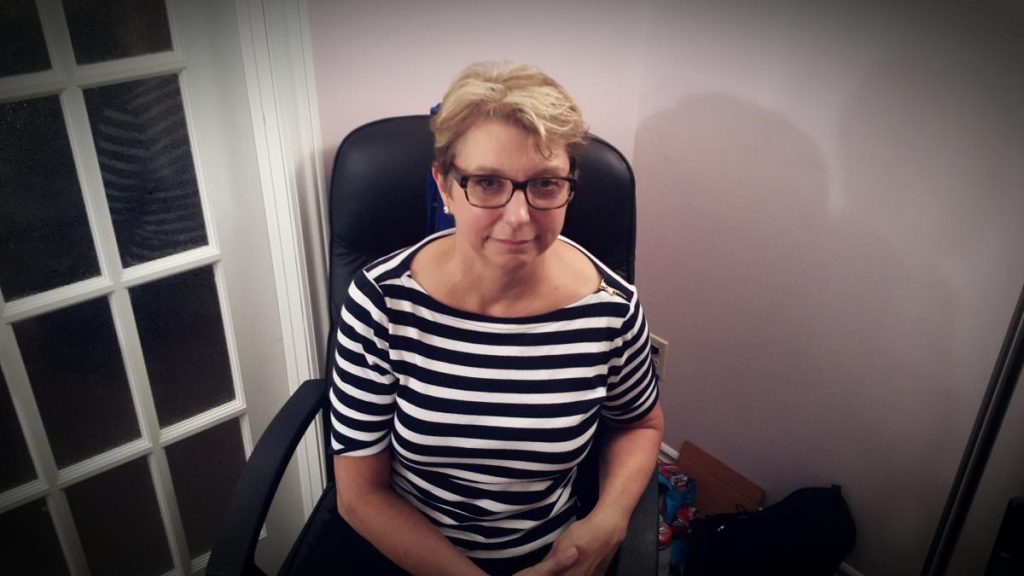
Reflecting on their initial meeting in 2016, her vocal coach remarked:
"Mary Ellen came to me with a story that carried decades of silent frustration. At age 22, medical intervention left her with a speaking voice that was a mere shadow of its former self. Yet, at 62, armed with nothing more than retirement free time and an unshakeable dream, she drove four hours through all kinds of weather to rewrite her own physiological narrative."
The collaborative nature of the training was paramount. The coach emphasized the mutual commitment required for success:
"No doubt, it requires a lot of effort and energy from both parties involved—my client and myself. The reward, however, is priceless. When the voice begins to sound crispy clear, with words well announced and pronounced, you realize you are witnessing the impossible made possible."
The validation of Stoll’s progress was confirmed by the Brockville choir director who had initially turned her away. Upon hearing her rehabilitated speaking voice after months of intensive speech restructuring, the director observed a radical transformation. He stated:
"Continue your vocal development, and you will be able to join the chorus."
For Stoll, achieving this milestone was nothing short of a miracle. Looking back on her journey—which involved enduring grueling winter drives of over five hours round-trip to reach the studio—she transitioned from an individual burdened by medical history to an active performer. Once the "impossible dream" became reality, it unlocked a new paradigm of health. By learning to use her voice "by design" in strict compliance with advanced technical principles, Stoll secured not only vocal health, but an elevated state of overall well-being.
Future Outlook: A New Chapter in Choral Arts
Redefining Late-In-Life Vocal Rehabilitation
Mary Ellen Stoll’s journey serves as a powerful case study for the fields of speech-language pathology, vocal pedagogy, and gerontology. It challenges the pervasive myth that vocal damage sustained in youth is permanent, or that individuals past retirement age cannot acquire complex new motor skills like singing.
As aging populations seek fulfilling, cognitively engaging, and socially connected retirement activities, choir participation has emerged as a premier pathway for holistic health. However, countless older adults suffer from age-related vocal decline (presbyphonia) or historical vocal injuries that preclude them from participating. Stoll’s trajectory proves that with specialized, mechanically sound rehabilitation, the senior demographic can successfully reclaim their vocal agency.
Sustainable Practices and Continued Growth
Now in her mid-60s—having recently celebrated her 64th birthday—Stoll continues to sing with her local choir. Her weekly routine now includes active participation in musical competitions, public performances, and community concerts.
The long-term outlook for Stoll’s vocal health remains exceptionally positive. Because her rehabilitation focused on structural integrity and biomechanical efficiency rather than temporary fixes, her voice operates under conditions of zero strain. This ensures longevity, resilience, and artistic fulfillment for years to come.
Conclusion
The story of Mary Ellen Stoll transcends a simple human-interest anecdote; it stands as a testament to human resilience and the profound efficacy of modern vocal science. From a botched surgical procedure at age 22 to a triumphant vocal resurgence in her sixties, Stoll’s journey illustrates that the human voice—when treated with anatomical precision and unwavering dedication—possesses an extraordinary capacity for self-heal and reinvention.
As Stoll looks forward to the future, her journey resonates as an inspiration to anyone told that their aspirations are out of reach. In the words of her mentor:
"Way to go Mary Ellen! Keep on singing Girl! Best of voice and best of health now, in the New Year… and ALWAYS!"