
Executive Overview
The New York theatrical landscape is bracing for a rare and ambitious revival as the critically acclaimed Fiasco Theater company takes on Susan Glaspell’s avant-garde 1921 drama, The Verge. Set to take over the Public Theater’s intimate LuEsther Hall this autumn, the production marks a major milestone in the ongoing rediscovery of canonical works written by historical women dramatists. Casting is now officially complete, setting the stage for a limited engagement that promises to blend early-20th-century expressionism with contemporary psychological urgency.
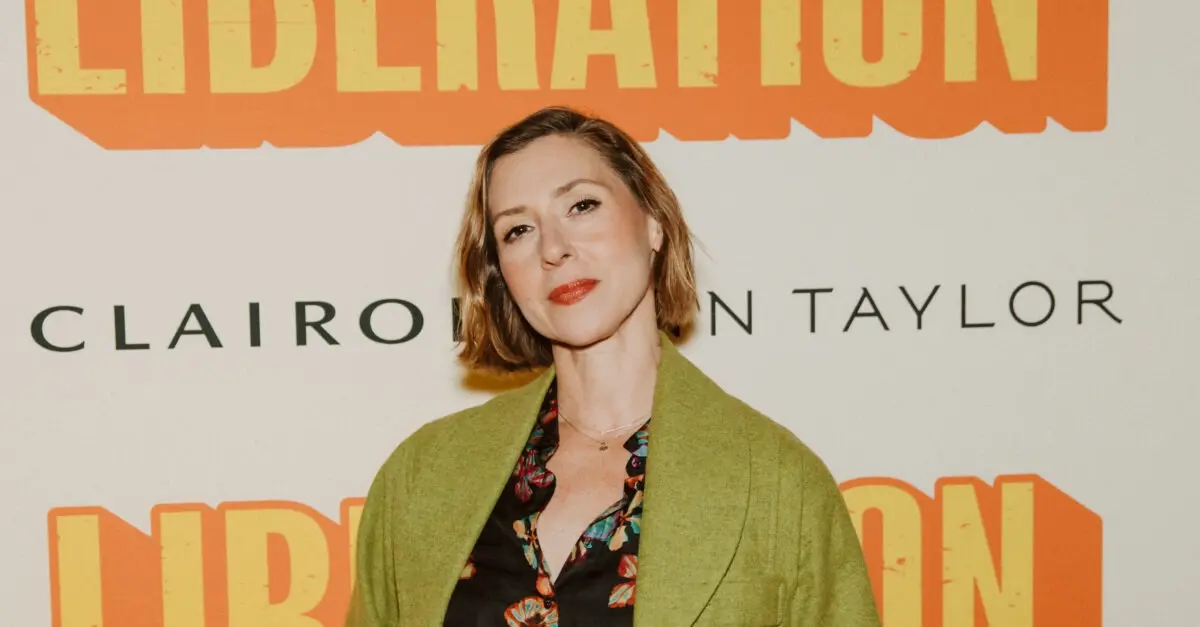
At the center of this theatrical endeavor is Tony Award winner Miriam Silverman, celebrated for her transcendent work in The Sign in Sidney Brustein’s Window, alongside television appearances in The Marvelous Mrs. Maisel and Your Friends and Neighbors. Silverman will step into the demanding, convention-defying role of Claire Archer, a visionary botanist whose obsessive quest to create entirely new forms of plant life mirrors her desperate internal rebellion against societal boundaries.
Directed by Fiasco Theater co-founder Jessie Austrian, the production begins its limited run with a Joseph Papp Free Performance on October 27, leading up to an official opening night on November 5. Performances will continue through November 22. The creative team has assembled a stellar ensemble cast, including Noah Brody as Harry, Paul L. Coffey as Anthony and Dr. Emmons, Devin E. Haqq as Dick, Amara Leonard as Elizabeth, Paco Tolson as Tom, and Emily Young as Adalaide and Hattie.
Furthermore, this revival is anchored by an elite team of design professionals, featuring lighting by Amith Chandrashaker, costume design by Sarita P. Fellows, sound design by Bailey Trierweiler, scenic design by Lawrence E. Moten III, music supervision by Daniel Kluger, and props direction by Caitlyn Murphy, with Caroline Englander serving as production stage manager.
Detailed Chronology: From 1921 Origins to the 2024 Public Theater Revival
To fully understand the weight of Fiasco Theater’s upcoming production, it is necessary to trace the historical lineage of The Verge, a play that was radically ahead of its time and remains a formidable hurdle for modern theater companies.
The Genesis and 1921 Premiere
Susan Glaspell, working alongside her husband George Cram Cook, founded the Provincetown Players—a theatrical collective that permanently altered the trajectory of American drama by championing experimental, non-realist plays. By 1921, Glaspell was already a celebrated voice in American letters, having won the Pulitzer Prize posthumously for Alison’s House in 1931, though The Verge emerged during a period of intense personal and artistic evolution.
When The Verge premiered in New York a little over a century ago, audiences and critics were polarized. The play refused to conform to the tidy domestic realism that dominated commercial stages in the early decades of the 20th century. Instead, Glaspell embraced a jagged, expressionistic style that externalized the psychological imprisonment of her protagonist, Claire Archer. Claire’s laboratory and greenhouse were not merely sets; they were psychological battlegrounds where the laws of nature and the suffocating expectations of patriarchal society collided.
The Modern Re-Evaluation: Expand the Canon and the 2023 Reading
For decades, The Verge suffered the fate of many masterworks by women dramatists: it slipped into obscurity, relegated to academic syllabi and rare university productions rather than mainstream professional houses. However, the theatrical tide began to turn dramatically in recent years.
The catalyst for the current Public Theater production arrived in 2023 when Expand the Canon—an advocacy organization dedicated to identifying, curating, and promoting classic plays written by women throughout history—intervened. The organization sent the script of The Verge to director Jessie Austrian. Recognizing the play’s astonishing prescience, Expand the Canon partnered with Fiasco Theater to mount a developmental reading during their 2023–24 advocacy season.
That reading acted as a crucible. It proved that Glaspell’s language, which oscillates between dizzying poetic flights and biting domestic satire, had lost none of its bite. The positive response from the reading accelerated discussions with The Public Theater, culminating in the greenlighting of the current full-scale off-Broadway production at LuEsther Hall.
Production Timeline (Fall 2024)
- Late 2023: Expand the Canon introduces Jessie Austrian to The Verge; Fiasco Theater mounts a private developmental reading.
- Mid-2024: Casting finalized with the announcement of Tony winner Miriam Silverman alongside ensemble members Noah Brody, Paul L. Coffey, Devin E. Haqq, Amara Leonard, Paco Tolson, and Emily Young.
- October 27, 2024: First performance commences with a Joseph Papp Free Performance at the Public Theater’s LuEsther Hall.
- November 5, 2024: Official opening night for the limited engagement.
- November 22, 2024: Final scheduled performance of the run.
Supporting Context & Metrics: The Mechanics of Fiasco Theater
Fiasco Theater’s Signature Aesthetic
Founded in 2007 by graduates of Brown University/Trinity Repertory Company’s graduate acting program, Fiasco Theater has cultivated a distinct international reputation for ensemble-driven, text-centric storytelling. Known for stripping away theatrical artifice to focus intensely on actors, language, and audience imagination, Fiasco’s previous credits include celebrated, highly stripped-down interpretations of Shakespeare’s Cymbeline, Measure for Measure, and The Two Gentlemen of Verona, as well as Stephen Sondheim and James Lapine’s Into the Woods.
Applying this rigorous, minimalist ensemble methodology to Susan Glaspell’s maximalist, expressionistic text represents a fascinating stylistic intersection. Fiasco’s ethos relies heavily on shared actor-manager dynamics and physical storytelling—tools that will be pushed to their limits in bringing Claire Archer’s botanical madness to visceral life.
The Venue: The Public Theater’s LuEsther Hall
The Public Theater, historically situated at Astor Place in Lower Manhattan, has long been a bastion for counter-cultural, politically engaged, and formally adventurous American drama. Founded by Joseph Papp in 1954 as the Shakespeare Workshop, the institution has nurtured countless works that challenge the status quo.
LuEsther Hall, an intimate black-box space within the complex, offers the ideal acoustic and spatial environment for The Verge. Because the play deals heavily with claustrophobia, obsession, and the suffocating pressure of domestic environments pressing down on a creative mind, the physical proximity of the LuEsther Hall audience will heighten the psychological intensity of the greenhouse scenes.
Economic and Cultural Metrics of the Revival
The production operates within the broader context of a national cultural shift. According to data tracked by theatrical advocacy groups, institutional theaters across the United States have faced mounting pressure to diversify their seasonal slates away from standard-issue revivals of mid-century male-authored plays. The inclusion of The Verge aligns with an industry-wide push to recover lost masterworks from the public domain.
Furthermore, the integration of a Joseph Papp Free Performance on October 27 underscores The Public’s ongoing commitment to socioeconomic accessibility. These free-ticket initiatives ensure that ticket pricing does not act as a barrier for younger audiences, students, and community members eager to engage with challenging theatrical literature.
Official Statements and Artistic Insights
The creative team behind the production has been vocal about the profound relevance of Glaspell’s text, emphasizing that a play written over a hundred years ago speaks directly to contemporary anxieties surrounding autonomy, scientific ethics, and gender roles.
Jessie Austrian on Discovering the Script
Director Jessie Austrian shared the journey of how The Verge crossed her desk and permanently altered her artistic perspective:
"I fell in love with The Verge when Expand the Canon, an organization that curates a collection of classic plays by women through history, sent the script my way in 2023 and then partnered with Fiasco on a reading of The Verge as part of their 2023-24 advocacy," Austrian stated.
"I was floored by Susan Glaspell’s writing: the daring, the humor, the vast topography within the play—its refusal to conform to one style or genre. And I immediately thought of my colleague Miriam Silverman, who I knew would be tremendous in the role of Claire. Fiasco is thrilled to be partnering with The Public to revive this masterpiece, which feels deeply immediate despite being written a hundred years ago."
Miriam Silverman’s Approach to Claire Archer
Miriam Silverman, whose stock has risen dramatically following her triumphant run in The Sign in Sidney Brustein’s Window, enters this project equipped with the emotional range required to play Claire Archer. Claire is not an easily digestible heroine; she is abrasive, brilliant, uncompromising, and terrifyingly driven.
In interviews regarding her process, Silverman has frequently discussed her attraction to characters who refuse to apologize for their intellect or their artistic hungers. Claire Archer’s botanical experiments—specifically her attempts to cultivate "Edge Vine" and "Breath of Life," plants that break free from known biological classifications—serve as an outward manifestation of Silverman’s deeply committed acting style, which relies on emotional authenticity and razor-sharp linguistic precision.
The Ensemble Dynamic
The casting choices reflect a deliberate gathering of downtown New York theater veterans who possess deep experience in classical, avant-garde, and contemporary spaces.
- Noah Brody, co-artistic director of Fiasco Theater, brings an intimate understanding of the company’s physical language to the role of Harry.
- Paul L. Coffey (Anthony/Dr. Emmons) and Devin E. Haqq (Dick) anchor the male figures in Claire’s orbit—representing the husband, lover, and conventional medical/societal establishment that Claire attempts to outgrow or destroy.
- Amara Leonard (Elizabeth), Paco Tolson (Tom), and Emily Young (Adalaide/Hattie) round out an ensemble designed to shift fluidly between comic domestic realism and expressionistic nightmare sequences.
Future Outlook: The Legacy of The Verge and Fiasco’s Trajectory
As rehearsals commence and opening night approaches, the theatrical community is watching closely to see how Fiasco Theater’s distinct aesthetic will handle the notoriously difficult tonal shifts of The Verge.
Artistic Implications for the American Canon
The success of this production could have ripple effects far beyond the walls of the Public Theater’s LuEsther Hall. For decades, directors and artistic directors hunting for "classics" have defaulted to a narrow, Eurocentric canon dominated by a handful of male playwrights. By successfully mounting and popularizing The Verge, Fiasco Theater and The Public are actively rewriting the syllabus of American theater history.
If audiences respond enthusiastically to Glaspell’s expressionistic masterpiece, regional theaters across the United States may feel emboldened to look past safe, predictable programming and take artistic risks on other forgotten masterworks preserved by organizations like Expand the Canon.
Fiasco Theater’s Next Chapter
For Fiasco Theater, this production represents an evolution. While the company built its early reputation primarily on Shakespeare and classic musical theater re-imaginings, The Verge proves that their methodology—rooted in ensemble collaboration, sparse physical staging, and deep reverence for the spoken word—is uniquely equipped to unlock the psychological depths of early 20th-century American modernism.
As the curtain rises on October 27 with its Joseph Papp Free Performance, The Verge will finally reclaim its rightful place in the New York theatrical spotlight. One hundred years after Susan Glaspell penned her radical botanical parable, Claire Archer’s desperate quest to break through the boundaries of human limitation will once again echo across the stage, proving that true theatrical genius is entirely immune to the passage of time.