
Executive Overview
Wolfgang Amadeus Mozart’s Don Giovanni, formally designated by the composer and his brilliant librettist Lorenzo Da Ponte as a dramma giocoso—a "joking drama"—occupies a fascinating, liminal space in the operatic canon. It defies easy categorization, sliding effortlessly between the sparkling levity of opera buffa and the crushing, existential weight of opera seria.
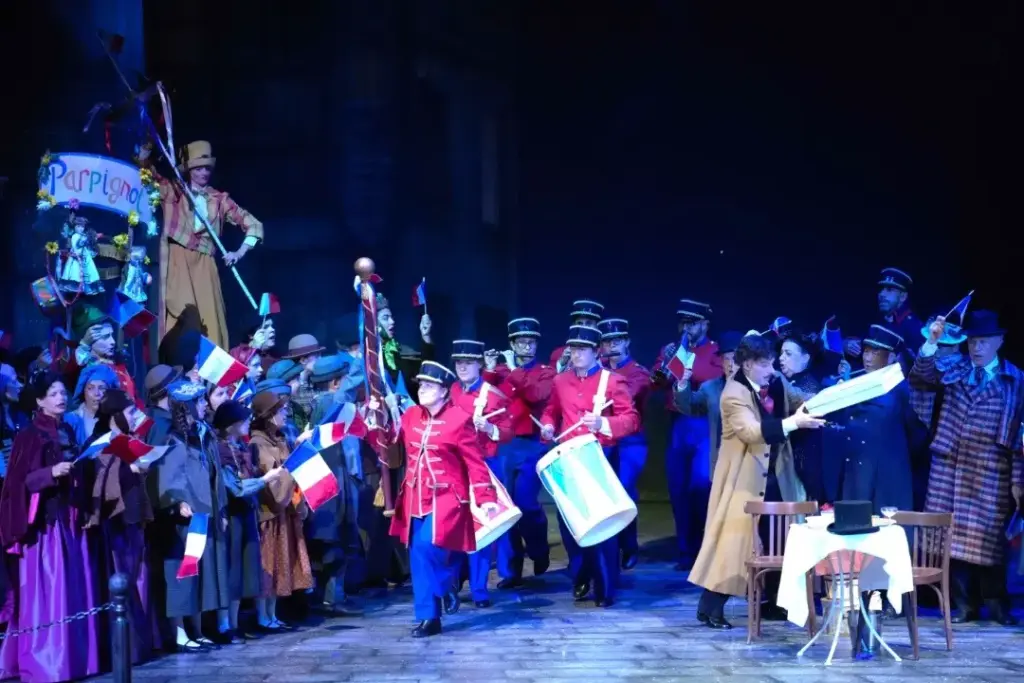
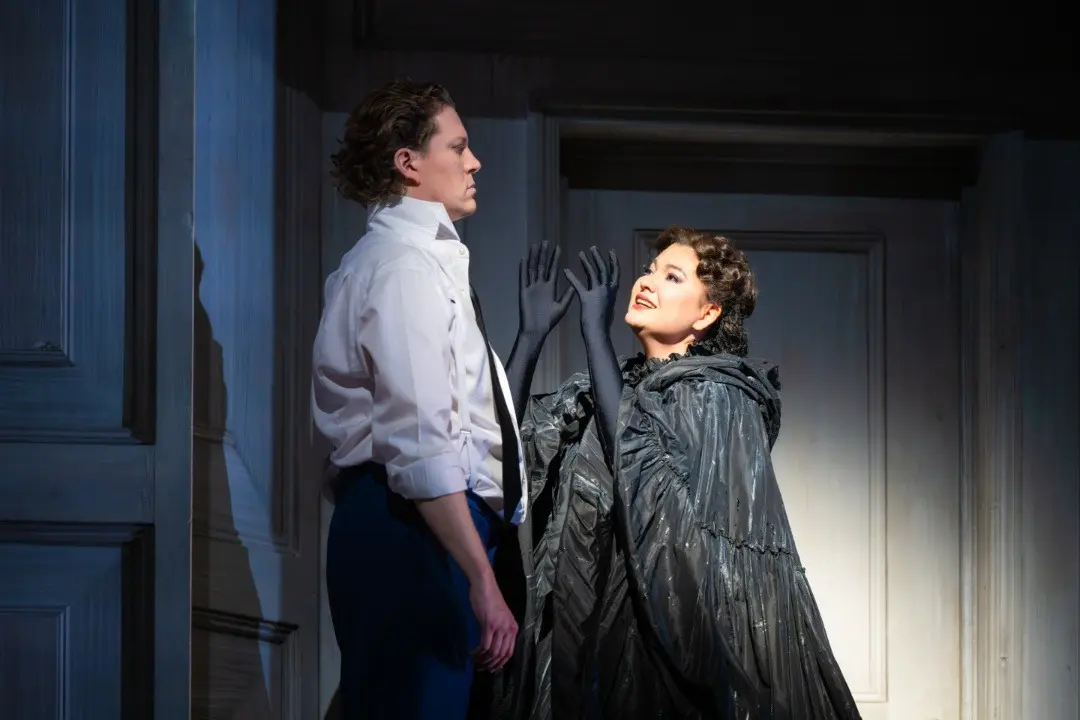
This duality took center stage in Greg Eldridge’s striking revival of Kasper Holten’s 2014 production at the Royal Opera House. Featuring an impressive rotating set design by Es Devlin and conducted with vibrant, if occasionally breakneck, energy by Stefano Montanari, the production sought to unearth the psychological fractures underlying 19th-century Victorian high society.
At its core, the performance was anchored by an extraordinary international cast. Canadian bass-baritone Gordon Bintner stepped commandingly into the titular role of the unrepentant libertine, flanked by a powerhouse supporting ensemble that included Roberto Tagliavini, Rachel Willis-Sørensen, Aigul Akhmetshina, and Bogdan Volkov. While Holten’s conceptual staging occasionally flirted with contentious directorial choices—most notably in its reinterpretation of the psychological dynamics between Donna Anna and her father’s murderer—the sheer caliber of the musicianship elevated the evening into an unforgettable theatrical triumph. This review examines the staging, the vocal performances, the scenic architecture, and the cultural resonance of a production that continues to challenge contemporary audiences.
Detailed Chronology: The Fall of the Libertine
The narrative framework of Don Giovanni unfolds as a breathless, relentless downward spiral for its protagonist, tracking a single, hedonistic nobleman through his final hours on earth. Originally transposed from 18th-century Spain to the suffocatingly rigid moral codes of the 19th-century Victorian era in this specific staging, the plot immediately plunges the audience into moral transgression.
Act I: The Catalyst of Chaos
The drama kicks off with clandestine urgency. Don Giovanni, an unrepentant narcissist driven by an insatiable, predatory libido, is discovered sneaking out of the bedchamber of his latest noble conquest, Donna Anna. The intrusion triggers a confrontation with Donna Anna’s father, the venerable Commendatore. In the ensuing sword fight, the elderly man is brutally slain by Giovanni, who promptly flees the scene alongside his long-suffering, hyper-pragmatic servant, Leporello.
Far from chastened by the gravity of his capital crime, Giovanni spends the subsequent daylight hours plunging deeper into predatory escapades. He attempts to dodge the furious advances of his abandoned former lover, Donna Elvira, while simultaneously infiltrating a rustic peasant wedding to seduce the blushing young bride, Zerlina.
As the narrative progresses, the psychological and physical walls begin to close in. Donna Anna, her devoted and perpetually anxious fiancé Don Ottavio, and a growing cohort of victims unite in a solemn pact to expose and punish the murderous libertine. The act culminates in mounting tension as Giovanni’s social circle disintegrates around him, setting the stage for an inevitable reckoning.
Act II: The Supernatural Reckoning
The second act accelerates the protagonist’s descent into psychological and literal hell. Giovanni’s arrogance reaches its zenith during a lavish banquet scene, where he remains impervious to the mounting societal pressures and ethical outcries of his adversaries.
The production reaches its breathtaking, supernatural climax when the stone statue of the murdered Commendatore—summoned recklessly by Giovanni earlier in the graveyard—mysteriously comes to life. Refusing to offer repentance for a lifetime of manipulation, violence, and hubris, Giovanni is dragged down into the fiery abyss by otherworldly forces.
This dramatic conclusion reinforces the timeless moral thesis of Da Ponte’s libretto: that earthly crimes, unchecked power, and narcissistic hubris must ultimately face divine or supernatural reckoning. In Holten’s Victorian-inflected staging, this descent was mirrored not just by theatrical pyrotechnics, but by the literal and figurative unravelling of the protagonist’s internal psyche, projected onto the very walls of Es Devlin’s ingenious rotating set.
Supporting Context & Metrics: Architecture, Design, and the Mind of a Monster
To evaluate a modern revival of a standard-repertory opera is to weigh the fidelity of the musical execution against the interpretive audacity of the staging. In this regard, the Royal Opera House production offered a masterclass in atmospheric world-building.
Es Devlin’s Rotating Set and Luke Halls’ Video Graphics
At the heart of the visual triumph was Es Devlin’s colossal rotating mansion façade. Far more than a static backdrop, the structure actively participated in the storytelling. As it slowly revolved, it revealed the complex inner workings of a Victorian estate: a central spiral staircase, interlocking corridors, and a multitude of folding doors that functioned as a literal and figurative Pandora’s box of secrets.
This architectural labyrinth was amplified by the groundbreaking video design of Luke Halls. Projected directly onto the rotating mansion walls were hand-scribbled names—a visual manifestation of Giovanni’s legendary "little black book," which swelled to reveal a vast, damning ledger of past and present victims. Swirling corridors, entwined lovers, and massive swathes of digital blood spattering at critical plot junctures transformed the physical set into an externalized landscape of Don Giovanni’s chaotic, predatory mind.
Lighting and Costumes
Lighting designer Bruno Poet maximized this psychological tension. By deploying stark, isolating spots and long, elongated shadow projections, Poet created an oppressive atmosphere where no character could hide from moral scrutiny.
Complementing the lighting were the meticulous period costumes designed by Anja Vang Kragh. While maintaining historical authenticity, Kragh’s tailoring occasionally achieved a stroke of theatrical genius: certain costumes were patterned to allow performers to blend almost invisibly into the digital projections washing over the set, symbolizing how deeply embedded Giovanni’s corruption was within the fabric of Victorian society itself.
Orchestra of the Royal Opera House
In the pit, the Orchestra of the Royal Opera House delivered a technically proficient, shimmering execution under the baton of Stefano Montanari. Montanari’s reading of Mozart’s score was notable for its vitality and forward-driving momentum. However, this brisk pacing occasionally courted controversy; purists in the audience noted moments where the lightning-fast tempos created minor synchronization and timing discrepancies between the pit and the vocalists on stage.
Official Statements and Critical Discourse: Deconstructing the Character Dynamics
A cornerstone of any theatrical review is the analysis of character interpretations, particularly when a director takes bold liberties with classic text. Kasper Holten’s revival provoked intense debate among critics and opera traditionalists alike, primarily concerning the psychological grey areas introduced into the relationships between the principals.
The Bintner-Tagliavini Dynamic
Canadian bass-baritone Gordon Bintner brought a commanding, magnetic physical presence to the title role. Imbuing Giovanni with an effortless, haughty authority, Bintner was entirely convincing as a licentious aristocrat who views humanity merely as a collection of disposable pleasures. Vocally, he deployed a rich, malt-toned instrument. His delivery of the iconic "Champagne aria" (Fin ch’han dal vino) crackled with manic energy, which he brilliantly contrasted with the soft, melting, gossamer tones of the canzonetta Deh, vieni alla finestra, used to seduce Donna Elvira’s maid.
Vocally matching him was Roberto Tagliavini as Leporello. Tagliavini possessed a more stentorian, deeply resonant bass-baritone that anchored the performance’s comedic and dramatic ballast. His opening lament, Notte e giorno faticar, established the weary resentment of a servant bound to a toxic master, while his famous "Catalogue aria" (Madamina, il catalogo è questo) was executed with impeccable comedic timing and vocal color.
The Controversy of Donna Anna
Perhaps the most significant point of critical discussion centered on the portrayal of Donna Anna, sung by the celebrated soprano Rachel Willis-Sørensen. Willis-Sørensen delivered a masterclass in vocal control, navigating her demanding arias with security in her lower register and resplendent, soaring power in her upper notes. Her Act I tour-de-force, Or sai chi l’onore, vibrated with a palpable, vengeful fury upon realizing Giovanni was her father’s murderer, while her Act II Non mi dir, bell’idol mio showcased breathtaking coloratura mastery.
However, dramaturgical friction arose due to director Greg Eldridge/Kasper Holten’s staging choices. During Don Ottavio’s tender Act I aria Dalla sua pace—in which the devoted fiancé pours out his soul downstairs—Donna Anna was directed to sneak upstairs and engage in secretive, intimate interactions with Don Giovanni himself.
Critics and audience members alike questioned the wisdom of this choice. By rendering Donna Anna a willing, complicit partner to her father’s killer, the staging arguably blunted the moral clarity of her quest for vengeance. While intended to explore the dark, complex psychological grey areas of obsession, trauma, and social hypocrisy, the interpolation struck many as an incongruous digression that undermined the opera’s structural integrity.
Akhmetshina’s Triumph as Donna Elvira
In stark contrast, Aigul Akhmetshina’s company debut as the emotionally volatile Donna Elvira received universal acclaim, emerging as the emotional zenith of the evening. Akhmetshina navigated Elvira’s mercurial shifts—swinging wildly between murderous rage and lingering, pathetic infatuation—with supreme vocal authority.
Starting with a slight, understandable caution in her establishing aria Ah, chi mi dice mai, Akhmetshina soon unleashed the lush, darkly burnished mezzo-soprano timbre that has rapidly marked her out as one of the defining vocal artists of her generation. Her interpretation of Mi tradì quell’alma ingrata in Act II was nothing short of sublime, earning the warmest and most sustained ovation of the night.
Future Outlook: The Evolving Repertoire of Mozartian Performance
As the curtain fell on the Royal Opera House’s latest traversal of Don Giovanni, the production left an indelible mark on the London cultural landscape. It proved that Mozart’s 1787 masterpiece, when subjected to rigorous theatrical interrogation and supported by world-class vocal talent, retains its capacity to shock, mesmerize, and provoke.
Looking ahead, the success of performers like Aigul Akhmetshina in navigating traditionally heavier repertoire signals a shifting paradigm in casting standards. The modern opera house can no longer rely on static, museum-piece stagings; audiences demand psychological depth, high-concept visual integration, and vocalists who are equally adept at acting as they are at soaring over a full romantic orchestra.
While minor critiques regarding directorial overreach—particularly concerning the complex psychosexual dynamics foisted upon Donna Anna—will continue to fuel intermission debates among purists, the overarching artistic achievement is undeniable. This Don Giovanni demonstrated that as long as humanity struggles with the eternal tension between desire and morality, hubris and retribution, Mozart and Da Ponte’s "joking drama" will remain entirely, urgently alive.