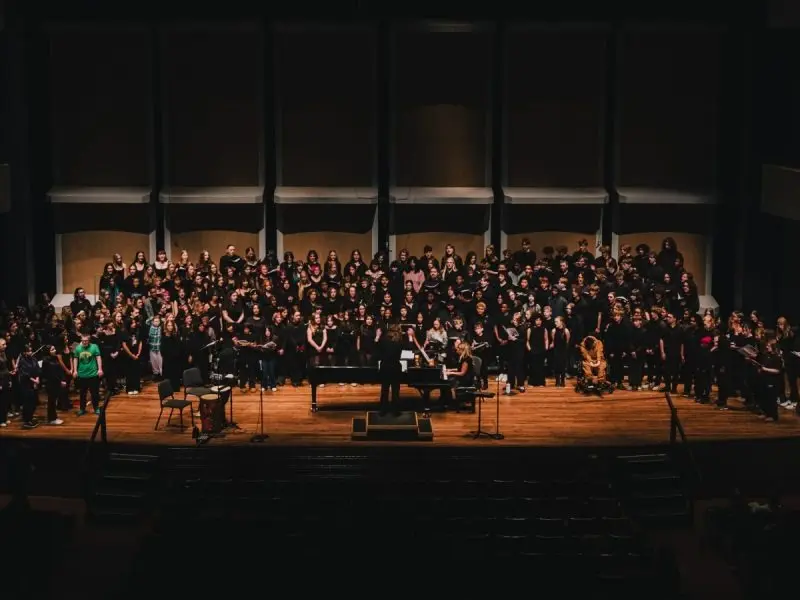

The announcement of Universal Studios Florida’s Rock the Universe festival lineup exposed a persistent ideological fracture within contemporary Christian music (CCM). When 23-year-old singer-songwriter Josiah Queen was unveiled as a top-billed headliner, online forums and comment sections lit up with a recurring, skeptical refrain: "Where are the headliners?"
This question, while seemingly innocuous, lays bare a profound generational disconnect. It highlights a widening chasm between legacy consumers of Christian music—those whose baseline for stardom was forged in the 1990s, 2000s, or even early 2010s—and a rapidly transforming digital ecosystem where traditional gatekeepers no longer dictate cultural resonance.
For veteran listeners, the absence of familiar, decades-old touring titans can create the optical illusion that the genre’s star power has evaporated. In reality, the movement is simply operating on an entirely different frequency. The old paradigms of radio dominance and brick-and-mortar retail have been entirely upended by algorithmic discovery, streaming micro-communities, and direct-to-consumer digital engagement.
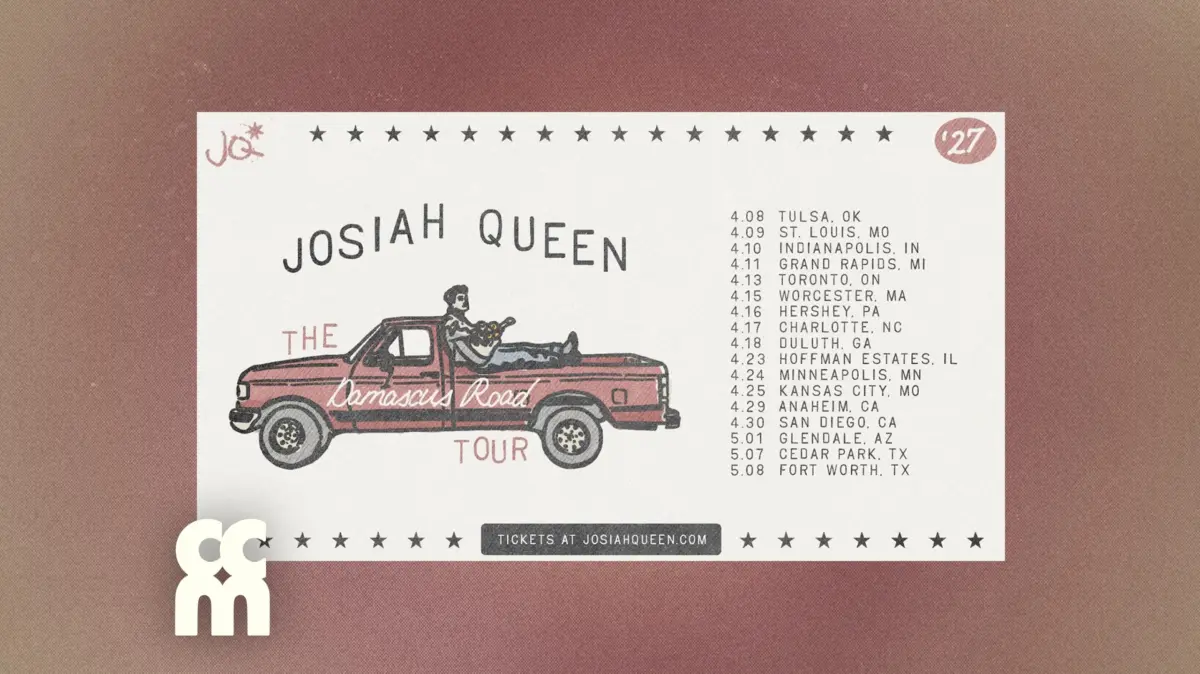
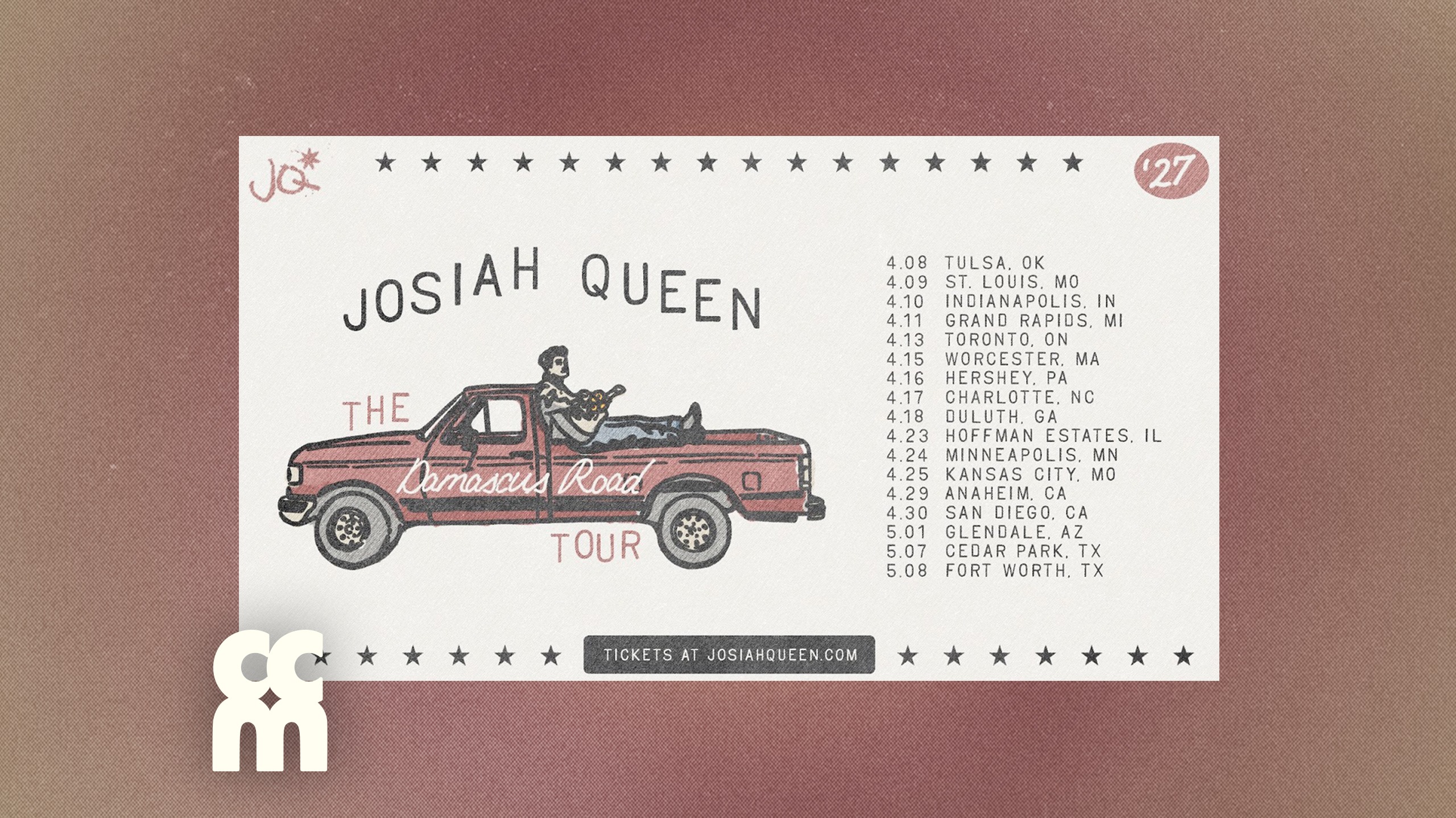
Josiah Queen’s meteoric rise is not an isolated anomaly; it is the vanguard of a systemic industry overhaul. Fresh off the heels of festival controversies, the Tampa, Florida-native has officially announced the Damascus Road Tour—a massive, 17-date arena run spanning the United States and Canada in the spring of 2027. Skipping the intermediary stepping stones of traditional clubs, mid-sized theaters, and mega-church auditoriums, Queen is heading straight for premier major-market venues like the BOK Center, Target Center, and the Honda Center.
With more than 2.1 billion global streams, a Billboard Hot 100 hit under his belt, and a dedicated multi-million-person digital following, Queen represents a new class of artist. They are young, digitally native, fiercely authentic, and completely unconcerned with the traditional gatekeeping mechanisms of the past. The audience has arrived, and it is time for the old guard to catch up.
Detailed Chronology: From Tampa Independent to Arena Headliner
To understand how a 23-year-old artist can bypass the traditional developmental trajectory and land straight in major North American arenas, one must trace the rapid, unconventional timeline of Josiah Queen’s career.
Operating largely outside the tightly controlled machinery of legacy CCM record labels early on, Queen built his initial momentum from the ground up in the greater Tampa area. His artistic identity was forged not in corporate Nashville boardrooms, but in bedroom writing sessions and acoustic jam spaces. His style bridges the gap between raw, organic indie-folk and modern worship-pop sensibilities—a sonic palette that appeals deeply to a generation fatigued by hyper-polished, over-produced radio singles.
The turning point arrived with the release of his breakout anthem, "The Prodigal." The track struck a visceral chord with listeners navigating doubt, spiritual reclamation, and personal identity. It quickly transcended standard Christian music boundaries, worming its way into secular and faith-based playlists alike. As streams accumulated in the tens and hundreds of millions, digital word-of-mouth transformed Queen from a local acoustic act into a national streaming powerhouse.
The momentum accelerated exponentially with subsequent releases. His single "Dusty Bibles" achieved a rare milestone for an independent-leaning artist, cracking the Billboard Hot 100 and securing an RIAA Gold certification in less than six months. Furthermore, the track achieved viral status, landing on Spotify’s prestigious Viral 50 chart in more than 15 countries simultaneously.
Radio success quickly followed. "Can’t Steal My Joy" surged to the No. 1 spot on Christian radio formats, a feat immediately mirrored by his subsequent single, "Demons," which simultaneously crossed the 100-million-stream threshold.
Rather than capitalizing on this digital success through traditional, incremental club tours, Queen’s team recognized the density of his regional support. His initial headline tours moved more than 260,000 tickets, proving that his digital footprint translated directly into physical, in-person attendance. This data-driven realization paved the way for the ultimate leap: the 2027 Damascus Road Tour.
Supporting Context & Metrics: Quantifying the New Era of Stardom
The skepticism surrounding Queen’s festival headlining status stems from what cultural analysts term the "silo problem." In the modern media landscape, it is entirely possible for a consumer to be deeply entrenched in one version of hit music while remaining completely oblivious to a massive subculture thriving just a click away.
Legacy consumers often measure success by physical album sales, legacy radio spins, and decades of institutional longevity. Conversely, Gen Z and younger millennial audiences consume music through a decentralized web of short-form video platforms, curated algorithmic playlists, and peer-to-peer digital recommendations.
When evaluated through objective data metrics, Queen’s commercial viability is undeniable:
- Global Streaming Power: Queen has officially surpassed 2.1 billion global streams across all major digital service providers (DSPs).
- Track-Specific Milestones: His breakout hit "The Prodigal" has crossed the 200-million-stream mark, while "Demons" has similarly eclipsed nine figures in streaming volume.
- Chart & Certification Success: "Dusty Bibles" marked his debut on the Billboard Hot 100, earning RIAA Gold certification within a record-breaking six-month window and dominating viral charts internationally.
- Radio Dominance: Consecutive No. 1 singles at Christian radio ("Can’t Steal My Joy" and "Demons") prove that he commands both streaming algorithms and traditional broadcast airwaves.
- Ticketing Momentum: Having already moved upwards of 260,000 tickets on preliminary headlining runs, his transition into full-scale arenas is backed by hard, verifiable consumer demand.
- Social Footprint: Queen commands an integrated digital audience of more than 3 million followers across Instagram, TikTok, YouTube, and Facebook.
This statistical reality shatters the myth that modern Christian music lacks cultural heavyweights. Instead, it proves that the heavyweights have simply changed uniforms, preferring direct digital communion with their fanbase over traditional media campaigns.
Official Statements and Tour Infrastructure
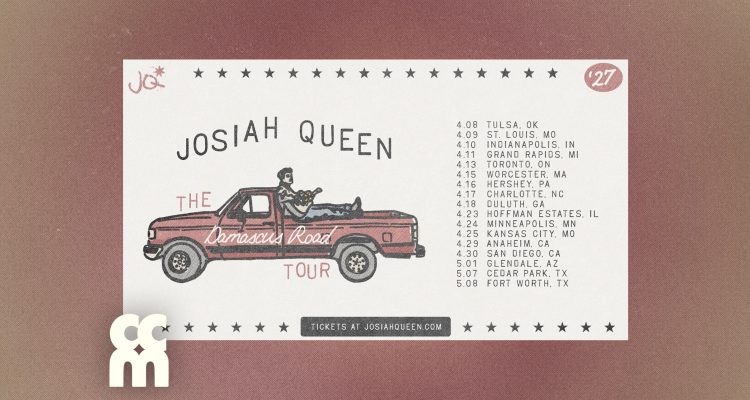
The official announcement of the Damascus Road Tour solidifies Queen’s transition from a digital phenomenon to an arena-level touring juggernaut. Commencing on April 8, 2027, in Tulsa, Oklahoma, the 17-date trek will crisscross the United States and Canada, hitting some of the most prominent multi-purpose entertainment venues in North America.
Industry insiders note that booking arenas of this magnitude requires a high degree of confidence from promoters, venue operators, and booking agents. Venues such as the Spectrum Center in Charlotte, the Target Center in Minneapolis, and the Honda Center in Anaheim are typically reserved for legacy acts, pop superstars, and mainstream rock icons. Queen’s inclusion in these spaces signals a paradigm shift in how live entertainment executives view the pulling power of faith-based artists originating from digital platforms.
Official 2027 Damascus Road Tour Dates & Venues:
- Thursday, April 8, 2027 – Tulsa, OK – BOK Center
- Friday, April 9, 2027 – St. Louis, MO – Chaifetz Arena
- Saturday, April 10, 2027 – Indianapolis, IN – Gainbridge Fieldhouse
- Sunday, April 11, 2027 – Grand Rapids, MI – Van Andel Arena
- Tuesday, April 13, 2027 – Toronto, ON – Coca-Cola Coliseum
- Thursday, April 15, 2027 – Worcester, MA – DCU Center
- Friday, April 16, 2027 – Hershey, PA – GIANT Center
- Saturday, April 17, 2027 – Charlotte, NC – Spectrum Center
- Sunday, April 18, 2027 – Duluth, GA – Gas South Arena
- Friday, April 23, 2027 – Hoffman Estates, IL – NOW Arena
- Saturday, April 24, 2027 – Minneapolis, MN – Target Center
- Sunday, April 25, 2027 – Kansas City, MO – T-Mobile Center
- Thursday, April 29, 2027 – Anaheim, CA – Honda Center
- Friday, April 30, 2027 – San Diego, CA – Viejas Arena
- Saturday, May 1, 2027 – Glendale, AZ – Desert Diamond Arena
- Friday, May 7, 2027 – Cedar Park, TX – H-E-B Center at Cedar Park
- Saturday, May 8, 2027 – Fort Worth, TX – Dickies Arena
Ticketing for the highly anticipated run will follow a structured rollout. An exclusive ticket presale is scheduled to kick off on September 14, giving early access to dedicated subscribers and community members, followed by the public on-sale opening on September 18 at 10:00 AM local time.
Future Outlook: The Next Wave of Faith-Based Music
The ascension of Josiah Queen serves as a case study for the future trajectory of Christian and faith-based popular music. For decades, the genre grappled with an identity crisis—struggling to balance artistic integrity with commercial marketability, often resulting in music that felt overly sanitized or derivative of secular pop trends.
Queen and his contemporaries represent a refreshing corrective. They are a generation of artists who grew up immersed in the culture of Christian music—they listened to it, were shaped by it, and harbor no embarrassment regarding its history or foundational themes. Yet, they are unafraid to present these spiritual truths through unfiltered, sometimes raw, and intensely personal songwriting structures.
As these young artists continue to populate festival headlining slots and fill major metropolitan arenas, the traditional gatekeepers of the genre are finding themselves forced to adapt. The question asked in online comment sections—"Where are the headliners?"—will likely become increasingly obsolete as the listening public embraces a new definition of stardom.
Ultimately, Queen’s journey from a young Tampa singer-songwriter to an arena headliner demonstrates that the audience for faith-based music is not shrinking; it is simply evolving. The next generation of headliners has arrived, and they are here to stay.