
Executive Overview
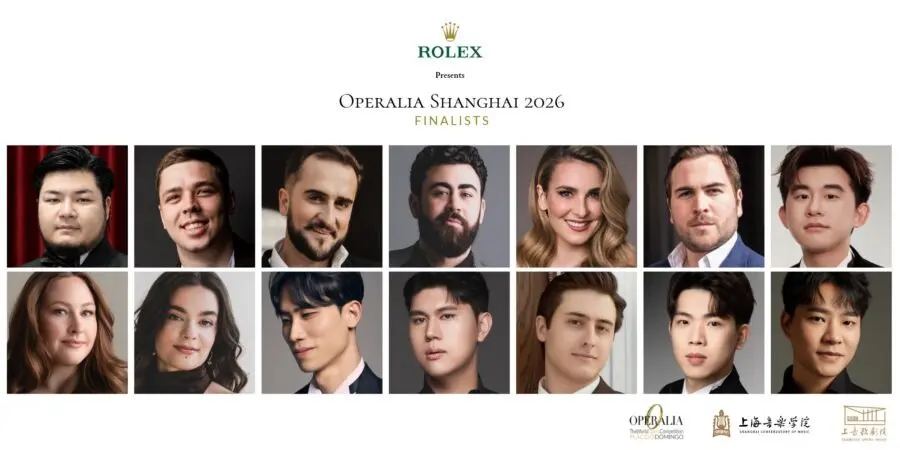
The global opera landscape has shifted its focus to Shanghai, where the rigorous semi-final rounds of the prestigious Operalia Competition have officially concluded. Following days of intense artistic scrutiny, vocal trials, and rigorous competition on the international stage, the organizers have announced the official roster of finalists for both the Opera and Zarzuela divisions. Representing a vivid tapestry of cultural backgrounds, vocal techniques, and national traditions, these exceptionally gifted young artists now stand on the precipice of a career-defining moment.
Founded in 1993 by legendary tenor and conductor Plácido Domingo, Operalia has consistently served as the gold standard for vocal competitions worldwide. It is designed to unearth rare talent, foster international cross-cultural exchange, and launch the careers of the next generation of opera luminaries. The stakes for the 2026 edition are higher than ever. Set against the dynamic, cosmopolitan backdrop of Shanghai, this year’s competition has drawn immense global interest from critics, industry insiders, and passionate opera lovers alike.
The culmination of this grueling artistic marathon will take place on November 1, 2026, when the finalists will take the stage for the ultimate showdown. They will perform before an elite, eagle-eyed jury comprising general directors, artistic administrators, and casting heavyweights from the world’s most formidable institutions, including the Metropolitan Opera, Teatro alla Scala, the Wiener Staatsoper, and the Dutch National Opera. For the twelve finalists in the opera category and the six finalists in the zarzuela category, the upcoming final round represents not merely a chance to win cash prizes and prestigious accolades, but a golden ticket to the upper echelons of the global lyric theater establishment.
Detailed Chronology: From Preliminary Auditions to the Shanghai Showdown
The Genesis of the 2026 Journey
The road to the Shanghai finals began many months prior, with thousands of hopefuls from across six continents submitting comprehensive digital audition portfolios. Operalia’s vetting process is notoriously stringent. A panel of international vocal experts evaluates applicants based on tone quality, musicality, stylistic versatility, and dramatic potential. Out of this vast ocean of international talent, a select group of participants was invited to compete live in the preliminary rounds.
The Crucible of the Semi-Finals in Shanghai
Upon arriving in Shanghai, the contestants faced an arduous schedule of orchestral rehearsals, coachings, and preliminary performances. The semi-finals acted as a fierce crucible, weeding out dozens of exceptionally talented hopefuls through demanding repertoire choices that tested both vocal agility and emotional depth.
Contestants were required to present a varied program spanning multiple languages, centuries, and stylistic epochs—ranging from the intricate coloratura and bell canto mastery of the 19th century to the raw emotional power of verismo and contemporary compositions. The pressure was compounded by the acoustics of the venue and the formidable presence of the jury members, who sat in the auditorium tracking every breath, phrasing choice, and dynamic shift.
When the dust settled and the scores were tallied, the pool of candidates was narrowed down to the elite group advancing to the final round. The announcement of the finalists sent waves of excitement through the international classical music community, highlighting the truly globalized nature of modern opera performance.
The Finalists: A Profile in Global Vocal Excellence
The 2026 Operalia finalists represent an extraordinary mosaic of vocal classifications and geographic origins, underscoring the universal appeal and evolving landscape of lyric art.
The Opera Division Finalists
The twelve singers advancing to the Opera Finals showcase a remarkable distribution of low and high voices, featuring distinct stylistic specializations:
- Alikhan Beisekov (Baritone, Kazakhstan) – Known for his burnished timbre and commanding stage presence, Beisekov brings the rich vocal traditions of Central Asia to the international forefront.
- Vladyslav Buialskyi (Bass-Baritone, Ukraine) – A remarkably versatile artist whose dual presence in both the opera and zarzuela finals highlights exceptional linguistic and stylistic adaptability amid challenging personal and professional circumstances.
- Roman Chabaranok (Bass, Ukraine) – Possessing a deep, resonant, and foundational instrument, Chabaranok represents the grand tradition of Slavic low-voice mastery.
- Robert Lewis (Tenor, UK) – A brilliant British tenor whose lyric projection and lyrical phrasing have consistently captivated audiences throughout the rounds.
- Zihao Li (Baritone, China) – Representing the host nation, Li exhibits a lush, velvety baritone sound coupled with a deeply intelligent approach to text and subtext.
- Tessa McQueen (Soprano, USA) – An American soprano bringing pristine vocal placement, soaring high notes, and vivid dramatic characterization to the stage.
- Emma Marhefka (Soprano, USA) – Earning a coveted double-finalist spot in both Opera and Zarzuela, Marhefka demonstrates a rare combination of technical security and stylistic chameleon-like brilliance.
- Junhyeok Felix Park (Baritone, South Korea) – Part of the formidable wave of East Asian vocal talent, Park commands attention with his rich core sound and expressive nuance.
- Sungmin Park (Bass, South Korea) – Demonstrating the profound depth and gravitas required for the great bass literature, this South Korean talent has turned heads with his resonant power.
- Kirill Sikora (Tenor, Russia) – An agile and passionate tenor who navigates demanding vocal acrobatics with fearless execution and emotional intensity.
- Jiazhou Wang (Baritone, China) – Securing a dual-finalist berth in both Opera and Zarzuela, Wang’s achievement highlights his remarkable versatility across Spanish and international repertoires.
- Gonghao Zhang (Baritone, China) – Rounding out a strong contingent of baritones and local talent, Zhang displays a polished, Italianate line and sophisticated musicality.
The Zarzuela Division Finalists
Operalia remains unique among major vocal competitions for its dedicated category celebrating zarzuela—the traditional Spanish lyric-dramatic genre that alternates between spoken and sung scenes. The six finalists competing for the prestigious Pepita Embil and Plácido Domingo Zarzuela prizes are:
- Vladyslav Buialskyi (Bass-Baritone, Ukraine)
- Eleomar Cuello (Baritone, Cuba) – Bringing Caribbean warmth, rhythmic vitality, and idiomatic Spanish phrasing to a genre that demands native-level theatricality.
- Sofía Esparza (Soprano, Spain) – The sole representative from the home of zarzuela, Esparza infuses her performances with authentic cultural cadence, sparkling charm, and vocal brilliance.
- Emma Marhefka (Soprano, USA)
- Robert Lewis (Tenor, UK)
- Jiazhou Wang (Baritone, China)
The inclusion of artists from Ukraine, Cuba, Spain, the United States, the United Kingdom, China, South Korea, Kazakhstan, and Russia in the final stages proves that the mastery of zarzuela transcends geographical boundaries, requiring absolute dedication to linguistic nuance and theatrical passion.
Supporting Context & Metrics: The Operalia Legacy
Understanding the Stakes
To fully comprehend the magnitude of the 2026 Operalia finals, one must examine the competition’s historical impact on the opera industry. Established over three decades ago, Operalia was conceived not merely as a contest, but as an incubator for future superstars. Unlike many regional competitions, Operalia changes its host city annually, transforming into a nomadic festival of global talent that has touched cities across Europe, the Americas, Asia, and the Middle East.
The structural design of Operalia ensures that winners receive more than just monetary rewards. The true prize is visibility. The jury pool is a who’s who of international opera management. When an artistic director from Milan, Vienna, or New York discovers a new voice at Operalia, professional engagements at major international houses frequently follow within weeks.
A Stellar Alumni Network
The roster of past Operalia winners reads like a historical directory of modern opera greatness. Artists who launched their careers or achieved critical international breakthroughs through the competition include:
- Levy Sekgapane (South Africa)
- Adela Zaharia (Romania)
- Xabier Anduaga (Spain)
- Adriana Gonzalez (Guatemala)
- Anthony León (USA/Spain)
- Juliana Grigoryan (Armenia)
- Le Bu (China)
- Kathleen O’Mara (USA)
- Mihai Damian (Romania)
- Ekaterine Buachidze (Georgia)
Many of these alumni now command the stages of the Metropolitan Opera, the Royal Opera House, the Opéra National de Paris, and the Bayerische Staatsoper. For the 2026 finalists, following in the footsteps of such luminaries provides both an inspiring benchmark and an intimidating standard to uphold.
Official Statements and Industry Perspectives
The Jury’s Mandate
While the identity of the jury members commands immediate respect, their task is fraught with difficult decisions. Representing institutions such as the Metropolitan Opera, Teatro alla Scala, the Wiener Staatsoper, and the Dutch National Opera, the jury operates under a strict mandate: to identify not only the most technically proficient singers of today, but the visionary artists who will carry the operatic art form through the 21st century.
Speaking on background during the semi-final deliberations, several casting consultants noted the unprecedented level of technical preparedness among the 2026 cohort. "The baseline of vocal health, linguistic precision, and stylistic awareness has risen exponentially over the past decade," remarked one European artistic administrator. "Gone are the days when a big voice alone could carry a singer through. Today’s Operalia finalist must be a complete artist: musically astute, linguistically fluent, physically expressive, and deeply intelligent."
Host City Resonance: Shanghai as a Cultural Hub
The decision to host the 2026 competition in Shanghai reflects the city’s rapid ascent as a vital epicentre for classical music and lyric theater in the Asia-Pacific region. Modern state-of-the-art concert halls, deeply enthusiastic local audiences, and robust institutional support have turned Shanghai into a magnet for international artistic exchanges.
Local cultural officials have expressed immense pride in welcoming Operalia, viewing it as a testament to the city’s growing influence in the global classical arts ecosystem. Furthermore, the strong showing of Chinese finalists—including Zihao Li, Jiazhou Wang, and Gonghao Zhang—underscores the exceptional quality of vocal training currently flourishing in Chinese conservatories and institutions.
Future Outlook: The Road to November 1, 2026
As the finalists retreat to their practice rooms to polish their arias, refine their cadenzas, and prepare for the final orchestral rehearsals in Shanghai, the classical music world holds its collective breath. The final round on November 1, 2026, promises to be an evening of high-stakes drama, breathtaking vocalism, and life-changing revelations.
For the winners, November 1 will mark the beginning of a whirlwind international career. Contracts will be offered, management representation will solidify, and debut roles on world stages will be booked. For those who do not walk away with top prizes, the exposure gained on the Operalia stage frequently serves as an invaluable springboard, introducing them to casting directors who will track their development for years to come.
As opera navigates a rapidly changing cultural and digital landscape, events like Operalia remain vital. They remind audiences of the raw, unamplified power of the human voice to transcend linguistic and cultural barriers, speaking directly to the human condition. On November 1, in the heart of Shanghai, eighteen extraordinary young artists will step onto the stage to prove why they are the future of the lyric art. The world will be listening.