
Executive Overview
It was just over two years ago that global superstar Céline Dion made a quiet yet ferocious public vow, declaring to the world: "If I can’t run, I’ll walk. If I can’t walk, I’ll crawl. But I won’t stop." That haunting and deeply emotional declaration, captured near the conclusion of her 2024 documentary I Am: Céline Dion, served as both a personal manifesto and a warning to a relentless illness that threatened to silence one of the greatest voices in human history.
On September 16, 2026, at Paris’ packed Plenitude Arena, that harrowing journey culminated in a moment that felt less like a standard concert and more like a miraculous cultural resurrection. Confronting stiff person syndrome (SPS)—a rare, degenerative neurological disorder that causes severe muscle rigidity and agonizing spasms—Dion proved that her indomitable spirit matches her legendary vocal range.
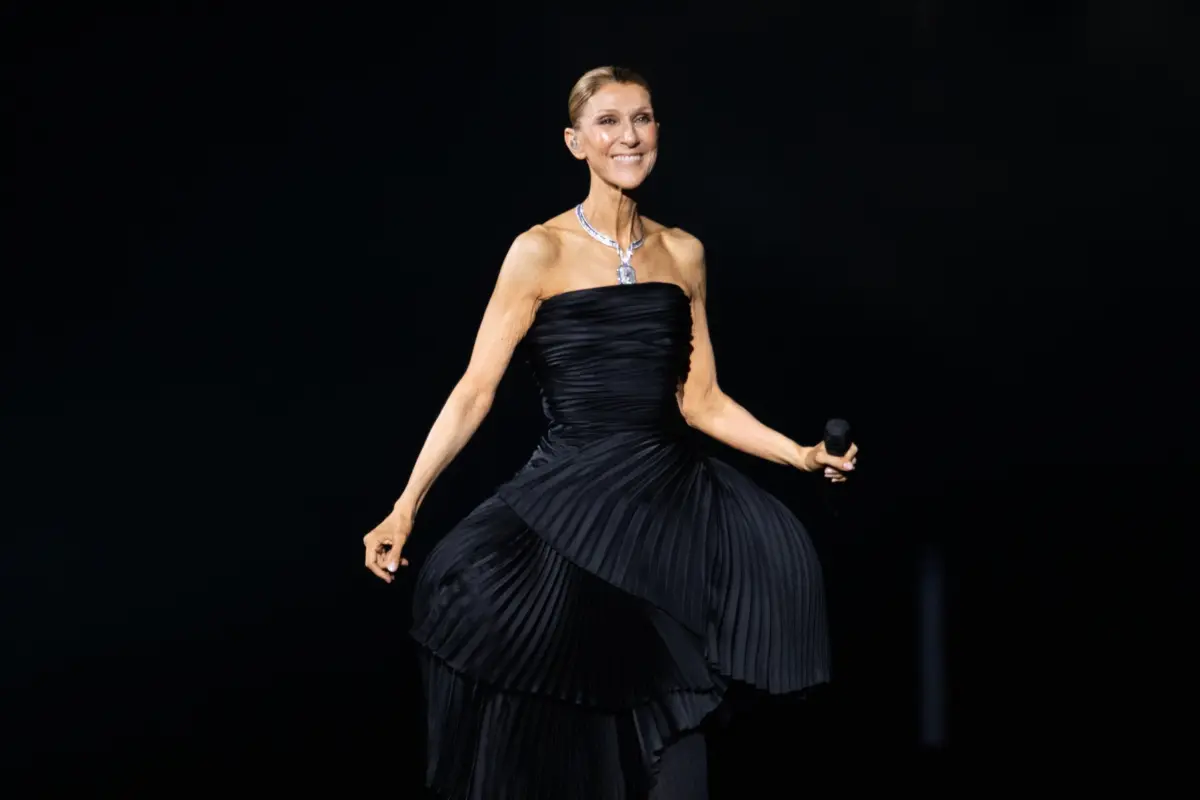
Stepping out onto the stage on the second night of her historic comeback residency, Dion did not merely walk; she sauntered, she danced, and she commanded the room with the fierce elegance of a haute-couture-clad icon. For the thousands in attendance and the millions watching the ripples of her return across the globe, the evening was a masterclass in resilience. It was the definitive final chapter of a hero’s journey, showcasing a performer who refused to let a debilitating autoimmune condition rob her of her stage, her passion, and her lifelong connection to her fans.
Detailed Chronology: From Silence to the Paris Stage
The path to the Plenitude Arena was paved with profound pain, agonizing uncertainty, and unprecedented global anticipation. To fully understand the magnitude of Dion’s September 2026 performances, one must trace the timeline of her battle against stiff person syndrome and her subsequent, against-all-odds rehabilitation.
The Revelation and the Silence (2022–2023)
The nightmare began quietly for the singer, manifesting as vocal disruptions and muscle spasms that she initially brushed off. However, by late 2022, the symptoms became impossible to hide or ignore. In an emotional video shared with her millions of followers across the globe, Dion publicly revealed her diagnosis: Stiff Person Syndrome (SPS).
Affecting roughly one in a million people, SPS is a progressive autoimmune neurological disorder that impacts the central nervous system, specifically the brain and spinal cord. It leaves sufferers locked in rigid postures or vulnerable to sudden, violent muscle spasms triggered by environmental stimuli like loud noises or emotional stress. For a vocalist who relies on absolute physical control and diaphragm stability, the disease was a cruel irony.
By 2023, the reality of the condition forced a heartbreaking decision: Dion announced the total cancellation of her remaining scheduled tour dates. As she retreated from the public eye to focus on intensive physical therapy and medical treatments, the music world held its collective breath, fearing that the voice behind "My Heart Will Go On" and "The Power of Love" might never be heard live again.
The Raw Documentary and the Turning Point (2024)
In 2024, Dion pulled back the curtain on her private struggle through the Amazon MGM Studios documentary I Am: Céline Dion. Directed by Irene Taylor, the film offered an unflinching, visceral look at her daily reality.
The documentary did not sugarcoat her condition. In one harrowing sequence that left audiences worldwide weeping, Dion suffered a severe SPS spasm mid-camera-shot, locking her body in agonizing tension and leaving her able to communicate only through hand squeezes. The film offered no guarantees of a happy ending; it simply documented a fighter refusing to surrender. Yet, it was within this raw exposure that she made her defining promise: "If I can’t run, I’ll walk. If I can’t walk, I’ll crawl. But I won’t stop."
Just months after the documentary’s release, the world witnessed the first flicker of her triumphant return. At the opening ceremony of the 2024 Paris Olympic Games, standing majestically on the Eiffel Tower, Dion delivered a breathtaking, pitch-perfect rendition of Édith Piaf’s "Hymne à l’amour." It was a staggering vocal feat that signaled to the industry that her voice—though tested by fire—was still intact.
The Residency Announcement and Global Frenzy (2025–2026)
Buoyed by her Olympic triumph and rigorous, specialized vocal and physical conditioning, Dion set her sights on a more permanent return to the stage. In April, she stunned the entertainment industry by announcing a 16-date comeback residency at Paris’ prestigious Plenitude Arena.
The demand for tickets shattered industry records. Reports indicated that more than nine million people entered the initial ticketing lottery for a chance to witness her return to the French capital. Due to the astronomical demand, a subsequent 10-show run was swiftly added for the following May, cementing this residency as one of the most sought-after tickets in live entertainment history.
Night Two at the Plenitude Arena (September 16, 2026)
When the lights went down at the Plenitude Arena on September 16, 2026, the atmosphere was thick with reverence and anticipation. Walking out onto the stage, Dion dispelled any lingering doubts about her physical stamina. Dressed in stunning haute couture that hugged her frame, she moved with a renewed, fluid grace.
The setlist was a carefully curated journey through her greatest French and English-language hits, each song delivered with an emotional depth amplified by her recent trials. Vocally, she proved that time and illness had only deepened her artistry. High notes were hit with piercing clarity, while softer passages resonated with a fragile, hard-earned wisdom. For two hours, the arena was transformed into a sanctuary of healing, shared joy, and triumphant celebration.
Supporting Context & Metrics: The Scale of the Comeback
To contextualize Céline Dion’s return to the stage, one must analyze both the medical rarity of her condition and the unprecedented commercial scale of her residency.
Understanding Stiff Person Syndrome (SPS)
Stiff Person Syndrome is classified as a rare autoimmune neurological disorder. Key characteristics and challenges include:
- Prevalence: Affects approximately 1 in 1 million individuals globally, predominantly women between the ages of 30 and 60.
- Pathophysiology: The body’s immune system mistakenly attacks glutamic acid decarboxylase (GAD), an enzyme involved in the synthesis of an inhibitory neurotransmitter in the central nervous system, leading to uninhibited motor neuron firing.
- Symptoms: Severe, fluctuating muscle rigidity in the trunk and abdomen, accompanied by excruciating, unpredictable muscle spasms triggered by physical contact, emotional distress, or ambient noise.
- Impact on Performance: Spasms can be so violent that they cause falls, joint dislocations, and, in Dion’s case, render the respiratory and vocal muscles temporarily uncontrollable.
Commercial Metrics of the Paris Residency
The financial and logistical footprint of Dion’s return underscores her enduring global dominance:
- Ticket Lottery Demand: Over 9 million unique users registered for the initial ticket lottery pool for the 16-date residency at the Plenitude Arena.
- Venue Capacity: The Plenitude Arena in Nanterre (west of Paris) accommodated thousands of roaring fans per night, resulting in instantaneous sell-outs across all announced dates.
- Extended Run: Driven by unprecedented public demand, a second leg consisting of 10 additional shows was commissioned for May, expanding her total 2026 Parisian footprint.
- Economic Impact: Local Parisian hospitality, tourism, and hospitality sectors experienced a measurable surge in bookings coinciding with Dion’s residency windows, echoing the economic boost typically reserved for major global sporting events.
Official Statements
The emotional weight of the residency has elicited powerful responses from Dion herself, her medical team, and her creative collaborators.
Addressing the audience on the opening week of her residency, an emotional Céline Dion reflected on the long road that brought her back to the limelight:
"There were nights when I didn’t know if I would ever hold a microphone again, let alone stand under these lights in the city that means so much to my heart. When you are forced to look at your own vulnerability, you learn who your true family is—and my family has always been you, the fans. Thank you for walking, crawling, and running with me to this very moment."
Medical experts who have overseen her rehabilitation have also marveled at her physical discipline. Dr. Élise Moreau, a leading neurologist specializing in autoimmune movement disorders who has consulted on high-profile rehabilitation cases, noted the sheer willpower required for Dion’s recovery:
"What Céline has achieved is not merely a medical anomaly; it is the result of superhuman tenacity. Stiff person syndrome locks the body in a vice. To unlock those muscles through grueling physical therapy, vocal cord re-coordination, and sheer mental fortitude requires a level of psychological endurance that very few human beings possess. She has redefined what is clinically expected of an SPS patient."
Longtime musical director and producer Scott Morrison praised the dedication poured into the live arrangements for the residency:
"We didn’t alter her key signatures just to make things easy. Céline wanted to challenge herself, to honour the purity of the music. When she hits those sustained notes now, there is a lifetime of lived experience behind them. It’s not just singing anymore; it’s an act of sheer triumph."
Future Outlook: What Lies Ahead for the Legend?
As the curtains close on her triumphant September run at the Plenitude Arena, the entertainment industry is left asking: What is next for Céline Dion?
While the grueling nature of stiff person syndrome means that Dion must continue to balance her intensive performance schedule with rigorous medical oversight, physical therapy, and vocal rest, her successful return to Paris has fundamentally shifted the paradigm of her career. Industry insiders suggest that rather than committing to traditional, multi-year global world tours that demand relentless travel and unpredictable environmental conditions, Dion and her management team are leaning toward a residency-centric model.
This approach allows the superstar to maintain strict control over her physical environment, ensuring access to her medical team and a stable routine—critical factors for managing SPS flare-ups—while still performing for passionate audiences who travel from across the globe to see her. Furthermore, rumors have begun to circulate regarding potential specialized television specials, recorded concert films, and select collaborative recording projects that could capitalize on the renewed richness of her mature vocal tone.
One thing is certain: the narrative surrounding Céline Dion is no longer one of tragic decline, but of unprecedented resilience. By conquering an illness designed to silence her, she has not only secured her legacy as one of the greatest vocalists in history, but she has also cemented her status as an enduring symbol of human courage. As she prepares for her upcoming May extension in Paris and looks toward the horizon, Céline Dion has proven once and for all that her voice will echo through the ages—unstoppable, unbroken, and magnificent.