
Executive Overview
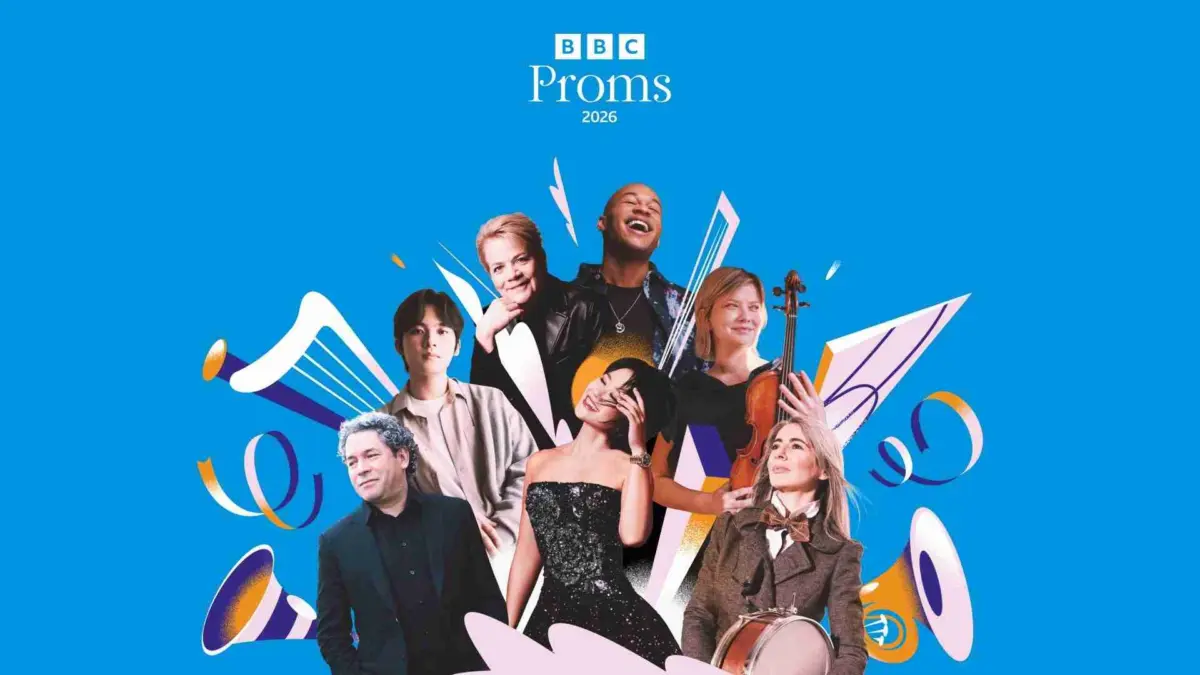
The curtain is set to fall on another extraordinary summer of classical music as the 2026 BBC Proms prepares for its momentous conclusion. On Saturday, 12 September, the historic Royal Albert Hall will host the crown jewel of the British cultural calendar: the Last Night of the Proms. Promising a vibrant blend of classical mastery, contemporary world premieres, and unexpected pop-infused tributes, this year’s finale encapsulates the ambition and evolving identity of the world’s largest classical music festival.
Chief Conductor Sakari Oramo will lead the BBC Symphony Orchestra, the BBC Symphony Chorus, and the BBC Singers in what has traditionally been classical music’s biggest party. Yet, the 2026 iteration is notable not just for its eclectic line-up—which features virtuoso pianist Yuja Wang, acclaimed tenor Nicky Spence, and a star-studded country-pop medley dedicated to the late Dolly Parton—but for the unprecedented cultural footprint the festival has carved out across both physical and digital domains.
Spanning an intensive eight-week season, the 2026 BBC Proms delivered 86 concerts across 74 events at the Royal Albert Hall and 14 venues nationwide. While approximately 300,000 live attendees experienced the magic inside the concert halls, digital engagement figures have shattered previous records. Interim metrics reveal a staggering 1.7 million unique accounts accessing Proms content via BBC Sounds and BBC iPlayer—a 32% year-on-year increase.
As the broadcasting schedule locks in—with live coverage spanning BBC Radio 3, BBC Two, BBC One, and digital streaming platforms—this year’s Last Night stands as both a celebration of musical excellence and a testament to the enduring, modernizing power of public service broadcasting.
Detailed Chronology and Programme: A Night of Contrasts and Commemoration
The musical journey of the 2026 Last Night of the Proms has been meticulously curated to balance time-honored patriotic traditions with bold contemporary commissions and crowd-pleasing crossovers.
The evening kicks off with Bernstein’s exuberant Candide: Overture, setting a high-energy tone before transitioning into the haunting beauty of Foulds’ Keltic Suite (specifically the second movement, "Lament"). Tenor Nicky Spence will then take center stage alongside the BBC Symphony Chorus and BBC Singers to deliver a poignant excerpt from Act I of Dvořák’s Rusalka ("Vidino divná, přecladká").
Following Smetana’s sweeping tone poem Vltava from Má vlast, the audience will be treated to the first of two world premieres commissioned by the BBC: Dithyramb, a powerful new choral-orchestral work by Canadian composer and conductor Samy Moussa.
Virtuosity and Pop Royalty
The first half of the concert reaches an instrumental peak with world-renowned pianist Yuja Wang making her highly anticipated Last Night debut. Wang will perform Samuel Barber’s Pulitzer Prize-winning Piano Concerto, a notoriously demanding piece that requires staggering technical dexterity and emotional depth.
In a departure that is sure to generate widespread discussion, the programme will pivot smoothly from high modernism to country music royalty. Under the banner To Dolly, With Love—arranged by Fiona Brice—an all-star cast will pay tribute to the legendary Dolly Parton. West End star Sheridan Smith will tackle the high-octane rhythms of 9 to 5, soul powerhouse Beverley Knight will deliver a soaring rendition of I Will Always Love You, and acclaimed country-pop duo Ward Thomas will harmonize on the classic Jolene.
Following Gustav Holst’s celestial crowd-pleaser Jupiter, the Bringer of Jollity from The Planets, Yuja Wang returns to the stage for a second time to perform Alexander Tsfasman’s jazzy Suite for Piano and Orchestra.
From World Premieres to Patriotic Tradition
The evening’s second world premiere arrives with Iris of Life by Academy Award-winning British composer Anne Dudley, showcasing the sublime vocal textures of the BBC Singers. Nicky Spence returns to lighten the mood with a medley of British folk tunes arranged by Stuart Calvert (Scotch Snap), followed by a rollicking performance of "Sit Down, You’re Rockin’ the Boat" from Frank Loesser’s Guys and Dolls.
As the clock ticks toward the traditional climax of the evening, the atmosphere inside the Royal Albert Hall will shift into its familiar, flag-waving crescendo. The sequence begins with the Fantasia on British Sea Songs (trad. arr. Henry Wood), followed by Thomas Arne’s stirring Rule, Britannia!, Edward Elgar’s majestic Pomp and Circumstance March No. 1 (featuring Sir Arthur Bliss’s arrangement of Land of Hope and Glory), and Sir Hubert Parry’s Jerusalem (orchestrated by Elgar). The official programme concludes with the national anthem, arranged by Benjamin Britten, before uniting the audience in the traditional communal farewell of Auld Lang Syne (trad. arr. Paul Campbell).
Supporting Context & Metrics: A Record-Breaking Season
While the Last Night captures the public imagination, the broader canvas of the 2026 BBC Proms season tells a remarkable story of accessibility, growth, and digital transformation.
Over the course of eight weeks, the festival presented 86 concerts. While the spiritual home of the Proms remains the Royal Albert Hall—which hosted 72 of these performances—the festival’s footprint extended far beyond South Kensington. Fourteen concerts took place in venues across the United Kingdom, reinforcing the BBC’s commitment to regional engagement and live arts access.
The Digital Renaissance
The most striking narrative of the 2026 season is its unprecedented digital penetration. In an era where traditional linear television audiences for classical music face demographic challenges, the Proms has successfully captured younger and digitally native demographics.
Interim metrics paint a vivid picture of this shift:
- Unique Accounts: 1.7 million accounts accessed Proms content across BBC Sounds and BBC iPlayer between 13 April and 6 September 2026, marking a robust 32% year-on-year increase.
- Engagement Volume: This digital traffic generated an incredible 6.8 million individual plays.
- Consumption Time: Audiences devoted a combined 3.4 million hours to listening and viewing Proms content over the summer.
- Radio 3 Boost: Weekly accounts on BBC Sounds for Radio 3 surged by 10% during the week commencing 17 August 2026—a week highlighted by marquee international residencies from The Met Orchestra, the Oslo Philharmonic, and the Berlin Philharmonic.
This digital-first strategy ensures that the ephemeral magic of live performance is preserved. Audio broadcasts will remain available on BBC Sounds for 30 days post-broadcast, while television and streaming coverage on BBC iPlayer will remain accessible for a full year, creating a vast, on-demand digital archive of contemporary classical performance.
Official Statements
The leadership behind the BBC Proms and BBC Arts has emphasized both the immediate joy of the upcoming finale and the structural triumph of the wider season.
Sam Jackson, Controller of Radio 3 and BBC Proms, reflected on the season’s dual success in live attendance and digital reach:
"This year’s Last Night of the Proms promises to be a joyous celebration, bringing together world-class performers, much-loved repertoire and memorable musical moments. Across eight weeks, audiences have embraced the Proms in record numbers on our broadcast platforms, while around 300,000 people have joined us at the Royal Albert Hall and at venues across the UK. We very much look forward to the centenary of the BBC Proms next year, but for now, we can’t wait to celebrate the end of the 2026 season in style!"
Echoing these sentiments, Suzy Klein, Head of Arts and Classical Music TV, highlighted the unifying power of public service broadcasting:
"The BBC Proms has once again connected audiences across the UK and beyond through an extraordinary summer of live music. We’re incredibly proud of the range and quality of concerts across BBC television and BBC iPlayer, and the Last Night will provide the perfect finale to an unforgettable season. And while the season may be drawing to a close, audiences will be able to enjoy the Proms on BBC iPlayer for a whole year afterwards."
Future Outlook: Looking Ahead to a Century of Proms
As the final notes of Auld Lang Syne fade under a canopy of falling balloons and paper streamers at the Royal Albert Hall, the BBC Proms will not merely close a chapter; it will cross a historic threshold.
The successful completion of the 2026 season lays a formidable foundation for what lies immediately ahead: the centenary of the BBC Proms. Founded in 1895 by Robert Newman and Henry Wood with the democratic mission of making classical music accessible to the widest possible public ("Prom" derived from "promenade concerts," where audience members could walk about for a cheaper ticket), the festival has endured world wars, societal shifts, and technological revolutions.
The metrics of 2026 prove that the appetite for orchestral music, choral masterworks, and daring cross-genre collaborations remains undiminished. By successfully marrying its historic traditions—such as the patriotic fervor of the Last Night—with cutting-edge digital accessibility and boundary-pushing commissions from composers like Anne Dudley and Samy Moussa, the Proms has proven its relevance in the 21st century.
As planners turn their eyes toward the upcoming 100th anniversary celebrations, the legacy of the 2026 season will be remembered as the moment the festival not only reclaimed its physical audiences in full force but triumphantly unlocked the digital age.
Broadcast Information Summary
For those tuning in from home, the Last Night of the Proms is broadcast across multiple platforms:
- Radio & Audio: Live on BBC Radio 3 and BBC Sounds starting at 7.10pm, presented by Petroc Trelawny and Georgia Mann.
- Television & Streaming (Part 1): Live on BBC Two and BBC iPlayer from 7.10pm.
- Television & Streaming (The Finale): Live on BBC One and BBC iPlayer from 9.00pm.
- Presenters: Katie Derham and Nick Mohammed hosting on television/iPlayer, with backstage reporting by Tina Daheley.
Catch-up viewing and listening will remain available on BBC iPlayer for one year and on BBC Sounds for 30 days.