
Executive Overview
The New National Theatre Tokyo (NNTT) has officially announced the crown jewel of its upcoming theatrical slate, confirming that its 2026–27 opera season will commence with a high-profile, internationally celebrated new production of Gioachino Rossini’s sparkling opera buffa, Il Turco in Italia ("The Turk in Italy"). Opening on October 2, 2026, and running through October 12, 2026, this high-stakes artistic venture is a major tripartite co-production developed alongside two of Europe’s premier lyric houses: Spain’s Teatro Real Madrid and France’s Opéra National de Lyon.
Known for his brilliantly kinetic, visually striking, and intellectually sharp staging concepts, visionary French stage director Laurent Pelly helms the production. While Pelly provides the foundational artistic blueprint, Christian Räth steps in for the Tokyo run as revival director, ensuring that the intricate choreography, frenetic stage business, and nuanced comedic timing translate seamlessly to Japanese audiences.
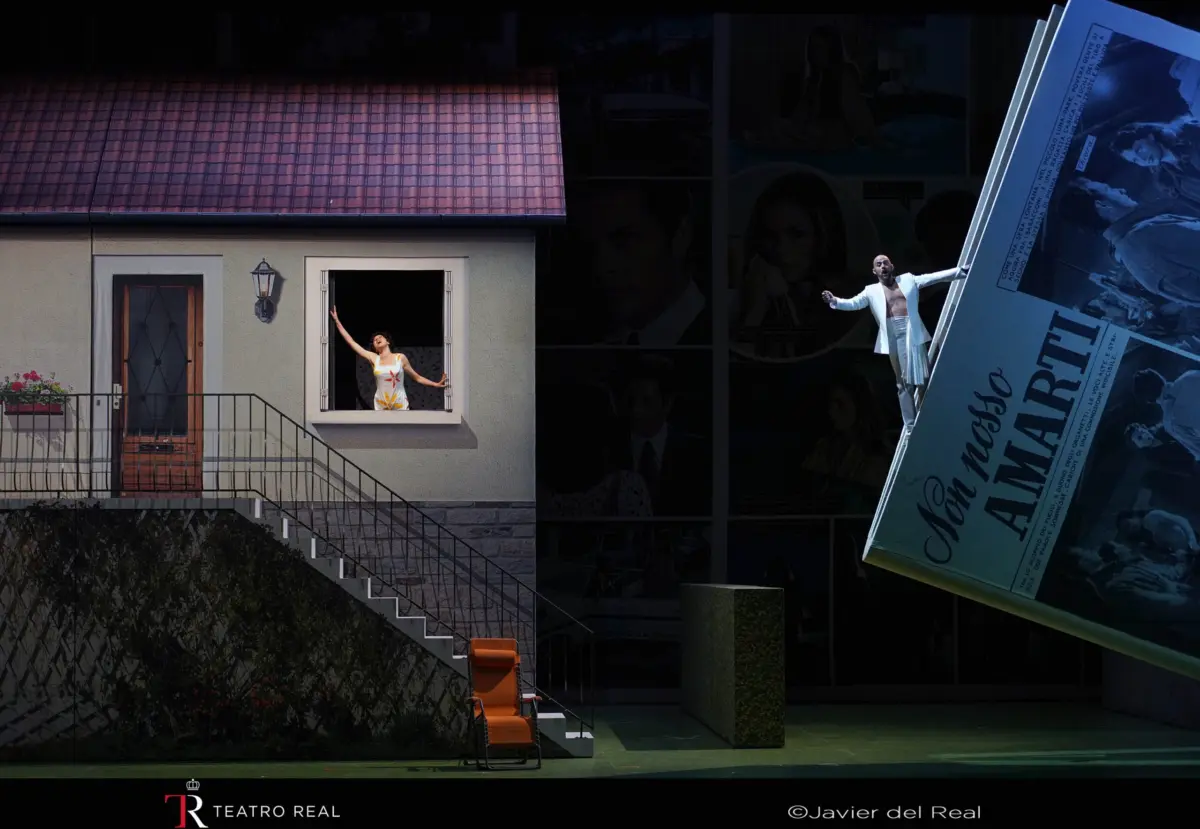
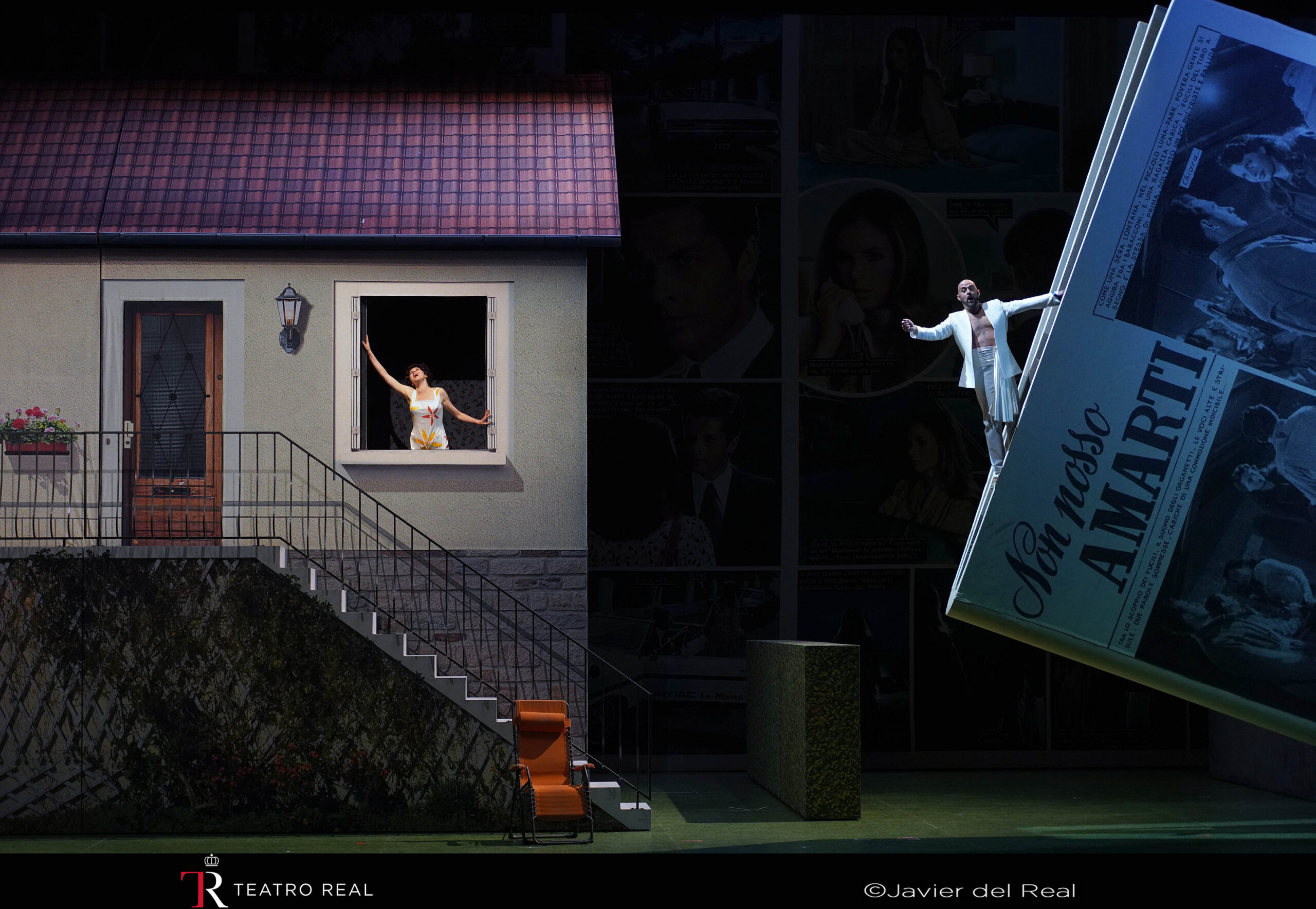
The production arrives in Tokyo riding a wave of formidable international acclaim. When the staging originally premiered during the 2022–23 season at Teatro Real de Madrid, it was universally praised by critics and audiences alike. Renowned industry publications, including OperaWire, lauded the staging as "a funny, amusing and frenzy production trademark of stage director Laurent Pelly," highlighting his rare ability to marry traditional commedia dell’arte tropes with a thoroughly modern, hyper-kinetic theatrical aesthetic.
Behind the proscenium, the artistic forces are equally formidable. Italian maestro Alessandro Bonato is set to make his highly anticipated NNTT debut, leading the world-class Tokyo Philharmonic Orchestra and the New National Theatre Chorus through Rossini’s notoriously glittering, rhythmically complex score. Meanwhile, the cast features a masterclass in international vocal casting, led by rising Italian soprano Claudia Muschio as the capricious Fiorilla, alongside Spanish tenor Alejandro Baliñas Vieites as the titular Turk (Selim), and veteran Italian bass-baritone Paolo Bordogna as the beleaguered husband, Don Geronio. Rounding out the principal ensemble are Ruzil Gatin, Bruno Taddia, Yuka Tajima, and Yasuhiro Yamamoto.
This production is not merely an entertaining night at the opera; it represents a major strategic milestone for the NNTT. As Japanese institutions increasingly seek to bridge the gap between local audiences and the pinnacle of European theatrical innovation, this co-production serves as a testament to the globalized nature of contemporary opera production. By importing a world-class European staging and pairing it with a stellar international cast and a rising Italian conductor, the NNTT is signaling its intent to remain a vital hub for world-class lyric art in the Asia-Pacific region.
Detailed Chronology & Production Genesis
To understand the weight of the NNTT’s upcoming premiere, one must trace the evolutionary arc of Laurent Pelly’s vision for Il Turco in Italia. Commissioned as a major European collaborative effort, the production first materialized on the stage of Madrid’s Teatro Real during its 2022–23 season. Teatro Real, celebrated for its adventurous programming and deep commitment to revitalizing the standard repertoire through visionary stage directions, provided the ideal crucible for Pelly’s concepts.
Pelly, who has built a legendary reputation for his work on comic masterpieces—most notably his definitive stagings of Donizetti’s La Fille du Régiment and Offenbach’s Les Contes d’Hoffmann—approached Rossini’s rarely performed gem with a characteristic blend of anarchic energy and structural precision. Il Turco in Italia, with a libretto by Felice Romani, is structurally meta-theatrical, featuring a frustrated poet (Prosdocimo) desperately searching for a plot for a new comedy, only to find the chaotic love lives of Neapolitan locals providing all the material he could ever need. Pelly capitalized on this self-aware theatricality, turning the stage into a living, breathing cartoon-like world where props, sets, and characters collide in a dizzying ballet of comic timing.
Following its triumphant run in Madrid, the production transitioned to the Opéra National de Lyon, further cementing its status as a benchmark staging of the 21st-century opera canon. The upcoming transfer to the New National Theatre Tokyo represents the third leg of this international journey.
Logistically, mounting a production of this scale across multiple continents requires meticulous planning. Christian Räth, an internationally acclaimed director in his own right who has worked extensively across Europe and the Americas, assumes the role of revival director for the Tokyo engagement. Räth is tasked with reassembling Pelly’s intricate puzzle within the acoustic and spatial parameters of the NNTT’s main opera house. Rehearsals are slated to commence in late summer 2026, bringing together the international guest artists and the Japanese resident chorus and orchestra for an intensive period of musical and dramatic integration.
The performance schedule for the Tokyo run is tightly compressed, designed to maximize theatrical momentum across its ten-day span:
- October 2, 2026 (Opening Night): World-premiere performance of the Tokyo run, preceded by traditional opening-night gala festivities.
- October 5 & 7, 2026: Mid-week performances focusing on deep vocal and orchestral refinement.
- October 10, 2026: Weekend matinee and evening performances catering to broader regional audiences.
- October 12, 2026: Grand closing night performance, marking the official conclusion of the production’s Japanese engagement.
Supporting Context & Metrics: The Musical and Artistic Landscape
Gioachino Rossini composed Il Turco in Italia in 1814 for La Scala in Milan, immediately following the sensational triumph of L’italiana in Algeri. While the earlier opera inverted the classic Mediterranean captivity trope by having an Italian woman rescue her lover from an Algerian bey, Il Turco reverses the dynamic: a Turkish prince arrives on the shores of Italy and becomes infatuated with a capricious, freedom-loving Neapolitan married woman.
Despite containing some of Rossini’s most inspired, sparkling music—including the breathtaking Act I buffa dialogue and the glittering duets between Fiorilla and Selim—the opera initially received a lukewarm reception in Milan, partly because audiences felt it was too similar to L’italiana. However, over the past half-century, the work has enjoyed a major critical reevaluation. Today, it is recognized as a masterclass in psychological comedy, offering a sharper, more cynical look at marital boredom, societal hypocrisy, and artistic creation than many of its contemporaries.
The Vocal and Orchestral Ensemble
Bringing this demanding score to life requires a specific breed of singing actor—artists who possess not only the agile coloratura required by Rossini’s vertical vocal writing, but also the physical dexterity to survive Laurent Pelly’s demanding physical comedy.
- Claudia Muschio (Fiorilla): As the whimsical, flirtatious heroine who treats men like fashion accessories before discovering the true weight of her actions, soprano Claudia Muschio steps into a role that demands supreme technical command. Muschio has been making waves across European opera houses for her crystalline tone and sparkling stage presence, making her ideal for a character who must be simultaneously exasperating and utterly charming.
- Alejandro Baliñas Vieites (Selim): The Turkish prince who wanders onto the Italian coast looking for a change of pace is portrayed by bass-baritone Alejandro Baliñas Vieites. Known for his resonant lower register and commanding stage presence, Vieites brings the requisite vocal authority and bemused exoticism to the role.
- Paolo Bordogna (Don Geronio): No opera buffa is complete without a long-suffering, older husband, and Paolo Bordogna is widely regarded as one of the definitive exponents of this fach today. With a career spanning the globe’s top houses—including Milan’s La Scala, the Vienna State Opera, and the Metropolitan Opera—Bordogna’s portrayal of the exasperated Geronio promises to be a masterclass in buffo artistry.
- The Supporting Cast: The ensemble is rounded out by tenor Ruzil Gatin as Narciso (Fiorilla’s hopelessly devoted and slightly ridiculous poet-suitor), baritone Bruno Taddia as the put-upon poet-dramatist Prosdocimo, alongside local and visiting talents Yuka Tajima and Yasuhiro Yamamoto.
- Alessandro Bonato (Conductor): Making his NNTT debut, maestro Alessandro Bonato stands at the vanguard of a new generation of Italian conductors. Having earned critical praise for his kinetic, historically informed readings of the bel canto repertoire, Bonato’s collaboration with the Tokyo Philharmonic Orchestra—an ensemble renowned for its flexibility and precision—is anticipated to be one of the musical highlights of the Tokyo season.
Official Statements & Industry Perspectives
The announcement of the 2026–27 season opener has generated significant commentary from cultural leaders and artistic administrators across the international opera community.
While the NNTT has historically balanced standard repertory staples with daring contemporary works, the choice to open a season with a high-concept European co-production of a less frequently performed Rossini title underscores a deliberate institutional evolution. Speaking on background, administrative sources within the NNTT emphasize that the theatre is keen to position itself not merely as a passive consumer of imported art, but as an active partner in the global creation of high-level theatrical property.
"The modern opera house cannot exist in a vacuum," notes a prominent Tokyo-based classical music critic. "By locking in co-productions with institutions like Teatro Real and Opéra National de Lyon, the New National Theatre Tokyo ensures that its audiences have immediate access to the bleeding edge of European stage direction. Laurent Pelly’s work is not safe, decorative opera; it is intellectually rigorous, visually arresting theatre that challenges how we view 19th-century masterpieces."
International reviewers who witnessed the Madrid run have been particularly eager to share insights regarding what Tokyo audiences can expect. As OperaWire noted in its review of the 2022–23 premiere, Pelly’s production strips away the dusty cobwebs of traditional 19th-century staging conventions, replacing them with a vibrant, graphic-novel aesthetic:
"Pelly constructs a world where the boundaries between reality and fiction—echoing the character of the poet Prosdocimo—are constantly porous. The staging moves with an electric, almost dizzying velocity, matching Rossini’s crescendo-laden musical architecture note for note. It is funny, yes, but it is a sharp, sophisticated humor that respects the intelligence of the audience."
Furthermore, the involvement of young Italian maestro Alessandro Bonato has been hailed as a major coup for the NNTT. In statements regarding his upcoming debut, institutional representatives have emphasized Bonato’s deep affinity for the bel canto style, noting his ability to balance rhythmic drive with the lyrical expansiveness that defines Rossini’s slow movements.
Future Outlook: The Strategic Impact on the NNTT and the Regional Opera Market
As the New National Theatre Tokyo looks ahead to the autumn of 2026, the implications of mounting Il Turco in Italia extend far beyond a successful ten-day run. In the broader context of the international performing arts economy, co-productions of this magnitude represent the future of institutional sustainability and artistic exchange.
In an era where mounting entirely new productions from scratch is fiscally prohibitive for individual houses, multi-institutional partnerships allow opera companies to pool resources while sharing the financial and logistical burdens. For the NNTT, participating in a tripartite agreement with Madrid and Lyon provides direct access to world-class set designs, costume inventories, and directorial concepts that would otherwise be economically unfeasible to produce exclusively for a single Japanese run.
Moreover, this production serves a vital pedagogical and cultural function within Japan. By bringing in international artists of the caliber of Claudia Muschio, Alejandro Baliñas Vieites, and Alessandro Bonato, and pairing them with local stalwarts like the Tokyo Philharmonic Orchestra and the New National Theatre Chorus, the production fosters a dynamic cross-pollination of artistic techniques. Japanese singers, instrumentalists, and technical staff working behind the scenes gain invaluable hands-on experience participating in a top-tier European touring production, elevating the domestic standard of operatic execution.
Looking forward, the success of the 2026–27 season opener will likely set the tone for the NNTT’s strategic trajectory into the late 2020s. If Pelly’s Il Turco in Italia resonates with Tokyo audiences the way it did in Madrid and Lyon, it will validate the theatre’s ongoing pivot toward bold, internationally collaborative, and visually adventurous programming.
Ultimately, when the curtain rises on October 2, 2026, it will mark more than just the beginning of a new theatrical season. It will represent a moment where Tokyo takes center stage in the global conversation about how classic opera can be reinterpreted, revitalized, and hurled into the modern era with unbridled joy and artistic rigor.