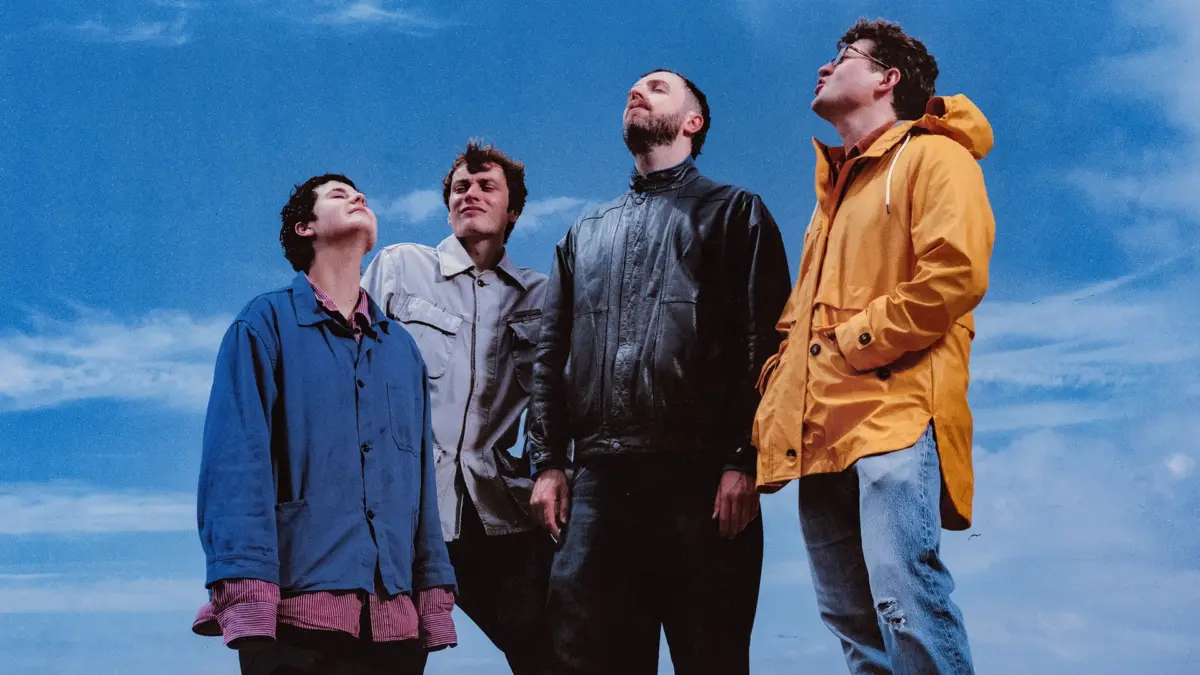

Executive Overview
Electronic-infused alternative outfit Porij has officially broken their post-debut silence with the release of their latest single, "Valley Kudu." Marking the band’s first fresh material since the highly praised rollout of their 2024 full-length debut, Teething, the track signals a compelling pivot in the group’s trajectory. Known for blending club-ready rhythms with emotive songwriting, Porij has characterized "Valley Kudu" as the most unreservedly "indie-leaning" composition of their career to date.
The single arrives at a high-stakes juncture for the band, currently carving out a reputation for electrifying live performances across the United Kingdom as direct support for indie-rock heavyweights Sports Team. This high-profile touring schedule is slated to culminate in a headline-grade homecoming performance at EartH (Evolution Arts Hackney) in London on October 3.
Beyond its musical classification, "Valley Kudu" operates on dual emotional frequencies. Instrumentally, it evokes a sun-drenched, cinematic nostalgia—a "coming-of-age" sonic landscape defined by vibrant guitars and galloping tempos. Lyrically, however, it anchors itself in deep vulnerability, born from a period of profound personal crisis involving vocalist and principal songwriter Scout Moore’s partner experiencing severe illness.
This comprehensive report examines the genesis of "Valley Kudu", contextualizes Porij’s rapid rise within the contemporary British alternative ecosystem, analyzes the stylistic departure from Teething, and outlines the strategic trajectory of a band navigating the delicate balance between commercial momentum and emotional authenticity.
Detailed Chronology: From Teething to the Suffolk Countryside
To understand the weight of "Valley Kudu", one must first retrace the momentum established by Porij throughout 2024. The band—comprising Scout Moore, James Howard, Nathan Carroll, and Jacob Maguire—spent the early months of the year establishing themselves as one of the most innovative crossover acts in the UK underground. Their debut album, Teething, was celebrated by critics for its seamless synthesis of house, UK garage, and organic instrumentation. It positioned Porij as standard-bearers for a generation of music consumers who reject rigid genre boundaries, seamlessly sliding from sweaty warehouse raves to intimate acoustic settings.
However, the relentless cycle of touring, promotional duties, and festival appearances left the quartet creatively fatigued. Seeking a reset, the band made a deliberate tactical retreat.
The Suffolk Retreat: Isolation and Incubation
In an effort to disconnect from the hyper-saturated environment of modern urban music production, Porij booked a remote studio nestled in the sprawling, tranquil landscapes of the Suffolk countryside. The objective was singular: begin drafting the foundational blueprints for their sophomore album cycle.
Isolated from external industry pressures, the band stripped away the heavy electronic sequencing that dominated Teething, opting instead for a raw, room-centric setup. It was during this rural residency that "Valley Kudu" was born.
- Phase 1: The Genesis Voice Note. The track’s inception was entirely unglamorous. It began as a spontaneous voice memo captured on a mobile phone—a rudimentary melodic sketch that relied solely on basic chord progressions and vocal humming.
- Phase 2: The Organic Translation. When translated to the live room in Suffolk, the voice memo rapidly mutated. Fueled by the physical interplay of bass, drums, and electric guitars, the song evolved far beyond Porij’s typical electronic comfort zone.
- Phase 3: The Completion. Returning from Suffolk with the bones of a track that felt startlingly direct, the band finalized the production in structured studio sessions, capturing an unvarnished energy that stands apart from their earlier recorded output.
The resulting composition is, by the band’s own admission, the closest they have ever ventured into traditional indie guitar music. Yet, it retains the intricate rhythmic pulse that has always defined the Porij aesthetic.
Supporting Context & Metrics: The Anatomy of a Transition
The release of "Valley Kudu" is not merely an isolated creative exercise; it represents a calculated evolution within the broader landscape of the UK alternative music scene.
Genre Fluidity in Post-Pandemic British Music
Over the past half-decade, British guitar music has undergone a massive renaissance characterized by cross-pollination. Bands like Squid, Black Country, New Road, and Foals have proved that audiences no longer demand ideological purity from guitar bands. Porij has capitalized on this shifting paradigm. By injecting dancefloor urgency into structurally sound indie arrangements, they occupy a rare commercial and critical sweet spot.
"Valley Kudu" pushes this philosophy even further by prioritizing the guitar as the primary emotional vehicle. Sonically, the track has been described by the band as embodying a distinct "coming-of-age" quality—a deliberate nod to nostalgic cinematography, sunlit road trips, and carefree youth.
| Metric / Attribute | Teething Era (2024) | "Valley Kudu" Era (Late 2024/2025) |
|---|---|---|
| Primary Sonic Palette | Electronic, UK Garage, House, Synth-Pop | Indie Guitar Rock, Organic Percussion, Nostalgic Pop |
| Writing Environment | Urban studios, fragmented digital exchanges | Immersive rural isolation (Suffolk countryside) |
| Lyrical Themes | Introspection, social observation, nightlife | Crisis, resilience, temporal healing, devotion |
| Live Integration | Club-focused sets, festival electronic stages | Arena/Theater support runs (Sports Team tour) |
The Sports Team Tour and Live Circuit Momentum
Porij’s current touring commitments have served as the ultimate testing ground for "Valley Kudu". Hitting the road alongside Sports Team—a band renowned for their chaotic, high-octane indie-rock shows—has forced Porij to lean into their heavier, more immediate instrumentation.
This live partnership has expanded their demographic reach, exposing their electronic-leaning catalog to traditional rock audiences while challenging the band to execute their new, guitar-driven material with visceral intensity. The tour’s trajectory through regional UK venues will culminate on October 3 at EartH, a multi-disciplinary arts center in Hackney, London, widely recognized as a litmus test for contemporary buzz bands looking to cement capital-city dominance.
Official Statements: Deconstructing the Artistry
To fully appreciate the depth of "Valley Kudu", one must examine the direct testimony of the creators. In official statements accompanying the release, Porij opened up about the stark dichotomy between the song’s euphoric musical arrangement and its harrowing lyrical genesis.
On the Sonic Transformation and The Title
Reflecting on their time in Suffolk and the unexpected direction of the track, the band shared:
"We’d been away for a while and booked a studio in the middle of the Suffolk countryside with the aim of writing the next album. It started out as a voice note and ended up as close to indie guitar music that Porij can get. Sonically it feels quite coming of age, think frolicking about with your pals and montage moments."
Despite the sunlit imagery evoked by the music, the band revealed that the title itself carries an affectionate, tongue-in-cheek backstory rooted in their deep admiration for electronic pioneers Mount Kimbie:
"The title is a bit tongue in cheek as it’s an homage to Mount Kimbie, a band we adore."
On Lyrical Vulnerability and Trauma
Beneath the glittering surface of shimmering guitars and driving tempos lies a deeply personal narrative. Scout Moore addressed the emotional weight carried within the verses, outlining a period of intense private trial:
"Lyrically it deals with a really difficult time in my life where my partner was very unwell. Ultimately it’s about not losing hope as you shift through the seasons and trusting that time will heal. It was fun playing around with the darker and lighter textures both instrumentally and lyrically and trying to strike the right balance."
This juxtaposition—pairing devastating emotional trauma with an uplifting, life-affirming musical backdrop—demonstrates a remarkable level of artistic maturity. Rather than leaning into self-pity or creating a brooding, downbeat ballad, Porij channeled the pain into a forward-momentum anthem about endurance. It mirrors the cyclical nature of grief and recovery, matching the changing of literal seasons with an internal shift toward optimism.
Future Outlook: What "Valley Kudu" Signals for Porij’s Sophomore Era
As the final chords of their tour with Sports Team ring out at EartH in London on October 3, Porij will officially close the chapter on their Teething era and pivot entirely toward the rollout of their anticipated second album.
"Valley Kudu" functions as a critical bridge. It reassures existing fans who fell in love with their groove-laden rhythm section that the band’s core identity remains intact, while simultaneously throwing open the doors for a wider audience traditionally aligned with alternative guitar music.
Key Strategic Implications for the Band’s Future:
- Commercial Crossover Potential: By successfully bridging the gap between club-adjacent electronic music and accessible indie rock, Porij is positioning themselves for major festival main-stage placements in the coming years.
- Lyrical Evolution: The embrace of raw, unvarnished personal storytelling signals that Moore and the band are willing to pull back the curtain even further on subsequent releases, establishing them as vital chroniclers of modern young adulthood.
- Producer Independence: The success of the Suffolk retreat suggests that future material may increasingly favor organic, isolated writing camps over traditional urban studio churning, fostering a distinct, cohesive sonic identity for LP2.
In summary, "Valley Kudu" is not just a welcome return from a band finding their footing after an acclaimed debut; it is a declaration of artistic fearlessness. By refusing to rest on the electronic formulas that brought them initial acclaim, Porij has proven that their creative palette is vast, resilient, and continuously expanding. As the industry watches their next moves unfold, "Valley Kudu" stands as a shining testament to the power of transformation—proving that even in the darkest seasons of life, music can still sound like freedom.