
Executive Overview
The global phenomenon of K-Pop has long outgrown physical borders, language barriers, and traditional radio airwaves. As the genre continues its relentless march toward universal cultural saturation, streaming platforms are fiercely competing to become the definitive home for its passionate, hyper-engaged fanbases. In the vanguard of this movement stands Spotify.
In a strategic push throughout the latter half of 2026, Spotify has orchestrated a triad of high-profile video podcast launches designed to pull international fans deeper into the cultural, linguistic, and creative machinery of K-Pop. Marked by a rapid-fire succession of releases—culminating in the recent announcement of Flip the Language featuring boy band KickFlip—Spotify is signaling a definitive shift in how audio platforms engage with superfans.
This is no longer merely about hosting tracks on curated playlists. Spotify is actively building an immersive, multi-format content ecosystem. By bridging the gap between music consumption and lifestyle content, the streaming giant is embedding itself directly into the K-Pop infrastructure. Through bespoke video podcasts, strategic label partnerships with powerhouses like JYP Entertainment, and high-visibility physical activations like the return of Spotify House in Seoul, the company is transforming passive listeners into deeply educated, culturally fluent community members.
Detailed Chronology: The Summer and Fall of K-Pop Content
Spotify’s recent content offensive did not happen in a vacuum. It represents the culmination of a meticulously planned rollout designed to capture global attention during the industry’s peak engagement windows.
August 2026: The JYP Entertainment Partnership and the Genesis of 3racha Sessions
The foundation for Spotify’s current podcast strategy was laid in late summer. In August 2026, the streaming platform announced a landmark partnership with major South Korean entertainment agency JYP Entertainment. The cornerstone of this alliance was the creation of the JYP Podcast series, a video-first initiative designed to give global audiences an intimate window into the creative output of the agency’s marquee roster.
Rather than sticking to standard interview formats, the inaugural episodes focused squarely on the artistic and technical backbone of K-Pop: songwriting and production. Kicking off with 3racha—the acclaimed in-house production unit of global sensation Stray Kids, comprising members Bang Chan, Changbin, and Han—the show peeled back the layers of modern track creation. For millions of international fans who consume K-Pop lyrics translated from Korean, hearing producers dissect chord progressions, beat arrangements, and conceptual narratives provided a profound new layer of connection.
September 2026: Cultural Immersion with Journey with Johnny
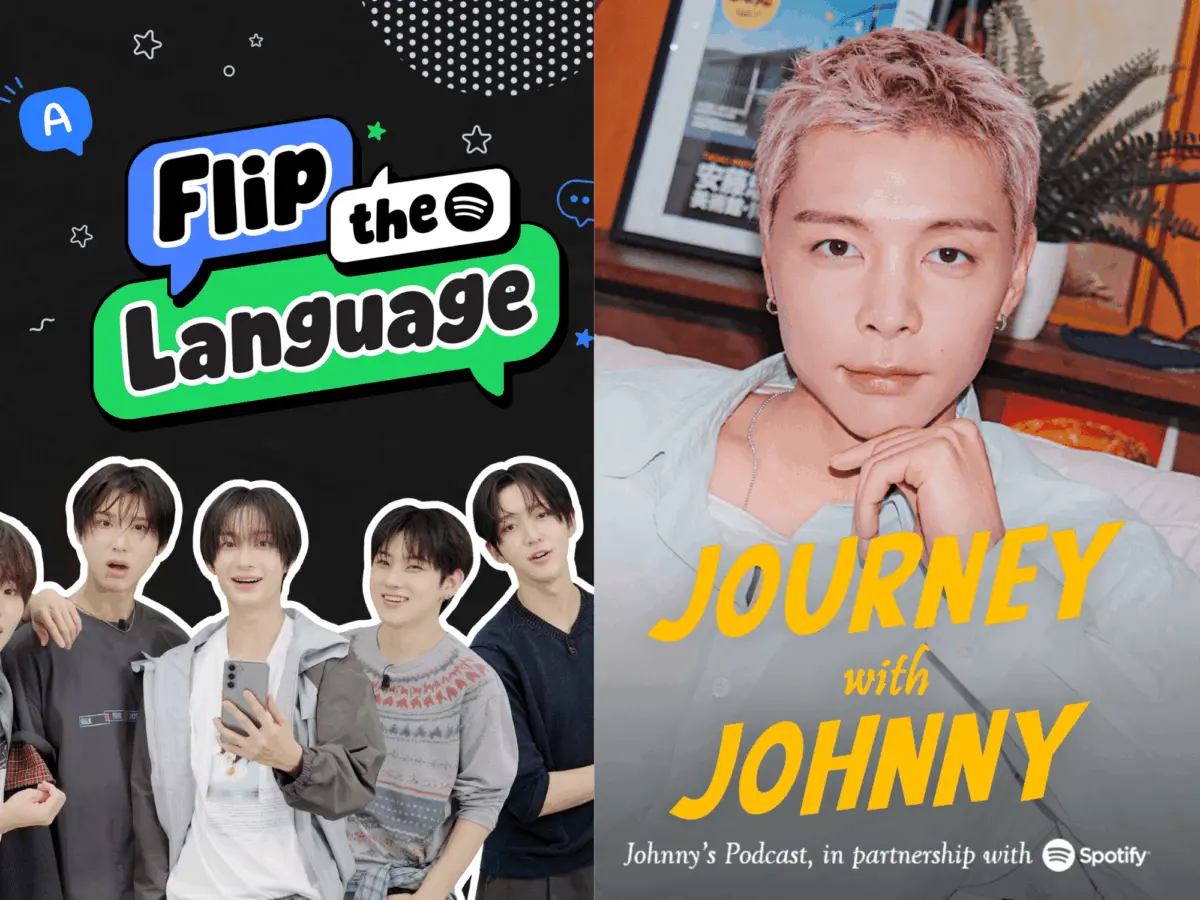
Building on the creative mechanics explored in the JYP collaboration, Spotify pivoted toward cultural context just weeks later. September saw the introduction of Journey with Johnny, a video podcast anchored by Johnny, a prominent member of the K-Pop collective NCT.
While 3racha looked at the mixing board, Johnny looked at the culture. Journey with Johnny was engineered to bridge the geographical and cultural divide between South Korea and the rest of the world. The series dove headfirst into everyday Korean customs, societal nuances, social etiquettes, and the distinct subcultures that shape the daily lives of idols. For a global audience often criticized for consuming K-Pop in a cultural vacuum, Johnny’s show offered an authoritative yet accessible masterclass in Korean heritage, guided by an artist who navigates both Western and Eastern spheres seamlessly.
October 2026: Cracking the Code with Flip the Language
True to the journalistic adage that "three things make a trend," Spotify cemented its K-Pop podcast strategy in October 2026 with the announcement of Flip the Language. Produced in collaboration with JYP Entertainment, the four-episode video series features members of the rising boy band KickFlip.
Designed specifically for English- and Japanese-speaking fanbases, Flip the Language tackles one of the most stubborn barriers in global fandom: linguistic nuance. The show focuses explicitly on Korean slang, internet memes, and colloquial everyday phrases that defy literal translation. By explaining why certain phrases carry specific emotional or cultural weights, the podcast equips international fans with the linguistic tools to understand not just the lyrics of their favorite tracks, but the underlying internet culture shared by domestic fans in Seoul.
Supporting Context & Metrics: The K-Pop Economy and Spotify’s Ecosystem
To understand why Spotify is investing heavily in video podcasts, physical pop-ups, and exclusive performance content, one must examine the unique economics of the K-Pop fandom model.
The Superfan Phenomenon
Unlike traditional Western pop demographics, which often rely on casual listeners and algorithmic radio streams, the K-Pop ecosystem is driven by "superfans." These are consumers who do not merely listen to music; they buy physical albums featuring multiple collectible photocards, attend global tours, organize streaming parties, and consume hours of supplementary reality television and vlogs produced by management agencies.

Spotify recognizes that to capture and retain these high-value users, the platform must offer more than an MP3 player. It must act as a cultural hub. By providing exclusive video content—such as the Le Sserafim performance-video exclusives launched earlier this year—Spotify shifts user behavior from background listening to active, destination-based engagement.
Physical-to-Digital Synergy
Spotify’s audio-visual strategy is mirrored in its physical activations. Over the past year, the company has orchestrated temporary physical pop-up installations tied to major K-Pop acts including Stray Kids, Aespa, and Enhypen. These experiential spaces allow fans to step inside the world of their idols, take photos, and purchase exclusive merchandise.
The crown jewel of this physical strategy is Spotify House in Seoul. Returning for a high-profile, four-day run last month in the trendy Seongsu-dong district, the activation served as a physical embodiment of the brand’s digital playlists. It featured live performances, artist-curated spaces, and networking events for the local and international music industry. By anchoring digital releases like Flip the Language and Journey with Johnny alongside physical spaces like Spotify House, the company is creating a 360-degree brand experience that competitors struggle to replicate.
Official Statements and Industry Perspective
While platform algorithms and streaming metrics tell one story, the strategic intent behind Spotify’s K-Pop push is rooted in a deliberate effort to localize global music discovery. Industry analysts note that audio platforms are increasingly transforming into video destinations to capture higher ad revenues and retain user attention spans that are continually being pulled toward YouTube and TikTok.
Although specific viewership projections for Flip the Language and the JYP Podcast series have not been publicly disclosed by Spotify’s corporate communications team, company leadership has repeatedly emphasized the importance of hyper-serving niche, highly passionate communities.
"K-Pop is truly a global phenomenon, but its power lies in the deep, personal connections fans feel with the artists and the culture from which it originates," noted a digital media strategist familiar with streaming platform dynamics. "By investing in educational and cultural video podcasts, Spotify is moving up the value chain. They aren’t just distributing the music anymore; they are teaching people how to appreciate it on a native level."
Furthermore, partnerships with powerhouse agencies like JYP Entertainment represent a significant coup for Spotify in the fiercely competitive Asian streaming market, where local platforms like Melon, Genie, and Flo have historically held immense sway over domestic consumption. By collaborating directly with the agencies that train and manage K-Pop’s biggest stars, Spotify secures exclusive intellectual property that draws international users into its ecosystem while burnishing its credentials within the Seoul music industry.
Future Outlook: What Lies Ahead for Audio Platforms and K-Pop
As we look toward the remainder of 2026 and into 2027, the success of Spotify’s K-Pop video podcast slate will likely set a new benchmark for how audio-first companies approach genre-specific curation.
The Convergence of Audio and Video
The traditional boundaries separating audio streaming services from video platforms are dissolving rapidly. Spotify’s aggressive push into video podcasts—spanning music creation (3racha), cultural literacy (Journey with Johnny), and linguistic translation (Flip the Language)—proves that the company views video not as an add-on, but as a core retention tool. Expect to see Spotify expand this model beyond K-Pop, applying localized cultural and linguistic video formats to other exploding international genres like Afrobeats and Latin urban music.
Deepening Agency Relations
The blueprint established with JYP Entertainment is expected to serve as a template for future agreements with other dominant South Korean agencies, such as HYBE, SM Entertainment, and YG Entertainment. As these agencies look for reliable conduits to western and Asian-Pacific markets outside of Korea, streaming platforms that can offer multi-format promotional packages—combining audio distribution, video podcasts, curated playlists, and physical pop-up activations—will win the lion’s share of exclusive content partnerships.
Empowering the Global Fanbase
Ultimately, the proliferation of shows like Flip the Language points to a maturation of the international K-Pop audience. No longer content with enjoying the music purely through a barrier of translation software or fan-subtitled YouTube videos, modern fans demand authenticity, context, and direct access. By systematically dismantling the language and cultural barriers that once kept K-Pop confined to domestic markets, Spotify is ensuring that its platform remains the indispensable companion for the global Korean Wave for years to come.