
Executive Overview
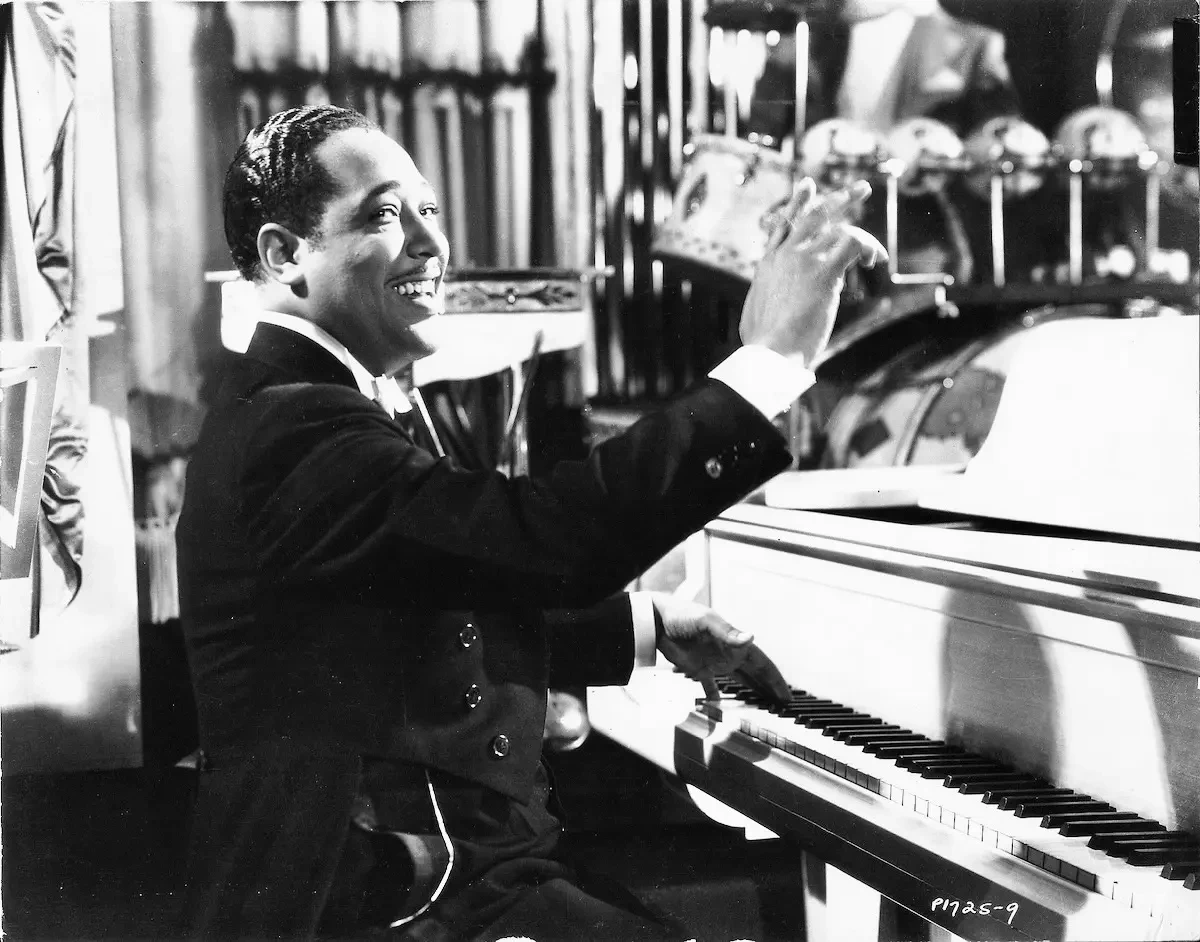
The landscape of jazz history is continuously shaped by retrospective archival preservation, innovative contemporary interpretations, and the ongoing curation of master recordings. In recent months, the jazz community has experienced a convergence of these three vital cultural pillars. At the foundation sits a sweeping historical deep-dive: Duke Ellington: Jungle Nights In Harlem 1927-1931, a two-volume archival release from Frémeaux & Associés that captures the legendary bandleader forging his signature style during his foundational residency at the Cotton Club.
Bridging the gap between historical reverence and contemporary innovation is young British pianist Nicco Widdowson. Winner of The Musicians’ Company 2024 Tina May Jazz Award, Widdowson has made waves with his debut trio recording, On Fools And Clowns (Trash City Records). By fusing classic Harlem stride piano with the post-bop idioms of Thelonious Monk, Bud Powell, and McCoy Tyner, Widdowson offers a hybrid artistic statement that honors the past while interrogating it through a modern lens.
Finally, the archival sector faces both celebration and critical scrutiny with Chesky Records’ vinyl reissue of alto saxophone titan Phil Woods’ 1988 masterwork, Here’s To My Lady. Featuring the exquisite accompaniment of the Tommy Flanagan Trio, the album showcases Woods at the height of his powers. However, the release also highlights the ongoing tensions within the audiophile reissue market regarding truncated tracklists, shifting recording dates, and sparse liner notes.
Together, these three releases offer a comprehensive window into the past, present, and ongoing preservation of jazz artistry. This report examines their technical merits, historical contexts, and artistic implications across an executive overview, detailed chronology, supporting metrics, official statements, and future outlook.
Detailed Chronology
To fully understand the current state of jazz releases, one must trace the developmental arc from the late 1920s to the modern era. The evolution of the music can be chronologically mapped across these three pivotal epochs:
Phase 1: The Cotton Club Crucible (1927–1931)
- The Residency Begins: Duke Ellington and his orchestra secure their legendary residency at Harlem’s segregated Cotton Club. In this crucible, Ellington transforms the venue into his private atelier, mastering his craft and developing his revolutionary "Jungle Music."
- Milestone Recordings: Between 1927 and 1931, Ellington cuts definitive sides such as Creole Love Call, Black And Tan Fantasy, The Mooche, and East St Louis Toodle-Oo. Innovating continuously, Ellington incorporates the blues—a genre secondary in his native Washington, D.C.—into his complex compositions. Vocalist Adelaide Hall introduces wordless, gravelly recitations on The Blues I Love To Sing, while Johnny Hodges makes his recorded saxophone debut on Yellow Dog Blues.
- Cultural Impact: Ellington emerges as a towering figure of the Harlem Renaissance, bridging high art with the vibrant flapper culture of the 1920s and 1930s.
Phase 2: The Modernist Synthesis and Mid-Career Masterworks (1956–1988)
- 1956: Phil Woods marries Chan Parker, the widow of bebop pioneer Charlie Parker, forging a personal and musical lineage that lasts 17 years and deeply informs his stylistic vocabulary.
- 1988: At age 57, Phil Woods enters the studio to record Here’s To My Lady. Backed by the peerless Tommy Flanagan Trio (featuring bassist George Mraz and drummer Kenny Washington), Woods delivers a masterclass in alto saxophone and clarinet expression, channeling the spirits of Benny Carter and Charlie Parker without losing his distinct artistic identity.
Phase 3: The Contemporary Era (2024–2026)
- 2024: Leeds-born and Leeds Conservatoire graduate Nicco Widdowson captures attention across the British jazz scene, ultimately winning The Musicians’ Company 2024 Tina May Jazz Award. Relocating to London, he forms the Nicco Widdowson Trio.
- March 6–7, 2026: The Nicco Widdowson Trio enters Lightship 95 in England to record On Fools And Clowns, blending classic Harlem stride with avant-garde and post-bop sensibilities alongside bassist Joe MacLaren and drummers Jordan Hadfield and Charlie Hutchinson.
- Recent Archival & Audiophile Releases: Frémeaux & Associés issues Duke Ellington: Jungle Nights In Harlem 1927-1931, featuring newly remastered sound and dual-language essays, while Chesky Records unleashes its controversial vinyl pressing of Woods’ Here’s To My Lady.
Supporting Context & Metrics
Evaluating these releases requires looking at track distributions, technical configurations, and the critical frameworks established by jazz scholars.
Archival Scope: Duke Ellington’s Two-Volume Set
The Frémeaux & Associés release (FA5934) is meticulously structured to give listeners both canonical masterpieces and overlooked deep cuts.
- CD1 (56:25): Comprises 16 tracks, opening with Creole Love Call and closing with The Dicty Glide. It heavily features cornerstone personnel such as trumpeter Bubber Miley, clarinetist Barney Bigard, baritone saxophonist Harry Carney, and trombonist Tricky Sam Nanton.
- CD2 (55:26): Features 17 tracks, including Cotton Club Stomp, Jungle Jamboree, Wall Street Wail, and Echoes Of The Jungle.
- Sonic and Critical Enhancements: Featuring essays by Tony Baldwin and Alain Pailler, the collection highlights Ellington’s structural innovations—specifically the alternation of major and minor scales within single compositions, shifting fluidly between martial authority and elegiac melancholy.
Modern Dexterity: Nicco Widdowson’s Hybrid Session
Recorded at the unique floating studio Lightship 95, Widdowson’s On Fools And Clowns (Trash City Records, 44:35 total runtime) presents a fascinating statistical and stylistic breakdown:
- Tracklist Highlights: Angela Scott, Are You There Lion?, Duke’s Blues, Nicotine Fingers, Who Shot Pinetop?, And Also Her Mother, Today I’ve Been Feelin’ Blue, You Can Fire Me In The Morning, On Fools And Clowns, To Those I Love, and Maple Leaf Rag.
- Lineup: Nicco Widdowson (Piano); Joe MacLaren (Bass); Jordan Hadfield, Charlie Hutchinson (Drums).
- Stylistic Fusion: Widdowson explicitly draws lines between early pioneers (Fats Waller, Art Tatum, James P. Johnson, Willie "The Lion" Smith) and mid-century masters (Thelonious Monk, Bud Powell, Jaki Byard, McCoy Tyner, and Duke Ellington).
Audiophile Discrepancies: Phil Woods’ Here’s To My Lady
The Chesky Records vinyl reissue (EVLP121) highlights the ongoing challenges of modern reissuing standards:
- The Cut Tracklist: While the original 1988 release contained 13 tracks, this audiophile LP features only eight, divided into two sides:
- Side 1 (19:05): Superette, Johnny Hodges, Another Love Song, Canadian Sunset.
- Side 2 (20:46): Charles Christopher, Visions Of Gaudi, Here’s To My Lady, Just Us.
- Omissions: Notable exclusions include Blue And Sentimental, Origins, Waltz For Debby, and alternate takes of the title track and Just Us. Furthermore, liner notes provided by Scott Yanow omit complete documentation regarding Woods’ transitions between alto saxophone and clarinet across tracks like Canadian Sunset and Charles Christopher.
Official Statements & Critical Commentary
The cultural weight of these recordings is best understood through the words of the artists, biographers, and critics who have shaped their reception.
Reflecting on the transformative environment of the Cotton Club, biographer A. H. Lawrence noted in Duke Ellington And His World (2001):
"The Cotton Club became Duke’s atelier, where he mastered his craft and forged his unique style."
Discussing the distinctive texture of Ellington’s orchestral writing, annotators Tony Baldwin and Alain Pailler observed that Ellington’s "Jungle Music" featured:
"Major and minor scales alternating within a given piece, shifting between martial and elegiac moods."
Nicco Widdowson has offered candid insight into his motivations for resurrecting early jazz idioms in the 21st century, stating to interviewers:
"I try to embrace my weaknesses and turn them into strengths… For all intents and purposes I’m rehashing a really old style, but it feels fresh to me because I do it as authentically to myself as I can."
Widdowson further emphasized the emotional duality required in jazz performance—a philosophy he traces directly back to Ellington:
"Ellington, a personal hero of mine, was master of this. I try to have fun [but] I’m deeply serious about the music I make… It’s harsh and gritty and the ultimate example of flawless black artistry at a time when the voices of black artists weren’t taken seriously."
In assessing Phil Woods’ legacy, veteran jazz critic Dan Morgenstern famously observed that Woods was:
"Not ashamed of his ancestry. He is never strident, never maudlin, and always tasteful."
Future Outlook
As the jazz genre looks toward the remainder of the decade, the dissemination and reception of its recorded history face several distinct trajectories:
- Refining Archival Standards: Releases like Frémeaux & Associés’ Ellington collection prove that there is an unflagging global market for meticulously remastered historical audio accompanied by rigorous bilingual scholarship. However, labels operating in the audiophile vinyl space—such as Chesky Records—will face increasing scrutiny from collectors demanding complete tracklists, transparent recording data, and comprehensive liner notes rather than truncated, sonically hyped pressings.
- The Rise of Post-Modern Traditionalism: Artists like Nicco Widdowson represent a promising new wave of musicians who refuse to treat historical jazz styles as museum artifacts. By blending Harlem stride with post-bop modal complexities, young artists are demonstrating that foundational techniques can be aggressively repurposed to address modern aesthetic sensibilities.
- Pedagogical and Cultural Integration: As institutions continue to digitize and re-evaluate the jazz canon, the separation between "early jazz," "swing," "bebop," and "contemporary avant-garde" is increasingly viewed as artificial. The continuous rediscovery of figures like Ellington, Woods, and the stride masters ensures that jazz education will remain rooted in a holistic understanding of lineage, technical mastery, and socio-cultural context.
Ultimately, whether through digitally cleaned 1927 shellac pressings, a contemporary London-based trio exploring the ghosts of Fats Waller and Thelonious Monk, or high-end vinyl reissues of late-20th-century masters, the spirit of jazz remains vibrantly alive, perpetually reflecting upon its storied past while boldly engineering its future.