
Executive Overview
When Noël Coward’s razor-sharp, bubbly 1925 drawing-room comedy Fallen Angels landed at Broadway’s Todd Haimes Theatre this past spring, it quickly became the toast of New York City. Earning rave reviews, playing to strictly sold-out houses, and capturing four prestigious Tony Award nominations—including dual nods for its powerhouse lead actresses, Rose Byrne and Kelli O’Hara—the production was an undeniable cultural phenomenon.
However, theatrical runs are inherently fleeting. For the legion of theatergoers who missed out on the hottest ticket of the season, or for those who simply crave a second glass of champagne with Julia and Jane, a thrilling second act is on the horizon. Thanks to a partnership with Trafalgar Releasing, Fallen Angels was meticulously captured live on stage. Beginning October 22, this sparkling theatrical film will light up movie theater screens nationwide.
Far from a mere archival recording, this live-capture cinematic release elevates Coward’s work, leveraging the intimacy of the camera lens to offer audiences a front-row seat to an astonishing masterclass in physical comedy, sartorial splendor, and timeless marital satire. For both longtime devotees of the theater and curious cinematic audiences, the silver-screen transfer of Fallen Angels represents an unmissable cultural event this fall.
Detailed Chronology: From 1925 Scandal to 2025 Broadway Triumph
To fully appreciate the scope of the current cinematic release, one must trace the winding, occasionally scandalous history of Fallen Angels and its recent journey to the Great White Way.
The 1925 Genesis
When Noël Coward first penned Fallen Angels, it shocked polite British society. In 1925, critics branded the play "disgusting, vile, and obscene." The source of the outrage? Coward dared to portray female characters—specifically, two married upper-class women—as human beings possessing active sexual desires, a wandering eye, and an appetite for independence outside the strict confines of domesticity. The plot centers on longtime friends Julia and Jane, whose comfortable, if monotonous, marriages are thrown into complete disarray when they learn that their shared former lover, the exotic Maurice Duclos, is arriving in town while their husbands are away.
The Spring 2025 Broadway Run
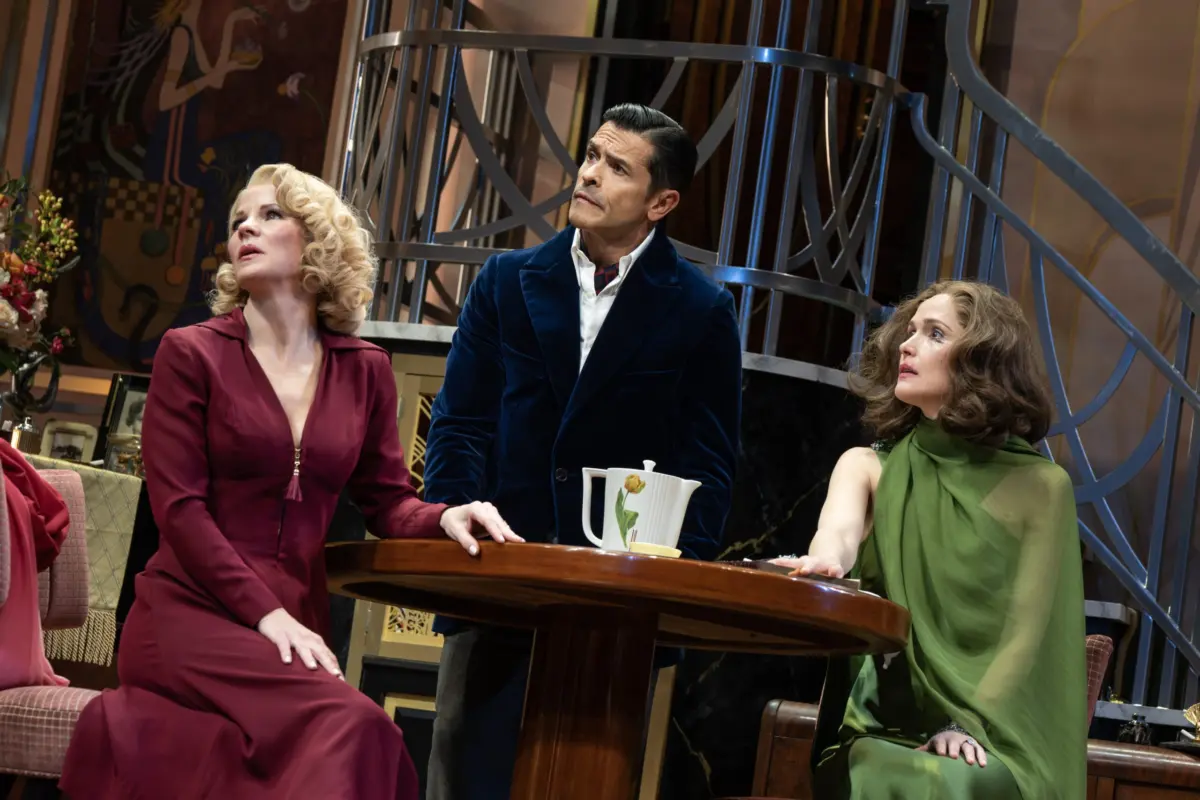
Fast-forward a century later to the Todd Haimes Theatre. Under the brilliant guidance of its creative team, the revival cast Kelli O’Hara as Julia and Rose Byrne as Jane. The production was immediately recognized as a triumph of tone, striking a delicate balance between Coward’s trademark high-society sophistication and unbridled, door-slamming farce. The production dominated spring theater conversations, earning universal critical acclaim, packing the house nightly, and securing four Tony Award nominations.
The Live-Stage Capture & October 2025 Cinematic Release
Recognizing the ephemeral nature of Broadway and the massive demand for tickets that went unfulfilled, producers partnered with Trafalgar Releasing to immortalize the production. Filmed live in front of an ecstatic Broadway audience, the resulting cinematic feature preserves every drop of champagne, every tumbled chaise lounge, and every subtle facial twitch. Hitting movie theaters on October 22, this release marks a significant milestone in how major theatrical works are preserved, distributed, and experienced by a global audience.
Supporting Context & Metrics: Five Reasons to Experience Fallen Angels in Cinemas
Playbill editors, having previewed the finished cinematic feature, note that the transition from stage to screen actually enhances Coward’s comedy. Here are the five foundational pillars that make the Fallen Angels live stage film a mandatory cinematic outing.
1. The Hilarious, High-Stakes Physical Comedy
Kelli O’Hara and Rose Byrne throw themselves into the physical demands of the script with infectious, unbridled joy. O’Hara, a celebrated musical theater royalty known for her soaring soprano, shocks and delights audiences by displaying world-class physical comedy chops. Throughout the play’s champagne-soaked benders, O’Hara falls off chairs, slides down them, and, in one breathtaking display of raw athleticism, tumbles head-first over a chaise lounge—a feat that leaves viewers marveling at how she executes it multiple times a week without injury.
Meanwhile, Byrne reminds the world why she remains a cinematic comedy powerhouse. Few actors can weaponize a tangled wig or a drooping scarf quite like Byrne. Her performance echoes the razor-sharp comedic timing that made audiences fall in love with her in Bridesmaids. The onstage chemistry reaches such a fever pitch that sharp-eyed viewers will catch minor moments where the actors nearly break character, heights of mirth that are captured brilliantly by the camera’s close-up lenses.
2. A Masterclass from a Committed Supporting Ensemble
While Byrne and O’Hara anchor the ship, the supporting cast is a veritable Avengers assemble of comedy veterans:
- Christopher Fitzgerald (Spamalot, Company) brings hysterical, endearing warmth to Jane’s oblivious husband, Willy.
- Aasif Mandvi (comedian and former Daily Show correspondent) plays Julia’s delightfully clueless husband, Fred.
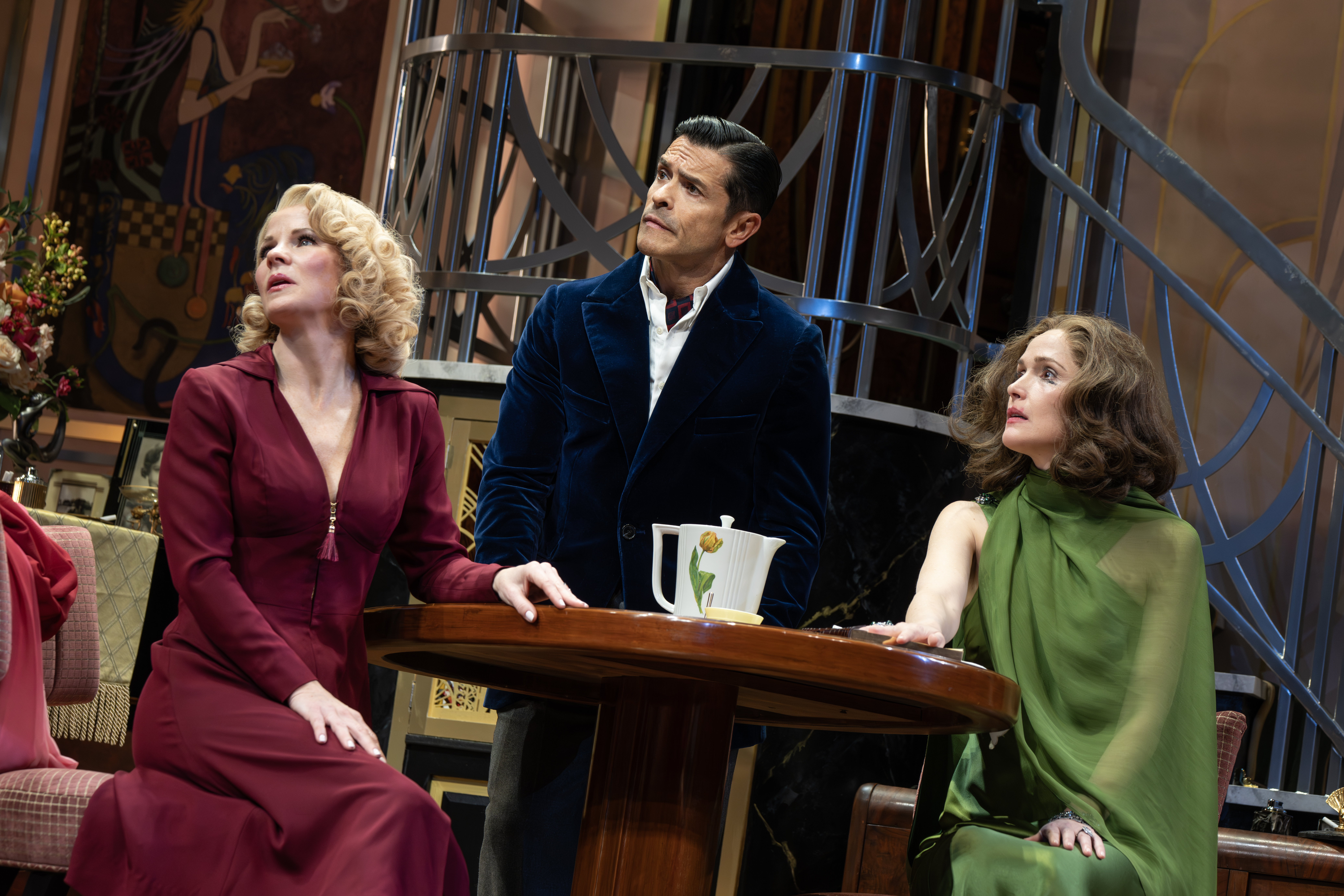
- Mark Consuelos steps into the role of the dreamy, Continental former lover, Maurice Duclos.
- Tracee Chimo (Bad Jews, Noises Off) steals entire scenes as the outspoken maid, Saunders. On the big screen, Saunders’ subtle side-eyes and knowing glances reveal a character who is always three steps ahead of her employers.
3. A Visual Feast: Tony-Winning Costumes and Set Design
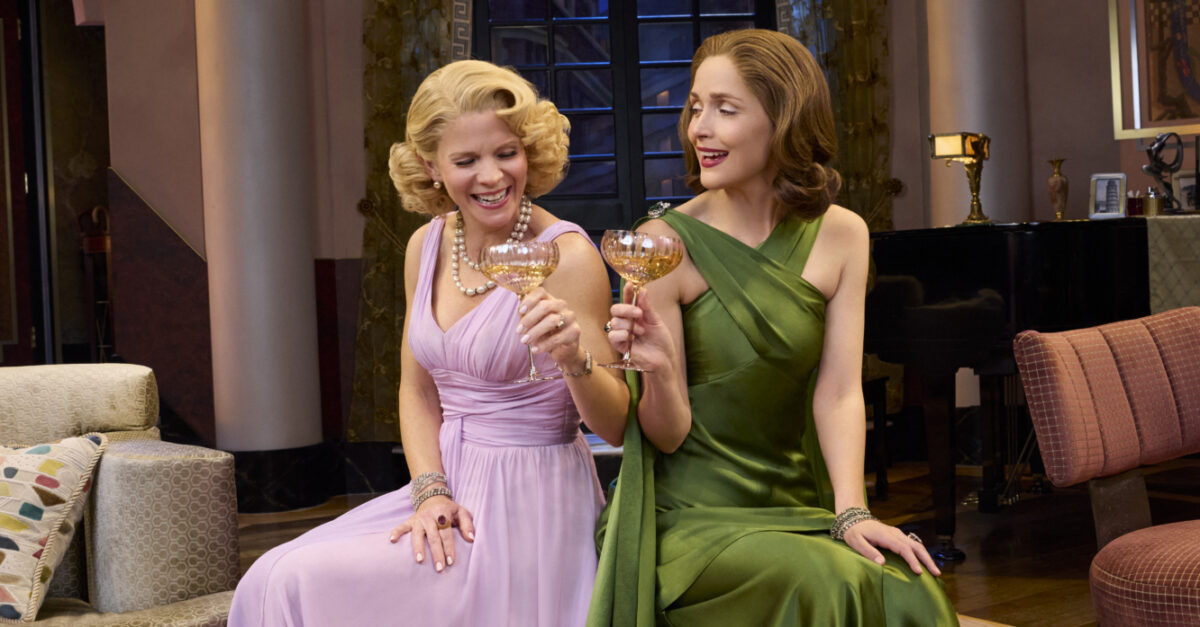
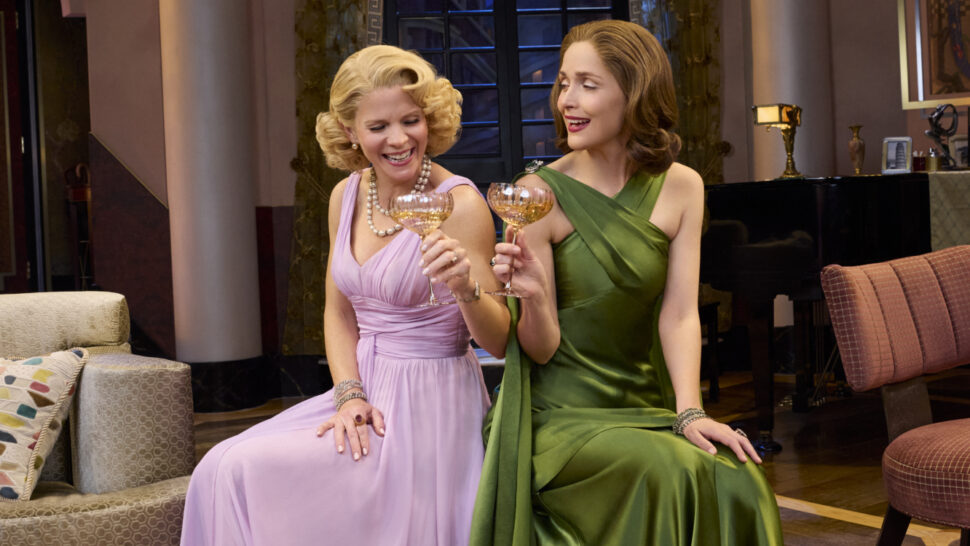
Jeff Mahshie’s Tony Award-winning costume design is nothing short of a visual feast for aficionados of 1930s elegance. Fans of The Great Gatsby or Downton Abbey will find themselves mesmerized by the period-accurate luxury. From O’Hara’s swoon-worthy floral dressing gown to Byrne’s liquid-green silk evening dress held together by emerald clasps, every garment moves with effortless grace. Furthermore, Byrne’s wig in the production’s second half operates as a character unto itself; its tangled, gravity-defying glory is rendered infinitely funnier when viewed through the magnified lens of a cinema camera.
4. Ravishing Intimacy and Auditory Details
In a traditional Broadway house, patrons seated in the mezzanine or balcony often miss micro-expressions, subtle reactions, and whispered asides. The cinematic capture of Fallen Angels completely dismantles this barrier. Viewers are granted an intimate, first-row perspective inside Julia’s lavish Art Deco apartment. The immersive sound design and close-range framing allow audiences to hear the authentic clink of glass champagne coupes and witness the fleeting, mischievous grins of actors momentarily caught breaking character.
5. Startlingly Modern Observations About Marriage
While written a century ago, the themes within Fallen Angels feel remarkably contemporary. The play’s original 1925 critics missed the point, condemning its frank exploration of female sexuality and marital restlessness. Today, audiences view the text through a profoundly modern lens. When O’Hara’s Julia turns to her husband and confesses, "I love you too, you’re a darling, but we’re not in love," the line resonates deeply. It is an astute, ahead-of-its-time critique of long-term domesticity where partners risk drifting into comfortable roommates. Coward’s brilliant satire makes Fallen Angels a must-see for modern couples, proving that the best antidote to marital complacency is a chilled bottle of champagne, a plate of oysters, and a shared laugh at human folly.
Official Statements & Industry Perspectives
The journey of Fallen Angels from a limited Broadway engagement to an international cinematic release has sparked widespread discussion among its creators regarding the nature of theatrical longevity and gender dynamics on stage.
Speaking on the play’s scandalous history and enduring relevance, star Rose Byrne noted in promotional interviews that the script’s fearlessness remains its greatest asset. "It’s astonishing how progressive Coward was," Byrne remarked. "These women aren’t punished for wanting agency, for wanting excitement, or for looking outside their marriages when the spark dies. They are allowed to be messy, ridiculous, and unapologetically human."
Kelli O’Hara echoed these sentiments, expressing a desire to extend the production’s life far beyond New York. In interviews with Playbill, O’Hara half-jokingly floated the idea of taking the chaotic duo on an international tour, citing the boundless joy she found in exploring physical comedy alongside Byrne.
Industry analysts view the partnership with Trafalgar Releasing as part of a growing, highly successful paradigm shift within the entertainment industry. By bridging the gap between live theater and cinema, producers are unlocking new revenue streams while democratizing access to high-art theatrical productions that would otherwise remain confined to major metropolitan hubs.
Future Outlook: The Expanding Horizon of Live Stage Cinema
The widespread theatrical distribution of Fallen Angels points toward an increasingly promising future for live-capture performing arts. As production companies recognize the immense appetite for premium Broadway content outside of New York City, the cinematic release of stage productions is rapidly evolving from a niche archival project into a major box-office sector.
For Trafalgar Releasing and the creative minds behind Fallen Angels, the October 22 premiere serves as a bellwether for future adaptations. If the ecstatic audience reactions from the Broadway run translate successfully to multiplexes nationwide—as industry insiders heavily anticipate—it could pave the way for more classic comedies and modern masterpieces to receive the silver-screen treatment.
Ultimately, Fallen Angels proves that great art is timeless. By capturing lightning in a bottle—or rather, champagne in a coupe—this cinematic release ensures that the comedic genius of Noël Coward, combined with the once-in-a-generation star power of Rose Byrne and Kelli O’Hara, will continue to intoxicate and delight audiences for generations to come.