
Executive Overview
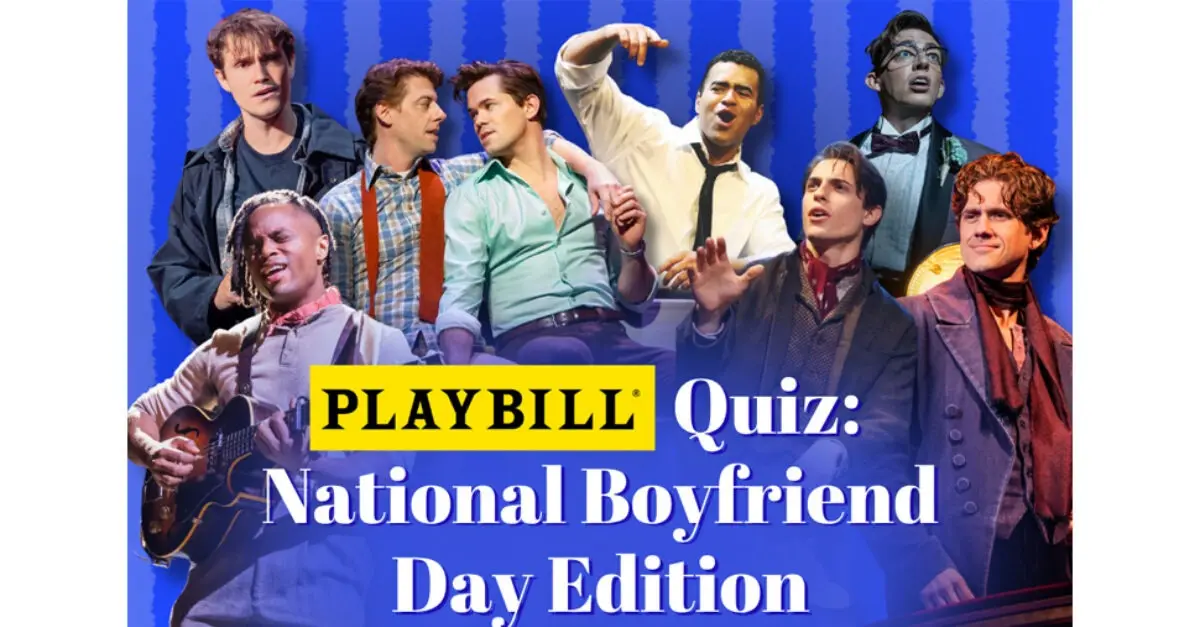
In the grand tapestry of musical theatre, few archetypes command the stage quite like the romantic lead. Whether he is a tragic poet yearning from a garret, a rebellious greaser navigating the tumultuous waters of high school politics, or a charming prince navigating fairy-tale complexities, the Broadway boyfriend has long been a cultural touchstone. On October 3, 2026, coinciding with the nationwide celebration of National Boyfriend Day, Playbill unveiled a specialized interactive feature designed to test the depth of theatrical scholarship among fans. Authored by Meg Masseron, Meredith Taylor Ammons, and Jeffrey Vizcaíno, the release of the quiz "How well do you know the lover boys of Broadway?" transcends a simple social media holiday stunt. Instead, it serves as an insightful prompt to examine how romantic male archetypes have evolved over a century of American musical theatre.
From the operetta-driven heroes of the early 20th century to the psychologically complex, flawed, and deeply human partners of contemporary productions, the evolution of the Broadway romantic lead reflects broader shifts in societal expectations of masculinity, partnership, and emotional vulnerability. This comprehensive report investigates the historical evolution of Broadway lover boys, explores the mechanics and cultural impact of Playbill’s latest interactive challenge, analyzes the metrics of theatrical fandom, and contextualizes how these characters continue to shape the emotional landscape of millions of theatergoers worldwide.
Detailed Chronology: The Evolution of the Broadway Boyfriend
To fully appreciate the scope of modern theatrical trivia and the characters celebrated on National Boyfriend Day, one must trace the historical lineage of the romantic lead on the New York stage. The perception of what makes an ideal stage partner has undergone profound transformations, moving through distinct eras defined by shifting musical styles, dramatic conventions, and cultural mores.
The Golden Age: Chivalry, Tenors, and Sweeping Melodies (1940s–1950s)
The Golden Age of Broadway established the blueprint for the modern musical, and with it, the archetype of the quintessential romantic lead. Characters such as Billy Bigelow in Carousel (1945), Lt. Joseph Cable in South Pacific (1949), and Sky Masterson in Guys and Dolls (1950) introduced audiences to men driven by intense passion, internal conflict, and the transformative power of love.
During this era, the Broadway boyfriend was frequently defined by his vocal prowess—often possessing a soaring baritone or tenor range capable of delivering anthems like "If I Loved You" or "Sue Me." However, these characters were rarely one-dimensional paragons of virtue. Billy Bigelow, for instance, introduced a gritty realism to the romantic lead, grappling with toxic masculinity and redemption long before contemporary psychological realism became the theatrical norm. Nevertheless, the prevailing narrative structure ensured that these men ultimately transformed for the sake of their partners, cementing the trope of love as a redemptive force.
The Rock and Concept Era: Rebellion, Trauma, and Anti-Heroes (1960s–1980s)
As cultural revolutions swept the globe in the 1960s and 1970s, the pristine, wholesome hero of the Golden Age gave way to something far more raw. The advent of rock musicals and concept-driven shows introduced the anti-hero boyfriend—a figure often defined by his alienation, socio-economic struggles, or emotional unavailability.
Consider Claude in Hair (1968) or the complex dynamics found in Stephen Sondheim’s groundbreaking explorations of modern relationships, such as Company (1970). The romantic focus shifted away from fairy-tale resolutions toward the messy, complicated realities of commitment. By the 1980s, the mega-musical era brought sweeping, tragic romances. Figures like Marius Pontmercy in Les Misérables (1987) or the Phantom in The Phantom of the Opera (1988) offered contrasting visions of devotion: the former representing youthful, idealistic, revolutionary love, and the latter exploring the dark, obsessive boundaries of unrequited passion. These characters expanded the emotional vocabulary of the Broadway boyfriend, proving that audiences were hungry for narratives that explored the shadows of human attachment.
The Contemporary Era: Authenticity, Diversity, and Deconstruction (1990s–Present)
The contemporary Broadway landscape has fundamentally redefined the lover boy. Today’s characters are characterized by emotional intelligence, vulnerability, intersectional representation, and a departure from toxic tropes.
Shows like Rent (1996) presented a mosaic of modern male partners—from Mark Cohen to Collins and Angel—who redefined domesticity and devotion in the face of the AIDS crisis. In the 21st century, mega-hits like Hamilton (2015), Hadestown (2019), Dear Evan Hansen (2016), and The Outsiders (2024) have continued to diversify the landscape. Orpheus in Hadestown exemplifies a shift toward the sensitive, art-driven, steadfast partner whose love is literal enough to challenge the underworld. Meanwhile, contemporary jukebox musicals and new dramatic works frequently interrogate traditional masculinity, presenting male leads who communicate openly, process trauma, and champion their partners’ autonomy.
Supporting Context & Metrics: The Mechanics of Fandom and Digital Engagement
The October 3, 2026 release of the Playbill lover boy quiz taps into a robust ecosystem of digital engagement, theatrical fandom, and data-driven cultural curation. Understanding why this specific piece of content resonates requires examining the metrics of how modern audiences interact with theatrical history.
The Psychology of Theatrical Fandom
Theatergoers possess a unique psychological connection to the art form. Unlike cinema, where performances are preserved permanently on film, theatre is ephemeral; it exists only in the shared space of the auditorium between the live performer and the audience. This ephemeral nature intensifies emotional investment. When an actor breathes life into a character night after night, the audience forms a parasocial and deeply emotional bond with that character’s journey.
Fictional characters from Broadway musicals frequently function as touchstones for personal identity, romantic ideals, and emotional healing. National Boyfriend Day provides a culturally sanctioned excuse for fans to publicly declare their allegiance to these characters. Playbill’s quiz capitalizes on this phenomenon by transforming passive appreciation into an active, gamified experience.
Digital Analytics and Interactive Journalism
In the contemporary media landscape, traditional news delivery has been augmented by interactive content that drives user retention and community building. Playbill’s editorial strategy frequently incorporates quizzes, galleries, and archival deep-dives to bridge the gap between historical theatrical scholarship and casual fandom.
- User Retention Metrics: Interactive quizzes traditionally yield significantly higher average session durations compared to standard editorial articles, as users pause to read, recall, and cross-reference information.
- Social Sharing Coefficient: Content themed around identity ("Which Broadway character are you?") or knowledge-testing ("How well do you know…") naturally incentivizes peer-to-peer sharing across platforms like X (formerly Twitter), Instagram, and TikTok.
- Archival Integration: By embedding quizzes within their broader news and category structures, publications like Playbill successfully drive traffic back to their extensive historical databases, ensuring that classic theatrical works remain relevant to younger generations of digital-native fans.
Official Statements and Editorial Insights
The creation of the National Boyfriend Day quiz was a collaborative editorial effort led by Meg Masseron, Meredith Taylor Ammons, and Jeffrey Vizcaíno. While the quiz itself relies on playful engagement and vague, evocative descriptions designed to challenge even the most seasoned theatre aficionado, the underlying philosophy reflects a deep reverence for the craft of character writing in musical theatre.
In discussing the launch of the feature, the editorial team emphasized the inclusive nature of modern theatrical fandom. As noted in the introductory text published by Playbill:
"It’s National Boyfriend Day, and whether you have a real-life, Broadway-loving boyfriend to celebrate, or your heart belongs to a fictional character from a musical, we’ve got a special quiz to pay tribute to the most beloved lover boys of the theatre."
This dual-track acknowledgment—validating both real-world partnerships forged through a shared love of the arts and the enduring emotional bonds fans share with fictional characters—highlights a nuanced understanding of contemporary consumer culture. Editorial contributor Meredith Ammons, whose photography and visual design frequently accompany these features, noted in behind-the-scenes production notes that curating the visual gallery required balancing iconic, instantly recognizable leading men with more niche, cult-classic characters to ensure a genuine test of expertise.
Furthermore, the editorial framing deliberately avoids reducing these characters to mere heartthrobs. Instead, the clues embedded within the image gallery challenge participants to recall narrative stakes, dramatic turning points, and character arcs. Recognizing a Broadway lover boy based on a vague description requires remembering not just a catchy song, but the emotional architecture of the show itself—whether it is a moment of sacrifice, a declaration of loyalty, or a journey of personal redemption.
Future Outlook: The Next Generation of Stage Romances
As the Broadway industry continues to evolve in the post-pandemic landscape, the portrayal of romance, partnership, and masculinity on stage is undergoing further transformation. Looking toward the future, several distinct trends are poised to shape how audiences perceive and celebrate the "Broadway boyfriend."
1. Deconstruction of Traditional Gender Roles
The rigid boundaries that once defined theatrical archetypes are dissolving. As casting practices become more inclusive and gender-blind or gender-conscious casting becomes standard, the very definition of a "boyfriend" or romantic lead is expanding. Future iterations of theatrical quizzes will likely feature characters whose gender expressions, sexual orientations, and relationship dynamics break historical binaries, reflecting the diverse reality of contemporary audiences.
2. The Rise of Mental Health Awareness in Narrative Arcs
Modern storytelling increasingly prioritizes emotional literacy. Where past eras might have romanticized possessiveness, jealousy, or emotional unavailability as signs of intense passion, contemporary musicals—and the audiences evaluating them—are far more discerning. The next generation of Broadway lover boys are defined by their capacity for active listening, emotional regulation, and mutual respect. Future theatrical analyses will undoubtedly track how these healthier relational models influence real-world cultural norms.
3. Gamification and Immersive Fan Communities
The success of interactive features like Playbill’s National Boyfriend Day quiz points toward a future where digital engagement and live theatrical performance are inextricably linked. Augmented reality (AR), virtual reality (VR), and advanced interactive digital archives will likely allow fans to engage with theatrical history in unprecedented ways. Imagine future quizzes that utilize spatial computing or interactive video archives to test not just factual recall, but emotional immersion in classic scenes.
Conclusion
Playbill’s October 3, 2026 quiz celebrating the lover boys of Broadway is much more than a holiday novelty. It is a mirror reflecting how theatrical fandom interacts with history, character development, and cultural memory. By charting the journey from the sweeping, operatic tenors of the Golden Age to the nuanced, emotionally intelligent partners of today, the feature honors the artists and writers who have spent a century capturing the complexities of the human heart on the New York stage. As long as stories continue to be told under the glow of the Great White Way, the archetype of the Broadway romantic lead will continue to adapt, endure, and capture our collective imagination.