
Executive Overview
The contemporary jazz landscape continues to thrive on the delicate tension between historical reverence and restless innovation. In an era where genre boundaries are constantly tested, two recent releases from European artists offer a compelling masterclass in how to honor the idioms of the past while injecting fresh, contemporary vitality into the art form.
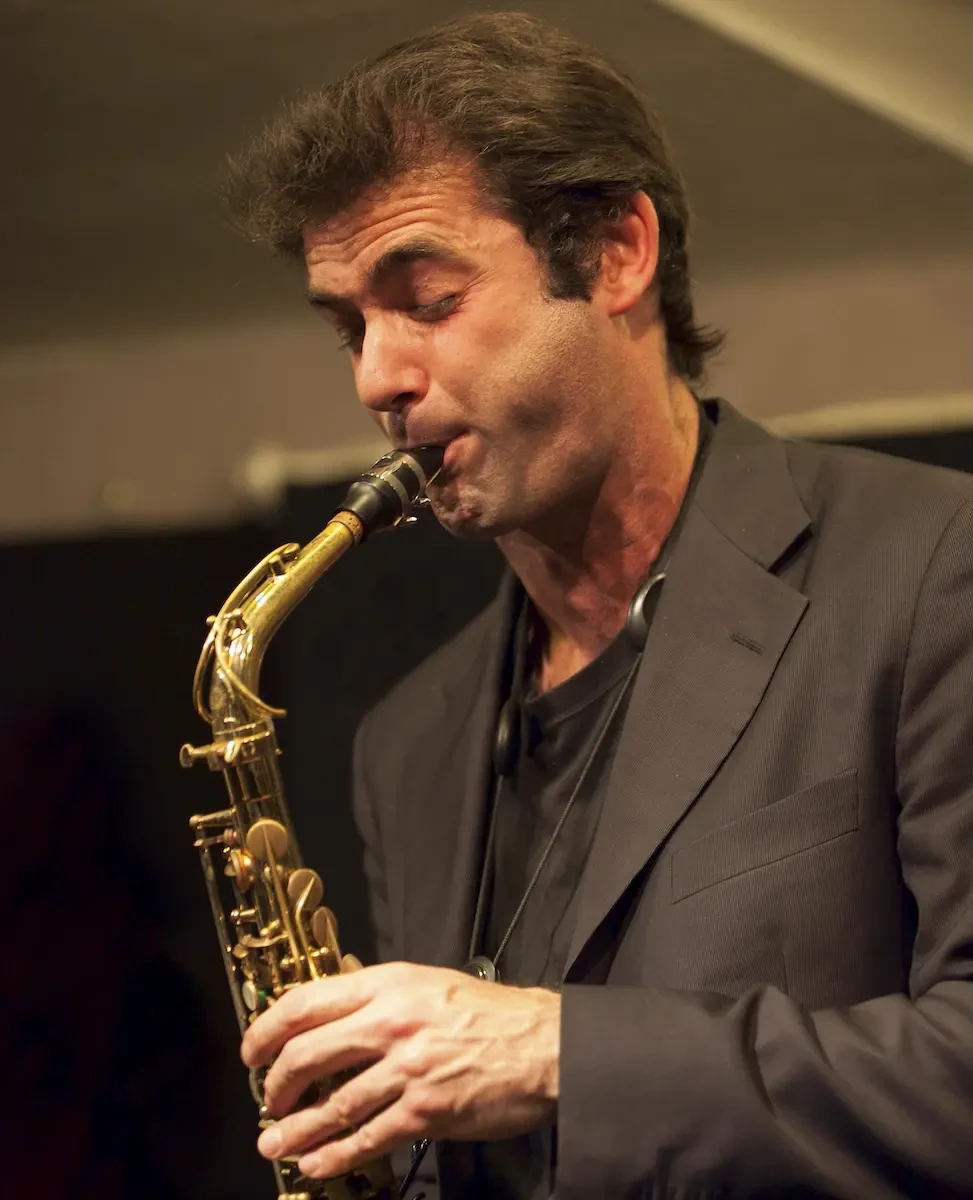
Milanese-born, naturalized-English tenor saxophonist Tommaso Starace has returned with a visceral, high-octane live recording, Live At The Beaver Inn. Captured against the dramatic backdrop of the Torridge cliffs in Appledore, this release showcases the classic organ trio format pushed to its absolute limits. Backed by Martin Jenkins on the organ and Pip Harbon on the drums, Starace channels the robust, muscular tone and harmonic sophistication of 1950s and 1960s tenor titans. The result is a performance that bridges generations, echoing the aesthetic championed by contemporaries like Eric Alexander while carving out an unmistakable identity rooted in spontaneous combustion and telepathic interplay.
Conversely, Czech guitarist Libor Šmoldas takes a conceptual, witty, and fiercely contemporary approach on his latest outing, Sorry, Miles!. Released via Bivak Records, Šmoldas’s quartet tackles the complex legacy of Miles Davis—specifically focusing on compositions famously "appropriated" or credited to the legendary trumpeter by others, alongside original compositions steeped in the Davis ethos. Far from being a mere gimmick, the album uses irony and historical anecdotes as a springboard for world-class, post-bop interplay. Featuring pianist Mikuláš Pokorný, bassist Tomáš Baroš, and drummer Jesse Simpson, the album pairs lighthearted liner-note storytelling with dead-serious musicianship.
Together, these two releases—distributed via Dodicilune and Bivak Records respectively—highlight the vibrant state of European jazz. They prove that whether one is sweating it out in a packed coastal British pub or deconstructing the complex mythos of American jazz royalty in a Czech studio, the idiom remains a living, breathing, and endlessly inventive discipline.
Detailed Chronology
Tommaso Starace Organ Trio: Live At The Beaver Inn (Recorded May 13, 2025)
The genesis of Live At The Beaver Inn lies in a singular evening of coastal performance that captured lightning in a bottle. Tommaso Starace, whose musical footprint has spanned various European and international stages since making England his home in 1994, convened with organist Martin Jenkins and drummer Pip Harbon in Appledore on May 13, 2025.
- The Warm-Up and Repertoire Selection: The trio curated a setlist that reads like a modern post-bop blueprint, blending revered jazz standards with groove-heavy crowd-pleasers. The evening commenced with rigorous explorations of Thelonious Monk’s angular We See and Cedar Walton’s robust Firm Roots.
- The Climax: Midway through the set, the performance reached a boiling point with Kenny Barron’s Voyage. This particular rendition transcended standard live execution, featuring a spontaneous, fiercely contested acoustic battle between Starace’s blistering tenor lines and Harbon’s driving, polyrhythmic drumwork that reportedly "burned down the house."
- Resolution and Nuance: Bringing the energy down without sacrificing intensity, the ensemble incorporated Blue Mitchell’s infectious calypso tune Fungii Mama alongside a deeply sensitive, ballad-mode interpretation of Erroll Garner’s timeless Misty. The performance concluded with a cohesive 57-minute arc (inclusive of tracks like Groovy Samba and Stablemates), immortalized on the Dodicilune label (Ed619).
Libor Šmoldas Quartet: Sorry, Miles! (Recorded November 6–7, 2025)
Moving from the rugged English coast to the controlled acoustic environment of Svarov, Czech Republic, the Libor Šmoldas Quartet gathered over two intense days in late autumn 2025 to commit a controversial historical premise to tape.
- Conceptual Framework: The project’s origins stem from Šmoldas’s wry fascination with jazz history, specifically the complex web of writing credits and copyright adaptations surrounding Miles Davis. Rather than offering a reverent, dust-covered tribute, Šmoldas framed the album as an ironic, panache-filled investigation into tunes Davis "nicked" from others, juxtaposed with original compositions written in the unmistakable Davis style.
- The Sessions (November 6–7, 2025): Over these 48 hours, Šmoldas (guitar), Mikuláš Pokorný (piano), Tomáš Baroš (bass), and Jesse Simpson (drums) tracked a tight, highly interactive 44-minute program. The sessions prioritized vintage post-bop interaction, channeling the telepathic ebb and flow of Davis’s legendary "Second Great Quintet."
- Key Interpretations: The ensemble navigated intricate arrangements of Dig, Four, Donna Lee, Tune Up, and Sonny Rollins’s Solar (titled simply Sonny here). Crucially, they tackled original and thematic compositions such as the title track Sorry, Miles! and the fugue-like ballad Richard’s Regret—a piece directly nodding to Richard Carpenter, the figure who allegedly funneled drug money to Davis in exchange for co-writing or naming credits on historical cuts like Walkin’. The resulting album was slated for release through Bivak Records (017).
Supporting Context & Metrics
To fully appreciate the weight of these releases, one must examine the metrics, historical contexts, and stylistic lineages that inform both albums.
The Organ Trio Tradition and Starace’s Lineage
The Hammond organ-tenor saxophone-drums configuration is one of jazz’s most durable and demanding formats. Historically anchored by icons like Jimmy Smith, Larry Young, and Grant Green (in guitar variations), the organ trio requires the saxophonist to act as both a melodic horn and a bass-register complement through implied harmonies.
- Tone and Technique: Starace’s approach marries a muscular, "testosterone-driven" timbre with modern harmonic finesse. Drawing inspiration directly from the hard-bop masters of the 1950s and 60s, Starace avoids nostalgic pastiche by injecting edgy twists and asymmetrical turns into his phrasing.
- Performance Metrics:
- Total Runtime: 57 minutes and 49 seconds.
- Key Personnel: Tommaso Starace (tenor saxophone), Martin Jenkins (organ), Pip Harbon (drums).
- Geographic Context: Appledore, near the Torridge cliffs—a setting that provided a receptive, intimate audience environment, amplifying the organic bleed and room acoustics essential for a successful live organ-trio date.
Deconstructing the Davis Mythos: Šmoldas’s Modern Quartet
Libor Šmoldas approaches the jazz canon not as a museum exhibit, but as a living script open to satire, reinterpretation, and structural deconstruction.
- The Lore: The album’s thematic undercurrent touches on well-documented industry practices of the mid-20th century, where publishing rights and composition credits were frequently bartered, assigned, or disputed. By highlighting these historical anomalies with a wink and a nod, Šmoldas shifts the focus from academic reverence to pure aesthetic enjoyment.
- Musical Metrics:
- Total Runtime: 44 minutes and 38 seconds across 10 tracks.
- Key Personnel: Libor Šmoldas (guitar), Mikuláš Pokorný (piano), Tomáš Baroš (bass), Jesse Simpson (drums).
- Acoustic Environment: Recorded in Svarov, the production emphasizes dynamic balance, allowing the interplay between guitar and piano—likened metaphorically to "butterflies on a breeze at the lake"—to cut cleanly through the mix without overpowering the rhythm section.
Official Statements & Critical Commentary
Reviewers and critics evaluating these releases have emphasized the artists’ technical mastery, narrative ambition, and emotional resonance.
On Tommaso Starace’s Live At The Beaver Inn:
"Hot on the heels of peer and champion Eric Alexander, the Milanese tenor saxophonist… combines a testosterone tone with harmonic finesse and edgy twists and turns, inspired by the tenor greats from the 1950s/60s. High praise. Another similarity is their fondness for the organ combo."
Critics have been particularly vocal about how the live setting acts as a catalyst for Starace’s sound, noting:
"In this live setting, for a responsive crowd near the Torridge cliffs, Starace’s organ trio… comes up trumps, stretching out on Thelonious Monk’s We See and Cedar Walton’s Firm Roots. Equally ardent, its take on Kenny Barron’s Voyage burns down the house, walls divided by a spontaneous tenor-drums battle."
Furthermore, the balance between high-energy workouts and accessible lyricism has drawn widespread acclaim:
"This description doesn’t take into account crowd-pleasers Fungii Mama, Blue Mitchell’s unbeatable calypso tune, and Erroll Garner’s Misty, tastefully interpreted in ballad mode. Starace’s sound—melodious but firm—develops its full potential here. The audience is sitting pretty, I’m not complaining either."
On Libor Šmoldas Quartet’s Sorry, Miles!:
"I can see for miles and miles along the main road of global misery but who you gonna call to drive it away? Ghostbusters? I’d rather, for comic relief, give Libor Šmoldas a ring. The premise of the Czech guitarist’s Sorry, Miles!—a presentation of compositions that Miles Davis nicked from others, complemented by Davis-imbued Šmoldas originals—is far from corny, mildly ironic instead, and worked out with panache."
Reviewers have also highlighted the dichotomy between the album’s playful exterior and its rigorous musicianship:
"Good humour in the liner notes, serious business on compact disc. The title track sets the pace, a line with a vintage post-bop vibe that pays homage… through acute interaction and a contagious ebb and flow, [to] Davis’s ‘Second Great Quintet’."
Reflecting on the deeper historical layers embedded within the project, critics note:
"The latter [Richard’s Regret] is about Richard Carpenter, full-time crook who gave The Dark Prince a small bundle of drug money and put his name to Walkin’. One doesn’t need to know all these stories from the ‘good old days’ to enjoy the fruits of Šmoldas’s thoroughly modern quartet, though it certainly adds some oomph."
Future Outlook
The release of these two distinct projects signals a robust, outward-looking trajectory for European jazz artists operating on the international stage.
For Tommaso Starace, Live At The Beaver Inn cements his reputation as a formidable force in the contemporary hard-bop and organ-combo traditions. As jazz audiences increasingly seek out the raw, unpolished energy of live club and intimate venue settings, Starace’s trio is uniquely positioned to take this program on wider international tours. The success of this Dodicilune release points toward a growing demand for traditional formats infused with modern urgency, suggesting that future collaborations with Jenkins and Harbon will be closely monitored by jazz purists and contemporary enthusiasts alike.
Meanwhile, Libor Šmoldas’s Sorry, Miles! opens up provocative conversations regarding how modern ensembles can engage with jazz history without falling into the trap of nostalgic pastiche. By combining conceptual humor with world-class post-bop execution, Šmoldas has charted a path that encourages listeners to question jazz mythology while deeply enjoying its musical output. The positive reception of this Bivak Records release indicates that audiences are hungry for intellectual engagement packaged with high-level musicianship.
Ultimately, both Starace and Šmoldas demonstrate that the future of jazz does not lie in sterile preservation, but in vigorous, highly personal interpretations of the tradition. Whether battling a drummer across the stage of a seaside pub or humorously unmasking the complex copyright history of jazz royalty in a Central European studio, these artists ensure that the pulse of the idiom remains strong, unpredictable, and profoundly alive.