
Executive Overview
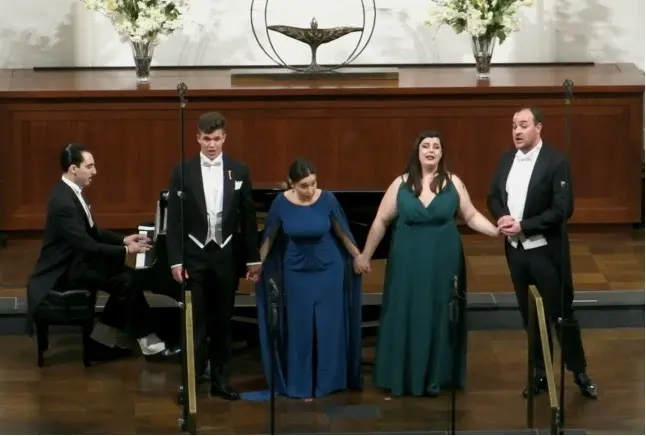
In the beautifully preserved, neo-colonial revivalist architectural gem that is New York City’s All Souls Church, the boundaries of classical music dissolved under the weight of shared artistry. Ten early-career opera singers from the United States and Spain recently converged on a single stage for a robust, emotionally resonant recital aptly titled “Rising Stars.”
Brimming with raw vocal talent and a meticulously curated repertoire spanning centuries and continents, the evening marked a historic milestone: the first joint public performance uniting elite artists from The Metropolitan Opera’s Lindemann Young Artist Development Program and Madrid’s Teatro Real Crescendo. Brought together under the nurturing wing of the Musica Viva organization and its visionary artistic director, Alejandro Hernandez-Valdez, the event was far more than a simple concert. It was the physical manifestation of an international partnership launched in 2024—a living testament to a friendship without borders built on a foundation of unyielding musical excellence, deep-seated camaraderie, and a shared, unconditional devotion to the operatic art form.
As global cultural institutions increasingly look inward in times of geopolitical friction, this transatlantic collaboration offered a refreshing counter-narrative. It was a masterclass in diplomacy through music, proving that the universal language of opera requires no translation.
Detailed Chronology and Musical Narrative
An Intimate Setting for Bold Interpretations
The close-knit sanctuary space of All Souls Church offered the capacity audience a rare, highly coveted luxury: a program tailored specifically to introduce patrons to each singer’s individual style outside the massive, highly codified machinery of mainstage opera productions. Stripped of sprawling sets and theatrical pyrotechnics, the evening laid bare the artistic DNA of these rising stars. It was immediately apparent that these emerging artists are well on their way to developing bold, signature approaches characterized by distinct artistic flairs that reach far beyond the superb technical training underpinning their burgeoning careers.
The Spanish Delegation: Crescendo’s Finest
The visiting contingent from Madrid’s Teatro Real Crescendo program brought an intoxicating blend of Iberian passion and rigorous European training. The ensemble featured sopranos and mezzo-sopranos of striking contrast, alongside formidable male leads and a brilliant collaborative pianist:
- Soprano Lucía Iglesias
- Mezzo-soprano Yasmin Forastiero
- Tenor Pablo Puértolas
- Baritone Enrique Torres Domínguez
- Pianist Carlos Alfonso Ferri
The artistic caliber of this touring group was underscored by professional reality: talents like Iglesias and Forastiero are slated to make highly anticipated mainstage debuts this season at Madrid’s prestigious Teatro Real.
Iglesias captivated the room early with her reading of Juliette’s waltz aria, “Ah! Je veux vivre,” from Gounod’s Roméo et Juliette. Her command of vibrato was nothing short of tantalizing; she held each note with absolute authority, purposefully manipulating their placement to weave a delicate, intoxicating tapestry of youthful, bubbling joy shadowed by subtle, chilling hints of doom.
Forastiero chose Saint-Saëns’s “Mon cœur s’ouvre à ta voix” from Samson and Delilah, delivering a performance of staggering vocal maturity. Her phrasing possessed an evenness and gravity that lent the aria visceral weight, spinning out long legato passages with the precision and luster of silken thread.
On the male side, tenor Pablo Puértolas brought a soaring lyric range to the stage with “Ê la solita storia del pastore” from Cilea’s L’Arlesiana. Unfurling the melodic line with methodical, breathtaking control, he imbued the piece with piercing drama and a ringing, swooning vocal approach.
Baritone Enrique Torres Domínguez offered a deeply personal gift to his New York hosts with a tour-de-force performance of a Spanish zarzuela-adjacent classic: “Luche la fe por el Triunfo” from Torroba’s Luisa Fernanda. Domínguez led with profound character, painting each phrase directly from the heart while mining cavernous sources of rich, rounded tone that vibrated through the sanctuary’s white-washed rafters.
Later in the program, Puértolas and Domínguez joined forces for the iconic Bizet duet “Au fond du temple saint” from Les pêcheurs de perles. Their voices blended with miraculous agility, perfectly balancing range and harmonic texture. The emotional zenith of the piece arrived naturally as the two young men concluded the duet with their arms draped over each other’s shoulders—an unscripted moment of genuine fraternal affection that resonated deeply with the audience.
The New York Contingent: The Lindemann Standard
Representing the host city, the artists of The Metropolitan Opera’s Lindemann Young Artist Development Program matched their Spanish peers measure for measure:
- Soprano Laura Santamaria
- Mezzo-soprano Sophia Baete
- Tenor Angel Raii Gomez
- Bass-baritone Lonwabo Mose
- Pianist John Morefield
Every single New York-based singer on stage commands active roles at the Metropolitan Opera this season, a testament to the ironclad standards of their home institution.
Bass-baritone Lonwabo Mose opened up the lower registers of the evening with a polished, powerhouse instrument infused with storied authenticity and razor-sharp characterization. His rendition of Figaro’s iconic aria “Non più andrai” from Mozart’s Le nozze di Figaro was simultaneously vocally stunning and delightfully jocular, proving his mastery of comedic timing and vocal heft.
Mezzo-soprano Sophia Baete opted for striking dramatic introspection, tackling “Must the Winter Come so Soon” from Samuel Barber’s Vanessa. Her delivery was perceptively understated, brushed with a melancholic warmth that illuminated the complex, psychological architecture of Barber’s score while showcasing radiant technical prowess.
Tenor Angel Raii Gomez commanded the space with the magnificent presence and charismatic pomp of Tonio in Donizetti’s La Fille du Régiment. Possessing a cannonball-like vocal power that seized the audience by the first note, Gomez balanced explosive volume with a supple, disarming sweetness. When he confronted the famously punishing high C pitches in Donizetti’s “Ah, mes amis,” he hit them like celebratory fireworks—a Herculean technical feat executed with breathtaking agility.
Soprano Laura Santamaria made a brilliant artistic choice in her interpretation of Puccini’s over-performed “O mio babbino caro.” Steering decisively away from the saccharine, melodramatic traps that so often snare interpreters of the work, Santamaria delivered a surprisingly innocent, crystalline version that elevated the sheer lyrical beauty of the composition. A deeply sensitive musician, she finessed her lush voice with unforgettable restraint.
The undeniable emotional peak of the solo sets arrived when Gomez and Santamaria united for Leonard Bernstein’s “Tonight” from West Side Story. Given the historic convergence of Madrid and New York institutions under the same roof, the performance took on an urgent, palpable poignancy, bringing tears to the eyes of seasoned opera-goers.
Supporting Context & Metrics
To fully understand the weight of the "Rising Stars" recital, one must examine the institutional ecosystems that produced these artists. The partnership between The Metropolitan Opera’s Lindemann Young Artist Development Program and Teatro Real’s Crescendo program represents a strategic shift in how elite training houses cultivate international talent.
| Institution | City | Flagship Program | Key Focus Areas |
|---|---|---|---|
| The Metropolitan Opera | New York City, USA | Lindemann Young Artist Development Program | Comprehensive vocal, musical, and linguistic training for artists destined for major global mainstages. |
| Teatro Real | Madrid, Spain | Crescendo Program | High-level professional bridging for early-career singers, emphasizing stylistic versatility and European performance traditions. |
| Musica Viva NY | New York City, USA | Presenting & Collaborative Partner | Fostering community engagement, cross-cultural choral and vocal performance, and innovative artistic partnerships. |
Beyond the solo turns, the evening’s ensemble pieces underscored the rigorous theatrical and dramatic training embedded in both institutions. Duets by Jules Massenet highlighted seamless tonal pairings and intense dramatic engagement, notably through Baete and Mose in “Oui, je souffre votre vitesse,” and Iglesias and Forastiero in “Bonjour, grande soeur.” Later, the SATB quartet “Bella figlia dell’amore” from Verdi’s Rigoletto was delivered with electrifying, punchy drive, terminating in a juxtaposed, sultry legato line that left the auditorium breathless.
The grand finale brought all ten vocalists to the stage simultaneously. The sheer collective potency of their combined operatic voices tested the acoustic limits of All Souls Church. Yet, rather than devolving into mere volume, the climax demonstrated a sophisticated understanding of acoustic balance—a skill modeled adeptly by guest bass Paul Whelan. During the sextet from Le nozze di Figaro, “Riconosci in questo amplesso,” Whelan demonstrated how subtle dynamic pull-backs and intentional pauses create expansive narrative space for true character development.
Following the dizzying momentum of Donizetti’s sextet “Chi me frena in tal momento,” the evening closed in traditional celebratory fashion with “Libiamo, ne’ lieti calici” from Verdi’s La Traviata. Musica Viva artistic director Alejandro Hernandez-Valdez joined at the piano, while members of the Musica Viva NY chorus flooded the stage. The boundaries between performer and patron dissolved entirely, transforming the sacred neo-colonial sanctuary into a joyous, old-fashioned community sing-in—though the audience wisely reserved the spotlight for the extraordinary talents on stage, showering them with thunderous, prolonged applause.
Official Statements and Perspectives
While formal press releases from the institutional partners have historically focused on the administrative framework of the 2024 transatlantic pact, the artistic leadership present at All Souls Church articulated a far more visceral vision for the collaboration.
Alejandro Hernandez-Valdez, Artistic Director of Musica Viva NY, emphasized the transformative power of cross-border musical exchange during post-concert reflections:
"When we conceived of bringing these two elite worlds together, our goal was never merely to host a concert. It was to build an ecosystem where young artists from entirely different cultural and pedagogical backgrounds could look across the stage and recognize their own dedication, their own struggles, and their own soaring potential in one another. Tonight proved that musical excellence is a universal bridge."
Faculty members from both the Lindemann program and Teatro Real Crescendo have privately echoed the sentiment, noting that the psychological barrier to international career mobility is often the hardest for young artists to clear. By sharing stages in major cultural capitals like New York and Madrid early in their development, these singers are effectively future-proofing their careers against isolationist industry trends.
Future Outlook
The resounding success of the "Rising Stars" recital at All Souls Church signals a watershed moment for the Lindemann-Crescendo partnership. What began in 2024 as an administrative accord on paper has now forged an unshakeable, living bond in sound.
Industry analysts and operatic critics are already looking toward the horizon, speculating on the long-term implications of this alliance. With key participants like Lucía Iglesias and Yasmin Forastiero stepping onto the Teatro Real mainstage this season, and their New York counterparts firmly entrenched in the Metropolitan Opera’s current roster, the pipeline of international talent is stronger and more fluid than ever before.
Plans are reportedly already underway to expand the collaborative footprint in the coming seasons. Discussions point toward reciprocal showcases in Madrid, expanded masterclass curricula featuring cross-faculty exchanges, and potentially fully staged collaborative chamber opera productions.
For the audiences fortunate enough to witness the genesis of this transatlantic bridge in the intimate sanctuary of All Souls Church, one truth remains absolute: the future of opera is not only secure, but it is borderless, vibrant, and fiercely collaborative.