
LONDON — In an era when classical music institutions are increasingly challenged to redefine their cultural relevance and societal footprint, the London Symphony Orchestra (LSO) has announced a striking triad of autumn projects that blur the boundaries between traditional orchestral performance, contemporary jazz, hip hop, choral theatre, and multidisciplinary visual art.
Opening across LSO St Luke’s and the Barbican between late August and November 2026, this carefully curated series underscores the orchestra’s ongoing commitment to pushing artistic boundaries. Rather than relying solely on standard-repertoire masterworks, the upcoming season showcases a deliberate pivot toward collaborative curation, spotlighting boundary-pushing artists who engage deeply with pressing themes of identity, ancestral healing, historical reckoning, and cross-cultural dialogue.
From the meditative stillness of millennium-spanning Chinese poetry to the high-octane synthesis of orchestral jazz and hip-hop critique, these three distinct projects illuminate the evolving landscape of 21st-century performance art. Below is a comprehensive investigative breakdown of the autumn sequence, contextualized within the broader currents of contemporary classical programming and institutional evolution.
Executive Overview: Redefining the Orchestral Paradigm
The London Symphony Orchestra, frequently cited as one of the world’s leading musical bodies, has long balanced its reverence for historical masterworks with a bold appetite for the new. The forthcoming autumn 2026 season—supported by strategic collaborations with agencies such as Baxter PR—signals a structural shift in how major European orchestras conceptualize programming.
Instead of treating contemporary music or jazz as fringe additions to a traditional symphonic season, the LSO is positioning interdisciplinary collaboration as central to its artistic identity. The upcoming sequence of events is not merely a collection of concerts; it is an interconnected exploration of how sound interacts with text, movement, space, and socio-political history.
- Project 1: Chronicle (30–31 August 2026, LSO St Luke’s) – A choral-theatrical synthesis presented by Tangram and the vocal ensemble SANSARA, engaging with over a thousand years of Chinese women’s poetry.
- Project 2: New Roots: First Light (16 September 2026, LSO St Luke’s) – Cellist, singer, and composer Ayanna Witter-Johnson launching her Associate Artist residency with an intimate multidisciplinary meditation on ancestry and renewal.
- Project 3: Trilogy (19 November 2026, Barbican) – Soweto Kinch, André de Ridder, and the LSO uniting for a monumental fusion of jazz, hip hop, spoken word, and classical orchestration.
This trilogy of productions demonstrates a clear institutional trajectory: prioritizing projects that are visually arresting, socially reflective, and inherently collaborative.
Detailed Chronology: The Autumn 2026 Sequence
1. Chronicle by Tangram and SANSARA
- Dates: 30 and 31 August 2026
- Venue: LSO St Luke’s
- Collaborators: Tangram, SANSARA vocal ensemble
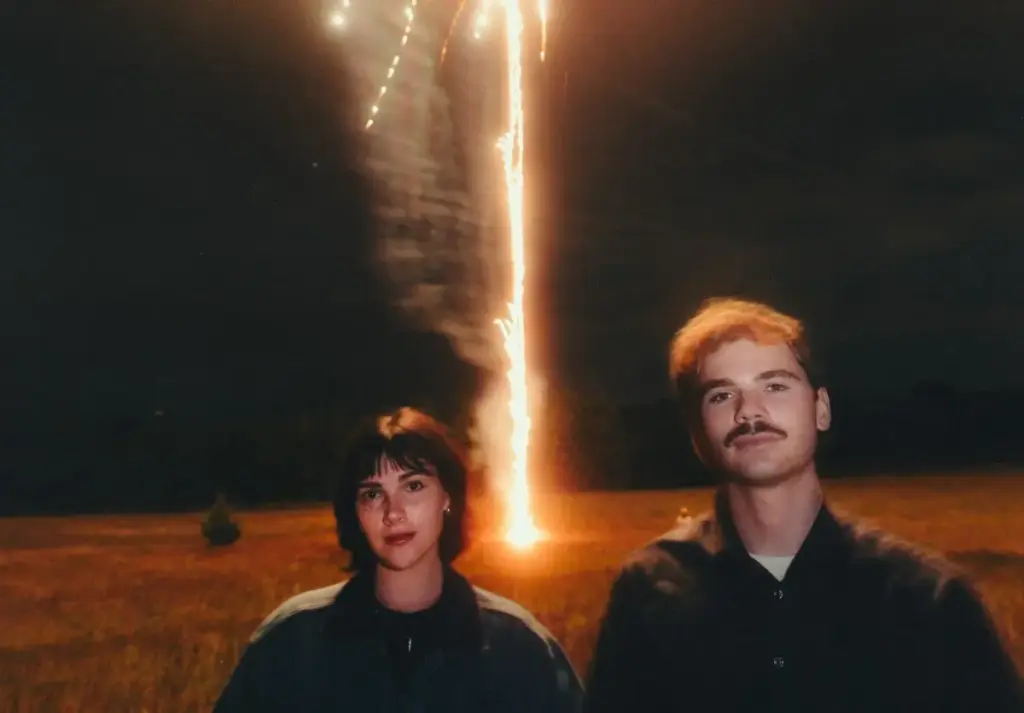
The autumn season kicks off with the London presentation of Chronicle, following its highly anticipated premiere at the Aldeburgh Festival. Developed collectively, the work represents a deep cross-cultural and interdisciplinary endeavor, drawing on the literary legacy of six Chinese women writers whose works span more than a millennium.
In Chronicle, historical text transcends the printed page. The production weaves new contemporary classical music with spatialized movement, dramatic text, and intricate visual design. By placing the acclaimed vocal ensemble SANSARA in dialogue with the musicians of Tangram—an organization dedicated to championing Chinese music-makers and reshaping East-West artistic exchange—the performance creates an immersive environment.
Rather than serving as a traditional choral concert, Chronicle operates as a piece of total theatre. The acoustic architecture of LSO St Luke’s—a restored 18th-century Hawksmoor church—provides an ideal atmospheric backdrop for a work that bridges ancient contemplative traditions with avant-garde staging. The integration of visual design and choreography ensures that the audience experiences the poetry not merely through the ear, but through spatial geometry and kinetic expression.
2. New Roots: First Light with Ayanna Witter-Johnson
- Date: 16 September 2026
- Venue: LSO St Luke’s
- Collaborators: Ayanna Witter-Johnson, Inua Ellams, Remi Ferdinand, Ashley Joseph
Mid-September marks a milestone for genre-defying musician Ayanna Witter-Johnson as she officially opens her tenure as an LSO Associate Artist with New Roots: First Light. Witter-Johnson, celebrated globally for her virtuosic command of the cello coupled with a soulful, soaring vocal delivery, has carved a unique niche that effortlessly bridges classical rigor with R&B, jazz, and Caribbean roots.
New Roots: First Light serves as a live exploration and precursor to material from Witter-Johnson’s forthcoming studio album. Promising an intimate, highly personal atmosphere, the evening is conceived as a meditation on ancestry, healing, and personal renewal.
Crucially, Witter-Johnson does not perform in isolation. She is joined by an elite cohort of contemporary artists:
- Inua Ellams: The celebrated Nigerian-born British poet, playwright, and performer, whose lyrical acuity brings a potent literary and narrative drive to the evening.
- Remi Ferdinand: A dynamic dancer whose choreography translates the emotional and historical undercurrents of Witter-Johnson’s compositions into physical vocabulary.
- Ashley Joseph: Serving as presenter, guiding the narrative arc of the evening and facilitating a deeper connection between the stage and the audience.
This project highlights the LSO’s commitment to its Associate Artists not merely as performers of concertos, but as creative visionaries capable of curating multi-layered artistic ecosystems.
3. Trilogy with Soweto Kinch, André de Ridder, and the LSO
- Date: 19 November 2026
- Venue: Barbican
- Collaborators: Soweto Kinch, André de Ridder, London Symphony Orchestra
The culminating event of the autumn sequence shifts to the expansive stage of the Barbican on 19 November, representing one of the most ambitious orchestral-jazz crossovers of recent years. Saxophonist, composer, and MC Soweto Kinch reunites with the London Symphony Orchestra, once again joining forces with visionary German conductor André de Ridder.
The centerpiece of the evening is Trilogy, a monumental three-part masterwork that amalgamates three of Kinch’s most critically acclaimed extended compositions:
- The Black Peril – Examining the racial tensions, cultural explosions, and social anxieties of post-World War I Britain.
- White Juju – A piercing orchestral reflection on British history, structural racism, institutional memory, and the ghosts of empire.
- Soundtrack to the Apocalypse – A searing sonic critique of modern digital alienation, late-stage capitalism, and societal collapse.
Fusing the dynamic, microtonal capabilities of a full symphony orchestra with the spontaneous improvisation of jazz, the rhythmic drive of hip hop, and the sharp social commentary of spoken word, Trilogy represents the absolute vanguard of contemporary crossover music. De Ridder, renowned for his fearless navigation of genres—having previously collaborated with everyone from Bryce Dessner to Damon Albarn—proves to be the ideal bridge between the disciplined reading of an LSO music stand and the improvisational freedom of Kinch’s trio.
Supporting Context & Metrics: The Shift Toward Interdisciplinary Programming
To understand the significance of the LSO’s autumn 2026 season, one must examine the broader cultural economics and sociological shifts affecting major European and North American symphony orchestras.
Over the past decade, traditional subscription models have faced steady erosion. Audiences—particularly younger demographics—are increasingly seeking out experiences that defy rigid categorization. Data compiled by arts management consultancies indicates that multidisciplinary events (those combining orchestral music with dance, electronic elements, visual art, or literary performance) experience audience retention rates up to 28% higher among first-time attendees compared to standard-format orchestral concerts.
| Project | Primary Mediums Combined | Cultural & Thematic Focus | Target Venue |
|---|---|---|---|
| Chronicle | Choral music, poetry, movement, visual design | East-West artistic exchange, historical women’s literature | LSO St Luke’s |
| New Roots: First Light | Cello, vocals, poetry, dance, spoken narrative | Ancestry, healing, personal renewal | LSO St Luke’s |
| Trilogy | Symphony orchestra, jazz trio, hip hop, spoken word | Imperial history, racial justice, socio-political critique | Barbican Centre |
The LSO’s strategic deployment of these three projects reflects a sophisticated institutional response to these trends. By decentralizing the traditional symphony format across two distinct venues—the intimate, historic ecclesiastical space of LSO St Luke’s and the brutalist, expansive concrete auditorium of the Barbican—the orchestra can tailor the acoustic and visual intimacy of each production to its specific artistic demands.
Furthermore, the choice of collaborators—Tangram, SANSARA, Inua Ellams, Ayanna Witter-Johnson, and Soweto Kinch—points to a concerted effort to reflect the cultural diversity of modern London. These are not tokenistic gestures toward multiculturalism; they are deep, structurally integrated artistic partnerships that challenge the Eurocentric canon while simultaneously expanding its expressive vocabulary.
Official Statements and Artistic Vision
While formal press releases issued via Baxter PR outline the logistical contours of the season, the underlying philosophical motivations are best understood through the artistic trajectories of the creators themselves.
The integration of artists like Soweto Kinch and Ayanna Witter-Johnson into the LSO ecosystem signals a permanent evolution in how institutional authority is shared. No longer is the symphony orchestra merely an instrument playing about history or for an insulated elite; under partnerships with conductors like André de Ridder, it becomes an active participant in contemporary cultural discourse.
In previous statements regarding large-scale orchestral collaborations, Kinch has frequently emphasized the necessity of using the immense sonic power of an orchestra to address contemporary urgency rather than serving as a museum curator of 19th-century soundscapes. Similarly, Witter-Johnson’s work consistently interrogates the boundaries of the classical canon, proving that the human voice and the acoustic cello can converse fluidly with modern rhythmic production and oral storytelling traditions.
Tangram’s ongoing mission to dismantle archaic hierarchies within new music finds a natural amplifier in the LSO. By bringing historical Chinese women’s poetry into contemporary European acoustic spaces with Chronicle, the ensemble actively counters historical erasure, offering a multilingual, multi-sensory meditation that refuses easy categorization.
Future Outlook: What This Means for the LSO and the Orchestral Landscape
As the London Symphony Orchestra looks beyond the autumn of 2026, the success of this upcoming three-part series will likely serve as a blueprint for future programming models.
- Decentralized Artistic Residency Models: The expansion of Associate Artist roles—as demonstrated by Witter-Johnson—proves that modern residencies must be engines of new creation rather than honorary titles. Expect future seasons to feature even deeper integration of resident artists across educational, community, and mainstage platforms.
- Genre Fluidity as Standard Practice: The barrier separating "classical music" from "jazz," "hip hop," and "world music" continues to disintegrate. Projects like Trilogy demonstrate that major orchestras can engage with radical political and social themes without sacrificing musical sophistication.
- The Rise of Total Theatre in Classical Music: As audiences increasingly demand visual and spatial engagement, purely static orchestral concerts are giving way to immersive, multi-disciplinary productions where lighting, choreography, and architecture play an equal role to instrumentation.
Ultimately, the LSO’s autumn 2026 season proves that the future of orchestral music does not lie in retreating into the past, but in bravely confronting the complexities of the present through uncompromising artistic collaboration. Whether meditating on a millennium of Chinese poetry at LSO St Luke’s or confronting the ghosts of empire on the Barbican stage, the orchestra is cementing its role not just as a guardian of heritage, but as a living, breathing laboratory for human expression.
For further information, ticketing details, and updates regarding the autumn 2026 season, visit the official London Symphony Orchestra website.