
Executive Overview
In the realm of musical pedagogy, a persistent bottleneck traps developing instrumentalists and vocalists alike: the laborious, mechanical translation of written notation into mental note-names, followed by finger numbers, and finally, physical execution. For generations, traditional music education has treated reading sheet music much like decoding an arcane cipher. Students stare at a measure, decipher notes individually, verify their theoretical accuracy, and painstakingly piece together a performance. The inevitable result? Hesitation, rhythmic collapse, and a total loss of musical momentum.
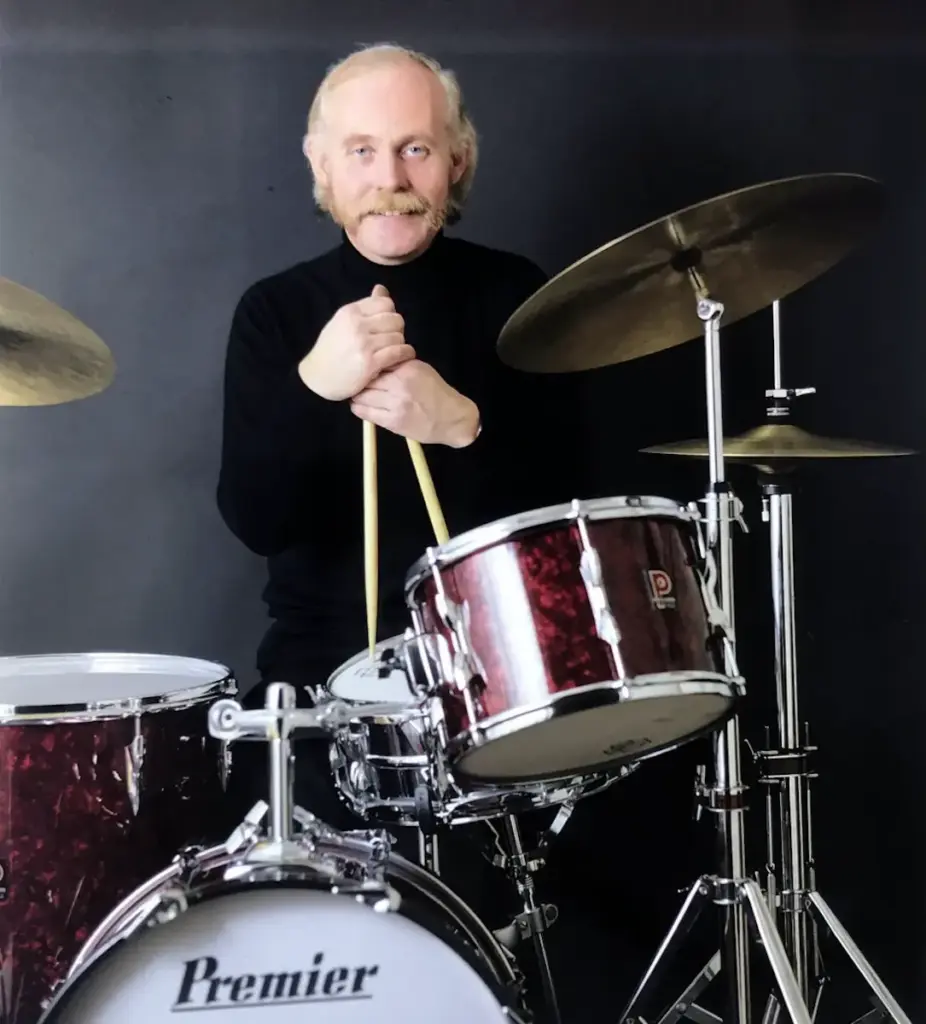
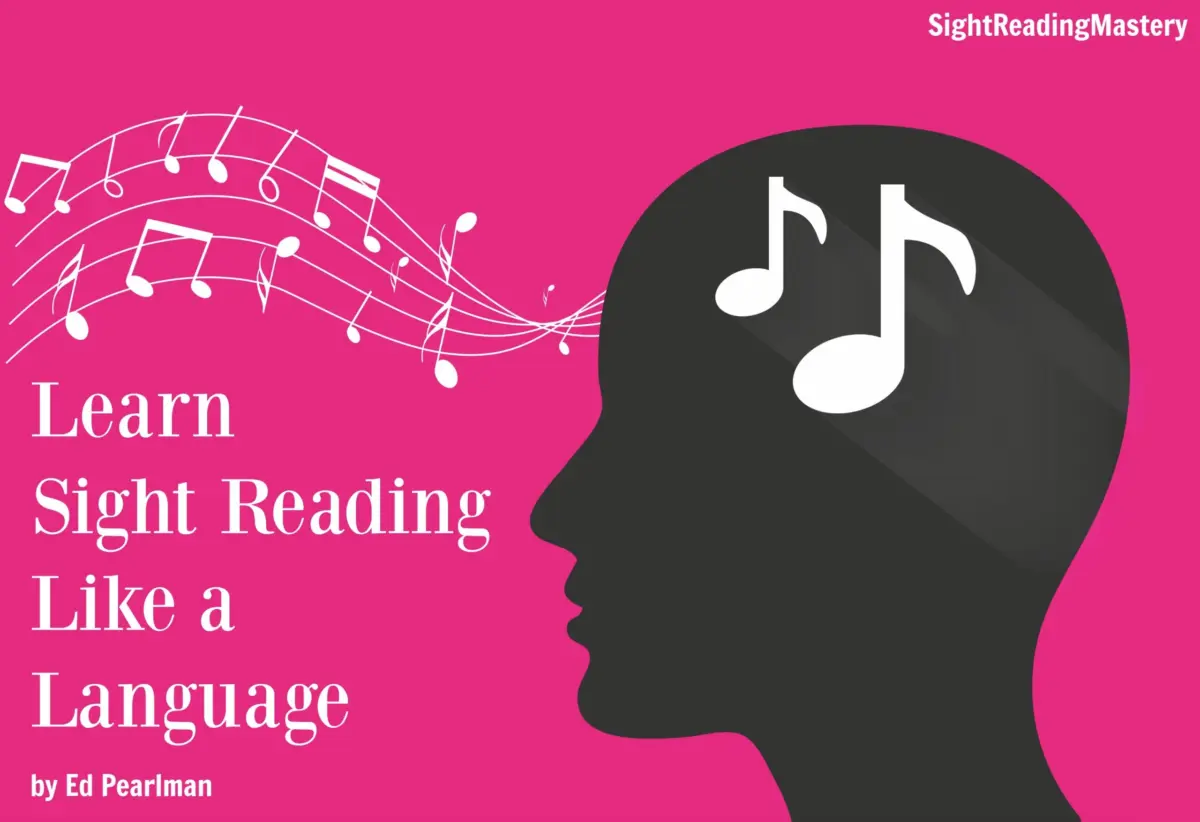
In a comprehensive instructional framework published by veteran performer and educator Ed Pearlman, this archaic paradigm is systematically dismantled. Drawing a direct parallel to the cognitive mechanics of learning a spoken language, Pearlman argues that true fluency in sight-reading cannot occur until the brain bypasses internal translation entirely. Just as a fluent speaker of Spanish understands the phrase "buenos días" instantaneously—without mentally converting it to "good morning"—a proficient musician must learn to perceive, process, and perform musical notation as a direct, unified language.
To bridge the gap between labored decoding and effortless fluency, this article outlines a rigorous, progressive five-step methodology. Ranging from foundational rhythmic execution to advanced interval recognition, Pearlman’s graded framework provides musicians of all backgrounds with a roadmap to transform sight-reading from a source of performance anxiety into a seamless, intuitive art form.
Detailed Chronology: The Evolution of Sight-Reading Pedagogy and the Language Parallel
For centuries, the instruction of musical notation mirrored the rigorous, grammar-heavy approaches once used to teach classical languages like Latin and Ancient Greek. Students were immersed in the theoretical taxonomy of music—memorizing clefs, key signatures, interval classes, and note values long before they were ever asked to synthesize this data in real time.
The Pitfalls of Traditional Decoding
In the early stages of instrumental training, this analytical approach is nearly unavoidable. A beginner sees a note on the treble staff, identifies it as a middle-line B, recalls which finger corresponds to that pitch on their instrument, depresses the appropriate key or string, and checks the result. While this analytical scaffolding ensures accuracy, it creates a severe cognitive bottleneck.
Consider the sheer volume of operations required to process a single measure of moderate-tempo sixteenth notes using this mechanical method:
- Identify the clef and key signature.
- Scan an individual note head.
- Determine its staff position (line vs. space).
- Assign a pitch name (e.g., F-sharp).
- Translate that pitch name into a physical motor command (finger placement, bow direction, or vocal shape).
- Verify rhythmic duration.
- Execute the movement while monitoring tempo.
When multiplied across an entire phrase, this serial processing model shatters under the weight of time. Music, unlike a static visual art, exists entirely within time. A performer who stops to mentally decode a tricky passage inevitably breaks the tempo, effectively halting the conversation mid-sentence.
The Linguistic Epiphany
The breakthrough in modern pedagogical thinking—championed by educators like Pearlman—stems from cognitive science research into language fluency. When humans acquire a native tongue, they do not learn isolated vocabulary words and stitch them together using grammatical look-up tables. They absorb patterns, phrases, and semantic units holistically.
Applying this concept to music shifts the objective of sight-reading practice. The goal is no longer to be "right" about every isolated note through sheer intellectual force, but rather to develop an instantaneous, visceral feel for the gestural shape of the music. By exposing the brain to a high volume of varied sight-reading examples without stopping to correct mistakes, a musician builds the subconscious pattern recognition required to "speak" the language fluently.
Supporting Context & Metrics: The Five-Tiered Mastery Framework
To transition from analytical decoding to intuitive fluency, Pearlman outlines a progressive, five-level practice framework. Crucially, these instructional tiers operate independently of the official "grade levels" used by platforms like SightReadingMastery to categorize a piece’s technical difficulty. Instead, these are behavioral levels of engagement: once a student masters Level 1, they integrate it into Level 2, stacking competencies until they achieve comprehensive, multi-layered sight-reading proficiency.
[Level 1: Rhythms Only]
       ↓ (Add)
[Level 2: Note Profile]
       ↓ (Add)
[Level 3: Focusing the Picture]
       ↓ (Add)
[Level 4: Seeing Intervals]
       ↓ (Add)
[Level 5: Names of Notes]
Level 1: Rhythms Only
- The Exercise: Select a passage, establish a steady tempo using a metronome or internal pulse, and simply tap, clap, or speak out the rhythm without worrying about specific pitches.
- The Cognitive Objective: Force the brain to process temporal relationships rather than isolated notes. Rhythms possess zero meaning in isolation; they exist entirely in relation to one another. By isolating the rhythmic framework, musicians eliminate half of the cognitive load.
- Pedagogical Humor: As Pearlman playfully notes, this level cures the classic orchestral joke about the violist who boasts to a violinist about playing rapid 64th notes, only to demonstrate by playing just one. Rhythm must be felt continuously, not calculated note by note.
Level 2: Note Profile
- The Exercise: Maintain the continuous rhythmic flow established in Level 1. Now, incorporate the instrument or voice, focusing exclusively on the contour or profile of the melody—whether notes move higher, stay the same, or drop lower relative to the previous pitch.
- The Cognitive Objective: Abandon micro-management of individual note names. If a passage requires a jump upward, focus on executing a broad upward motion in time, even if the exact intervallic distance or specific pitch is momentarily missed. The priority is maintaining forward momentum and structural shape over microscopic perfection.
Level 3: Focusing the Picture
- The Exercise: Prior to sight-reading, identify the key signature and play the corresponding scale, paying explicit attention to the location of half-steps (which may number only one or two within the passage’s active range). Then, begin the passage with correct timing, utilizing the physical constraints of the scale and the note profile from Level 2.
- The Cognitive Objective: Lock down pitch accuracy within a tonal framework without sacrificing tempo. If uncertainty arises regarding a specific note, the musician is permitted to make an educated guess, but they are strictly forbidden from hesitating, stuttering, or breaking the underlying tempo. For those struggling to maintain speed, Pearlman advises slowing the metronome down or restricting practice to isolated one- or two-measure segments.
Level 4: Seeing Intervals
- The Exercise: Actively scan the page for structural intervals rather than reading note heads individually. Train the eye to instantly distinguish between step-wise motion (a scale moving consecutively from a line to a space, or vice versa) and skips/leaps (such as thirds, which move from line to adjacent line or space to adjacent space).
- The Cognitive Objective: Expand visual chunking capacity. Just as expert readers perceive entire words and phrases rather than individual letters, advanced sight-readers perceive intervals and chordal shapes as single visual units. While larger leaps (fourths, fifths, and beyond) require greater visual familiarity, they are rapidly absorbed through consistent exposure.
Level 5: Names of Notes
- The Exercise: Verbally or mentally name each note as it is played, layering this analytical task over the rhythmic, profile, and intervallic frameworks built in previous levels.
- The Cognitive Objective: Test ultimate focus. Pearlman emphasizes that naming notes is strictly optional for effective sight-reading, as it is not an essential requirement for the direct language of music performance. However, incorporating it serves as an elite stress-test for cognitive multitasking, proving whether a musician can consciously identify note names without disrupting their automated reading fluency. For musicians struggling with this tier, targeted digital tools—such as SightReadingMastery’s dedicated Note Recognition feature—can accelerate rapid visual-to-pitch association.
Official Insights & Expert Perspectives
Education experts and master teachers continually emphasize that the greatest barrier to musical proficiency is not physical limitation, but psychological tension. Performance anxiety frequently manifests as a subconscious desire for immediate perfection—a trait heavily reinforced by traditional, test-oriented academic environments.
In commentary surrounding holistic music acquisition, master instructors point out that young musicians are rarely taught how to fail productively during a sight-reading run. When a student stops the moment they play a wrong note, they are actively training their brain to associate sheet music with friction and abrupt halts.

By restructuring practice through tiered frameworks like Pearlman’s, educators report a dramatic shift in student psychology. When the primary mandate of Level 1 and Level 2 becomes uninterrupted momentum, the fear of playing a "wrong" note evaporates. Students realize that a performance with minor pitch inaccuracies delivered at a steady tempo sounds vastly more musical—and feels infinitely more authentic—than a halting, stuttering performance that eventually hits every mathematically correct pitch.
Furthermore, digital pedagogy platforms have begun integrating these multi-tiered philosophies directly into software interfaces. By allowing users to isolate rhythmic drills, contour exercises, and interval training dynamically, modern learning tools mirror the immersive, iterative exposure necessary to master a second language.
Future Outlook: The Next Generation of Musical Fluency
As music education continues to evolve in the digital age, the convergence of cognitive science and pedagogical design promises to redefine how instrumentalists approach notation. The old model of rote, laborious decoding is steadily giving way to intuitive, language-based frameworks that prioritize real-time comprehension and expressive communication.
Future developments in sight-reading pedagogy are expected to leverage adaptive learning technologies, real-time audio analysis, and interactive software to provide immediate feedback on both rhythmic stability and melodic contour. Yet, the foundational truth highlighted by educators like Ed Pearlman remains unchanged: technology can only support the journey; the ultimate transformation occurs in the mind of the musician.
By treating sheet music not as a complex architectural blueprint to be laboriously translated, but as a living, breathing language to be experienced and spoken fluently, the next generation of musicians will unlock unprecedented levels of artistic freedom, confidence, and joy in performance.