
Executive Overview
The contemporary jazz ecosystem thrives on a delicate equilibrium between historical preservation and relentless forward momentum. Across the global soundscape, artists and archivists are continually redefining what it means to contribute to the genre. This review explores three distinct releases that capture this dynamic tension: a newly remixed and repackaged 1978 Irish jazz-fusion gem by drummer John Wadham; a daring, bass-less piano trio release from New York City by pianist Nicki Adams and drummer Francisco Mela; and a deeply personal, emotionally charged modern statement from Nashville saxophonist Rashaan Barber.
While vastly different in origin, era, and aesthetic, these works share a common devotion to uncompromising artistic expression. Wadham’s Drums And Friends showcases the vibrant cross-pollination of European jazz traditions, capturing a golden era of Irish improvisation. Conversely, Nicki Adams’s Arrival challenges conventional instrumentation by omitting the double bass, replacing traditional low-end foundations with expansive harmonic piano voicing. Meanwhile, Rashaan Barber’s Eternal serves as a poignant reminder of jazz’s capacity for emotional catharsis, channeling profound personal grief and socio-cultural reflection into a modern masterclass.
Together, these releases offer a comprehensive cross-section of jazz in the twenty-first century—one eye fixed firmly on the foundational masters who paved the way, and the other scanning an uncharted horizon of structural and emotional possibilities.
Detailed Chronology
1. John Wadham: Drums And Friends (Livia Records, Reissued/Remixed 2025)
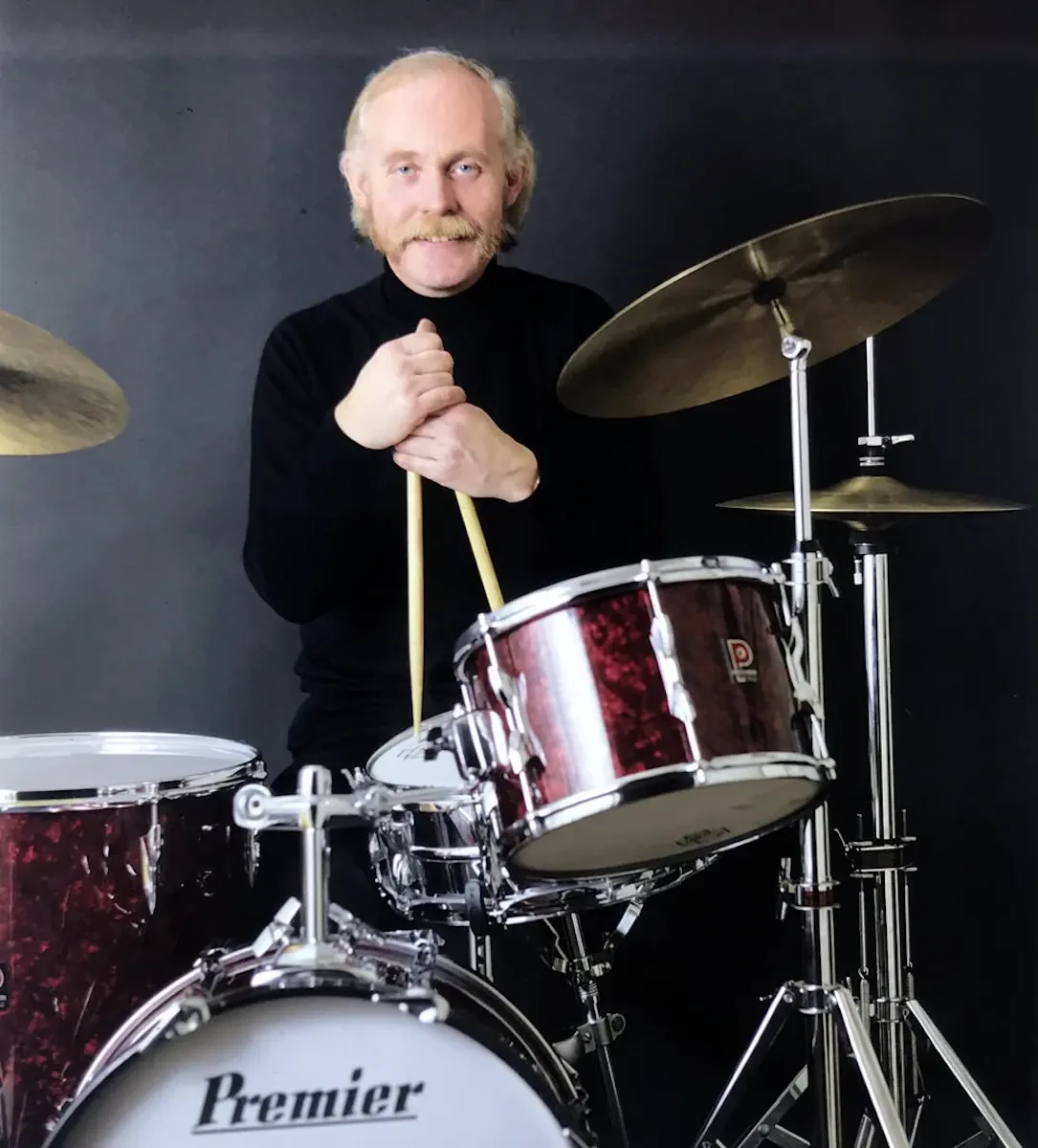
The lineage of European jazz is rich with unsung heroes—drummers whose technical precision and adventurous spirit earned the quiet respect of demanding American legends and inspired generations of disciples. Names like Daniel Humair, Alex Riel, Spike Wells, and John Engels immediately spring to mind. To this elite echelon, jazz-minded Ireland proudly adds the accomplishments of John Wadham.
Though an Englishman by birth, Wadham moved to Dublin as a teenager and quickly became a foundational pillar of the Irish jazz scene. That scene also birthed virtuosos such as guitarist Louis Stewart and acclaimed flautist Brian Dunning. Both musicians feature prominently on Wadham’s definitive 1978 debut album, Drums And Friends. Originally a milestone for Livia Records, the album received a CD reissue in 2000 and has now been freshly remixed, accompanied by striking new photography and insightful sleeve notes penned by Conor Guilfoyle.
The album is neatly divided in its conceptual execution, featuring Dunning on Side A and Stewart on Side B, complemented throughout by the steady, resonant basswork of Frank Hess. On the Dunning-led tracks, Wadham explores the outer boundaries of avant-garde folk on Floatin’ and digs into deep, infectious grooves on John Surman’s Winter Song. Wadham’s crisp, razor-sharp drumming pairs seamlessly with Dunning’s flexible flute work, occasionally upstaging the progressive heights of Jethro Tull—particularly during a blistering rendition of Freddie Hubbard’s Clarence’s Place.
When Wadham transitions to dialogue with guitarist Louis Stewart, the artistic stakes are raised significantly. Their freely improvised piece, Improvisation For Guitar And Drums, serves as a masterclass in sonic geography. It evokes a restless navigation between pastoral green hills and the asphalt jungle, swinging wildly between the open air of a children’s playground and the physical intensity of a rugby match. Stewart’s creativity proves boundless, reaching an even higher plane during their interpretation of Wayne Shorter’s iconic Footprints.
Though late-album bonus tracks—including Victor Feldman’s Seven Steps To Heaven (marred slightly by a heavy, muddy bass sound) and John Coltrane’s transcendent Naïma, highlighted by lovely, lyrical guitar work from Stewart—feel tacked on, they do little to diminish the triumph of this vital archival package.
2. Nicki Adams: Arrival (J-Man Records, 2025)
Moving from the archival fields of Dublin to the relentless kinetic energy of modern New York City, pianist Nicki Adams presents a daring structural gamble with his latest release, Arrival. Collaborating alongside heavy-hitting drummer Francisco Mela (renowned for his work with McCoy Tyner, Esperanza Spalding, and Chucho Valdés) and saxophonist Michael Eaton, Adams operates in a notoriously difficult format: the piano trio without a bassist.
Adams compensates for the absence of an upright bass by making full use of the piano’s 88 keys. He assumes the traditional harmonic and foundational duties of the bass through full-bottomed, multi-note lines and watertight, interlocking chords. This dense, self-reliant piano style proves entirely conducive to Arrival’s progressive, uncompromising repertoire, which spans compositions by Andrew Hill and Wayne Shorter alongside bold originals driven by staggered, broken time signatures. Adams’s occasional injections of stride piano are not merely nostalgic nods; they are functionally vital to maintaining momentum.
Yet, this relentless intensity cuts both ways. The sheer abundance of frenzied patterns and interlocking solos can occasionally overwhelm the listener. One yearns for moments of negative space—breathing room between notes and tones that would allow the complex harmonic structures to settle.
Fortunately, the album finds effective points of respite. Radiohead frontman Thom Yorke’s Daily Battles provides a moody, atmospheric breather. Moreover, when the trio finally locks into a hard-swinging, spontaneous groove on Cole Porter’s It’s Alright With Me, the stylistic gamble pays off entirely—even if only for a fleeting moment.
3. Rashaan Barber: Eternal (Jazz Music City, 2025)
Context is everything in jazz, and Nashville-born saxophonist Rashaan Barber’s Eternal arrives steeped in a profound web of personal and cultural influences. Raised amidst the sounds of gospel and soul, Barber’s immediate circle reads like a masterclass in musical pedigree: his twin brother is a professional trombonist, and his wife is a distinguished classical saxophonist. Marking the 15th anniversary of his independent label, Jazz Music City, the 46-year-old saxophonist pours this diverse background into his most compelling work to date.
Building upon the stylistic blueprints laid down by forebears like Michael Brecker, Kenny Garrett, and Branford Marsalis, Eternal is a towering achievement. The album is deeply charged, largely infused with the raw grief of a miscarriage suffered by Barber’s wife, Heidi Radtke, just prior to the recording sessions. The resulting music is filled with cathartic cries and moans from the tenor horn—a concise, dramatic explosion of sound that could easily have devolved into unbridled melodrama. Instead, Barber’s flawless articulation and emotional control elevate the material into high art.
Barber integrates seamlessly with an exceptional ensemble featuring New Orleans guitarist Ted Ludwig and pianist Matt Endahl. The band thrives on a delicate juxtaposition of uproar and serene contemplation. A prime example of the latter is their unexpectedly sweet, mellow, and deeply reverent reading of Marvin Gaye’s protest and soul masterpiece, What’s Going On.
The album reaches its emotional and sonic climax with Mandela, a hi-octane reflection on agony, resilience, and historical atonement. Much like his earlier recordings, Barber bridges the gap between fiery personal expression and urgent socio-cultural commentary. He stands as an criminally underrated frontrunner among contemporary "new stars" like Immanuel Wilkins and Ambrose Akinmusire, making Mandela and the entire album an essential listen for modern jazz enthusiasts.
Supporting Context & Metrics
To fully understand the weight of these releases, it is necessary to examine their technical parameters and production metrics:
-
John Wadham: Drums And Friends
- Recording Location: Dublin, Ireland
- Recording Year: 1978 (Remixed for 2025 release)
- Total Runtime: 55 minutes, 20 seconds
- Label: Livia Records (Catalog No. 2602)
- Personnel Highlights: John Wadham (drums), Brian Dunning (flute, tracks 1-3), Louis Stewart (guitar, tracks 4-6), Frank Hess (bass), Martin Walsh (bass, track 9).
-
Nicki Adams: Arrival
- Recording Location: New York City, USA
- Recording Year: 2025
- Total Runtime: 53 minutes, 52 seconds
- Label: J-Man Records
- Personnel Highlights: Nicki Adams (piano), Francisco Mela (drums), Michael Eaton (tenor and soprano saxophone). Note: Absence of traditional acoustic bass.
-
Rashaan Barber: Eternal
- Recording Location: Nashville, Tennessee, USA
- Recording Dates: May 18 & 19, 2025
- Total Runtime: 47 minutes, 07 seconds
- Label: Jazz Music City (15th Anniversary Release)
- Personnel Highlights: Rashaan Barber (tenor saxophone), Matt Endahl (piano), Ted Ludwig (guitar), Kevin Beardsley (bass), Joshua Hunt (drums).
Official Statements & Critical Perspectives
The release of these diverse projects has sparked significant discourse among critics, producers, and the artists themselves regarding the state of modern and archival jazz production.
Conor Guilfoyle, who spearheaded the remixing and re-packaging efforts for John Wadham’s Drums And Friends, emphasized the importance of historical reclamation in European jazz:
"We often look across the Atlantic for our jazz pantheon, but the foundations built in cities like Dublin during the late seventies were profoundly innovative. John Wadham didn’t just keep time; he curated an entire conversation between European folk idioms and American post-bop sensibilities. Remixing these tapes allowed us to bring the crispness of his kit back to life for a generation that might otherwise overlook this golden chapter of Irish jazz history."
In New York, pianist Nicki Adams addressed the structural challenges of recording a bass-less piano trio:
"When you strip away the double bass, you aren’t just removing an instrument—you are completely re-engineering the harmonic gravity of the ensemble. Francisco [Mela] and Michael [Eaton] and I had to build a language where rhythmic displacement and vertical piano voicings could hold the weight of the music. It’s an exercise in high-wire balancing; every note has to serve a structural purpose."
Reflecting on the deeply personal catalyst behind Eternal, Rashaan Barber offered insight into the healing power of improvisation:
"Music is often where we go when human language completely fails us. When Heidi and I went through that devastating loss prior to these sessions, the horn became the only way I could process the grief. We didn’t set out to make a comfortable record; we set out to make an honest one. If the music feels explosive, it’s because it had to be liberated."
Future Outlook
As the global jazz community looks toward the remainder of the decade, these three releases point toward three distinct, highly promising trajectories for the genre.
First, the successful reissue and remixing of John Wadham’s Drums And Friends signals a growing appetite for archival excavation outside of the traditional American jazz hubs. Record labels and historians are increasingly recognizing that the transatlantic exchange produced hidden masterpieces in cities like Dublin, London, and Copenhagen that deserve modern sonic restoration and critical re-evaluation. We can anticipate a continued wave of archival releases aimed at re-contextualizing European jazz pioneers.
Second, the structural bravery demonstrated by Nicki Adams on Arrival highlights an ongoing desire among contemporary musicians to push against traditional instrumentation constraints. As young artists continue to experiment with chordless trios, hybrid electronic-acoustic setups, and cross-genre fusions, the dialogue surrounding spatial awareness and harmonic responsibility in jazz will only intensify. The challenge for these innovators will be balancing technical audacity with emotional accessibility for the listener.
Finally, Rashaan Barber’s Eternal reinforces the vital, unyielding connection between personal lived experience and jazz composition. In an era often dominated by slick, hyper-technical perfectionism, Barber proves that raw emotional honesty, socio-cultural engagement, and structural rigor remain the true lifeblood of the genre. As artists like Barber, Immanuel Wilkins, and Ambrose Akinmusire continue to lead the vanguard of modern expression, the future of jazz remains not only secure, but profoundly resonant.