
Executive Overview
As the autumn academic semester kicks into full gear, instrumental music educators across middle and high schools face a universally daunting challenge. The initial chaos of the school year—learning students’ names, navigating the logistical nightmare of instrument rental week, and establishing baseline classroom management—has finally settled. Ensembles are starting to sound cohesive, blending individual tones into a unified voice. Yet, a critical hurdle remains: accurately evaluating what every individual student truly knows and can execute before the first grading period closes and the relentless cycle of fall concert preparation consumes rehearsal time.
In this crucial window, educators must establish sustainable routines that go beyond traditional, one-size-fits-all playing tests. Enter MakeMusic, a leading digital platform for music education, which is addressing this pedagogical need by expanding its assessment ecosystem. While standard performance assignments drawn from the platform’s extensive Music Catalog have long been a staple of music classrooms, MakeMusic has introduced two highly versatile assessment formats: Audio/Video-only assignments and Multiple Choice assessments.
These innovative tools are designed to bridge the gap between in-class instruction and at-home practice, providing directors with granular insights into student technique, theoretical comprehension, and independent study habits. By integrating these flexible assessment types into a balanced weekly routine—and leveraging automated gradebook integration like Google Grade Passback—music educators can drastically reduce administrative overhead while maximizing student accountability and musical growth. This report explores the mechanics of these new assessment types, their implementation strategies, the underlying pedagogical philosophy, and what this technological shift means for the future of secondary music education.
Detailed Chronology: The Evolution of Music Assessment in the Digital Age
To understand the significance of MakeMusic’s latest feature expansion, it is helpful to trace the evolution of assessment methodologies within instrumental music education over the past several decades.
The Era of Traditional In-Person Auditions (Pre-2000s)
Historically, instrumental music assessment relied almost exclusively on live, in-person playing tests. Students would line up outside the director’s office or play individually in front of their peers during class time. While this method provided immediate auditory feedback, it suffered from severe systemic flaws:
- Time Inefficiency: Hearing a 70-person concert band perform a 30-second etude individually consumes multiple valuable rehearsal periods.
- Performance Anxiety: High-stakes, public testing often triggered acute performance anxiety, skewing results and failing to reflect a student’s true capability.
- Lack of Formative Tracking: Because these tests were usually summative endpoints, teachers rarely had visibility into how the student practiced at home leading up to the test.
The Shift to Basic Digital Recording (2000s–2010s)
As educational technology advanced, teachers began utilizing basic audio and video recording tools. Students recorded themselves on cassette tapes, CDs, or early MP3 devices and submitted them via email or physical media. While this solved the classroom-time bottleneck, it created an administrative avalanche. Teachers found themselves drowning in disorganized file formats, missing codecs, and manual grading spreadsheets, making formative feedback nearly impossible to scale.
The Rise of Interactive Music Software (2010s–Present)
Platforms like MakeMusic revolutionized practice by introducing interactive sheet music with real-time assessment feedback, allowing students to play along with backing tracks while software evaluated pitch and rhythm accuracy. However, directors soon realized that automated pitch-and-rhythm scoring did not capture the whole picture. Elements such as correct physical posture, embouchure formation, hand position, and foundational music theory comprehension remained blind spots in purely algorithmic performance evaluations.
The Introduction of Holistic Digital Toolsets (Current Era)
Recognizing these pedagogical gaps, MakeMusic expanded its platform capabilities to include Audio/Video-only assignments and customizable Multiple Choice assessments. This evolution represents a holistic approach to music education—one that acknowledges that a great musician is built not just on correct notes, but on healthy physical habits, deep theoretical understanding, and effective self-reflection.
Supporting Context & Metrics: The Science of Student Practice and Assessment
The integration of multimedia and cognitive assessments into music curricula is backed by robust educational research regarding deliberate practice and metacognition.
The Problem with Unsupervised Home Practice
In a typical secondary instrumental music program, students spend roughly 250 minutes a week in class, but only a fraction of that time playing individually. The vast majority of skill acquisition is supposed to happen during at-home practice sessions. However, educational researchers have long noted that unsupervised home practice often devolves into inefficient repetition.
- Students frequently repeat passages from beginning to end without isolating trouble spots.
- Physical bad habits—such as collapsed wrists, incorrect bow holds, or tense embouchures—go unnoticed and uncorrected.
- Without structured guidance, students practice mistakes just as often as they practice correct techniques.
Audio/Video-Only Assignments as a Mirror
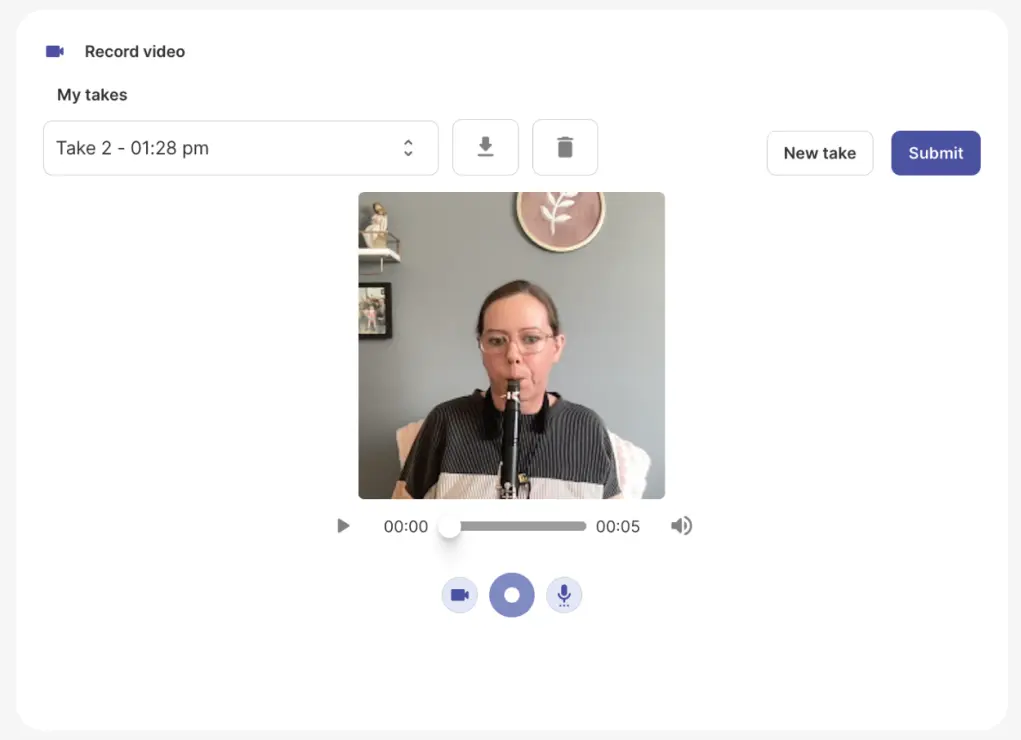
By utilizing Audio/Video-only assignments, educators give students a powerful psychological and pedagogical tool: visual and auditory self-reflection. When students record themselves, they are forced to step outside the act of playing and observe their performance objectively.
Pedagogical studies consistently show that self-video analysis accelerates skill acquisition. When a student watches their own video submission:
- Visual Correction Occurs Naturally: They spot their own collapsed posture, improper hand placement, or tension in the shoulders without the teacher having to point it out repeatedly.
- Auditory Awareness Sharpens: They hear tone quality issues, intonation drifts, and uneven articulation that escape notice while actively concentrating on reading notes in real-time.
Cognitive Preparation via Multiple Choice Assessments
Music performance is fundamentally a cognitive activity before it is a physical one. Rushing students into playing a new piece of music without checking their foundational understanding often leads to frustration and ingrained errors.
Multiple choice assessments serve as a "Pre-Practice Check." By requiring students to answer targeted questions regarding key signatures, unusual rhythm groupings, dynamic markings, and structural landmarks before they pick up their instruments, teachers activate critical thinking. Data from early adopters of digital cognitive assessments in the arts indicate that students who pass a pre-practice theoretical check spend significantly less time stumbling through initial home practice sessions, leading to faster mastery of concert repertoire.
Practical Implementation: Ready-to-Use Lesson Plans
To help educators seamlessly integrate these new tools without overwhelming their planning schedules, MakeMusic has structured practical, low-barrier lesson plans designed specifically for middle and high school ensembles.
Lesson Plan 1: Audio/Video-Only Assignment
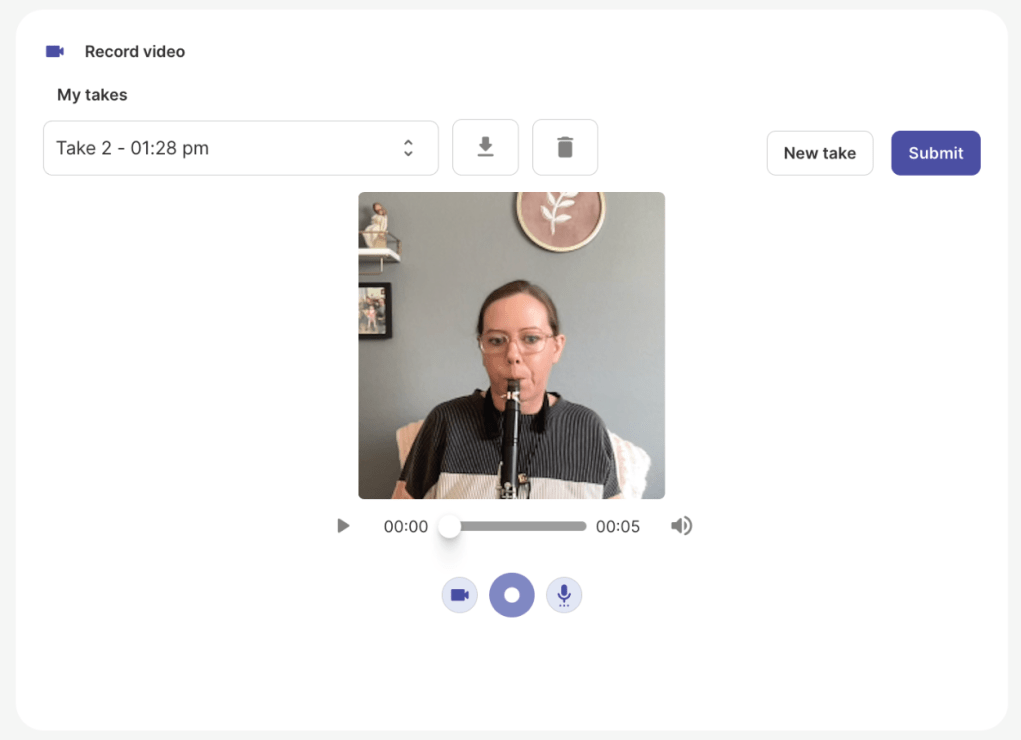
- Assignment Record, Watch, Fix
- Target Audience: Band or Orchestra Ensembles
- Time Commitment: 15 minutes at home
- Primary Goal: Students learn to independently catch and correct their own posture, physical habits, and hand-position errors during home practice.
- Implementation Steps:
- The Setup: The teacher assigns a standard technical exercise or a short excerpt from current concert music, instructing the student to record a video of themselves playing it at home.
- The Review Phase: Before submitting the file, the student is required to watch their recorded video at least once and make mental or written notes on one physical habit they want to improve (e.g., maintaining relaxed shoulders, keeping curved fingers on the keys/strings, or stabilizing embouchure).
- The Iteration: The student records a second take applying their self-correction.
- The Submission: The student submits the final video alongside a brief reflection comment detailing what they observed and how they fixed it.
Lesson Plan 2: Multiple Choice Assessment
- Assignment The Pre-Practice Check
- Target Audience: Any Instrumental Ensemble
- Time Commitment: 5 minutes at home
- Primary Goal: Students identify key signatures, complex rhythms, tempo changes, and important expression markings in a new concert piece before practicing it physically.
- Implementation Steps:
- Quiz Construction: Using MakeMusic’s multiple-choice builder, the director creates a short 5-question quiz incorporating text and uploaded image snips directly from the new musical score.
- Targeted Inquiry: Questions ask students to identify elements such as: "What key does measure 17 modulate into?", "Which measure contains syncopated rhythms requiring careful subdivision?", or "What does the musical term at the top of page two require of our tempo?"
- Digital Deployment: The assignment is assigned through the platform ahead of the first rehearsal of the piece.
- Classroom Integration: The teacher reviews automated analytics to see which specific concepts the class struggled with, allowing for targeted remediation during the subsequent live rehearsal.
Building a Balanced Weekly Routine
One of the most common anxieties voiced by instrumental music teachers is workload sustainability. Adding new assignments can easily lead to burnout if not carefully managed. However, by rotating assignment types thoughtfully throughout the week, educators can construct a comprehensive, multi-dimensional curriculum without adding hours to their lesson-planning schedule.
A balanced weekly workflow might look like this:
- Monday: Introduce a new concert piece in rehearsal; assign a Multiple Choice Pre-Practice Check for homework to verify theoretical and visual comprehension of the score.
- Wednesday: Assign a targeted Music Catalog performance assessment focusing on pitch and rhythm accuracy for a specific tricky measure.
- Friday: Assign an Audio/Video-only "Record, Watch, Fix" exercise to evaluate physical posture, tone production, and self-reflection.
Furthermore, administrative friction is minimized through modern LMS integrations. With built-in features like Google Grade Passback, all completed assignment scores sync automatically to the educator’s Google Classroom gradebook, eliminating tedious manual data entry and ensuring that parents and students have up-to-date visibility into their progress.
Future Outlook: The Next Frontier in Music Tech Pedagogy
As digital tools continue to mature, the landscape of music education is undergoing a fundamental paradigm shift. The integration of cognitive quizzes, video self-reflection, and automated performance tracking points toward a future where data-informed instruction is standard practice in the arts, matching the methodological rigor long found in STEM disciplines.
Industry analysts and educational technologists predict several key trends on the horizon for music assessment software:
- Advanced Diagnostic Analytics: Future iterations will likely feature deeper algorithmic insights, helping teachers instantly identify systemic ensemble weaknesses (e.g., an entire section struggling with a specific rhythmic sub-division) based on aggregated assessment data.
- Personalized Practice Pathways: As AI and machine learning tools become more deeply embedded in educational platforms, software will be able to dynamically generate custom practice exercises based on an individual student’s unique error patterns recorded in audio submissions.
- Redefining the Role of the Director: Far from replacing the human element of music teaching, these technological advancements elevate the role of the director. By offloading routine administrative grading, basic theoretical testing, and initial posture checks to intelligent digital platforms, music educators are freed up to focus on what they do best: inspiring artistic expression, mentoring young minds, and crafting moving musical performances.
For educators looking to modernize their classrooms without sacrificing instructional time, the path forward is clear. By starting small—introducing a single audio/video reflection or a quick multiple-choice theory check next week—teachers can unlock profound new insights into their students’ capabilities.
New to MakeMusic? Educators can explore the platform’s full capabilities by signing up for a free trial to test every assignment type ahead of their next major rehearsal cycle.