
Executive Overview
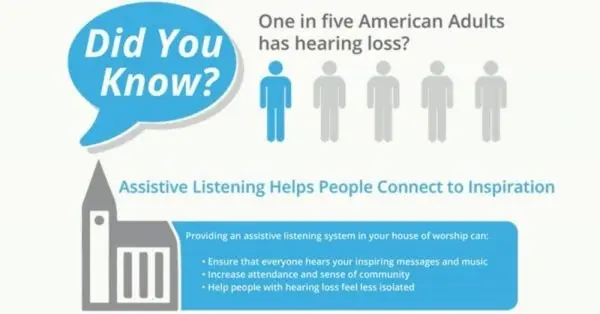
In an era where modern houses of worship strive to offer deeply immersive, spiritually uplifting, and emotionally resonant experiences, a significant portion of the congregant population often remains inadvertently disconnected. Hearing loss is one of the most prevalent physical impairments affecting modern communities, particularly among aging demographics. For millions of churchgoers, the weekly service—once a source of profound spiritual community and auditory comfort—can become an exercise in frustration, marked by muffled acoustics, reverberant halls, and unintelligible spoken words.
To combat this invisible barrier, forward-thinking ministries are increasingly turning to advanced Assistive Listening Systems (ALS). Implementing these technologies is no longer viewed merely as an accommodation for a marginalized few, but rather as an essential pillar of radical hospitality, full accessibility, and genuine community inclusion.
However, procuring and installing an Assistive Listening System is only half the battle. True ministry integration requires a strategic, methodical approach that spans initial congregation assessment, financial planning, comprehensive staff and volunteer training, and sustained community-wide promotion. Drawing on insights from audio-visual integration experts and industry resources—such as the Listen Technologies Church Assistive Listening Toolkit—this report provides a definitive, step-by-step framework for houses of worship looking to bridge the auditory divide, ensure regulatory compliance, and fulfill their mandate of radical inclusivity.
Detailed Chronology: A Four-Step Implementation Roadmap
Successfully deploying an Assistive Listening System within a worship facility requires moving through distinct operational phases. Ramping up technology without laying the proper cultural and administrative groundwork often leads to underutilization, wasted budgets, and frustrated end-users. Below is the strategic four-phase chronology required for seamless implementation.
Phase 1: Understand Your Congregational Needs
Before contacting vendors or browsing equipment catalogs, church leadership must accurately diagnose the specific listening challenges within their community. Assumptions regarding who can or cannot hear clearly during services are notoriously inaccurate.
- Conducting the Needs Assessment: The most efficient and reliable method to uncover these metrics is by deploying a targeted survey. Congregants should be asked to evaluate their audio experience during various parts of the service—whether during spoken prayers, scripture readings, or dynamic musical performances.
- Auditing Hearing Technology Profiles: Crucially, the survey must inquire whether respondents currently use hearing aids, and if so, whether those devices are equipped with telecoils (t-coils). Understanding the prevalence of t-coil technology helps leadership decide between different transmission formats, such as FM systems, Infrared (IR), or Audio Frequency Induction Loop Systems (AFILS), which transmit audio signals directly into hearing aids.
- Analyzing Acoustic Environments: Beyond individual surveys, leadership should map out the physical sanctuary. Are there dead zones where sound waves dissipate? Does architectural reverberation muddy speech intelligibility in the rear pews or under balconies? Combining survey data with spatial acoustic awareness ensures that the chosen solution targets the exact pain points of the congregation.
Phase 2: Fully Understand Your Options and Budgetary Realities
Once the congregation’s profile is established, leadership must navigate the landscape of available hardware, estimated costs, and budgetary frameworks.
- Budgetary Forecasting: Assistive listening equipment varies significantly in price depending on the size of the facility, the number of receivers required to meet regulatory mandates (such as the Americans with Disabilities Act in the United States), and the technology platform chosen.
- Leveraging Expert Consultations: Facilities do not need to navigate this alone. Organizations such as CCI Solutions offer specialized assistance, providing free consultations designed to help church boards and AV teams forecast expenses, evaluate infrastructure, and integrate costs into existing operating budgets without financial strain.
- Creative Funding and Stewardship: For smaller congregations or those operating under tight capital expenditure constraints, funding the project may require creative approaches. Dedicated fundraising campaigns focused explicitly on accessibility—often championed by members who personally understand the isolation of hearing loss—frequently yield enthusiastic financial support from the broader congregation.
Phase 3: Prepare for Operational Success
The finest audio hardware in the world will fail if the internal team does not know how to operate, maintain, or distribute it. Operational readiness is the linchpin of successful ALS deployment.
- Appointing "Assisted Listening Ambassadors": Staff and volunteers working at welcome desks, audio-visual booths, and ushering stations must receive rigorous, hands-on training. Rather than viewing them merely as administrative personnel, frame them as "Assisted Listening Ambassadors"—welcoming advocates whose primary duty is to ensure every visitor experiences pristine sound.
- Interactive Distribution Protocols: When a device is checked out to a congregant, the process should never be passive. Ambassadors should take a brief moment to demonstrate how the device works, how to adjust the volume, and how to comfortably fit the earpieces or neck loops.
- Eliminating Friction Points: To prevent staff confusion during high-traffic Sunday mornings, facilities should keep a laminated, easy-to-read sheet of Frequently Asked Questions (FAQs) directly at the distribution counter. Quick access to troubleshooting steps ensures that minor operational questions are solved in seconds rather than interrupting the service.
Phase 4: Create Awareness and Foster Community Engagement
An invisible technology is an unused technology. Once the system is installed and the team is trained, leadership must aggressively market the availability of the new system both internally and externally.
- Strategic Signage and Branding: Proper signage must be prominently displayed near entrances, welcome centers, and sanctuary doors, indicating that Assisted Listening Devices (ALDs) are available and showing precisely where they can be obtained.
- Multi-Channel Reminders: Accessibility updates should not be a one-time announcement. Bulletins, digital slide decks, pre-service announcements, and church websites must feature ongoing reminders that the facility is fully equipped to support those with hearing loss.
- Hosting Live Technology Demos: To reduce intimidation or self-consciousness regarding assistive devices, consider hosting a live training or demonstration session after a service. Allowing congregants to test the technology in a relaxed environment demystifies the equipment.
- Community Outreach: Do not restrict marketing to existing members. Advertising accessibility options to the surrounding geographic community—particularly through local senior centers, retirement communities, and healthcare networks—sends a powerful message of radical hospitality. Many individuals stop attending church entirely due to hearing decline; knowing a facility accommodates their needs will draw them back through the doors.
Supporting Context & Metrics: The Scale of the Challenge
To fully grasp why assistive listening integration is critical, one must examine the broader public health context surrounding hearing impairment and worship spaces.
The Demographic Imperative
According to public health data from organizations such as the World Health Organization (WHO) and the Hearing Loss Association of America (HLAA), hearing loss is one of the most common chronic physical conditions affecting adults. In aging populations, the incidence rate rises dramatically:
- Approximately one in three individuals aged 65 to 74 experiences disabling hearing loss.
- That figure surges to nearly one in two for individuals aged 75 and older.
Given that traditional church demographics skew toward older populations, houses of worship inherently serve a constituency with elevated rates of auditory decline. When churches fail to provide assistive listening solutions, they inadvertently alienate their most seasoned, historically committed members.
The Psychological Cost of Auditory Isolation
Hearing loss is rarely just a physical ailment; it carries profound psychological and social consequences. Studies in geriatric medicine consistently link untreated hearing loss to:

- Increased feelings of isolation, loneliness, and depression.
- Cognitive fatigue, as the brain works overtime to decipher muffled speech in reverberant architectural spaces.
- Gradual withdrawal from communal gatherings, as individuals prefer staying home rather than sitting through a service where they cannot comprehend the sermon or liturgy.
By deploying an Assistive Listening System, houses of worship do more than transmit sound—they actively combat the spiritual and emotional isolation caused by sensory decline.
Official Statements and Industry Insights
Audio professionals, accessibility advocates, and ministry leaders agree that the integration of assistive technologies marks a paradigm shift in how sacred spaces view inclusion.
"Reaching out to those who feel disconnected from your community due to hearing loss is central to sharing the message of inclusion. Genuinely compassionate service involves being aware of and caring for the needs of everyone, especially those dealing with impairments. Make sure they are able to hear the beauty and emotion of the spoken word in your church by providing them with the equipment they need to stay connected."
— Industry Audio Integration Consensus (Adapted from Listen Technologies Educational Framework)
Experts emphasize that modern church design must balance aesthetic beauty with functional acoustic equity. While historic cathedrals and modern megachurches alike often feature stunning architectural elements—such as vaulted ceilings, hard stone floors, and expansive glass panels—these design choices create notorious acoustic hurdles. Sound reflections bounce indiscriminately, turning spoken messages into an unintelligible wash of noise for those with compromised hearing.
Accessibility consultants note that compliance with legal standards, such as the Americans with Disabilities Act (ADA) in the United States, sets a baseline requirement for public assembly spaces to provide assistive listening. However, true pastoral leadership transcends mere legal compliance. It reframes accessibility as an ethical and spiritual imperative: if the core mission of a house of worship is to proclaim a message of hope, every single soul in the room must be granted unhindered access to that message.
Future Outlook: The Next Horizon in Worship Accessibility
As audio technology continues to evolve at a rapid pace, the future of assistive listening within houses of worship promises even greater integration, discretion, and fidelity.
The Convergence of Wi-Fi and Personal Smartphones
While traditional RF (Radio Frequency) and IR systems relied heavily on dedicated, facility-owned receivers handed out at the door, the next generation of assistive listening leverages local Wi-Fi networks and personal smart devices.
- BYOD (Bring Your Own Device) Models: Future-focused systems allow congregants to download an app on their personal smartphones, connect to the church’s secure low-latency Wi-Fi stream, and route crystal-clear audio directly into their own wireless earbuds, headphones, or Bluetooth-enabled hearing aids.
- Reduced Stigma: By utilizing the same smartphones that people carry in their pockets every day, the perceived stigma of walking up to a service desk to request a specialized medical receiver is entirely eliminated.
Integration with Artificial Intelligence and Smart Acoustics
Looking further ahead, artificial intelligence (AI) and machine learning algorithms are beginning to enter the commercial audio space. Future assistive listening systems will likely feature real-time AI noise suppression that automatically filters out HVAC hums, ambient coughing, and acoustic reverberation in real-time, delivering a pristine, studio-quality vocal track directly to the listener’s ear, tailored specifically to their audiogram profile.
Conclusion
The integration of an Assistive Listening System is far more than an audio-visual upgrade—it is a profound theological statement. It declares that every individual, regardless of physical ability, is a valued, fully participating member of the body of Christ. By carefully assessing congregational needs, navigating budgetary options with expert partners like CCI Solutions, training dedicated operational ambassadors, and aggressively raising community awareness, churches can dismantle the invisible barriers of hearing loss.
Ensuring that every congregant can absorb the emotion, beauty, and power of the spoken and musical word is a vital step toward a truly inclusive, compassionate, and connected community of faith.
For more detailed information on choosing the right Assistive Listening System and tools to ensure your success—including sample surveys, signage assets, and promotional announcements—please download a copy of the official Listen Technologies Church Assistive Listening Toolkit.