
Executive Overview
From September 25 to 27, South Bay’s historic Victorian coastal spa transformed once again into a bustling nexus of modern and traditional improvised music for the 23uretics edition of the Scarborough Jazz Festival. Over three action-packed days, the Grand Hall and surrounding venues played host to an international roster of trailblazers, seasoned masters, and promising young up-and-comers. From high-octane soul-jazz and sweeping modal explorations to ambitious big band reinterpretations of classic rock and global folk fusions, the festival proved that the genre remains as vibrant, diverse, and boundary-pushing as ever.
Despite a few unavoidable last-minute lineup changes—stemming largely from sudden illnesses that tested the resilience of artists and organizers alike—the weekend was overwhelmingly characterized by artistic triumphs. Memorable high points included career-spanning retrospectives by legendary progressive outfits, soul-stirring vocal performances, and deep-dive thematic tributes to jazz icons like McCoy Tyner and Alice Coltrane. As the final notes of the 2026 edition echoed over the North Sea, organizers confirmed that early-bird tickets for next year’s festival are already on sale, ensuring that Scarborough’s rich musical tradition will continue to thrive.
Detailed Chronology: Day-by-Day Festival Breakdown
Friday: Soul-Jazz Roots, Global Horizons, and Avant-Garde Explorations
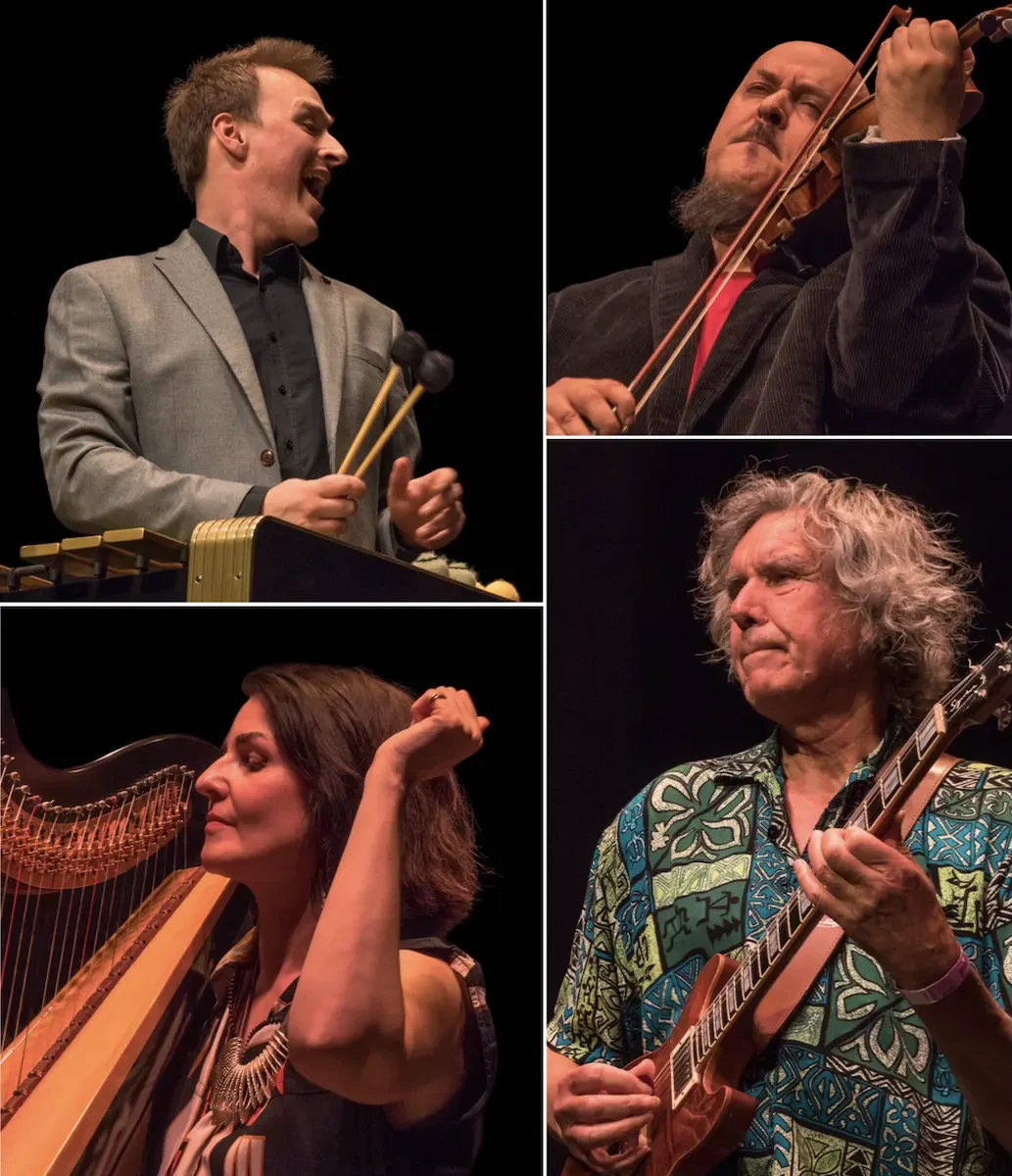
The festival’s opening morning in the Grand Hall immediately established a high-water mark for swing and groove. John Settle’s Vibe-ology kicked off the weekend with a scintillating, rhythmically intoxicating tribute to the soul-jazz sounds of the 1960s. Anchored by Settle on vibes, the quartet featured Al Morrison on guitar, Bob Birch on the Hammond organ, and Joe England driving the groove on drums. Their impeccably curated set spanned iconic cuts like Big John Patton’s Let ’Em Roll, Wes Montgomery’s Jingles, and Buddy Montgomery’s Bock To Bock. Adding an early bonus for purists, woodwind virtuoso Alan Barnes stepped up as a guest artist, handling baritone saxophone duties on Bock To Bock and alto on Grant Green’s Jean De Fleur. Traversing Billy May’s Somewhere In The Night and closing with Marcos Valle’s celebratory Batucada, Vibe-ology delivered a masterclass in mood-setting.
The energy seamlessly shifted to contemporary sounds with Orchard, a recently formed neo-soul octet whose members first crossed paths at London’s Guildhall School of Music. Influenced heavily by the contemporary stylings of Roy Hargrove and Kokoroko, the group brought an entirely original setlist to the stage. Led by the expressive vocals of Evie Hill, the ensemble—featuring Jemima Whyte (alto sax), Matt Hill (trumpet), Cat Eden (trombone), Calum Harrison (guitar), Diarra Walcott-Ivanhoe (piano), Joe Orme (bass), and Lewis Kentaro (drums)—breathed fresh air into the venue with originals like Honesty, Moonlight, and their forthcoming single Towards The Sun.
The afternoon brought the first major lineup alteration of the weekend: Barry Green was sadly forced to withdraw from his scheduled performance with Expansion: McCoy Tyner Project due to sudden illness. In his stead stepped 21-year-old Thomas Sladden, one of Green’s most promising students. Accompanied by Gareth Lockrane (flute), Femke Mooren (alto sax), Oli Hayhurst (bass), and Darren Beckett (drums), Sladden acquitted himself brilliantly. The quintet delivered a deeply reverent, engrossing exploration of lesser-heard McCoy Tyner compositions, including Utopia, Three Flowers, Search For Peace, Fly With The Wind, and Inception, alongside Geri Allen’s emotive Unconditional Love.
As Friday evening dawned, Shirley Smart’s Sextet returned to the festival following their acclaimed appearance the previous year. Smart’s performance was heavily informed by her extensive fieldwork in Jerusalem and her time teaching cello at the conservatory in Ramallah. Seamlessly blending Arabic and North American folk traditions with contemporary jazz frameworks, the sextet—featuring Alistair Martin (trumpet), James Arben (saxes/flute), John Crawford (piano), Marcus Penrose (bass), and Demi Garcia Sabat (drums)—unspooled a magnetic set. Highlights included Saba, the Hebrew-titled Zricha, an Algerian rhythm captured firsthand in the back of an Arab transport van, and Midak Alley, inspired by Naguib Mahfouz’s classic novel exploring the tension between modernism and nostalgia in Cairo.
Later in the evening, the festival encountered some logistical friction with David Newton’s Trio, rounded out by Andy Cleyndert on double bass and Steve Brown on drums. While the musical execution was characteristically relaxed, an unorthodox staging choice—placing the Bösendorfer grand piano end-on between the musicians and the audience—entirely obstructed the pianist from view. With no verbal song introductions and a continuous wall of music, the visual disconnect left some patrons feeling distanced from the performance.
Friday night concluded with a set from the London-based Levitation Orchestra. Self-described as a "genre-defying" and "visionary artistic collective," their sonic palette draws inspiration from Alice Coltrane, Sun Ra, Stravinsky, and Ravel. However, their late-night performance proved polarizing; despite the ambitious theoretical framework, the material felt somewhat disjointed and inaccessible to segments of the audience, who found the stage movement and whispered onstage camaraderie more distracting than atmospheric.
Saturday: Hard-Bop Revival, Pink Floyd Re-Worked, and Progressive Royalty
Saturday morning opened with a fresh configuration of jazz violinist Benet McLean’s Quintet. Featuring Liam Dunachie on piano, Ben Treacher on tenor sax, Wayne Matthews on fretless bass, and Gwilym Jones on drums, the group launched into Archway—a piece inspired by a London police siren from the 1980s. A diverse set followed, including a blistering arrangement of Stan Kenton’s Artistry In Rhythm, a sublime reading of Tubby Hayes’ Young And Foolish, and a witty nod to a friend named Ray in ’Ray’nd Midnight. The morning peaked when Alan Barnes returned to the stage to guest on alto saxophone for a ferocious hard-bop finale on Jackie McLean and Freddie Redd’s O.D.
Barnes immediately transitioned into another collaboration, joining vocalist Brigitte Beraha and pianist David Newton (substituting once more for the recovering Barry Green). Their sublime, highly emotive set—drawing heavily from their collaborative album Tea For Three—offered a masterclass in vocal jazz phrasing. Highlights ranged from the playful opening of Tea For Two and Tom Jobim’s Wave to Beraha’s original setting of a Tennessee Williams poem, We Have Not Long To Love, featuring Barnes on soulful clarinet. Moving effortlessly between languages and emotional registers, Beraha delivered a poignant rendition of Duke Ellington’s Solitude and Jobim’s Falando De Amor, earning a well-deserved standing ovation.
The afternoon brought a momentary stumble for tenor saxophonist Xhosa Cole, who performed alongside Calum Gourley (double bass) and Tim Giles (drums) after pianist Pat Thomas was sidelined by illness. Stripped of a chordal instrument and visibly fatigued from an overnight flight from Scotland, Cole and his trio struggled to ground their cerebral, Thelonious Monk-centric arrangements, resulting in a performance that felt uncharacteristically sparse and hesitant.
Saturday evening, however, brought an explosion of stadium-sized energy with Dark Side Of The Big Band: Pink Floyd Re-Worked. Co-led by guitarist Mark Roadnight and trumpeter Mark Armstrong, this hybrid ensemble combined an electric rock outfit with a roaring big band to reimagine Pink Floyd’s seminal 1973 album The Dark Side of the Moon. Roadnight stepped ably into Roger Waters’ shoes vocally, supported by powerhouse backing singers Sammy Mayne and Rebecca Grayson. With roaring brass charts and soaring guitar solos on tracks like Time, Money, and Us And Them, the set brought the crowd to its feet in roaring approval.
Directly following this, the Trombone Assembly—led by Rory Ingham—commanded the Grand Hall. Accompanied by a stellar brass front-line of Mark Nightingale, Trevor Mires, Kieran McLoud, and Andy Wood (bass trombone), alongside Liam Dunachie (piano), Sam Quintana (electric bass), and Kai MacRae (drums), the group delivered rich, harmonically complex arrangements of standards and originals. From Sonny Stitt’s Eternal Triangle to Trevor Mires’ haunting Bradshaw’s Lament and a breakneck closer of Clark Terry’s Tee Pee Time, the performance was an absolute triumph of brass pedagogy and performance.
Saturday night reached its zenith with a performance by festival headliners Soft Machine. With a lineup featuring guitar luminary John Etheridge, Theo Travis (sax, flute, keys), Fred T. Baker (bass), and Asaf Sirkis (drums), the progressive rock-jazz fusion pioneers delivered a mesmerizing retrospective. Etheridge, marking an astonishing 51 years with the band, regaled the audience with historical anecdotes before launching into cuts from their latest album Thirteen, alongside archival favorites like Out-Bloody-Rageous (1970) and their debut US single Joy Of A Toy (1968). The audience responded with a thunderous, emotional standing ovation.
Sunday: Groove Units, Harp Collectives, and Blues-Infused Joys
Sunday opened with an injection of high-energy jazz-funk courtesy of trumpeter Bryan Corbett and his Instrumental Groove Unit. Admitting to the audience that 95% of their material consisted of exploratory originals, Corbett—alongside Paul Deats (Fender Rhodes), Wayne Matthews (six-string bass), and Luke Harris (drums)—delivered tight, driving grooves from their new album, including the title track IGU, Rubicon, and the botanical-inspired Aloelina.
Following them, leading harpist Alina Bzhezhinska and her HipHarp Collective delivered one of the weekend’s most visually and sonically captivating sets. Joined by Tony Kofi on saxes and flute, Menelik Claffey (double bass), Matthew Holmes (drums), and Joel Prime (percussion), Bzhezhinska explored modal jazz spirituality through arrangements of John Coltrane’s Alabama, Dorothy Ashby’s Soul Vibration, and Alice Coltrane’s Something About John Coltrane. During an unreleased original from their forthcoming album, Bzhezhinska successfully orchestrated mass audience participation, inspiring spontaneous dancing in the aisles.
Sunday afternoon saw a recurrence of Friday’s staging critiques with the vocal pairing of Ian Shaw and Liane Carroll. Once again, the grand piano was positioned end-on, entirely blocking the performers from view whenever they sat at the keyboard, while intermittent stage exits left both artists invisible at points. Despite the vocal brilliance, patrons seated further back voiced frustration over the lack of visual engagement.
The festival concluded on a high note with the return of the American 3D Jazz Trio. Comprising pianist Jackie Warren, bassist Amy Shook, and drummer Sherry Maricle, the trio exuded boundless enthusiasm and musicianship. Their genre-spanning set blended jazz standards like Alice In Wonderland and Midnight Sun with playful originals, culminating in a joyful, crowd-pleasing tribute to Dolly Parton with 9 to 5.
Supporting Context & Metrics
The 2026 edition of the Scarborough Jazz Festival once again underscored the event’s economic and cultural importance to the Yorkshire coast. Drawing attendees from across the United Kingdom and continental Europe, the festival operated across multiple performance spaces—primarily the majestic Grand Hall of the Scarborough Spa, complemented by intimate fringe sessions in the Jazz Lounge and the open-air Sun Court.
Despite unforeseen challenges—including late-stage illnesses affecting prominent bandleaders like Barry Green and Pat Thomas—the festival’s robust booking strategy and deep roster of guest artists ensured minimal artistic disruption. Over 40 distinct ensembles and collaborative projects performed across the three-day weekend, supported by masterclasses, educational outreach involving local school bands, and continuous interval entertainment provided by the Al Morrison Trio.
Official Statements and Artist Reflections
Reflecting on the unpredictable nature of live performance and the resilience of the festival community, organizers highlighted the spirit of collaboration that defined the weekend.
"Jazz is, at its core, a music of adaptation and immediate response," noted a festival spokesperson during the Sunday evening wrap-up. "When illness struck key members of our lineup, the way our resident artists, students, and guest performers stepped into the breach—learning complex repertoire hours before showtime—exemplifies the extraordinary character of this community."
Artists similarly praised the unique acoustics and warm reception of the Scarborough audience. John Etheridge of Soft Machine reflected on his five-decade tenure with the band: "Playing in venues with this kind of historical resonance brings out a distinct energy in the band. The crowd here doesn’t just listen; they engage deeply with the history and the evolution of the music."
Future Outlook: Looking Ahead to 2027
As the curtains close on the 23rd annual gathering, the Scarborough Jazz Festival has firmly cemented its reputation as one of the premier fixtures on the European jazz calendar. By striking a delicate balance between venerated heritage acts, boundary-pushing contemporary collectives, and rigorous educational support for the next generation of players, the festival continues to set a gold standard for curation.
Planning for the 24th edition is already well underway. Organizers have confirmed that early-bird weekend tickets for the 2027 festival are officially on sale, remaining available through January via the official Scarborough Spa ticketing portal at www.scarboroughspa.co.uk. With anticipation already building, patrons are advised to secure their passes early to witness the next chapter in Scarborough’s storied musical legacy.