
Executive Overview
In an era where houses of worship strive to create welcoming, inclusive environments, ensuring that every attendee can fully engage with services remains a paramount challenge. While architectural acoustics, state-of-the-art sound reinforcement systems, and modern multimedia displays have transformed the contemporary worship experience, a significant segment of the population often remains unintentionally isolated: individuals experiencing hearing loss.
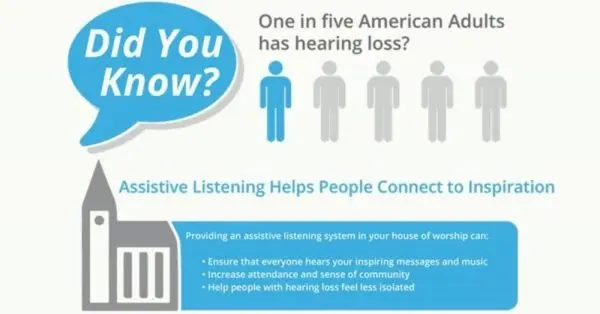
For millions of churchgoers, background noise, reverberation, and distance from the pulpit can turn a deeply spiritual Sunday service into an exercise in frustration. The integration of an Assistive Listening System (ALS) is no longer merely an accommodating afterthought or a legal compliance checkbox; it is a vital ministry tool that ensures the spoken word, music, and emotional resonance of a service reach every ear.
Implementing an ALS requires careful strategic planning, financial forecasting, congregation-wide assessment, and intentional staff training. Drawing on expert insights from audio-visual integration specialists such as CCI Solutions and resources like the Listen Technologies Church Assistive Listening Toolkit, this report provides a comprehensive, step-by-step roadmap for houses of worship looking to bridge the auditory divide. By understanding community needs, evaluating technological options, empowering staff, and actively promoting new capabilities, churches can transform their sanctuary spaces into truly accessible environments where no one misses a message of hope.
Detailed Chronology: The Four-Step Implementation Roadmap
Successfully deploying an Assistive Listening System within a worship facility is a methodical process. To ensure high adoption rates and long-term utility, church leadership must navigate four distinct phases of execution.
[Phase 1: Needs Assessment] ➔ [Phase 2: Technological & Financial Planning] ➔ [Phase 3: Staff Training & Preparation] ➔ [Phase 4: Awareness & Community Outreach]1. Understand Your Needs: Conducting the Initial Assessment
The foundational step when considering an Assistive Listening System is establishing a clear, data-driven understanding of the congregation’s specific auditory needs. Assumptions about who can or cannot hear during services can lead to under-utilized equipment or the purchase of mismatched technology.
- Deploying Congregation Surveys: The most effective method for evaluating need is distributing a comprehensive survey. This questionnaire should explicitly inquire about individual experiences during services, whether respondents currently use hearing aids, and—crucially—whether those hearing aids are equipped with telecoils (t-coils).
- Analyzing Acoustic Environments: Beyond self-reported data, leadership should evaluate the acoustic profile of the sanctuary. High ceilings, hard reflective surfaces, and large open spaces frequently exacerbate speech intelligibility issues, impacting not only seniors with age-related hearing loss but also younger attendees with auditory processing challenges.
- Establishing Baseline Metrics: Gathering this information allows the AV team and administrative staff to quantify the demand, ensuring that the initial investment matches the actual volume of potential users.
2. Fully Understand Your Options: Budgeting and Technological Evaluation
Once the demographic and acoustic needs are established, the next phase involves researching equipment tiers and estimating comprehensive project costs. Navigating the myriad of options—ranging from FM and infrared systems to advanced Wi-Fi and audio induction loop systems—requires expert guidance.
- Professional Consultations: Organizations like CCI Solutions offer expert assistance and complimentary consultations to help facilities navigate the complex landscape of acoustic engineering and budgeting. These sessions help leadership align technical specifications with real-world financial constraints.
- Exploring Funding and Fundraising: For many congregations, capital expenditure can be a hurdle. Developing targeted fundraising campaigns, securing dedicated memorial gifts, or applying for specialized grants can successfully offset the costs of procuring high-end assistive listening solutions.
- Future-Proofing Investments: During this phase, churches must evaluate whether to invest in universal receivers with headsets or systems that broadcast directly to personal smartphones and t-coil-equipped hearing aids, balancing upfront costs against long-term user convenience.
3. Prepare for Success: Staff Training and Operational Protocols
The finest technology in the world will fail if the personnel responsible for distributing and managing it are unprepared. Operational friction at the welcome desk can deter elderly or hard-of-hearing visitors from ever attempting to use an ALS device again.
- Appointing "Assistive Listening Ambassadors": Staff members and hospitality volunteers should be viewed as ambassadors for accessibility. Comprehensive training sessions must be conducted to ensure they understand how the devices function, how to sanitize them between services, and how to troubleshoot basic connection issues.
- Patient, Personalized Onboarding: When checking out a device to a congregant, volunteers must take the time to instruct users patiently on volume controls, neck-loop positioning, and acoustic adjustments. A rushed handoff often leads to user error and abandonment of the technology.
- Creating Quick-Reference Guides: To support volunteers during high-traffic Sunday mornings, facilities should maintain a laminated copy of frequently asked questions (FAQs) and step-by-step troubleshooting instructions directly at the distribution desk or reception counter.
4. Create Awareness: Marketing and Community Integration
Purchasing and installing an ALS is only half the battle; the congregation and the wider local community must be made aware that the technology is available and ready for use.
- Clear, Universal Signage: Strategic signage must be displayed prominently at building entrances, welcome centers, and sanctuary entry points, utilizing the international symbol of access for hearing loss to indicate that Assisted Listening Devices are available and where they can be obtained.
- Multi-Channel Promotion: Reminders should be woven into weekly printed bulletins, digital newsletters, and pre-service multimedia projection slides.
- Live Demonstrations: Hosting a dedicated live training or orientation session allows congregants to familiarize themselves with the technology in a low-pressure environment before a packed Sunday service begins.
- Community Outreach: Advertising the availability of an ALS to the surrounding neighborhood communicates a powerful message of radical hospitality. Many individuals who have stopped attending in-person services due to hearing decline will return when they realize a church has actively invested in their ability to participate.
Supporting Context & Metrics: The Scale of Hearing Loss in Worship
To fully appreciate the urgency of deploying Assistive Listening Systems, one must examine the broader demographic and sociological data surrounding hearing impairments, particularly within faith communities.
Demographic Realities
According to public health data from organizations such as the Hearing Loss Association of America (HLAA) and the World Health Organization (WHO):
- Approximately 48 million Americans (one in five) experience some degree of hearing loss.
- Hearing loss is the third most prevalent chronic physical condition in the United States, outpacing diabetes and cancer.
- While age is a primary factor—affecting nearly 50% of individuals over the age of 75—hearing loss affects people of all demographics, including millions of working-age adults and children.
The Impact on Spiritual Communities
In a traditional house of worship, spoken communication is the primary vehicle for transmitting theology, community announcements, pastoral care, and artistic expression. When speech intelligibility drops:

- Social Isolation Occurs: Hard-of-hearing attendees often migrate to the back or edges of the room, missing out on interpersonal greetings and fellowship moments before and after services.
- Disengagement Deepens: Straining to hear for an hour causes cognitive fatigue, frequently leading individuals to stop attending services altogether.
- The Ministry Gap: Without specialized listening technology, churches inadvertently build physical and psychological barriers that run counter to core tenets of fellowship and compassion.
Technological Advancements: T-Coils and Beyond
Modern assistive listening technology has evolved far beyond the bulky, static-prone radio receivers of the past. Today’s systems integrate seamlessly with personal medical devices:
- Induction Loop Systems: These systems transmit audio electromagnetically directly to hearing aids and cochlear implants equipped with telecoils (t-coils), eliminating the need for separate physical receivers.
- Wi-Fi and FM Streaming: Contemporary venues increasingly utilize local Wi-Fi networks to stream ultra-low-latency audio directly to smartphones via dedicated applications, offering a discreet, user-friendly experience for tech-savvy congregants.
Official Statements and Industry Insights
Industry leaders, accessibility advocates, and AV integration specialists emphasize that accommodating hearing loss is an essential component of modern ministry stewardship.
"Reaching out to those who feel disconnected from your community due to hearing loss is central to sharing the message of inclusion. Genuinely compassionate service involves being aware of and caring for the needs of everyone, especially those dealing with impairments."
— Accessibility Advocacy Collective
Integration professionals point out that technological upgrades in houses of worship frequently focus heavily on visual grandeur—such as large LED walls and complex lighting rigs—while acoustic accessibility is overlooked.
"Make sure they are able to hear the beauty and emotion of the spoken word in your church by providing them with the equipment they need to stay connected. When a visitor sits down and realizes they can hear every whisper, every musical nuance, and every spoken prayer without strain, the barrier between them and the worship experience instantly dissolves."
— Technical Integration Specialist, CCI Solutions
Furthermore, legal standards such as the Americans with Disabilities Act (ADA) outline specific requirements for assembly areas regarding assistive listening systems, making proactive implementation both a moral imperative and a standard of organizational excellence.
Future Outlook: The Evolution of Inclusive Worship Spaces
Looking ahead, the landscape of worship technology is poised for even greater integration of accessibility and universal design principles. As houses of worship continue to adapt to hybrid models—combining in-person gatherings with robust digital broadcasting—the expectation for pristine, accessible audio will only intensify.
Key Trends Shaping the Future of Worship Accessibility:
- Mainstream Smartphone Integration: The shift toward BYOD (Bring Your Own Device) streaming models will accelerate. Congregants will increasingly prefer using their personal smartphones, paired with wireless earbuds or hearing aids, to access customized audio feeds during services, reducing equipment loss and maintenance overhead for churches.
- Artificial Intelligence and Real-Time Captioning: Beyond traditional acoustic assistive listening, forward-thinking ministries are beginning to pair audio systems with AI-driven real-time speech-to-text transcription, projecting live sermon captions onto sanctuary screens for both the hard of hearing and those navigating language barriers.
- Proactive Universal Design: Rather than retrofitting acoustic solutions as an afterthought, future church architecture will incorporate acoustic modeling and integrated loop systems at the blueprint stage, ensuring that buildings are born accessible.
Recommended Action Plan for Leadership
To prepare for this inclusive future, church boards, pastoral staffs, and technical directors should immediately take the following steps:
- Download Industry Toolkits: Utilize comprehensive planning resources such as the Listen Technologies Church Assistive Listening Toolkit, which includes sample congregation surveys, promotional signage templates, and bulletin announcements.
- Initiate an Audit: Partner with an experienced AV provider like CCI Solutions to conduct a comprehensive acoustic and infrastructure audit of your current worship space.
- Commit to Ongoing Education: Train hospitality teams regularly to ensure that accessibility remains a living, breathing part of the church’s cultural ethos.
By intentionally bridging the auditory divide, houses of worship can ensure that the transformative message of their community resonates clearly, powerfully, and equitably in every heart and ear.