
Executive Overview
As the autumn semester swings into full gear, music educators across middle and high school ensembles face a familiar, high-stakes balancing act. The chaotic weeks of student roster adjustments, instrument rental distributions, and initial acoustic calibrations have settled. Ensembles are finally beginning to sound cohesive. However, instrumental music teachers now confront a more complex pedagogical hurdle: accurately evaluating individual student comprehension, technical proficiency, and practice habits before the closing of the first grading period and the onset of intensive fall concert preparations.
In response to this critical juncture in the academic calendar, digital music education platform MakeMusic has rolled out an expanded suite of flexible assessment tools. Designed to move beyond traditional performance-only catalog assignments, the platform now integrates Audio/Video-only assignments and Multiple Choice assessments.
These new features aim to provide directors with granular insights into how students interact with their instruments outside the classroom. By combining visual-auditory performance tracking with foundational music theory comprehension checks, MakeMusic is positioning its platform as a comprehensive ecosystem for modern music pedagogy. This article explores the pedagogical framework behind these tools, their implementation in middle and high school ensembles, and the broader implications of tech-driven assessment in music education.
Detailed Chronology: Navigating the Early-Year Ensemble Transition
To understand the strategic timing of MakeMusic’s feature expansion, one must examine the typical timeline of a school music program’s academic year.
Phase 1: August to Early September — Logistics and Onboarding
The academic year begins with logistical turbulence. Directors spend weeks confirming seat placements, matching students with appropriate instruments, and establishing baseline classroom management strategies. During this phase, digital tools are primarily utilized for basic administrative tasks and standardized catalog performance assessments. Students interact with the platform almost exclusively to play back pre-loaded sheet music, receiving automated feedback on pitch and rhythm.
Phase 2: Mid-September — The Diagnostic Crisis
By mid-September, ensembles begin to unify, but diagnostic blind spots emerge. While a director can hear the collective sound of a band or orchestra during a full rehearsal, isolating individual technical flaws—such as incorrect bow grips, poor embouchure, or tension in the wrists—remains difficult. Furthermore, directors often discover that students are practicing mechanically at home, repeating errors without understanding the underlying notation, key signatures, or rhythmic structures of their repertoire.
Phase 3: Late September and Beyond — Strategic Diversification
Recognizing this pedagogical bottleneck, curriculum developers at MakeMusic identified the need for qualitative oversight during home practice. Rather than waiting for formal sectional rehearsals or high-stakes recitals, educators require diagnostic touchpoints that evaluate how students practice, not just the final audio output.
By introducing targeted homework models—specifically the "Record, Watch, Fix" audio/video protocol and the "Pre-Practice Check" multiple-choice framework—instructors can establish sustainable diagnostic routines before fall concert pressure takes precedence.

Supporting Context & Metrics: The Mechanics of Modern Practice Assessment
The integration of multi-modal assessments addresses long-standing challenges in music pedagogy, specifically the phenomenon of unsupervised, unguided home practice.
Audio/Video-Only Assignments: Cultivating Self-Correction
Traditionally, home practice has been a black box for music educators. Students take their instruments home, practice for a mandated number of minutes, and return to school. Without real-time supervision, bad habits regarding posture, hand position, and tension easily take root.
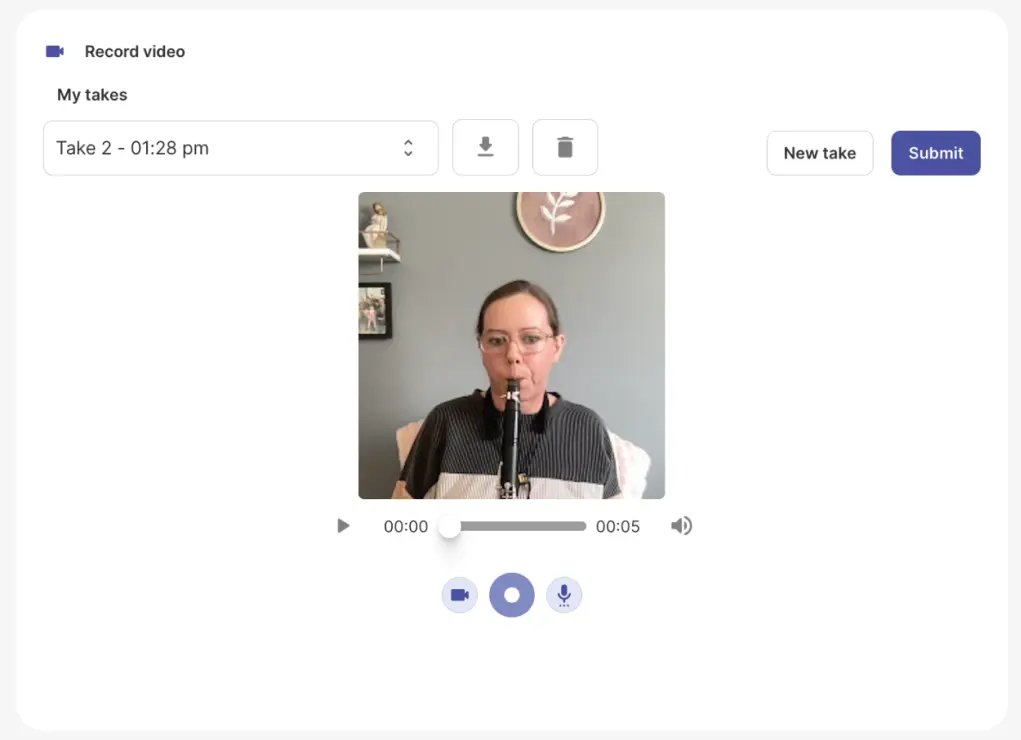
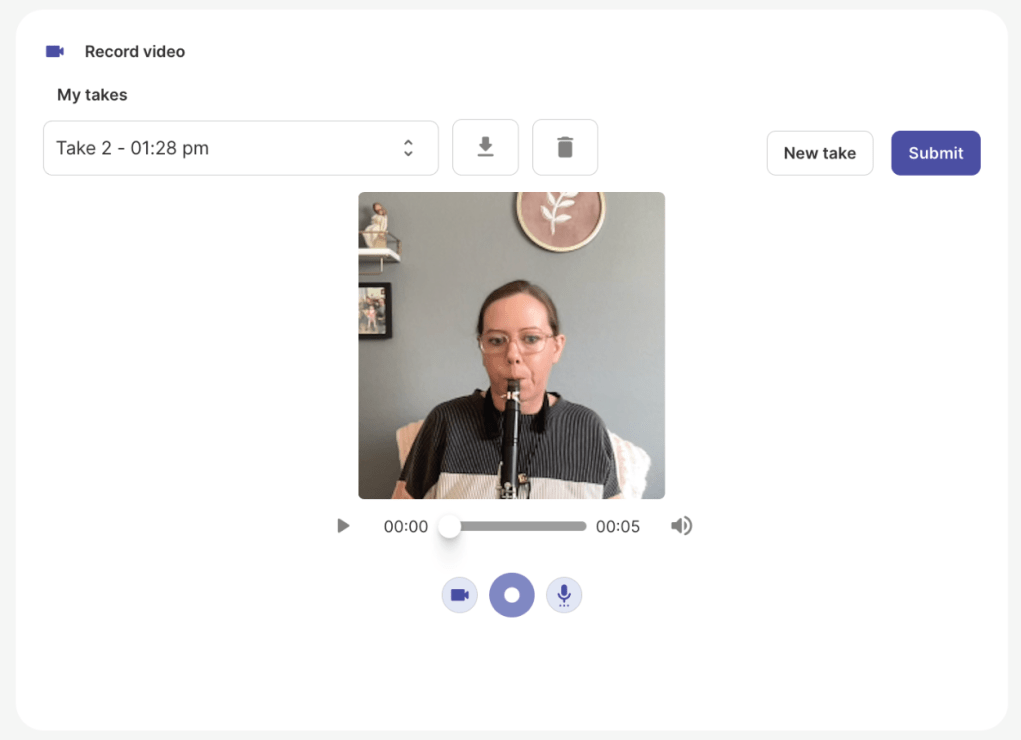
MakeMusic’s Audio/Video-only assignments are designed to crack open that black box. By requiring students to record short video segments of their practice sessions, educators gain a window into home study habits. More importantly, the act of recording forces students to confront their own physical execution.
- The Pedagogical Mechanism: When students watch themselves play, they engage in metacognition—thinking about their own thinking and physical habits. They can visually identify collapsed wrists, asymmetrical bow holds, or improper posture that they might not feel while playing.
- The Homework Model ("Record, Watch, Fix"): Configured for a brief 15-minute home session, this assignment challenges band and orchestra students to record a passage, review the footage specifically for posture and hand position, and document one physical adjustment they need to make.
Multiple Choice Assessments: Theory Meets Instrument
While performance is the ultimate goal of any ensemble, technical proficiency is inextricably linked to theoretical literacy. Too often, students approach new concert pieces by brute-force repetition, hammering away at difficult measures without understanding the underlying harmonic or rhythmic context.
MakeMusic’s introduction of Multiple Choice assessments marks the platform’s first foray into written, non-performance evaluations.
- The Customization Factor: Educators are not limited to generic music history trivia; they can build custom questions incorporating text and targeted image files. A director can crop a complex measure from an upcoming concert piece, insert it into the assessment, and ask questions regarding key signatures, syncopated rhythms, or dynamic markings.
- The Homework Model ("The Pre-Practice Check"): Designed as a quick, five-minute home activity, this assessment requires students to analyze the structural components of a new piece before ever playing a note. By verifying that students understand what is on the page prior to physical execution, home practice time shifts from error-repetition to targeted improvement.
Official Statements and Pedagogical Philosophy
Music education experts emphasize that technology should not replace the human element of instruction, but rather amplify the director’s ability to provide individualized mentorship.
"You’ve learned the names, survived instrument rental week, and your ensemble is starting to sound like an ensemble. Now comes the tricky part: finding out what every student actually knows and can do before the first grading period closes and fall concert prep takes over," notes the MakeMusic curriculum team.
Industry advocates point out that administrative overhead often burns out music educators. Grading dozens of individual student recordings while managing large ensembles leaves little time for personalized intervention. To mitigate this, MakeMusic has integrated automated administrative workflows, such as Google Grade Passback, which automatically syncs assessment scores directly to Google Classroom gradebooks.
By streamlining the collection and grading process, the platform aims to return valuable hours to educators, allowing them to focus on musical interpretation and ensemble cohesion rather than data entry. Furthermore, the platform’s developers stress that teachers do not need to overhaul their entire curriculum overnight. The tools are modular, allowing instructors to introduce a single multiple-choice check or video assignment into their weekly routine and scale upward at their own pace.
Future Outlook: The Evolution of Digital Music Classrooms
As schools increasingly adopt hybrid and tech-enabled learning environments, platforms like MakeMusic are setting new standards for how instrumental music is taught, monitored, and evaluated.
The Shift Toward Holistic Evaluation
The expansion beyond traditional performance-matching software signals a broader industry trend toward holistic student evaluation. Future iterations of music education technology will likely lean heavily into advanced analytics, tracking student progress across multiple dimensions:
- Technical Accuracy: Pitch and rhythm precision via automated audio analysis.
- Physical Ergonomics: Posture and hand-position tracking facilitated by video-based assignments.
- Theoretical Literacy: Cognitive comprehension measured through integrated multi-format assessments.
Integration and Accessibility
As these tools mature, interoperability with major Learning Management Systems (LMS) will remain a primary focus. Eliminating administrative friction ensures that even directors with limited technological proficiency can harness sophisticated diagnostic tools.
For schools transitioning into the late-fall concert season, the immediate availability of these flexible assessment options offers a stabilizing force. By establishing balanced weekly routines—alternating between standard catalog performance pieces, video-based self-reflections, and theory-based multiple-choice check-ins—directors can cultivate well-rounded, self-sufficient musicians.
For educators seeking to evaluate these capabilities firsthand, MakeMusic continues to offer structured onboarding resources and trial pathways, ensuring that the transition into tech-supported ensemble management remains accessible to programs of all sizes and resource levels.