The initial weeks of a new academic year in music education are universally recognized as a delicate, high-stakes crucible. Directors must navigate the logistical chaos of instrument rental weeks, learn dozens—sometimes hundreds—of new names, and guide disparate instrumentalists toward a unified, cohesive ensemble sound. Yet, just as the initial tuning settles and the ensemble begins to gel, educators face a formidable pedagogical hurdle: accurately evaluating individual student comprehension, technical proficiency, and home practice habits before the closing of the first grading period and the frantic onset of fall concert preparations.
Historically, digital music education platforms have relied heavily on automated performance assessments tied directly to standard repertoire catalogs. While invaluable for evaluating melodic accuracy and rhythm through interactive sheet music, these traditional tools have often left a blind spot regarding physical technique, posture, and foundational music theory comprehension.
To bridge this critical gap, MakeMusic has introduced two flexible, highly versatile assessment modalities to its platform: Audio/Video-Only Assignments and Multiple Choice Assessments. Designed specifically with middle and high school band, orchestra, and choir directors in mind, these features arrive at a pivotal moment in the academic calendar. By integrating these tools early in the school year, educators can establish sustainable routines that evaluate not just how a student plays, but how they practice, think, and troubleshoot independently. Combined with seamless administrative integrations—such as automated grade synchronization with Google Classroom—these additions promise to reduce grading friction while offering unprecedented insight into student development.
Detailed Chronology: The Evolution of Digital Music Assessment
To understand the significance of MakeMusic’s latest updates, it is essential to trace the evolution of digital evaluation tools within secondary music education over the past two decades.
Phase 1: The Analog Era and the Black Box of Home Practice
For generations, music education operated on an honor system regarding home practice. Directors assigned weekly practice minutes, relying on signed parent logs or student honor statements. The ultimate evaluation occurred exclusively during in-class rehearsals or sectional pull-outs. This model created a "black box" phenomenon: directors could hear the collective output of the ensemble, but diagnosing the root cause of an individual player’s intonation or tone production issue required time-consuming, one-on-one diagnostic sessions that rarely fit into a crowded rehearsal schedule.
Phase 2: The Rise of Automated Performance Tracking
The advent of interactive music software revolutionized digital pedagogy by introducing automated pitch and rhythm recognition. Students could open a digital score, play into a microphone, and receive immediate algorithmic feedback regarding correct notes and tempos. While this dramatically increased individual accountability and practice engagement, it inadvertently fostered a narrow focus on correct output at the expense of proper physical mechanics. A student could achieve a high score while maintaining atrocious posture, tension-inducing hand positions, or improper embouchure habits—flaws that would eventually manifest as performance ceilings or repetitive strain injuries.
Phase 3: The Integration of Holistic Multimodal Evaluation
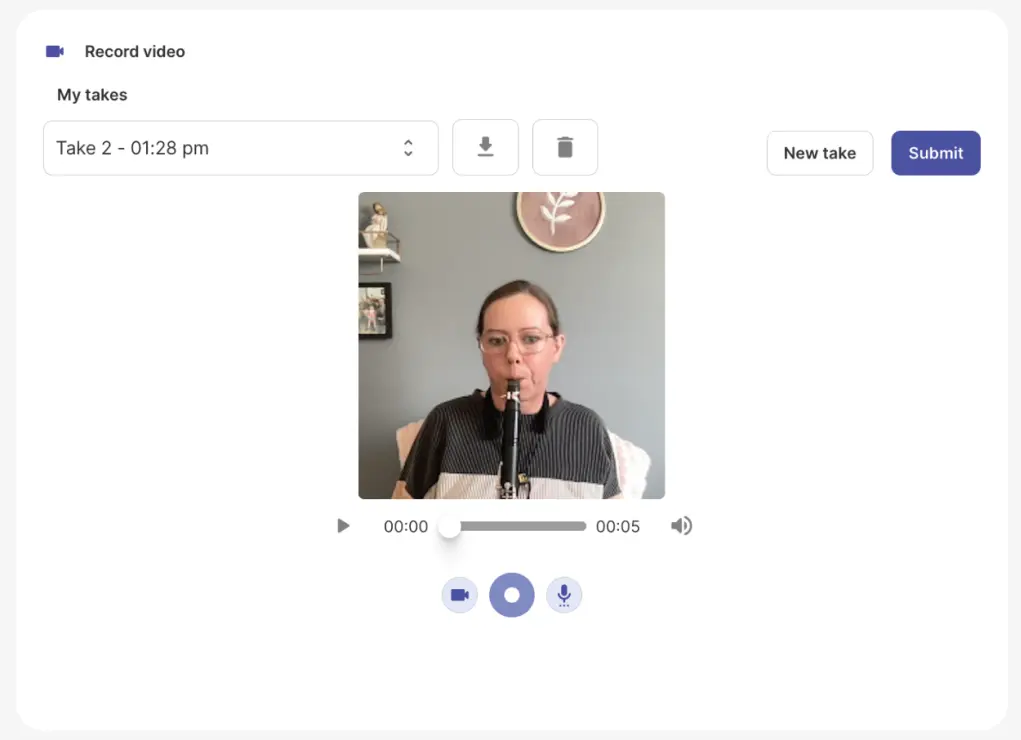
Recognizing the limitations of purely algorithmic audio grading, music technology developers began expanding platform capabilities. The introduction of robust Audio/Video-Only assignments marked a turning point, allowing educators to peer directly into the domestic practice environment. Simultaneously, the integration of written assessment capabilities—specifically customizable multiple-choice evaluations—bridged the historical divide between music theory instruction and applied performance.
MakeMusic’s recent rollout synthesizes these milestones. By providing a unified ecosystem where directors can seamlessly blend performance tracking, visual posture checks, and theoretical pre-assessments, the platform addresses the whole student rather than merely scoring their digital accuracy.
Supporting Context & Metrics: The Mechanics of Modern Ensemble Pedagogy
To appreciate the impact of these new assignment types, one must examine the pedagogical theories underpinning modern music education, particularly the concepts of metacognition, deliberate practice, and formative assessment.
Cultivating Metacognition Through Audio/Video Analysis
In educational psychology, metacognition refers to the learner’s ability to monitor, evaluate, and regulate their own cognitive and physical processes. In instrumental music, self-monitoring is notoriously difficult. When a middle school flutist or high school violinist is deeply engaged in decoding notation and manipulating an instrument, their brain is taxed to its functional limit. Consequently, they frequently fail to notice physical manifestations of poor technique—such as elevated shoulders, collapsed arches in the hand, or awkward bow grips.
Audio/Video-only assignments directly combat this phenomenon by shifting the paradigm from passive practice to active self-reflection. When a student is prompted to record a short practice session, watch the playback, and identify a single physical or technical adjustment, they transition from passive recipients of instruction to active agents of their own technical development.
The "Record, Watch, Fix" Protocol: Structured typically around a concise 15-minute home routine, this assignment type asks students to capture their posture and hand position, review the footage alongside a rubric or guided prompt, and document their corrective actions.
Data-Driven Diagnostics for Directors: For the educator, reviewing a class set of video submissions provides an efficient diagnostic overview. Instead of spending valuable rehearsal time discovering that an entire section of clarinetists has developed a collapsed right-hand wrist angle, the director can identify the trend digitally and address it proactively.
Theoretical Foundations via Multiple Choice Assessments
Performance anxiety and poor sight-reading often stem from a lack of cognitive familiarity with the score. Too often, students approach a new piece of concert literature by immediately placing the instrument to their face and plowing through the notes, repeating foundational mistakes until those errors become hardwired muscle memory.
MakeMusic’s Multiple Choice assessment type—its first venture into written, non-performance digital evaluation—disrupts this counterproductive cycle by enforcing a "know it before you play it" ethos.
Customizable Visual and Textual Content: Educators are empowered to construct targeted quizzes incorporating text, custom images, or direct excerpts from upcoming repertoire.
The "Pre-Practice Check": Designed as a swift 5-minute homework task, these assessments require students to examine key signatures, unusual time signatures, tricky syncopated rhythms, or dynamic markings before touching their instruments.
Cognitive Priming: By answering conceptual questions about the score beforehand, students build a mental map of the piece. When they finally open their cases at home, their practice sessions are focused, intentional, and significantly more efficient.
Building a Balanced Weekly Routine
Pedagogical efficiency relies on variety without administrative overload. By strategically rotating assignment types throughout a weekly cycle, directors can construct a comprehensive, multi-dimensional curriculum without inflating their grading burden.
This structured rotation ensures that cognitive comprehension, technical performance, and physical mechanics receive equal emphasis. Crucially, the administrative overhead associated with managing this multifaceted routine is mitigated by native technological integrations. Through automated grade passback features, scores generated across all assignment types sync directly with popular Learning Management Systems like Google Classroom, ensuring that educators maintain meticulous gradebooks without drowning in paperwork.
Official Perspectives and Expert Analysis
Music educators and curriculum designers have long debated the optimal balance between digital tools and traditional, face-to-face instruction. Industry experts who have evaluated MakeMusic’s expanded assessment suite emphasize that technology should serve to illuminate human instruction, not replace it.
Dr. Elena Vance, a prominent researcher in secondary music pedagogy and former high school band director, notes that the integration of non-performance metrics transforms how students perceive their own artistic growth.
"For decades, students equated ‘practicing’ with simply making noise for a designated period of time," Dr. Vance observes. "By introducing video reflection and theoretical pre-checks, platforms like MakeMusic force a cognitive paradigm shift. Students realize that music-making is an intellectual and physical discipline. When a teenager watches a video of themselves struggling with hand tension and successfully corrects it, that moment of discovery is worth hours of mindless repetition."
Furthermore, administrative stakeholders have lauded the platform’s focus on workflow efficiency. In school districts facing rising student-to-teacher ratios—where a single middle school instrumental music teacher may instruct upwards of two hundred students daily—administrative burnout is a leading cause of educator attrition.
School district fine arts coordinators have pointed out that features like automated Google Grade Passback and customizable template libraries are not merely luxury conveniences; they are essential survival tools. By automating the mechanical aspects of score collection and synchronization, platforms give teachers back the mental bandwidth necessary to focus on artistic expression, ensemble balance, and interpersonal mentorship during live rehearsals.
Future Outlook: The Next Frontier in Music Technology
As educational technology continues to mature, the boundary between digital assessment and live classroom instruction will continue to blur. The successful implementation of audio/video-only and multiple-choice modalities represents a critical stepping stone toward more sophisticated, holistic learning environments.
Looking ahead, industry analysts anticipate several major developments in the digital music education landscape:
Advanced Biometric and Posture Analytics: Future iterations of video assessment tools may incorporate lightweight, privacy-compliant computer vision algorithms designed to automatically flag ergonomic red flags—such as severe spinal curvature, asymmetrical embouchures, or excessive physical tension—providing instant visual overlays to both student and teacher.
Adaptive Theoretical Scaffolding: Multiple-choice assessments are expected to evolve into adaptive learning pathways. If a student struggles to identify a specific key signature or rhythmic grouping during a pre-practice check, the platform could dynamically serve targeted remediation exercises tailored specifically to that student’s individual learning gap.
Deepened LMS Interoperability: While current grade passback integrations streamline administrative record-keeping, future developments will likely feature deeper, bidirectional data syncing with comprehensive student information systems, allowing arts educators to track longitudinal artistic growth across multiple academic years.
Conclusion: Actionable Next Steps for Educators
For educators navigating the complexities of the current academic term, the message from curriculum experts is clear: meaningful reform does not require an immediate, disruptive overhaul of an established syllabus.
Directors are encouraged to adopt an incremental, low-stress implementation strategy. By selecting a single new assignment type—perhaps introducing a quick multiple-choice pre-practice check for the upcoming fall concert repertoire, or piloting a brief video self-assessment with an advanced section—teachers can immediately gather actionable data on student comprehension and practice habits.
For those eager to modernize their instructional approach, logging into the MakeMusic platform and exploring the Create menu opens the door to these flexible new tools. Educators who are new to the ecosystem can access free trial accounts to test-drive every assignment type prior to their next major rehearsal cycle.
Ultimately, these technological advancements serve a singular, timeless purpose: empowering music educators to look beyond the collective wall of sound, understand the unique needs of every individual student, and cultivate a culture of thoughtful, intentional musicianship that lasts a lifetime.