
Executive Overview
The modern jazz landscape continues to expand its perimeters, embracing cross-genre fertilization, large-ensemble reinvention, and vocal experimentation. In an era where traditional boundaries are routinely challenged by a globally interconnected generation of artists, recent recording output offers a compelling snapshot of jazz’s adaptability. This review examines three distinct contributions to the contemporary recorded catalog: Dallas-based saxophonist Justin Pierce’s debut quintet album, Sway; New Orleans bandleader David Bode’s high-octane concert recording, Live At The 2026 New Orleans Jazz & Heritage Festival; and genre-blending vocalist Sarah Pillow’s ambitious septet project, Wanderer.
While each release approaches the broader umbrella of jazz from an entirely different ideological and stylistic vantage point, collectively they underscore the tensions inherent in pushing a historic art form into new territories. Pierce operates within a classicist yet adventurous framework, blending the Great American Songbook with Latin and New Orleans idioms. Bode leverages a sprawling 22-piece contemporary big band to merge progressive jazz-rock textures with New Orleans street beats, albeit with polarizing results. Pillow treads a fine line between classical vocal discipline and jazz-adjacent performance, utilizing an all-star band to interpret standards across eras.
Through a rigorous examination of these works—analyzing their structural arrangements, execution, stylistic divergences, and overarching artistic merits—this survey maps out the current trajectories defining contemporary improvised music.
Detailed Chronology & Album Analysis
Justin Pierce: Sway (Justin Pierce Music, JPM-001)
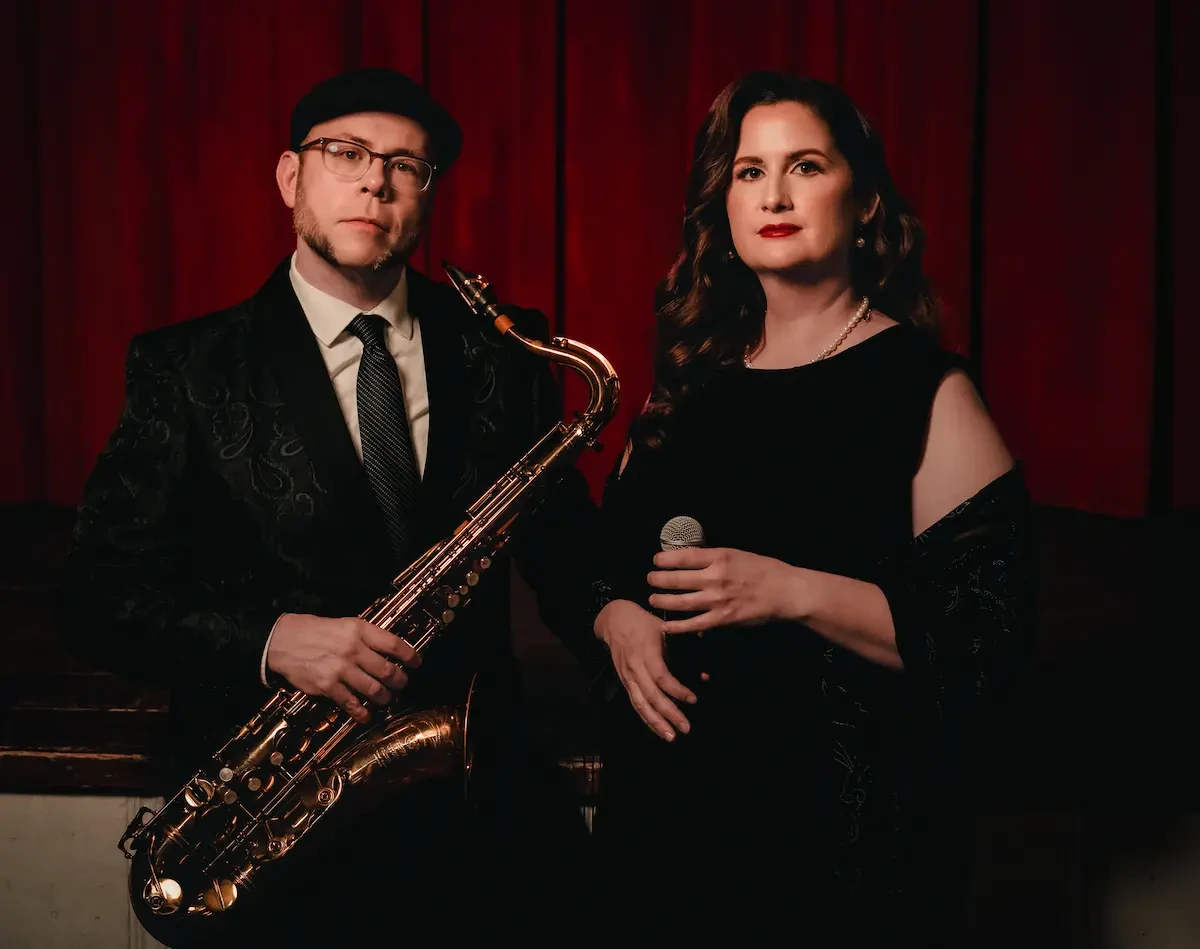
Recorded on May 5, 2025, in Dallas, Texas, Sway marks the official debut album of saxophonist Justin Pierce, a seasoned performer whose résumé includes high-profile collaborations with jazz heavyweights Arturo Sandoval, Bob Mintzer, and Randy Brecker. For this project, Pierce has assembled a tightly knit quintet featuring a rhythm section composed of alumni from the prestigious University of North Texas One O’Clock Lab Band—specifically pianist Sean Giddings, bassist Young Heo, and drummer Matt Young, all of whom previously shared the bandstand with Pierce when he served as lead alto player. Completing the ensemble is Pierce’s wife and primary musical partner, vocalist Ashley Pierce. On Sway, Justin Pierce pivots away from the alto to focus predominantly on the tenor saxophone.
The 48-minute, 10-track program focuses primarily on reimagined standards from the Great American Songbook, cleverly infused with Latin grooves and New Orleans jazz refinements. The opening title track, "Sway," immediately establishes the album’s dual mandate: it showcases Pierce’s commanding tone on the tenor alongside Ashley Pierce’s sultry, warm vocal delivery. However, the track’s momentum is momentarily disrupted by an uncharacteristically off-kilter piano interlude that fractures the song’s natural swing flow.
The sequencing recovers quickly with a creative reading of Fats Waller’s "Honeysuckle Rose," which strips the arrangement down to an intimate bass and voice duet before introducing the full band. This track precedes the first of three instrumentals on the record: a vibrant, tempo-shifting rendition of Horace Silver’s "Jody Grind" that highlights Pierce’s fluid, agile sax work. Mancini’s "Meglio Stasera" is subsequently refashioned into a sprightly samba featuring Italian-language vocals, setting the stage for the second instrumental, a rollicking, high-velocity New Orleans-style overhaul of Miles Davis’s modal classic "All Blues."
The album’s second half maintains this eclectic momentum. Schwarz & Dietz’s "Alone Together" receives a Latinized treatment characterized by amorous vocal phrasing and smooth tenor lines, seamlessly bleeding into a waltzing interpretation of "Moon River." Duke Ellington’s melodic masterpiece "In A Sentimental Mood" serves as the third and final instrumental showcase, featuring breathy, introspective saxophone exploration. Following a soulful, contemporary-leaning revision of Bill Withers’ "Just The Two Of Us," the album concludes with a spirited, high-energy, New Orleans-inflected take on Kaempfert and Gabler’s "L-O-V-E."
Overall, the chemistry within the quintet is palpable. Pierce’s saxophone intonation is remarkably secure across all registers, while Ashley Pierce’s vocal contributions anchor the project with a crystalline clarity and an inviting, organic warmth.
David Bode: Live At The 2026 New Orleans Jazz & Heritage Festival (MunkMix)
Following the 2025 release of his studio debut, Good Hang, which featured a 19-piece orchestra, New Orleans-born saxophonist and big-band leader David Bode returned to the stage with an expanded 22-piece ensemble. Recorded live on April 25, 2026, at the legendary New Orleans Jazz & Heritage Festival, this new album captures the raw, kinetic energy of a large jazz ensemble operating in front of a live festival audience.
Comprising eight tracks entirely arranged by Bode, the 55-minute performance kicks off with an explosive rendition of Kenny Garrett’s "Happy People," quickly pivoting into a poignant, sweeping reading of Jeff Buckley’s "Lover, You Should Have Come Over." The energy shifts again with James Black’s "Monkey Puzzle," which utilizes an arrangement heavily modeled on Sammy Nestico’s celebrated writing style for the Count Basie Orchestra ("Basie Straight Ahead"). This is followed by a striking version of Billy Strayhorn’s "Lush Life," featuring modern synthesizer soloing, evocative vocals by Jenna Winston, and rhythmic underpinnings reminiscent of 1990s neo-soul.
The album’s centerpiece, however, is Bode’s audacious arrangement of John Coltrane’s "Syeeda’s Song Flute," which injects the modal jazz composition with a heavy, driving rock backbeat, extended trumpet jousting, and an intentionally flamboyant, extroverted trombone solo. This segues directly into Bode’s own raucous composition, "Cold Train Funk." Bode has stated that the piece draws inspiration from the melodic vocabularies of John Coltrane, Johann Sebastian Bach, and the legendary New Orleans funk outfit The Meters—though those classical and funk markers occasionally dissolve beneath the dense, heavy-handed orchestration.
The program rounds out with a localized, bounce-beat-infused take on Radiohead’s "Airbag," before concluding with a clever Lennon-McCartney medley pairing "Dear Prudence" with a reggae-rhythm-reimagined "Don’t Let Me Down."
While representing a bold, uncompromising vision of contemporary big-band music, the album is not without its aesthetic challenges. The relentless, pounding backbeat that permeates much of the performance, combined with frequent stage announcements demanding that the festival crowd "make some noise," can become wearisome over the course of a full-length listening experience, occasionally overshadowing the nuance of the arrangements.
Sarah Pillow: Wanderer (Buckyball Records, BR046)
Vocalist Sarah Pillow occupies a rare space in contemporary American music. Having established a career that spans jazz, classical opera, early music, and progressive rock—notable milestones include singing at the Montreux Jazz Festival at age 18, studying jazz at the University of California followed by classical studies at the Oberlin Conservatory, touring with jazz quartets, collaborating with early-music ensemble Galileo’s Daughters, and performing opera at Carnegie Hall—Pillow’s artistic scope is vast.
Her latest project, Wanderer, recorded on January 13–14, 2026, at Raw Recording Studio in Patterson, New York, and released on Buckyball Records, presents a 64-minute, 13-track program. The repertoire traverses an extraordinarily wide sonic map, ranging from the classic pop-jazz of Irving Berlin and Sérgio Mendes to bebop and post-bop staples by Dizzy Gillespie and Charles Mingus, alongside the exotica of Eden Ahbez and the traditional American folk standard "Wayfaring Stranger." The album’s complex and colorful arrangements were crafted by Pillow’s husband, vibraphonist Marc Wagnon, who also performs in the accompanying septet.
Pillow’s vocal approach on Wanderer relies heavily on a semi-operatic technique. While her technical mastery as a classical vocalist is beyond dispute, this stylistic choice imparts a pronounced Broadway-showbiz theatricality to the material. This aesthetic polarization is further heightened by the personnel of her backing septet, which reads as a veritable roll call of modern jazz luminaries: tenor saxophonist Donny McCaslin, alto saxophonist Nicola Caminiti, trumpeter Joey Curreri, pianist Dave Kikoski, bassist Joe Martin, and drummer Mike Clark. Despite the pedigree of these players, their performances within this specific configuration occasionally feel restrained or perfunctory, resulting in a soundscape that listeners steeped in instrumental jazz may find somewhat garish or over-produced.
Ultimately, Wanderer resists easy categorization. It functions less as a traditional jazz vocal record and more as a hybrid, "jazz-adjacent" theatrical song cycle, testing the porous boundaries between high-art vocal interpretation and improvised music.
Supporting Context & Metrics
To contextualize the production values, market positioning, and artistic scopes of these three releases, the following comparative matrix breaks down their core production metrics:
| Album Title | Artist / Bandleader | Primary Ensemble Size | Core Genre Fusion | Recording Location & Date | Primary Label |
|---|---|---|---|---|---|
| Sway | Justin Pierce | Quintet (5 musicians) | Great American Songbook, Latin, New Orleans Jazz | Dallas, Texas (May 5, 2025) | Justin Pierce Music (JPM-001) |
| Live At The 2026 New Orleans Jazz & Heritage Festival | David Bode | Big Band (22 musicians) | Contemporary Big Band, Jazz-Rock, Funk, Reggae | New Orleans, LA (April 25, 2026) | MunkMix |
| Wanderer | Sarah Pillow | Septet (8 musicians incl. leader) | Opera/Classical Vocalism, Standards, Exotica | Patterson, NY (Jan 13–14, 2026) | Buckyball Records (BR046) |
Comparative Stylistic Analysis
- The Traditionalists vs. The Revisionists: Justin Pierce’s Sway remains tethered to the lyrical and harmonic architecture of the Great American Songbook, relying on subtle rhythmic coloration (samba, swing, New Orleans second-line grooves) rather than radical deconstruction. In contrast, David Bode and Sarah Pillow engage in aggressive stylistic juxtaposition. Bode forces John Coltrane and Radiohead through the prism of heavy rock and festival funk, while Pillow bridges the chasm between 19th-century operatic vocal training and mid-century jazz/exotica repertoire.
- Acoustic Space and Arrangement: While Pierce utilizes the intimate, transparent dialogue of a traditional jazz quintet to let individual voices breathe, Bode and Wagnon (Pillow’s arranger) deal in dense, maximalist orchestration. Bode’s 22-piece setup creates a wall of brass and synthesized textures optimized for open-air festival acoustics, whereas Wagnon’s arrangements for Pillow prioritize lush, vibraphone-led harmonic beds designed to support a dominant, operatic vocal line.
Official Statements & Artistic Intentions
While full press releases and liner-note manifests for these specific 2025–2026 cycles highlight distinct promotional angles, the artistic philosophies driving these projects illuminate their broader goals within the contemporary scene.
Justin Pierce has consistently emphasized the importance of lineage and institutional grounding. Coming out of the fertile training ground of the University of North Texas One O’Clock Lab Band, Pierce views his quintet not as a transient pickup group, but as an extension of a shared musical vocabulary cultivated over years of academic and professional association. The inclusion of Ashley Pierce as a permanent co-frontperson shifts the group dynamic away from the horn-centric models typical of straight-ahead quintets toward a vocal-instrumental partnership reminiscent of classic mid-century jazz collaborations.
David Bode’s public commentary surrounding his expansive orchestral works centers on breaking down the perceived stiffness of conventional big-band jazz. By integrating repertoire from rock acts like Radiohead and Jeff Buckley alongside modern jazz innovators, Bode positions his 22-piece unit as an inclusive, genre-fluid vehicle. His stated desire to synthesize disparate influences—ranging from J.S. Bach to The Meters—speaks to an overarching ambition to make large-ensemble music relevant to contemporary festival audiences who consume music across multiple genres.
Sarah Pillow’s body of work, culminating in Wanderer, is rooted in the systematic dismantling of genre silos. Having traversed early music, avant-garde classical composition, opera, and straight-ahead jazz, Pillow has frequently noted in interviews that her vocal apparatus is an omnivorous instrument. Rather than altering her vocal production to fit the stylistic constraints of standard jazz clubs, Pillow insists on bringing her classical training directly into conversation with jazz masterworks, challenging audiences to reconsider the ownership and interpretation of the American canon.
Future Outlook
As the jazz industry moves deeper into the latter half of the 2020s, releases like Sway, Live At The 2026 New Orleans Jazz & Heritage Festival, and Wanderer point toward several notable trends shaping the future of improvised music:
- The Persistence of Genre Fluidity: The porous boundary between jazz and rock, pop, and classical music will continue to widen. Artists are increasingly less concerned with genre purity and more invested in personal sonic synthesis—regardless of whether audiences and critics embrace the resulting hybridity.
- Orchestral Ambition in Live Settings: Bode’s success in bringing a massive 22-piece ensemble onto the festival circuit demonstrates that large-scale jazz orchestration still holds commercial viability, provided it incorporates high-energy grooves and cross-genre covers capable of captivating large, open-air crowds. However, artists walking this path must carefully balance sonic density with dynamic subtlety to avoid listener fatigue.
- Vocal Experimentation and Polarization: As vocalists like Ashley Pierce and Sarah Pillow prove, the human voice remains the ultimate vehicle for pushing jazz into new territory. Whether through warm, intimate swing interpretations or high-art, semi-operatic recontextualizations, vocal jazz will continue to provoke debate among purists and innovators alike.
Ultimately, these three releases remind us that jazz remains a vital, restless art form. Whether looking backward with a fresh perspective or hurtling forward into unchartered sonic territory, contemporary artists continue to expand the vocabulary of improvised music, ensuring its relevance for generations to come.