
Executive Overview
For generations, music educators have faced a persistent, frustrating pedagogical paradox: strong sight-reading skills are essential for lifelong musicianship, yet providing a continuous stream of fresh, appropriately leveled material to build those skills remains one of a teacher’s most exhausting weekly chores. Sight reading unlocks the ability to learn music faster, rehearse more efficiently, and walk into festival evaluation rooms with cool confidence instead of white-knuckled dread. More importantly, independent reading literacy is the primary vehicle that ensures students continue making music long after they graduate, whether they join a regional community band, a Sunday morning church choir, or assemble a garage jam band with old friends.
The catch—and the historic pain point for instructors—has always been the exhaustion of static resources. Traditional printed method books contain a finite number of exercises. Once a student plays through a page two or three times, cognitive recognition gives way to rote memorization; they are no longer reading notation, but rather recalling sounds from muscle memory. Sourcing supplementary, perfectly leveled material requires hours of manual transcribing, scouring online archives, or paying out-of-pocket for auxiliary workbooks.
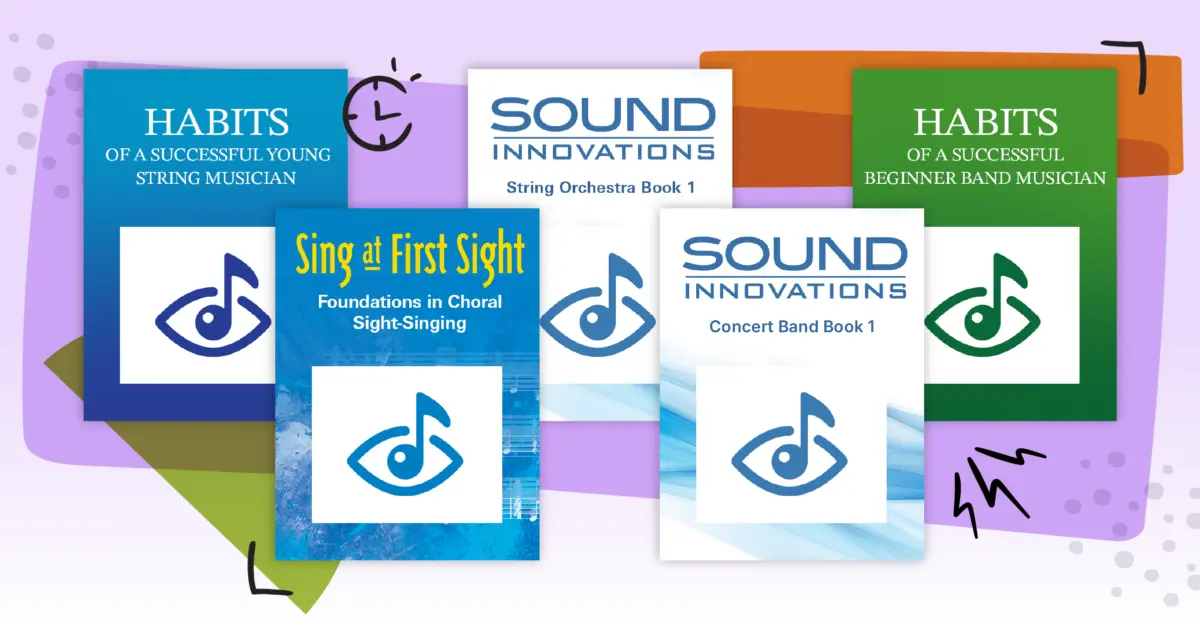
Enter MakeMusic, an industry leader in digital music education tools. In a major development for instrumental and vocal classrooms, the company has officially rolled out its innovative Correlated Sight Reading Templates via MakeMusic Cloud. Designed to seamlessly integrate with Sight Reading Studio, these pre-built, lesson-by-lesson generators convert standard, widely adopted method books into an infinite, automated pipeline of fresh sight-reading exercises. By bridging the gap between curriculum pacing and algorithmic generation, MakeMusic is drastically slashing teacher preparation time while fundamentally modernizing how students interact with music notation.
Detailed Chronology: The Evolution of Sight-Reading Pedagogy and Digital Integration
To understand the weight of MakeMusic’s latest release, one must examine the historical trajectory of music literacy instruction and the gradual convergence of pedagogical method books with digital technology.
The Era of Static Print (Pre-Late 20th Century)
For centuries, music pedagogy relied entirely on physical print. Instructors utilized canonical method books—such as the Essential Elements series, Tradition of Excellence, or Standard of Excellence—which established systematic sequences for teaching rhythm, pitch, articulation, and key signatures. While these books revolutionized group instruction by providing a uniform text for every student in an ensemble, they suffered from a fatal physical limitation: page economy. A single page might offer four or five short exercises for a specific rhythmic concept (e.g., dotted quarter-eighth note combinations). Once mastered or memorized, that page lost its utility as a pure sight-reading tool.
The Rise of Digital Notation and Early Software (2000s–2010s)
As music notation software (like Finale and Sibelius) matured, educators gained the ability to draft their own custom exercises. However, this shift merely transferred the labor burden from paper to screen. Teachers spent late nights typing notes into scorewriters, transposing keys, and formatting handouts. While platforms like MakeMusic Cloud (formerly SmartMusic) introduced interactive assessment and vast digital libraries, automated personalization matched to specific page numbers of physical curricula remained a distant frontier. Instructors still had to manually hunt through software repositories to find pieces that matched a specific week’s lesson plan.
The Algorithmic Breakthrough (Present)
The introduction of MakeMusic’s Correlated Sight Reading Templates represents the culmination of years of metadata tagging, algorithmic development, and pedagogical alignment. Instead of forcing educators to cross-reference software databases with their printed curriculum, MakeMusic’s developers mapped pre-existing Sight Reading Studio parameters directly against the chronological benchmarks of trusted, mainstream method books.
When an instructor is teaching Lesson 14 of a specific method book—focusing, for instance, on specific pentatonic extensions or syncopated rhythms—they can now navigate directly to that corresponding digital template. With a single click, an algorithm generates an entirely original exercise calibrated precisely to the technical limitations and achievements of that specific lesson. The era of manual transposition and repetitive practice on memorized exercises has officially drawn to a close.
Supporting Context & Metrics: The Crisis of Teacher Burnout and Music Literacy
The release of these correlated generators arrives at a critical juncture for K-12 arts education. Recent educational studies and teacher-retention surveys highlight a silent crisis across school music programs: administrative burden and non-instructional workload are driving passionate educators out of the profession at alarming rates.
The Mathematics of Prep Time
Consider the typical workflow of a middle school band or high school choir director. A full-time instructor often teaches five classes a day, interacting with anywhere from 150 to 250 students daily. Providing differentiated instruction requires tailoring materials for varying skill tiers.
- The Weekly Toll: Industry estimates suggest an average music educator spends between 3 to 5 hours every week searching for, formatting, printing, or hand-writing supplementary sight-reading materials.
- The Annual Impact: Over a 36-week academic year, this translates to upwards of 180 hours—roughly four and a half standard work weeks—spent purely on auxiliary paperwork rather than direct student engagement, podium time, or artistic mentorship.
MakeMusic’s correlated generators directly target this administrative drag. By automating the creation of leveled reading exercises, the platform hands those hours back to the educator, redirecting energy toward diagnostic listening, tone development, and expressive interpretation.
The Cognitive Science of Sight Reading
From a neurological perspective, sight reading is one of the most complex cognitive tasks a human brain can perform. It requires simultaneous processing of visual symbols (notes, clefs, dynamic markings), translation of those symbols into motor commands (fingerings, bowings, vocal placements), real-time rhythmic calculation, and auditory feedback monitoring.
Cognitive psychologists emphasize that true sight reading relies on pattern recognition rather than serial decoding. When students repeatedly play exercises they have seen before, their brains bypass the active visual-cognitive processing loop, substituting it with procedural memory. By providing an infinite well of novel exercises that strictly adhere to a student’s current zone of proximal development (learning just one new variable at a time), the correlated templates ensure that genuine cognitive processing—and true literacy acquisition—remains active day in and day out.
Official Statements and Pedagogical Insights
Industry experts, curriculum developers, and veteran music educators have praised the flexibility and design philosophy behind the new templates.
"For decades, teachers have known that sight reading is the key to musical independence, but the logistical hurdles of finding fresh, appropriate material day after day have made consistent implementation nearly impossible," noted a lead product developer at MakeMusic. "We didn’t just want to build another database of exercises. We wanted to build a bridge that respects the curriculum teachers are already using, removing friction so that sight reading feels like a natural, effortless extension of the daily lesson."
Pedagogical consultants emphasize that the integration addresses both classroom mechanics and autonomous student practice. In group settings, ensemble directors frequently struggle with pacing. When some students grasp a concept immediately while others require reinforcement, the teacher is caught in a bind. With infinite generation capabilities, an instructor can instantly project a secondary, parallel exercise on a smartboard to challenge advanced learners or remediate struggling sections without losing the momentum of the full ensemble.
Furthermore, the design philosophy champions equity in music education. Not all students have access to private tutors who can supply custom technical ETUDES. By embedding these generators within an accessible digital ecosystem, MakeMusic ensures that every student—regardless of socioeconomic background or geographic location—has access to an inexhaustible library of customized reading material tailored precisely to their classroom textbook.
Future Outlook: The Next Frontier of Digital Music Education
As artificial intelligence, adaptive algorithms, and cloud-based learning management systems continue to intertwine, the launch of MakeMusic’s correlated sight-reading templates serves as a clear indicator of where music pedagogy is heading.
Predictive Personalization
Looking forward, industry analysts predict that the next iteration of these tools will move beyond static lesson-book correlation into dynamic, adaptive generation. Imagine a platform where MakeMusic Cloud analyzes a student’s micro-errors during a live practice session—identifying specific rhythmic hesitations or pitch inaccuracies—and automatically adjusts the parameters of the next generated sight-reading exercise to target those precise weaknesses.
Expanding Curricular Ecosystems
While the current rollout successfully anchors itself to major foundational method books, the architecture of Sight Reading Studio is designed for continuous expansion. As publishing houses update their curricula and regional educational bodies adopt new state standards, the template library is expected to grow, encompassing specialized methodologies for jazz idioms, contemporary commercial music (CCM) vocal styles, and advanced orchestral literature.
A Renewed Focus on Lifelong Music-Making
Ultimately, the grand vision of these technological advancements is not merely higher scores at regional adjudicated festivals, though that remains a welcome byproduct. The true victory lies in the cultivation of autonomous, fearless musicians.
When students conquer sight reading through low-stress, high-frequency, automated practice, the fear of the unknown score evaporates. They enter high school wind ensembles, university marching bands, community theater pits, and local acoustic circles equipped with a profound literacy that transcends the classroom walls. By removing the administrative barriers that kept fresh material out of students’ hands, MakeMusic has laid down a vital digital foundation for the future of participatory music culture.
How to Get Started Today
For educators eager to reclaim their weekends and supercharge their students’ sight-reading proficiency, implementation requires just a few clicks:
- Log In: Access your account via the MakeMusic Cloud portal.
- Navigate: Explore the newly updated Correlated Sight Reading Templates within the Sight Reading Studio interface.
- Select & Generate: Locate the specific method book and current lesson number you are actively teaching in your classroom. Click Generate to instantly produce a pristine, professionally formatted exercise tailored to your students’ exact developmental milestone.
Transform sight reading from a dreaded chore into an engaging, infinite daily habit, and watch your students step up to the music stand with absolute confidence.