
Executive Overview
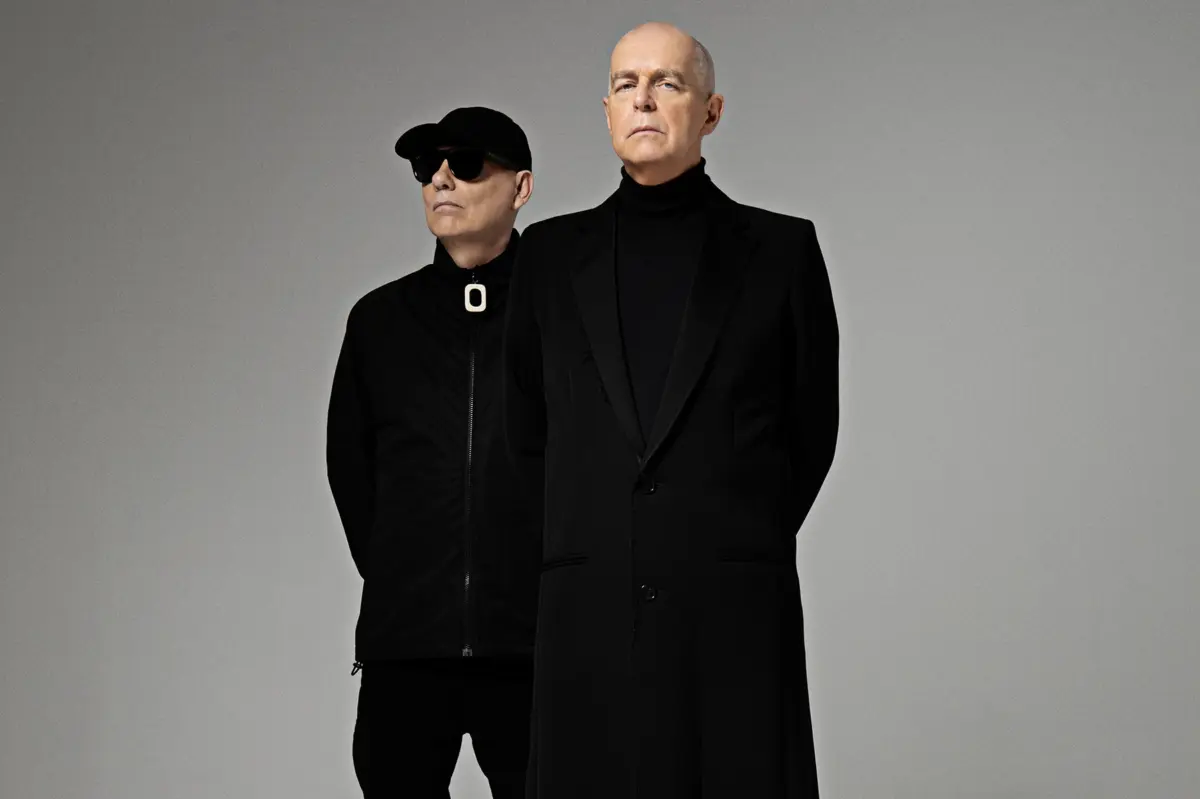
More than a decade after its initial conceptualization, the legendary British electro-pop duo Pet Shop Boys—comprising vocalist Neil Tennant and keyboardist/programmer Chris Lowe—has officially released A Man from the Future. Arriving via Parlophone Records, this sweeping concept album represents a profound evolution of a project first staged in fragments over ten years ago.
Produced collaboratively by the Pet Shop Boys and avant-garde composer Sven Helbig, the record serves as a sonic biography, exploring eight critical chapters in the life, monumental achievements, tragic persecution, and ultimate demise of Alan Turing. Widely recognized as the intellectual architect of modern computing and artificial intelligence, Turing’s brilliant trajectory was cut short by systemic prejudice.
A Man from the Future bridges the gap between classical composition and futuristic electronic soundscapes. Featuring new electronic textures, freshly arranged text, and dynamic orchestrations by Sven Helbig—performed by the Manchester Camerata Octet, alongside spoken-word performances by acclaimed actress Juliet Stevenson drawn from Andrew Hodges’ definitive biography, Alan Turing: The Enigma—the album is both a technological marvel and a poignant musical memorial. Coming on the heels of their critically acclaimed 2024 LP Nonetheless, which peaked at No. 2 on the Official U.K. Albums Chart, this release reaffirms Tennant and Lowe’s enduring commitment to high-concept, culturally vital pop art.
Detailed Chronology: From Concept to Completion
The genesis of A Man from the Future dates back to 2012 and 2013, a period when Neil Tennant and Chris Lowe first immersed themselves in Andrew Hodges’ biographical work. The creative spark coincided with the cultural buildup to the theatrical release of The Imitation Game (2014), the cinematic retelling of Turing’s codebreaking exploits starring Benedict Cumberbatch.
Recognizing the dramatic potential and historical weight of Turing’s narrative, the Pet Shop Boys set out to construct a large-scale musical tribute. The project found its initial public expression in July 2014, when the duo performed select pieces from the work during a landmark BBC Prom at London’s prestigious Royal Albert Hall. Backed by orchestral arrangements, those early performances established the foundational thematic elements of the composition, though the complete studio realization remained dormant for years.
In the intervening decade, the project underwent a comprehensive re-evaluation. Tennant and Lowe revisited the score, updating, reworking, and rearranging the material to reflect contemporary electronic production standards. Partnering with Sven Helbig proved transformative; Helbig injected fresh orchestrations into the compositions, while new electronic elements and narrative texts were woven into the tapestry of the album.
The resulting LP is structured as a chronological journey through Turing’s extraordinary life:
- The Formative Years: Exploring Turing’s early school days, his burgeoning fascination with mathematics and science, and the quiet realization of his personal identity and sexuality.
- Cambridge Academia: Capturing his intellectual awakening at the University of Cambridge, where his theoretical frameworks began to take shape.
- Bletchley Park and World War II: Detailing his pivotal, classified role at Bletchley Park, where he led the charge in unlocking the encrypted messages of the German Enigma machine, directly contributing to the Allied victory.
- The Birth of Computing: Documenting his foundational contributions to the invention of the digital computer.
- The Vision of AI: Highlighting Turing’s uncanny, prescient predictions concerning Artificial Intelligence and machine sentience.
- Persecution and Trial: Confronting the darker, institutional realities of post-war Britain, focusing on his 1952 trial and subsequent conviction for homosexuality.
- Tragic Conclusion: Commemorating his untimely death by suicide in 1954 at the age of 41, sealing a dark chapter in British judicial history.
Supporting Context & Metrics: A Legacy of Electronic Innovation
The release of A Man from the Future arrives at a time of sustained creative vitality for the Pet Shop Boys. The duo’s previous studio album, Nonetheless (2024), captured the imagination of critics and fans alike, securing the No. 2 position on the Official U.K. Albums Chart. Such commercial and critical longevity is rare for electronic acts originating in the 1980s, yet Tennant and Lowe have continually defied expectations by merging sophisticated lyricism, danceable hooks, and high-concept art projects.
In their native United Kingdom, the Pet Shop Boys occupy legendary status. Their historic chart run includes:

- 22 Top 10 Hit Singles: A testament to their ubiquity in British pop culture, featuring four chart-topping No. 1 singles.
- 10 Top 10 Studio Albums: Highlighted by their 1993 chart-topper Very, which cemented their mastery of synthesized pop grandeur.
Across the Atlantic, the duo’s impact on American dance and pop charts remains indelible. The act has notched 12 appearances on the Billboard Hot 100, including five top 10 hits and a historic No. 1 with their seminal 1986 anthem, "West End Girls"—a track that itself revolutionized the sonic landscape of synth-pop.
By channeling this pop pedigree into a solemn, biographical concept album, the Pet Shop Boys demonstrate that electronic music can function simultaneously as high-art narrative and emotional catharsis. The integration of Juliet Stevenson’s spoken-word delivery—utilizing excerpts from Andrew Hodges’ literary text—anchors the electronic and orchestral flights in rigorous historical fact, ensuring the album reads and listens like an auditory documentary.
Official Statements and Cultural Significance
The impetus behind A Man from the Future is rooted firmly in a sense of historical reckoning and moral obligation. In an official joint statement released alongside the album, the Pet Shop Boys articulated the underlying motivation for the project:
"Our motive in creating this work was to make a musical memorial to Alan Turing who gave so much to his country and the world and was rewarded for it by being prosecuted for his sexuality.
Alan made a massive contribution to the defeat of Germany in World War II and was a pioneer of computing, imagining a world with intelligent computers. He also looked forward to a time when being gay would be accepted as normal. In both his professional and private lives, he was ahead of his time."
Turing received a posthumous royal pardon from Queen Elizabeth II in 2013, over half a century after his chemical castration and tragic death. Yet, cultural tributes of this scale—crafted by artists of international renown—play an essential role in embedding his sacrifices into the global consciousness. By framing Turing’s life through the lens of electronic music, a medium that itself relies on the binary logic and computational advances he helped pioneer, the Pet Shop Boys have created a deeply symmetrical tribute.
Future Outlook
As A Man from the Future makes its way into the digital streaming ecosystem and physical record stores worldwide, its release opens new avenues for how pop and electronic artists can engage with historical nonfiction. The collaboration between Tennant, Lowe, Helbig, and the Manchester Camerata Octet sets a high benchmark for orchestral-electronic fusion.
While the Pet Shop Boys have not yet announced a full-scale global tour dedicated exclusively to the performance of A Man from the Future, the sheer ambition of the score—combined with the positive critical reception of its midnight release—suggests that live stagings in major cultural capitals are a distinct possibility. Following their triumphant run with Nonetheless, Tennant and Lowe have once again proven that they are artists refusing to rest on their considerable 1980s and 90s laurels. Instead, they continue to look backward to honor the architects of our modern world, while simultaneously pushing the boundaries of electronic music production straight into the future.