
Executive Overview
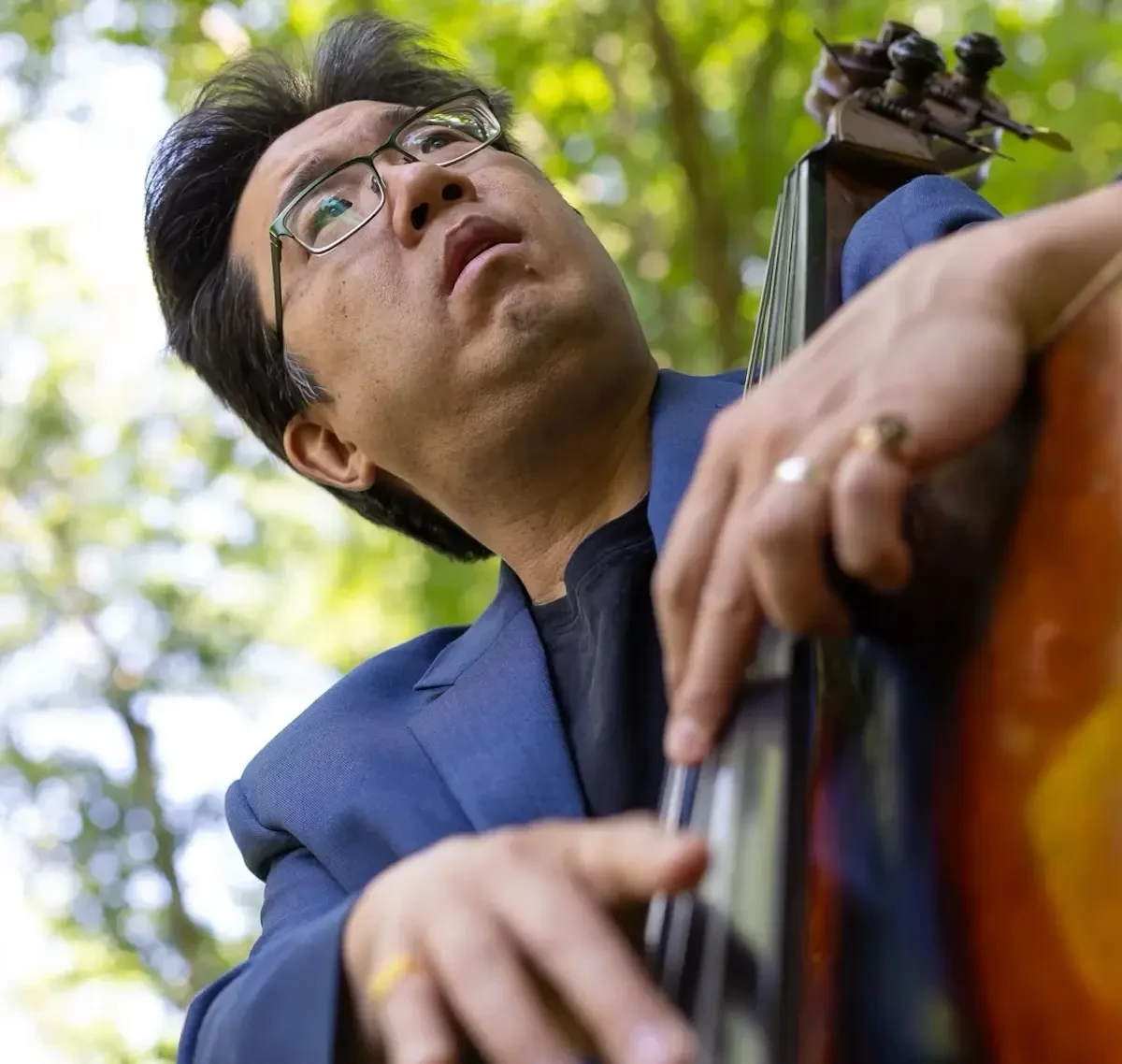
The contemporary landscape of jazz criticism frequently grapples with a central tension: the pull of archival reverence versus the push for cross-cultural innovation. Two recent additions to the global jazz catalog— bassist Fumi Tomita’s conceptual suite Yokai: Songs Of The Japanese Supernatural (OA2 Records) and WaxTime’s premium 180-gram vinyl reissue of Cannonball Adderley’s 1957 classic Sophisticated Swing—offer a fascinating masterclass in this dichotomy. While Adderley’s rediscovered gem anchors us firmly in the golden age of American hard-bop, Tomita’s ambitious quartet project projects ancient Japanese mythology through a distinctly modern, swinging improvisational lens.
Despite the global saturation of Japanese horror cinema in the late 20th and early 21st centuries, Western audiences frequently retain only a superficial understanding of Nippon’s rich folkloric traditions. Fumi Tomita bridges this cultural deficit not through academic lectures, but through robust, harmonically adventurous hard-bop compositions featuring the soaring leads of guitar and saxophone. Conversely, the reissue of Cannonball Adderley’s Sophisticated Swing reminds contemporary listeners of the foundational architecture of the genre. Presented as a deluxe, limited-edition gatefold package complete with restored archival notes and pristine analog pressings, the album captures an era when hard-bop was not just an artistic statement, but a vital cultural force driving the American musical landscape.
Together, these releases represent a dual narrative in jazz documentation: the ongoing preservation of mid-century mastery and the continuous expansion of jazz’s thematic vocabulary. This report provides an exhaustive, multi-faceted analysis of both albums, evaluating their historical contexts, structural compositions, technical merits, and long-term implications for the genre.
Detailed Chronology: From 1957 New York Sessions to 2025 Massachusetts Studios
To fully appreciate the lineage connecting these two releases, one must trace the chronological arc of hard-bop across nearly seven decades—from the sweltering New York recording studios of the mid-1950s to the state-of-the-art acoustic spaces of modern New England.
The Winter of 1957: The Birth of Sophisticated Swing
In early February 1957, the jazz world was undergoing a seismic shift. The bebop era was maturing into the harder, more blues-infused cadence of hard-bop, driven largely by horn players who sought to reconnect jazz with its gospel and rhythm-and-blues roots. Among these architects were brothers Julian "Cannonball" Adderley and Nat Adderley.
Between February 6 and February 11, 1957, a quintet featuring Nat Adderley on trumpet, Cannonball Adderley on alto saxophone, Junior Mance on piano, Sam Jones on bass, and Jimmy Cobb on drums assembled in New York City. The sessions yielded the material for Sophisticated Swing, a date that highlighted the seamless interplay between the Adderley siblings and a rhythm section destined for legendary status. Bassist Sam Jones, who contributed three compositions to the date (along with one co-written with Nat Adderley), was establishing himself as an indispensable sideman on the West Coast before heading eastward. Within a year of these sessions, Jones would join forces with pianist Dave Brubeck, while drummer Jimmy Cobb and pianist Junior Mance cemented their reputations as the quintessential accompanists of the era.
These recordings captured the exact historical juncture before Cannonball Adderley joined the Miles Davis Sextet later that year—a tenure that would result in masterworks like Milestones and Kind of Blue. Sophisticated Swing stands as a crucial snapshot of an ensemble on the cusp of global prominence.
The Summer of 2025: The Conception of Yokai
Fast-forward nearly seventy years to August 15–16, 2025, at Northfire Studios in Amherst, Massachusetts. Here, a modern quartet consisting of Carl Clements (soprano/tenor saxophone, flute), Jason Ennis (guitar), Fumi Tomita (bass), and Gary Feldman (drums) gathered to record Yokai: Songs Of The Japanese Supernatural.
Unlike the spontaneous, high-turnover recording schedules of 1950s New York, Tomita’s project represents a meticulously curated conceptual suite. For months preceding the sessions, Tomita translated the complex behavioral archetypes of Japanese folklore—spirits, demons, and phantoms known as yokai—into specific harmonic frameworks, rhythmic counterpoints, and structural motifs. The resulting studio sessions captured an organic, deeply telepathic dialogue among four seasoned improvisers, blending the structural discipline of modern chamber jazz with the untamed swing of classic hard-bop.
Supporting Context & Metrics: Cultural Narratives and Musical Architecture
A granular examination of the compositions housed within both Yokai and Sophisticated Swing reveals the sophisticated mechanics driving their respective artistic visions.
Yokai: Songs Of The Japanese Supernatural — Track-by-Track Analysis
Tomita’s album operates on dual tracks: it functions simultaneously as an engaging primer on Japanese mythology and a masterclass in contemporary hard-bop instrumentation.
- Daija (Monster Snake): Far from the terrifying, fire-breathing dragons of Western myth, the Daija is rendered here as an amiable creature. Despite its anatomical lack of legs, the composition dances with a sprightly, buoyant energy, propelled by agile bass lines and crisp percussion.
- Kitsune (The Fox): Representing the notoriously clever and shape-shifting fox, this track balances aristocratic elegance with an underlying sense of mischief. The arrangement remains relatively reserved until it opens up into a meticulously articulated, busy drum solo by Gary Feldman.
- Betobeto-san: Evoking the eerie folkloric spirit said to follow travelers at night—prompting the traditional polite request for the spirit to "go ahead"—this piece opens with a confident, rhythmic strut. The arrangement masterfully conjures the psychological tension of being tailed, subtly urging the listener to quicken their pace.
- Wakana-Hime (Princess Wakana): Centered on the tragic, magical princess, this movement relies on sinuous grace. The interplay between Carl Clements’ flute and Jason Ennis’s guitar floats atmospherically, creating a suspended state of haunting beauty.
- Kiyomori: Taira no Kiyomori, the ruthless 13th-century samurai warlord, is soundtracked not through overt displays of cacophony, but through music that underscores his unyielding determination, strategic genius, and political ruthlessness.
- Amabiko (Sea Lad): Referencing the mythical marine creature believed to forecast bumper crops and ward off plagues, this track carries an aquatic fluidity and protective cadence.
- Tenju Zakushi Emaki (Beasts Galore): A clear nod to traditional hard-bop aesthetics, this piece introduces an infectious bop bustle. It quickly settles into a rapid-fire parade of lively solos and trading-fours, highlighting the technical agility of all four ensemble members.
- Okiku: Grounded in the tragic tale of a young servant girl executed for breaking a precious dish—whose vengeful spirit supposedly haunts a well—the music predominantly expresses deep regret for her unfair treatment before erupting into sudden, chilling hints of retribution.
- Hyakki Yagyo (Night Parade Of 100 Demons): The monumental closing track begins with an air of sophisticated, well-behaved restraint before Clements cuts loose on soprano saxophone. Ennis amplifies the intensity, and Tomita and Feldman wade in with thunderous dynamics to build an electrifying, chaotic finale.
Sophisticated Swing — Architectural Breakdown
WaxTime’s reissue honors the meticulous sequencing of the original 1957 sessions while supplementing the package with valuable contextual framing.
- Opening Dynamics: The album launches with a brisk Nat Adderley composition, immediately sparking fiery, conversational solos between the brothers. This is followed by Miss Jackie’s Delight, a looser, blues-inflected track that demonstrates the band’s ability to fuse technical precision with down-home soul.
- Balladry and Homage: The ensemble shifts gears for Cannonball’s elegant feature on Spring Is Here, showcasing his lyrical sensitivity. This transitions seamlessly into Tribute To Brownie, a moving homage to the tragically short-lived bebop trumpet pioneer Clifford Brown, featuring Cannonball opening in pure, fleet-fingered bebop mode.
- Mid-Century Vigor: Up-tempo workouts like Spectacular (co-written by Nat Adderley and Jimmy Jones) push the rhythmic speed limit, while Jeannie maintains the kinetic momentum. A notable inclusion is the piano feature on Stella By Starlight, which introduces a dramatic, atmospheric intro before Junior Mance delivers a deeply contemplative solo.
- The Bonus Dimension: The reissue includes a valuable bonus track: an uptempo reading of the Gershwins’ A Foggy Day recorded during the same sessions but omitted from the original LP. Supported by the iron-clad rhythm section of Mance, Jones, and Cobb, the track reinforces why these sidemen became the heartbeat of 1950s modern jazz.
Official Statements and Critical Reception
The critical reception surrounding both releases highlights a broader cultural conversation about the state of jazz preservation and cross-cultural exploration.
Industry analysts have praised Fumi Tomita for avoiding the trap of gimmicky "world music" fusion. In promotional statements regarding Yokai, Tomita noted: "The goal was never to force traditional Japanese scales into an American jazz box, but rather to use the behavioral psychology of these mythological figures as a mirror for human improvisation. The spirits provide the narrative catalyst; the hard-bop tradition provides the emotional gasoline."
Jazz historians reviewing the WaxTime reissue of Sophisticated Swing have focused heavily on the socio-musical politics of the era. During the late 1950s, commercial success—such as that achieved by Dave Brubeck and later Cannonball Adderley—frequently drew the ire of dogmatic jazz purists who conflated popularity with artistic dilution. Modern retrospective criticism, however, views these recordings not as compromised commercial pop, but as the pinnacle of accessible, high-art hard-bop.
As noted in contemporary liner notes included in the WaxTime package: "The purists missed the forest for the trees. What Adderley, Mance, Jones, and Cobb were doing was distilling the complex harmonic innovations of bebop into an idiom that spoke directly to the human pulse without sacrificing an ounce of intellect."
Future Outlook: The Evolution of Hard-Bop and Global Jazz Fusion
As we look toward the future of improvised music, releases like Yokai and Sophisticated Swing point toward two distinct, yet complementary, pathways for the genre.
1. Archival Integrity and Analog Preservation
The continuing market viability of premium, 180-gram vinyl reissues from labels like WaxTime indicates an insatiable global appetite for historical documentation. As digital streaming flattens the listening experience into compressed, non-material files, physical media paired with exhaustive liner notes acts as a cultural anchor. Future releases in this sector are expected to lean further into archival curation, unearthing alternate takes, studio chatter, and high-fidelity transfers that restore the sonic fidelity of mid-century masterpieces for modern audiophiles.
2. The Global Expansion of Narrative Jazz
Fumi Tomita’s success with Yokai signals a growing trend among contemporary bandleaders: the utilization of hyper-specific regional mythologies and non-Western narrative structures to drive original compositions. By moving beyond standard American Songbook covers and conventional blues heads, modern composers are discovering that international folklore offers an inexhaustible well of mood, tempo, and character development.
Furthermore, the instrumentation employed on Yokai—utilizing the guitar-saxophone front line rather than the traditional trumpet-saxophone pairing—suggests an ongoing evolution in group voicings. This sonic palette allows for greater transparency in chordal accompaniment and melodic counterpoint, paving the way for chamber-jazz ensembles to explore larger conceptual canvases without losing the gritty, spontaneous core of hard-bop.
Conclusion
Ultimately, whether exploring the restless streets of 1950s New York alongside the Adderley brothers or wandering through the twilight realm of Japanese folklore with Fumi Tomita’s modern quartet, the listener is reminded of the boundless adaptability of jazz. These two releases—separated by nearly seven decades of musical history—prove that whether looking backward to honor foundational giants or forward into uncharted cultural territories, the language of swing, blues, and improvisation remains universally resonant.