
Executive Overview
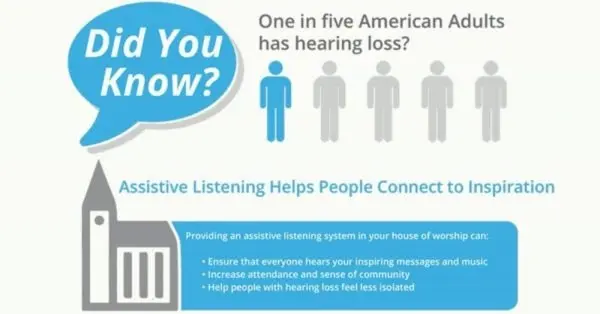
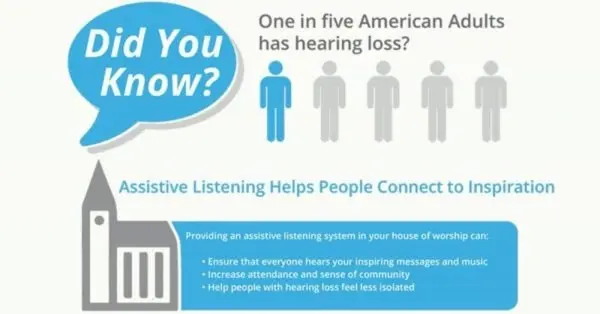
In an era defined by rapid technological innovation in multimedia production, architectural acoustics, and digital sound reinforcement, many modern houses of worship find themselves facing a paradox. While millions of dollars are poured into line-array speaker systems, high-definition projection screens, and sophisticated digital mixing consoles, a significant demographic within the congregation remains structurally excluded from the worship experience: the hard of hearing.
For aging populations, individuals with congenital hearing loss, and those experiencing sudden auditory decline, standard sanctuary acoustics often present an insurmountable wall of reverberation, distance-related volume drop-off, and ambient noise. Traditional sound systems—no matter how powerful—frequently amplify the chaos of a large room rather than delivering the clarity required for speech intelligibility.
Enter the Assistive Listening System (ALS). Far from being a mere afterthought or a regulatory compliance checkbox, an advanced ALS represents a vital ministry tool. It bridges the gap between the pulpit and the pew, ensuring that every whispered prayer, spoken scripture, and impassoned sermon reaches the ears and hearts of every congregant.
However, the procurement and deployment of an effective ALS cannot be treated as a simple plug-and-play electronics purchase. Implementing these systems requires a meticulous, multi-phase strategy that encompasses congregation assessment, financial planning, comprehensive staff and volunteer training, and proactive internal and external communication.
This special report provides a comprehensive, four-step journalistic and technical roadmap for church leadership teams, audio-visual (AV) technicians, and ministry directors seeking to implement or upgrade their assistive listening infrastructure. Drawing on industry best practices, expert consultations, and deployment toolkits from sector leaders such as Listen Technologies and CCI Solutions, this guide explores the critical phases necessary to transform your worship space into a fully inclusive acoustic environment.
Detailed Chronology: The Four-Step Implementation Roadmap
Deploying an Assistive Listening System requires deliberate pacing and structured execution. To minimize friction, prevent budget overruns, and maximize adoption rates, houses of worship should follow a rigorous, four-stage chronological implementation framework.
[Phase 1: Assessment] ---> [Phase 2: Procurement] ---> [Phase 3: Preparation] ---> [Phase 4: Awareness]Phase 1: Understand Your Needs (The Assessment Stage)
The foundational error made by many church administrative boards is purchasing an ALS based solely on architectural square footage or arbitrary equipment specifications without first consulting the end-users. An ALS must be custom-tailored to the specific demographic and auditory landscape of your unique congregation.
Conducting the Congregation Survey
The most effective, data-driven method to understand your community’s listening needs is to distribute a comprehensive congregation-wide survey. This survey should be deployed across multiple channels—including physical inserts in Sunday worship bulletins, digital distribution via email newsletters, and QR codes displayed on pre-service slide decks.
Key data points to collect during this phase include:
- General Experience: How would you rate your ability to understand the spoken word and music during standard worship services?
- Specific Pain Points: Do you experience difficulty due to background noise, echo (reverberation), or low volume?
- Hearing Aid Integration: Do you currently wear hearing aids or cochlear implants?
- T-Coil Capability: If you wear hearing aids, are they equipped with telecoil (t-coil) technology? (This metric is particularly vital if you are considering a room-wide loop system rather than individual RF or infrared receivers).
By gathering these qualitative and quantitative metrics, your leadership team can accurately quantify the scale of the need. You may discover that the population of hearing-impaired members is significantly higher than initially estimated, providing the empirical justification required for budget approval.
Phase 2: Fully Understand Your Options (The Financial & Technical Stage)
Once the congregation’s needs have been mapped, the next phase involves translating those requirements into a concrete hardware strategy and a realistic financial budget.
Navigating the landscape of assistive listening technologies can be daunting for non-technical leadership. Options generally range from Radio Frequency (RF) and Infrared (IR) systems—which transmit audio to dedicated beltpack receivers and headphones—to Audio Frequency Induction Loop Systems (AFILS), which broadcast magnetic signals directly into t-coil equipped hearing aids.
Budgeting and Estimating Costs
Estimating the cost of an ALS involves calculating not only the price of base transmitters and receivers, but also peripheral equipment such as charging stations, sanitization stations, neck loops, and custom signage.
Because every worship space possesses unique acoustic signatures and architectural constraints, houses of worship are strongly encouraged to seek professional guidance. Industry partners such as CCI Solutions offer specialized assistance and complimentary initial consultations explicitly designed to help church finance committees navigate expense projections and capital budgeting.
Funding the Initiative
For many congregations, particularly smaller or mid-sized ministries, capital expenditures must be weighed carefully against operational needs. To offset the acquisition cost of premium assistive listening solutions, leadership teams should consider:
- Dedicated Special Offerings: Framing the ALS acquisition as a "Ministry of Inclusion" fundraising campaign.
- Memorial Gifts: Allowing families to fund equipment purchases in honor of loved ones who struggled with hearing loss.
- Denominational Grants: Applying for regional or national church body grants aimed at accessibility and community outreach.
Phase 3: Prepare for Success (The Operational Stage)
Purchasing and installing the hardware is only half the battle. Countless churches invest thousands of dollars in state-of-the-art ALS technology, only to watch the equipment sit unused in a drawer because staff members do not know how to operate it, or volunteers forget to offer it to guests.
The operational success of an assistive listening system hinges on the human element: your staff and volunteers.
Cultivating "Assisted Listening Ambassadors"
Your welcome team, ushers, guest services staff, and sound technicians must be reframed not merely as door-greeters, but as Assisted Listening Ambassadors.

Comprehensive training sessions must be conducted prior to the launch of the system. Every volunteer stationed at information desks or entry points must be thoroughly trained in:
- The physical location of the listening devices.
- How to turn the receivers on, adjust volume levels, and pair them with various accessories (such as headphones or neck loops).
- Basic troubleshooting procedures for common issues (e.g., dead batteries, weak signal range, or feedback loops).
High-Touch Distribution Protocols
When checking a device out to a congregant, volunteers should never simply hand over a piece of plastic across a counter. Instead, staff should take the time to offer a brief, welcoming tutorial on how the device functions.
To ensure consistency and eliminate volunteer error during high-traffic Sunday morning rushes, administrative teams should create a laminated Frequently Asked Questions (FAQ) sheet. This cheat sheet should be permanently affixed to the counter or distribution desk where receivers are housed, providing instant answers to technical queries.
Phase 4: Create Awareness (The Outreach Stage)
Even the most advanced, perfectly calibrated Assistive Listening System is useless if the congregation and the surrounding community do not know it exists. Launching an ALS requires an aggressive, multi-channel marketing and communications campaign.
Internal Signage and Reminders
Visibility is paramount. Proper, ADA-compliant international symbols for accessibility should be prominently displayed at all main entrances, worship center doors, and guest services desks, explicitly stating that Assisted Listening Devices are available and directing visitors where to find them.
Additionally, maintain a consistent presence in internal communications:
- Weekly Bulletins: Include a standardized blurb in every printed and digital bulletin highlighting the availability of listening assistance.
- Multi-Media Announcements: Incorporate visual reminders into pre-service slide loops and video announcements.
- Live Demonstrations: Consider hosting a dedicated live training session or a "Sunday Showcase" where congregants can try out the technology firsthand, demystifying the equipment and removing any social stigma associated with wearing a listening receiver.
Community-Wide Outreach
Do not limit your awareness campaign strictly to current attendees. Advertise your new accessibility infrastructure to the surrounding geographic community. Many individuals with hearing impairments have completely stopped attending worship services because they assume traditional churches cannot accommodate their needs. When word spreads that your facility is actively equipped for universal hearing accessibility, you will likely see a significant influx of new or returning visitors.
Supporting Context & Metrics: The Human and Economic Impact
To understand why investing time and capital into an Assistive Listening System is essential, one must examine the broader socio-acoustic context of modern life and the physiological reality of hearing impairment.
The Scale of Hearing Loss
According to public health data, hearing loss is one of the most common chronic physical conditions in the developed world. In the United States alone, tens of millions of individuals suffer from varying degrees of hearing impairment, with the demographic skewing heavily toward older adults—a core constituency in many traditional and contemporary church congregations.
| Metric / Demographic Factor | Estimated Impact on Church Communities |
|---|---|
| Aging Congregations | Natural age-related hearing loss (presbycusis) affects over 50% of adults over the age of 75. |
| Acoustic Challenges | Modern worship design often incorporates hard surfaces (glass, concrete, wood) that exacerbate reverberation and destroy speech intelligibility. |
| Social Isolation | Unaddressed hearing loss in social and religious settings directly correlates with feelings of depression, anxiety, and eventual absenteeism. |
When a congregant can no longer understand the spoken word from the pulpit, they do not simply turn up their hearing aid; they often withdraw entirely from community life. By implementing an ALS, a church directly combats this isolation, fulfilling a profound pastoral mandate.
Official Statements and Industry Insights
Industry leaders and integration specialists emphasize that accessibility is no longer an optional feature of church facility design—it is a core component of welcoming ministry.
"Reaching out to those who feel disconnected from your community due to hearing loss is central to sharing the message of inclusion. Genuinely compassionate service involves being aware of and caring for the needs of everyone, especially those dealing with impairments. Make sure they are able to hear the beauty and emotion of the spoken word in your church by providing them with the equipment they need to stay connected."
— Technical Integration & Ministry Development Advisory
AV engineering consultants frequently point out that sound reinforcement and assistive listening are two distinct engineering disciplines. While a high-end PA system projects sound across a vast spatial volume, an ALS delivers a pristine, direct-to-ear audio feed that bypasses room acoustics entirely. Integrating these systems requires close collaboration between church pastoral staff, AV operators, and specialized installation contractors.
Future Outlook: The Horizon of Inclusive Worship
As audio technology continues to evolve, the future of assistive listening in houses of worship promises even greater integration, discretion, and fidelity.
Emerging Trends in Accessibility Technology
- Auracast™ Broadcast Audio: Moving beyond traditional analog RF and localized induction loops, the next generation of Bluetooth technology—known as Auracast—will allow churches to broadcast multiple high-quality audio streams directly to modern hearing aids, cochlear implants, and smartphones without the need for specialized venue-owned receivers.
- App-Based Streaming: Many modern systems now allow users to download a proprietary app on their personal smartphones, utilizing their own personal headphones or wireless earbuds to stream real-time sanctuary audio with zero latency.
- AI-Powered Acoustic Enhancement: Future digital signal processors (DSPs) will incorporate real-time artificial intelligence to dynamically isolate human speech from ambient room noise and musical instruments, feeding ultra-clean signals directly into assistive listening channels.
Conclusion and Next Steps
The measure of a vibrant, healthy faith community is not found solely in the scale of its production values or the volume of its worship bands, but in its unwavering commitment to leaving no one behind. By taking a methodical approach—understanding needs through surveys, budgeting wisely, training passionate volunteer ambassadors, and aggressively communicating availability—your church can shatter the acoustic barriers that divide your community.
For leadership teams eager to take the next step, comprehensive resources are readily available. You can download specialized deployment guides, such as the Listen Technologies Church Assistive Listening Toolkit (available via Listen Technologies), which provides invaluable sample surveys, ADA signage templates, and bulletin announcements.
Is your worship facility fully equipped to reach every member of your community? Evaluate your acoustic infrastructure today, and ensure that the message of grace is heard clearly by all.