
Executive Overview
In the modern music classroom, few skills are as universally prized—or as notoriously difficult to teach effectively—as sight reading. Educators have long understood that strong sight-reading capabilities form the bedrock of musical independence. Students who can fluidly decode unfamiliar notation learn repertoire exponentially faster, run more efficient rehearsals, and approach adjudicated festivals and auditions with confidence rather than anxiety. More importantly, independent literacy ensures that students continue to engage with music long after graduation, seamlessly transitioning into community bands, church choirs, and amateur ensembles.
Yet, despite its recognized importance, sight reading remains a perennial bottleneck in music instruction. Traditional curricula face a fundamental pedagogical paradox: true sight reading requires continuous practice with unfamiliar material, yet standard printed method books possess a finite number of exercises. Once a student plays through a page two or three times, visual recognition gives way to rote memorization, rendering the exercise useless for genuine sight-reading development.
To bridge this gap between pedagogical theory and classroom reality, MakeMusic has officially unveiled its new Correlated Sight Reading Templates within the MakeMusic Cloud ecosystem. Designed to integrate directly with widely used pedagogical method books, these dynamic generators provide educators with an infinite, on-demand stream of fresh sight-reading exercises tailored precisely to a student’s current progress. By automating the creation of leveled, curriculum-aligned notation, MakeMusic is poised to reclaim countless hours of weekly preparation time for teachers while fundamentally transforming how musical literacy is cultivated both in the classroom and at home.
Detailed Chronology: The Evolution of Sight-Reading Pedagogy and Technology
To understand the significance of MakeMusic’s latest innovation, it is essential to trace the historical evolution of how music educators have attempted to solve the sight-reading scarcity problem.
The Era of Static Print (Pre-Digital Age)
For generations, music teachers relied exclusively on physical print. Method books such as Essential Elements, Standard of Excellence, and various instrument-specific etude collections served as the primary vehicles for instruction. While these volumes provided comprehensive technical foundations, their space was inherently limited.
- The Memorization Trap: Teachers frequently supplemented method books with photocopied excerpts from anthologies or hand-written exercises drafted on chalkboards and whiteboards.
- The Labor Burden: Educators spent hours scanning, copying, and filing supplemental materials, searching for pieces that matched the exact key signatures, rhythms, and technical thresholds of their students’ current developmental stage.
The Advent of Digital Notation Software
The late 20th and early 21st centuries introduced desktop notation software, empowering tech-savvy educators to compose custom sight-reading exercises. While this represented a step forward in personalization, it introduced a new bottleneck: time. Drafting clean, pedagogical notation, formatting it for various band and orchestral instruments, and exporting PDFs consumed precious evening and weekend hours—time that could have been dedicated to direct student engagement or mental restoration.
The Rise of Algorithmic Practice Tools
Recognizing the administrative burden on educators, digital platforms began experimenting with algorithmic content generation. Early iterations, however, often lacked pedagogical nuance. They generated randomized notes that strictly adhered to a scale or time signature but failed to respect the careful pacing, melodic contour, and conceptual scaffolding found in established, peer-reviewed method books. Sight reading often felt like an isolated chore rather than a cohesive continuation of daily instruction.
The Launch of MakeMusic’s Correlated Generators (Present Day)
MakeMusic’s introduction of Correlated Sight Reading Templates represents the convergence of advanced music notation technology and established pedagogical frameworks. By embedding these generators directly into the Sight Reading Studio within MakeMusic Cloud, the platform bridges the divide between automated content creation and trusted classroom methods. Educators no longer have to choose between spending hours writing custom exercises or settling for repetitive, memorized print materials. With a few clicks, they can synchronize digital generation with their chosen curriculum, marking a major milestone in music technology integration.
Supporting Context & Metrics: The Anatomy of Musical Literacy and Teacher Burnout
The release of MakeMusic’s correlated generators addresses two critical crises currently facing arts education: the decline of deep literacy skills due to time constraints and mounting educator burnout driven by administrative overload.
The Cognitive Science of Sight Reading
Cognitive research in music education consistently demonstrates that visual processing, auditory feedback, and motor execution must operate simultaneously during sight reading. According to studies on musical decoding, proficient sight readers utilize chunking strategies—recognizing harmonic intervals, rhythmic cells, and scale patterns instantaneously rather than parsing individual notes sequentially.
However, developing this cognitive reflex requires massive amounts of varied input. When students repeatedly play the same exercises in a method book, their brains bypass the visual decoding process, relying instead on kinesthetic memory and auditory recall. True cognitive growth stalls. The MakeMusic generators provide the volumetric novelty required to keep the brain’s pattern-recognition centers actively engaged.
The Administrative Toll on Music Educators
A comprehensive analysis of music teacher workloads reveals that lesson planning, repertoire curation, and material preparation consume nearly 30% of a teacher’s non-contact time. Within that allocation, sourcing and formatting leveled sight-reading material ranks among the most frequently cited daily stressors.
- The Prep-Time Deficit: Teachers balancing multiple concert bands, jazz ensembles, and general music classes often lack the bandwidth to curate customized sight-reading sheets for every developmental tier present in a single classroom.
- The Consequence: Consequently, sight reading is frequently marginalized or treated as an afterthought—practiced only in the weeks leading up to regional festivals, when panic sets in.
By removing the friction of material sourcing, MakeMusic’s correlated templates directly combat teacher fatigue. When preparation is reduced from hours to seconds, educators can integrate sight reading into every single rehearsal without adding to their administrative burden.
Official Statements and Architectural Breakdown
MakeMusic’s development team engineered the Correlated Sight Reading Generators to function as a seamless extension of existing teaching practices. Rather than forcing instructors to adopt an entirely new curriculum, the system maps directly onto trusted educational frameworks already deployed in classrooms worldwide.
How the Technology Operates
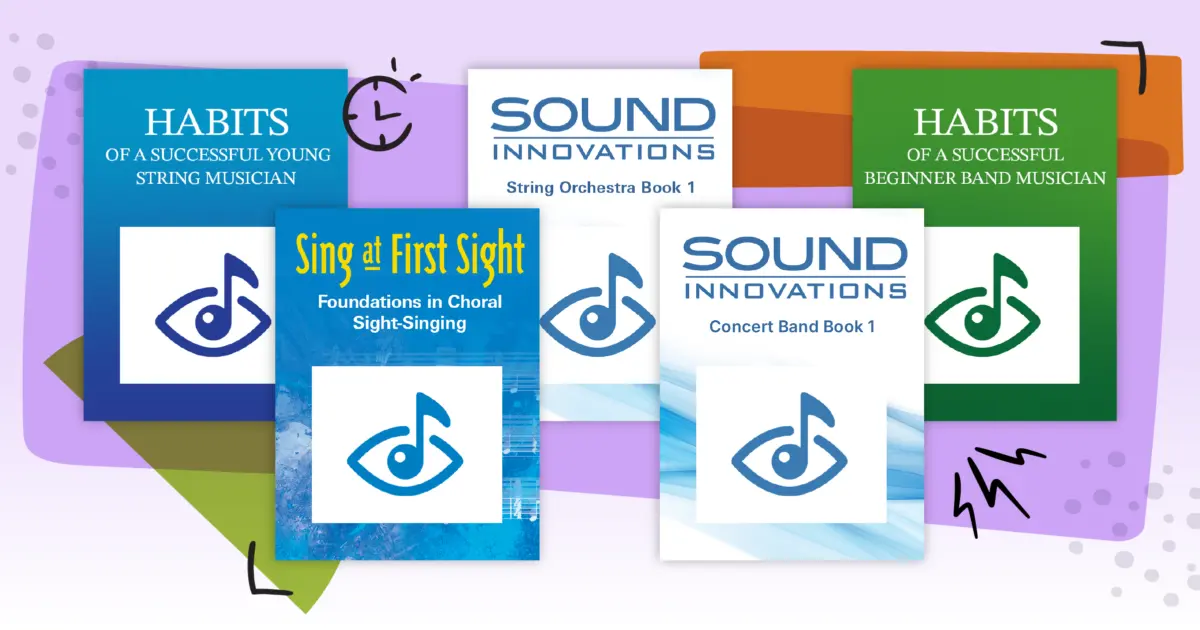
At its core, the system utilizes pre-built Sight Reading Studio (SRS) templates housed natively within the MakeMusic Cloud library. These templates are meticulously aligned, lesson by lesson, with industry-standard method books.
- Selection: The educator logs into MakeMusic Cloud and navigates to the Sight Reading Studio module. They select the specific method book currently in use by their ensemble.
- Alignment: The teacher jumps directly to the exact lesson or page number currently being covered in class.
- Generation: With a single click on the "Generate" button, the system produces a brand-new, procedurally generated exercise built strictly around the pedagogical parameters, technical thresholds, and vocabulary introduced in that specific lesson.
- Infinite Iteration: If the educator wants to run the exercise again—whether for a different section of the room, a subsequent class period, or remedial home practice—they simply click generate again to receive a fresh, unique permutation adhering to the exact same difficulty constraints.
Pedagogical Integrity
Industry experts emphasize that automation without pedagogical constraint is counterproductive. If a generated sight-reading exercise introduces an accidental or rhythmic syncopation three units ahead of the students’ current technical level, it ceases to be a valid formative assessment tool.
MakeMusic’s engineering approach ensures that the algorithmic generation engine respects the boundaries of each method book lesson. If Lesson 4 introduces the concert F-sharp and quarter-note/eighth-note combinations while omitting slurs, the generator strictly restricts its output to those exact parameters. Students are never tested on concepts they have yet to encounter, preserving their confidence and ensuring valid diagnostic feedback for the instructor.
Future Outlook: The Next Frontier in Digital Music Education
As educational technology continues to mature, tools like MakeMusic’s Correlated Sight Reading Generators offer a clear glimpse into the future of arts instruction—one where administrative friction is minimized, and human-to-human mentorship is prioritized.
Personalized Learning Pathways at Home
While the immediate utility of the generators shines brightest in group classroom settings—where differentiation is notoriously difficult—their impact on at-home practice is equally profound. Historically, independent practice suffered from a lack of guidance outside school hours. Students assigned to practice sight reading at home often lacked access to appropriate, leveled materials, leading to frustration or abandonment of the task.
With remote access to MakeMusic Cloud, students can now access these same correlated generators from home. If a student struggles with a specific rhythmic pattern introduced in class that day, they can generate targeted, safe, un-memorized variations to drill the concept independently. This creates a continuous feedback loop between the classroom podium and the living room music stand.
Artificial Intelligence and Adaptive Pedagogies
Looking ahead, the integration of generative templates paves the way for increasingly sophisticated, adaptive learning environments. Future iterations may dynamically adjust difficulty levels in real-time based on a student’s pitch and rhythmic accuracy as recorded through the platform’s assessment microphones. If a student consistently stumbles over specific interval jumps within a generated exercise, the system could automatically isolate that weakness, generating hyper-focused micro-exercises to shore up the deficiency.
Reclaiming the Joy of Music-Making
Ultimately, the broader adoption of automated, curriculum-aligned sight-reading tools heralds a cultural shift within music education. By lifting the heavy administrative weight of material creation off the shoulders of educators, technology allows teachers to focus on what matters most: artistic interpretation, expressive phrasing, ensemble listening, and the sheer joy of collaborative music-making.
For music programs seeking to elevate literacy standards without overwhelming their staff, the path forward is clear. Educators ready to transform their rehearsal rooms can log in to MakeMusic Cloud today, explore the new correlated templates, and ensure that every student walks up to the music stand with a fresh, confidence-building challenge waiting for them.