
Executive Overview
The contemporary recorded music landscape continues to exhibit a fascinating tension between historical preservation and urgent, modern-day experimentation. Across the global musical ecosystem, artists and curators are simultaneously looking backward to unearth forgotten studio chemistry and pushing forward into uncharted sonic territories shaped by personal tribulation and cross-cultural experimentation.
This review examines three distinct releases that capture these disparate impulses:
- Tommy Smith’s Four, a long-buried live studio session from 1999 that showcases the blistering, unadulterated power of a premier acoustic jazz quartet through a delightfully antiquated recording lens.
- Onmo’s In Time And Spirit, the striking debut from a London-based ensemble spearheaded by guitarist Jean de Talhouet, which translates the harrowing psychological and physical toll of long COVID into a sprawling, multi-textured suite of modern jazz.
- Pedro Luis Ferrer’s La Bunga, a perplexing and eccentric offering from the veteran Cuban troubadour that pairs glossy, pop-oriented arrangements with eccentric, socially idiosyncratic lyricism.
Together, these works present a panoramic view of how jazz and world music continue to absorb the weight of history, illness, and local cultural quirks, filtering them through radically different aesthetic frameworks. While Smith leans into the raw, high-wire immediacy of pure performance, Talhouet structures an intimate journey through trauma, and Ferrer offers a sun-baked, albeit uneven, slice of Caribbean folklore and whimsy.
Detailed Chronology
1. Tommy Smith: Four (Recorded 1999, Released 2026 via Spartacus Records)
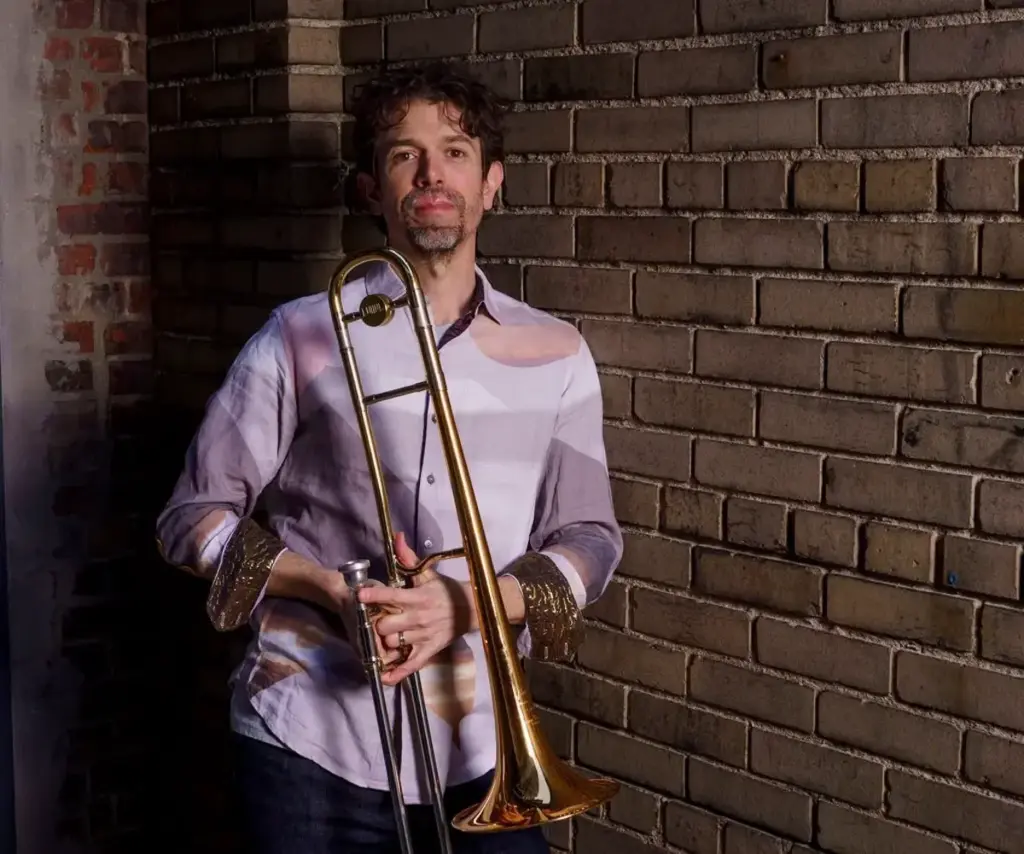
The genesis of Tommy Smith’s Four dates back over a quarter of a century to a brisk session at the Gateshead Art Centre in 1999. At this juncture in his illustrious career, Smith had already solidified his reputation as a formidable force on the international jazz circuit, boasting more than 30 albums as a leader and laying the foundational groundwork for what would become the Scottish National Jazz Orchestra. Yet, rather than polishing this archival tape through modern multi-track digital restoration, Smith chose to honor the raw spontaneity of the original evening.
Captured in real-time with an uncompromisingly minimalist setup—a single microphone placed deliberately in front of the ensemble, routed directly to a portable MiniDisc recorder—the session bypasses modern conveniences entirely. There was no mixing desk, no active Public Address (PA) system reinforcement, and no instrument amplifiers to balance the room.
The resulting sonic profile is both a throwback and a revelation. While the physical acoustic parameters of the Gateshead venue are somewhat deadened by the proximity of the singular microphone, the recording compensates with an explosive, tactile presence. The listener is transported instantly into the room, sharing physical space with a quartet that operates with the synchronicity of a well-oiled machine.
The tracklist opens at a breakneck tempo with a blistering 15-minute deconstruction of Miles Davis’s modal standard, Four. Here, Smith displays jaw-dropping agility, navigating the high register of his tenor saxophone with such fluidity and breath control that it frequently mimics the lighter, airier timbre of an alto. This high-wire acrobatics gives way to deep introspection on the self-penned ballad When I’m All Alone. On this cut, Smith channels the spirit of Ben Webster, deploying a rich, sepia-toned vibrato on the low register that evokes the veteran master’s definitive style.
Rounding out the 65-minute digital-only release on Spartacus Records (STS033) are inventive interpretations of The Lady Is A Tramp, Secret Love, a medley of Mil Dew / Cotton Tail, and Some Day My Prince Will Come. Supported by pianist Steve Hamilton, bassist Orlando Le Fleming, and drummer Sebastian De Krom, Smith delivers a masterclass in acoustic interplay that sounds as vital today as it did during the twilight of the 20th century.
2. Onmo: In Time And Spirit (Recorded 2026 at Fish Factory Studios, Released via Clonmell Jazz Social)
Moving from the archival depths of 1990s northern England to the contemporary underground scene of London, Onmo’s debut album In Time And Spirit represents an entirely different compositional methodology. Led by composer and guitarist Jean de Talhouet, the ensemble draws upon a dense web of cross-genre influences—ranging from the spiritual jazz pillars of John Coltrane and Eric Dolphy to the rhythmic complexities of funk, hip-hop, and the minimalist academic structures of Steve Reich.
The album’s conceptual and chronological catalyst is rooted in Talhouet’s personal battle with "long COVID." The lingering, debilitating effects of the virus are directly metabolized in the record’s nine-minute opening track, Lapse. The piece begins deceptively, unfurling through gentle, melodic guitar lines before descending into darker, highly exploratory territory. As the composition evolves, Talhouet’s collaborators are drawn into a turbulent dialogue. The music serves as a literal and emotional processing ground, exploring cycles of adaptability, hope, grief, and resilience. Spiky, abrasive avant-garde textures clash with sweeping, lyrical resolutions, painting a vivid portrait of chronic illness and recovery.
The album’s centerpiece is its titular composition, In Time And Spirit, an extended three-part suite that explores the tension between lyrical accessibility and minimalist abstraction. (Curiously, the digital release packages both the individual movements and the full continuous take, offering listeners multiple ways to digest the work).
Recorded primarily at London’s Fish Factory Studios, the ensemble features an elite roster of contemporary London jazz talent: Jonathan Chung and George Crowley on tenor saxophones, trumpeter Mike Soper, keyboardist Rupert Cox, bassists Huw V. Williams and Flo Moore, and drummer Joost Hendrickx alongside Talhouet. The physical LP release, distributed by Clonmell Jazz Social (CJS012LP), features striking visual packaging: a pinhole camera long-exposure photograph capturing four candles rotating on turntables over a four-hour period, serving as a tangible artifact for vinyl enthusiasts in an increasingly digitized medium.
3. Pedro Luis Ferrer: La Bunga (Recorded 2025 across Havana and Miami, Released via Dot Time Records)
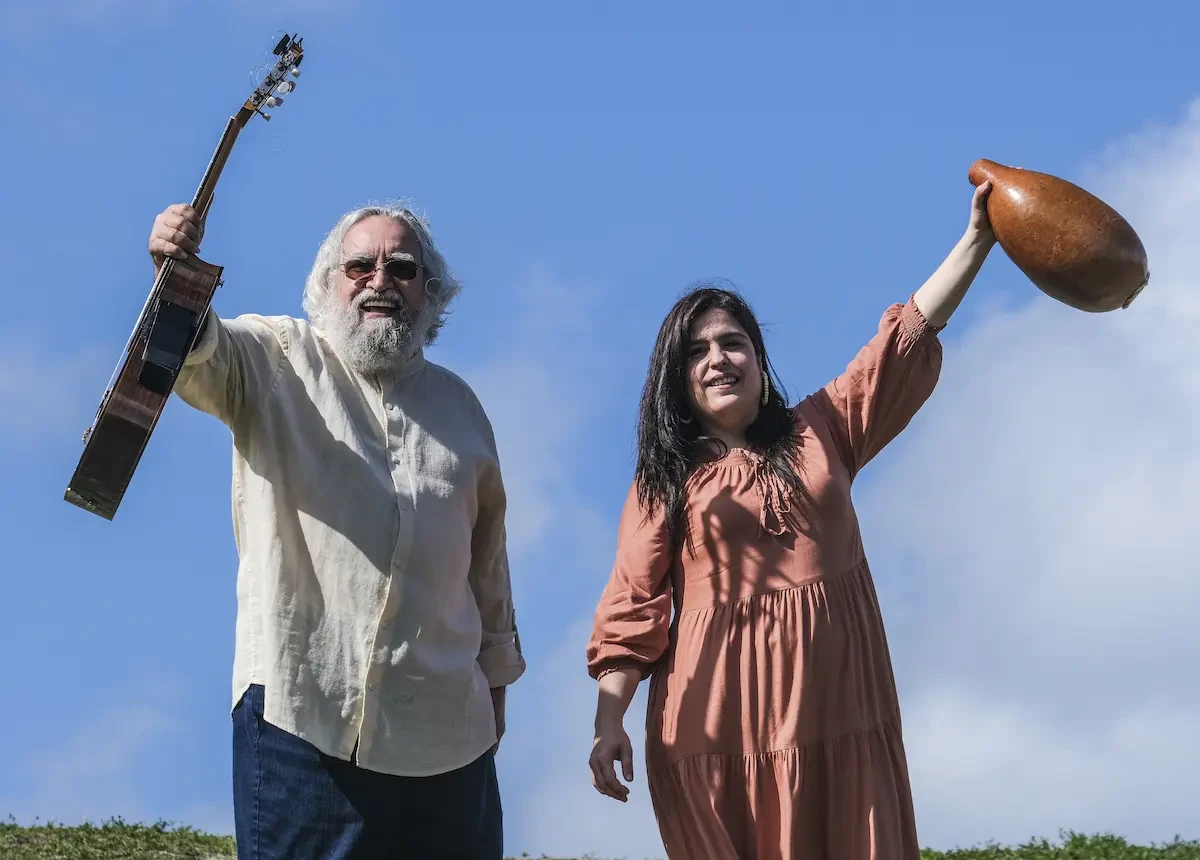
Shifting cultural hemispheres entirely, veteran Cuban singer-songwriter, poet, and guitarist Pedro Luis Ferrer returns with La Bunga (Dot Time Records, DT9196). Having maintained an active presence in Cuban musical spheres since 1965, Ferrer is frequently framed by admirers as a custodian of the island nation’s cultural soul. For this project, he enlists his daughter, Lena, creating a family affair that spans 14 concise tracks, none of which breach the four-minute threshold.
Recorded across Havana, Cuba, and Miami, Florida, in 2025, the album presents an eccentric stylistic dichotomy. Musically, it offers a breezy, effortless listening experience underpinned by bright, hyper-polished arrangements. However, this very sheen introduces a problematic artificiality; both Ferrer and Lena’s vocals exhibit signs of heavy processing, imparting an unnatural edge to high-register harmonies and straining the organic warmth traditionally associated with Cuban son and trova.
Lyrically, La Bunga defies standard categorization, alternating between mundane domestic reflections, culinary celebrations, and bizarrely surreal aphorisms. The CD booklet provides English translations that reveal delightfully idiosyncratic poetic choices. On Güirón Del Coco, Ferrer warns listeners, "If you don’t eat coconut you’ll lose your wits." Meanwhile, the hygiene-themed track La Mandonga offers unsolicited bodily advice: "Don’t let your sweaty groin be anybody’s sorrow. And don’t let your armpits brew their smoky tobacco."
Across tracks like Celebración, Papurrico, Conga Del Pueblo, and Soncito, Ferrer plays a staggering array of instruments—including percussion, keyboards, guitar, piano, timbales, lute, and brass—while Lena contributes vocals, keyboards, cajón, and traditional percussion. Yet, despite the instrumental versatility, the tracks bleed together, lacking the dynamic nuance required to sustain a 43-minute runtime. The result is a frothy, albeit confounding, release that occupies an awkward space between profound folk expression and transient street-side entertainment.
Supporting Context & Metrics
To contextualize these releases within the broader macroeconomic and cultural framework of the modern music industry, it is instructive to examine their distribution models, physical-versus-digital ratios, and production metrics:
| Release Title | Primary Artist / Leader | Primary Genre | Recording Year / Location | Release Format & Label | Key Production Characteristic |
|---|---|---|---|---|---|
| Four | Tommy Smith | Acoustic Modern Jazz | 1999 (Gateshead, UK) | Digital-only via Bandcamp (Spartacus Records STS033) | Single-microphone direct-to-MiniDisc; zero mixing desk or PA. |
| In Time And Spirit | Jean de Talhouet (Onmo) | Contemporary / Spiritual Jazz | 2026 (London, UK) | LP & Digital via Clonmell Jazz Social (CJS012LP) | Extended multi-part suites; pinhole camera long-exposure packaging. |
| La Bunga | Pedro Luis Ferrer | Cuban Folk / Trova | 2025 (Havana & Miami) | CD & Digital via Dot Time Records (DT9196) | Over-produced vocal processing; whimsical and eccentric lyrical themes. |
The structural divergence among these three projects highlights the current fragmentation of the jazz and world music markets.
- Tommy Smith’s archival strategy relies exclusively on direct-to-consumer digital infrastructure (Bandcamp), bypassing traditional retail distribution entirely in favor of high-margin, low-overhead curation for dedicated aficionados.
- Conversely, Onmo’s physical-first LP strategy targets the resurgent vinyl collector market, leveraging tactile art objects—such as the pinhole-camera album cover—to incentivize physical purchases in an era dominated by streaming algorithms.
- Pedro Luis Ferrer’s release via Dot Time Records demonstrates the enduring viability of traditional international CD and digital distribution channels for established world-music legacy acts, even when the artistic output court controversy regarding its production choices.
Official Statements & Critical Reception
The reception of these albums reflects the varied expectations of contemporary music criticism, where technical purity, emotional authenticity, and stylistic audacity are constantly weighed against commercial and production realities.
Tommy Smith on the Philosophy of Four
Reflecting on the decision to exhume the 1999 Gateshead tapes, Tommy Smith’s camp emphasizes the value of unvarnished documentation over sterile perfectionism. Industry insiders note that the absence of modern multi-tracking preserves an irreplaceable window into late-90s European jazz history.
Critical consensus has generally lauded the release’s fearless energy. Reviewers have highlighted the uncanny ability of the rhythm section—Hamilton, Le Fleming, and De Krom—to anticipate Smith’s virtuosic lines without the safety net of studio isolation booths. As one contemporary reviewer noted, "The lack of modern recording techniques doesn’t hinder the music; it supercharges it, thrusting the listener into the front row of a masterclass in spontaneous combustion."
Jean de Talhouet on the Genesis of Onmo
In promotional materials accompanying In Time And Spirit, Jean de Talhouet has spoken candidly about the physical and psychological toll of long COVID, positioning the album not merely as a collection of songs, but as a therapeutic reclamation of artistic agency.
Jazz critics have praised Onmo’s debut for its uncompromising refusal to pander to smooth-jazz conventions. By welding the cyclical harmonies of Steve Reich with the volatile fire of 1960s spiritual jazz and modern hip-hop cadence, Talhouet has successfully carved out a unique niche within the London scene. The album’s visual component has similarly drawn praise for bridging the gap between fine art photography and physical record collecting.
Critical Reception of Pedro Luis Ferrer’s La Bunga
Reaction to Pedro Luis Ferrer’s latest collaboration with his daughter Lena has been markedly more mixed, skewing toward bemused detachment. While Ferrer’s historical status as a pillar of Cuban songwriting remains undisputed, international critics have struggled to embrace the slick, over-processed vocal aesthetics and baffling lyrical content of La Bunga.
Reviewers have pointed out that tracks addressing mundane hygiene or offering eccentric dietary warnings risk alienating listeners who look to Ferrer for profound social commentary. As one critic dryly observed, the album evokes "the kind of music you might encounter from a band of street musicians somewhere hot when you are trying to enjoy a quiet meal and hoping desperately that they soon move on." Despite these reservations, the record remains an intriguing, if eccentric, footnote in Ferrer’s six-decade discography.
Future Outlook
As the global music industry navigates the latter half of the 2020s, the trajectory of these artists points toward distinct futures for jazz and world music production:
- The Archival Gold Rush: The success of Tommy Smith’s Four proves there is a thriving, monetizable appetite for vintage, low-fi archival recordings. As artists look back into their vaults, expect an increase in direct-to-fan digital releases that bypass conventional studio gatekeepers in favor of raw, unedited historical documents.
- The Genre-Agnostic Collective: Ensembles like Onmo represent the blueprint for modern metropolitan jazz—fluid, cross-genre, and deeply responsive to contemporary socio-political and personal trauma. The integration of high-concept visual art with physical vinyl packaging will likely remain a vital strategy for boutique labels seeking to cultivate dedicated communities of listeners.
- The Legacy Paradox: Veteran world music icons like Pedro Luis Ferrer illustrate the delicate balance required when managing a long-term catalog. As production technologies evolve, artists face the perennial challenge of maintaining organic authenticity against the temptations of hyper-polished digital processing.
Ultimately, whether through the time-capsule immediacy of a 1999 MiniDisc recording from Gateshead, the cathartic purgatory of a London studio session battling chronic illness, or the sun-drenched eccentricities of Havana and Miami, these three releases demonstrate that music remains an indispensable vehicle for memory, survival, and cultural expression.