
In the realm of musical pedagogy, a persistent barrier separates the aspiring instrumentalist from genuine fluency: the temptation to mentally translate written notation. Just as a language student stumbles when mentally converting every foreign phrase back into their native tongue before speaking, musicians frequently bog themselves down. They look at a score, decode the note names, calculate the corresponding finger numbers, double-check their accuracy, and then attempt to produce sound. By the time this mental checklist is complete, the rhythm has vanished, the tempo has dragged, and the music has lost its life.
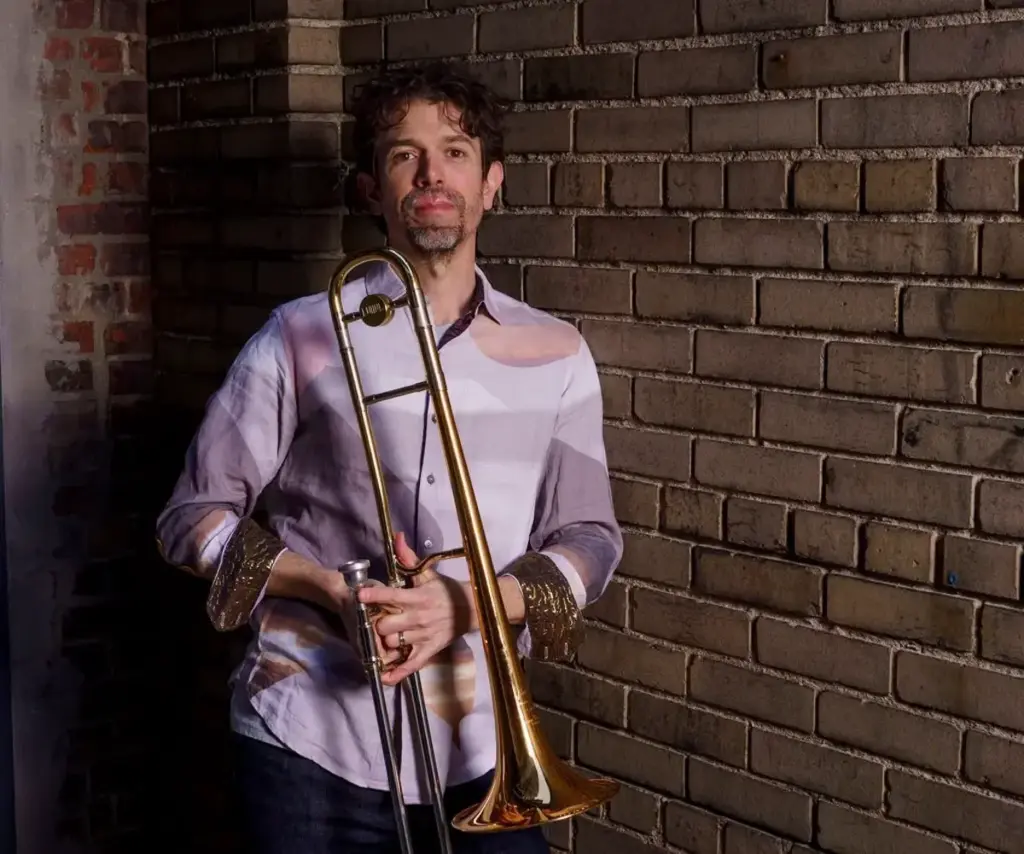
In this comprehensive guide, master musician and educator Ed Pearlman presents a transformative paradigm shift: sight-reading is a language, not a cryptographic puzzle.
Published originally through SightReadingMastery, Pearlman’s methodology bridges the gap between cognitive decoding and direct, intuitive execution. Whether you are a classical violinist, a contemporary jazz pianist, a vocalist, or a folk fiddler, the ultimate goal of reading sheet music is to bypass intellectual translation entirely. You must learn to perceive musical notation the way literate adults perceive text—absorbing the meaning directly through the eyes into physical action.
This article explores a progressive, five-tier framework designed to overhaul how musicians practice sight-reading. Moving from basic rhythmic frameworks to advanced interval recognition and optional note-naming, this authoritative breakdown offers a roadmap to fluency. Designed for musicians at any developmental milestone, these strategies promise to transform sight-reading from an anxiety-inducing chore into a fluid, expressive art form.
Detailed Chronology: The Evolution of Sight-Reading Pedagogy
To understand why Pearlman’s five-level approach is so revolutionary, one must examine the historical evolution of music education. For centuries, music pedagogy was dominated by rote memorization and mechanical drill. Students spent months mastering a single piece, committing every dynamic shift, note, and measure to memory long before they understood the holistic architecture of the composition.
While this deep-dive approach produced technically proficient players, it fostered an over-reliance on muscle memory and visual safety nets. When confronted with unfamiliar scores, these same musicians frequently froze. The traditional pedagogical model treated sight-reading as an afterthought—an innate talent some musicians possessed and others permanently lacked.
The Linguistic Turn in Music Theory
In the late 20th and early 21st centuries, cognitive scientists and progressive music educators began drawing parallels between linguistic acquisition and musical literacy. Language acquisition research proved that fluency depends on immersion and direct semantic association. Translating words mentally acts as a cognitive bottleneck.
Applying this discovery to music education changed everything. Educators realized that sight-reading was not a separate, mystical talent, but a direct extension of auditory-visual integration. Pearlman’s framework—developed over decades of classical violin studies in Chicago and Boston, followed by 35 years of immersive fiddle performance across North America and Scotland—epitomizes this modern shift.
Instead of demanding perfection on the first read-through, Pearlman’s methodology breaks the cognitive load down chronologically. By isolating specific variables across five distinct levels, musicians can systematically train their brains to process visual patterns without getting overwhelmed by the sheer volume of information on a page.
Supporting Context & Metrics: The Five-Level Sight-Reading Framework
Before diving into the mechanics of Pearlman’s tiered system, it is vital to establish a foundational truth: the levels detailed below measure cognitive focus during practice, not the intrinsic difficulty grade of a musical piece.
To extract maximum value from this framework, practitioners must master each level independently before layering them together. Once you successfully execute Level 1, you must maintain that skill while integrating Level 2, and so on.
[Level 1: Rhythms Only]
       ↓ (add)
[Level 2: Note Profile]
       ↓ (add)
[Level 3: Focusing the Picture]
       ↓ (add)
[Level 4: Seeing Intervals]
       ↓ (optional)
[Level 5: Names of Notes]
Level 1: Rhythms Only
- The Exercise: Select a comfortable tempo and simply tap, clap, or speak out the rhythm of the passage you are sight-reading, ignoring the pitch entirely.
- The Objective: Train your eyes to parse the rhythmic structure of entire measures rather than calculating one note duration at a time.
Rhythms derive their entire meaning from context; a quarter note or a sixteenth note only matters in relation to the pulse surrounding it. Attempting to process pitch and rhythm simultaneously during an initial read-through invites cognitive overload.
(As the classic musician’s joke goes: A violist boasts to a violinist that he can play lightning-fast 64th notes. When challenged, the violist plays just one note—highlighting the absurdity of divorcing complex subdivision from a broader rhythmic continuum.) By isolating rhythm in Level 1, you build the internal metronome essential for all subsequent practice.
Level 2: Note Profile
- The Exercise: Maintain the strict tempo and rhythm established in Level 1. Now, introduce your instrument or voice, focusing purely on the relative contour of the notes—whether they ascend, descend, or remain on the same pitch.
- The Objective: Abandon the pressure of getting every specific note right. Instead, map the general topography or "profile" of the phrase.
Human vision is naturally adept at recognizing shapes and patterns. When reading text, we do not spell out every individual letter; we recognize word shapes. Similarly, Level 2 trains the eye to see musical phrases as rolling landscapes. Does the line step upward? Does it drop steeply into a valley? By prioritizing momentum and contour over pitch accuracy, you eliminate the hesitation that destroys tempo.
Level 3: Focusing the Picture
- The Exercise: Before playing, identify the key signature and execute a scale in that key. Locate all half-steps within your playing range. Then, begin sight-reading at a strict tempo, combining the rhythmic discipline of Level 1 and the contour awareness of Level 2 with accurate tonal context.
- The Objective: Maintain unbreakable time by prioritizing timing over absolute pitch perfection.
Good timing is non-negotiable in music. If you stumble on a specific note, you do not have permission to pause or drag the tempo. Instead, you must keep moving forward, educated guessing permitted on tricky notes, but never on the rhythm or general pitch direction.
If this proves too difficult, Ed Pearlman offers two vital remedies:
- Reduce the tempo to a crawl where your brain can process the visual data without panicking.
- Isolate your scope by reading only one or two measures at a time while maintaining the pulse.
Level 4: Seeing Intervals
- The Exercise: Actively train your eyes to recognize specific geometric shapes on the staff that correspond to musical intervals.
- The Objective: Distinguish instantly between step-wise motion and leaps.
At this stage, visual recognition becomes highly sophisticated. You must instantly identify what a scale looks like on the page (consecutive notes moving alternately from line to space or space to line) versus what a third looks like (moving from a line to the next adjacent line, or a space to the next adjacent space).
While larger leaps—such as fourths, fifths, and octaves—initially require more cognitive bandwidth, consistent practice allows the brain to map these geometric intervals automatically. A fifth, for instance, spans two full staff lines or spaces, a visual marker that eventually becomes instantly recognizable at a glance.

Level 5: Names of Notes
- The Exercise: Silently or aloud, voice the actual letter names of the notes as you play them.
- The Objective: Test your cognitive focus under high-demand multi-tasking conditions.
Interestingly, Ed Pearlman classifies this final level as optional. Why? Because knowing note names is technically non-essential to the core language of seeing and playing music. Just as you do not need to identify the etymological root of every English word to speak fluently, you do not need to name a middle C sharp to play it.
However, mastering note-naming adds a powerful layer of verification. It tests whether your brain can maintain rhythm, contour, interval recognition, and physical execution while running a parallel linguistic check. For musicians struggling with note identification, targeted supplementary tools—such as the digital Note Recognition trainers offered through platforms like SightReadingMastery—can accelerate this specific neural pathway.
Official Statements & Expert Insight
The philosophy underpinning this tiered methodology stems from decades of cross-genre artistic experience. Ed Pearlman, whose career spans a classical foundation in Chicago and Boston followed by decades of traditional fiddle mastery across North America and the Scottish Highlands, emphasizes that musical fluency requires breaking free from academic paralysis.
"When you’re learning a language, the goal is to be able to understand and speak without having to mentally translate the words into your native language," Pearlman explains. "It’s the same in music. You want to play directly from sight… You’ll get bogged down if you try to see the notes on paper, translate them into names and finger numbers, make sure you’ve got it right, and then finally play—you won’t have time to do all this and stay in tempo."
Pearlman’s transition from classical strictness to folk traditions heavily influenced his pedagogical approach. Traditional fiddle styles rely deeply on ear training, dance momentum, and stylistic phrasing over rigid note-pecking. By importing this holistic mindset back into formal reading pedagogy, Pearlman provides a bridge for musicians trapped in rigid, note-by-note habits. His workshops and online instructional platforms (such as Fiddle-Online) continue to champion the idea that music is a living, breathing language meant to be communicated instantly, not deciphered laboriously.
Future Outlook & Supplementary Practice Strategies
As music education continues to evolve in the digital age, the integration of interactive software, dynamic visual aids, and structured daily sight-reading routines is reshaping how students build confidence. Overcoming sight-reading anxiety is no longer a matter of luck or raw talent; it is a predictable byproduct of deliberate, structured cognitive training.
To maximize the long-term utility of Pearlman’s five-level framework, educators and self-guided students are encouraged to incorporate supplementary micro-practices into their daily routines. Without losing focus on the primary goal of continuous sight-reading, consider adding these creative variations to your practice sessions:
- The Silent Scan: Before playing a new piece, spend 30 seconds scanning the score exclusively for structural signposts—repetition markers, dynamic changes, accidental flats/sharps, and sudden tempo shifts.
- The Drone Companion: Practice sight-reading over a static pitch drone (using an electronic tuner or backing track) to sharpen your internal intonation and harmonic awareness relative to a tonic center.
- Variation Cycling: Take a single sight-reading etude and cycle through the five levels across five consecutive days, ensuring mastery of rhythm before layering on intervals and note names.
- Partner Duets: Sight-read unfamiliar duets with a peer, enforcing the Golden Rule of Level 3: never stop the pulse, even if you miss notes. Learning to recover gracefully from a mistake in real-time is an essential performance skill.
By treating sight-reading as a linguistic immersion rather than an academic exam, musicians can unlock unprecedented levels of fluency, confidence, and musical joy. The notes on the page cease to be obstacles and instead become an open doorway to immediate, expressive communication.