
Executive Overview
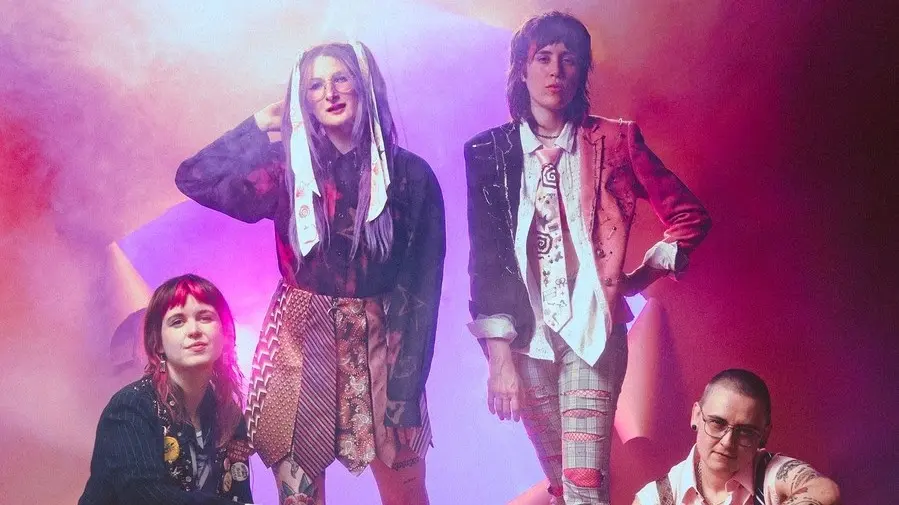
In the heartland of American independent music, where the legacy of midwestern emo intersects with the exploratory textures of contemporary noise rock and ambient composition, a vital new voice is cementing its place. Pinksqueeze—the genre-bending ensemble whose sonic footprint spans the delicate interplay of vulnerability and raw catharsis—has officially announced its signing to a prominent regional indie and emo label. The band joins an influential roster that includes revered underground acts such as Jack M. Senff, gay meat, and Yasmin Nur, further solidifying the label’s reputation as a incubator for forward-thinking, emotionally resonant guitar music.
This strategic alignment heralds the release of their eagerly anticipated sophomore full-length album, We Can Have It. Serving as the follow-up to their critically acclaimed 2003 debut, Be Gay Have Fun—a record that quickly became a touchstone for devotees of indie-pop luminaries like Beach Bunny, The Beths, and Illuminati Hotties—the new LP represents a profound artistic maturation. Built upon the defiant, utopian premise that a better world is not merely a hypothetical dream but an attainable reality, We Can Have It navigates a sophisticated labyrinth of noise, emo, and ambient influences.
Beyond its sonic ambition, the album carries deep emotional weight. Pinksqueeze is releasing the record in sacred memory of the late Simon Small, professionally known as Tunnel of Reverb. Small’s visionary work as a sound engineer and producer fundamentally shaped the contours of the project, leaving an indelible imprint on its sonic architecture.
As the band prepares to take these songs to the stage with an extensive United States tour—highlighted by a marquee release show at Chicago’s historic Lincoln Hall on December 12—critics and fans alike are turning their attention toward a collective that has evolved from a humble two-piece bedroom project into a powerhouse of democratic, multi-faceted songwriting. This feature explores the journey of Pinksqueeze, dissecting the creation of We Can Have It, the philosophies underpinning its creation, and what the future holds for one of the underground’s most compelling acts.
Detailed Chronology: From Bedroom Roots to Collective Enterprise
To understand the scope of We Can Have It, one must retrace the trajectory of Pinksqueeze from its modest origins nearly half a decade ago. The project materialized in 2018 initially as a two-piece collaboration between founding members April Hickey and Ava Marvin. In its earliest iterations, the duo focused on paring down emotional urgency into sharp, melodic indie-rock frameworks, capturing the transient anxieties and queer joys of youth through a DIY lens.
As the scope of their songwriting expanded, so too did their physical lineup. Recognizing the need for a more thunderous rhythm section and a richer harmonic palette, Hickey and Marvin integrated bassist Anna White and drummer Logan Greenfield into the fold. This expansion transformed Pinksqueeze from a localized bedroom recording venture into a fully realized, collaborative band unit.
The turning point for the quartet arrived with the release of their debut full-length album, Be Gay Have Fun. Released via Bandcamp, the record functioned as a rallying cry for the queer indie community. Brimming with infectious hooks and self-aware lyricism, the album drew immediate comparisons to modern indie royalty. In promotional materials surrounding the release, the band openly contextualized their sound for fans of Beach Bunny, The Beths, and Illuminati Hotties, establishing a clear lineage of witty, guitar-driven pop-punk and indie-rock. The album earned them a dedicated cult following and laid the groundwork for regional touring.
However, the creative process behind We Can Have It marked a radical departure from their debut. Eschewing traditional hierarchical songwriting models, Pinksqueeze adopted a strictly democratic approach to the creation of their sophomore album. All four members—Hickey, Marvin, White, and Greenfield—share equal footing in both songwriting credits and lead vocal duties.
According to the band, the tracklist of We Can Have It is a mosaic of individual expressions and collective efforts. The record features compositions written independently by each member, alongside tracks forged in real-time through four-way collaborative jams. This multi-author approach lends the album a kaleidoscopic quality; tracks seamlessly bleed into one another not because they adhere to a single stylistic template, but because they are bound together by a shared emotional vernacular.
The chronological arc of the album’s rollout officially began with the unveiling of its lead single, "Springtime." Written by April Hickey, the track sets the thematic and sonic tone for the entire project. Described by the band as opening the record "grounded in hope and new beginnings," "Springtime" diverges from the cynical resignation often found in contemporary indie rock. Instead, it embraces the difficult, radical act of optimism, underscored by a sweeping, melancholic viola string arrangement that elevates the song far beyond standard three-chord structures.
Supporting Context & Metrics: The Architecture of We Can Have It
The sonic palette of We Can Have It is defined by a deliberate tension between aggressive, abrasive textures and soaring, ambient expanses. Where Be Gay Have Fun leaned heavily into pristine indie-pop structures, the new record allows its edges to fray. The band successfully bridges disparate micro-genres, moving fluidly through the chaotic catharsis of noise rock, the bleeding-heart confessionals of emo, and the hypnotic, meditative drones of ambient music.
At the core of this sonic alchemy was the late Simon Small, operating under the moniker Tunnel of Reverb. Small’s expertise as a producer and sound engineer was not merely technical; it was foundational to the album’s emotional resonance. Small helped Pinksqueeze capture the kinetic energy of their live performances while carving out sonic space for experimentation—allowing subtle ambient soundscapes to coexist with crushing walls of distorted guitars. Pinksqueeze’s decision to release the album in his memory transforms We Can Have It into a monument to collaboration, grief, and artistic legacy.

The thematic spine of the record rests on an ideological rejection of fatalism. In an era marked by socio-political turmoil and cultural exhaustion, We Can Have It is built around the fundamental, utopian conviction that a better world is possible. This thesis is mapped out across a ten-track journey that balances biting social commentary with deeply personal introspection.
We Can Have It Official Tracklist:
- "Springtime" – A hopeful, viola-infused opener that establishes the album’s thematic roots.
- "The Rock Show" – A driving, dynamic track exploring the sweaty, communal catharsis of live music spaces.
- "Stoner Butch Blues" – A character-driven, emotionally raw exploration of identity, culture, and burnout.
- "Night Sweats" – A tense, claustrophobic piece capturing anxiety and late-night rumination.
- "Sweet Tooth" – A melody-forward track masking sharp lyricism with deceptive sweetness.
- "Green" – A textural bridge focusing on growth, envy, and organic sonic shifts.
- "The Gay Agenda" – A cheeky yet fierce anthem addressing queer existence and societal paranoia.
- "Rebirth" – A transformative composition showcasing the band’s ambient and noise influences.
- "Songs About Love (Interlude)" – A brief, atmospheric pause reflecting on the tropes of romantic songwriting.
- "Die Happy" – A monumental closing track that synthesizes the album’s overarching themes of mortality, fulfillment, and radical hope.
The physical presentation of the album matches its auditory ambition. The striking album artwork—featuring minimalist yet evocative visual motifs—complements the atmospheric nature of the music, anchoring the physical release as a collector’s item for fans of the burgeoning midwestern indie circuit.
Official Statements and Industry Reception
The signing of Pinksqueeze to their new home within the midwestern indie and emo landscape has been met with widespread enthusiasm from critics and peers alike. Industry insiders have noted that the label’s curation—which champions artists unafraid to blend emotional vulnerability with sonic experimentation—provides the ideal ecosystem for Pinksqueeze’s evolution.
Speaking on the conceptual framework of the album, the band released a joint statement emphasizing the urgency of their message:
"We Can Have It is an exploration of what happens when you refuse to let cynicism win. Writing this record together, as a true four-piece unit where everyone’s voice holds equal weight, changed us. It forced us to look at our fears, our grief, and our hopes, and to put them all in the same room. We built this album on the stubborn belief that a better world—and a better way of making art—is genuinely possible."
Reflecting on the role of the late Simon Small, the band expressed profound gratitude for his creative partnership:
"Simon (Tunnel of Reverb) was more than an engineer to us; he was a co-conspirator who understood the exact emotional frequency we were trying to reach. His guidance, patience, and brilliance shaped every single second of this record. We release We Can Have It in his memory, carrying his spirit with us into every room we play."
Early critical reactions to lead single "Springtime" have praised its sophisticated arrangement, particularly highlighting the integration of the viola string arrangement as a sign of Pinksqueeze’s growing compositional maturity. Reviewers have noted that while the band retains the infectious energy that endeared them to fans on Be Gay Have Fun, the new material displays a cinematic depth that positions them as one of the most exciting outfits to emerge from the contemporary indie underground.
Future Outlook: Touring Plans and the Road Ahead
As the release date for We Can Have It approaches, Pinksqueeze is turning its full attention toward the stage. The band has announced a comprehensive United States tour designed to bring the complex sonic landscapes of the new album to life in intimate club settings and DIY spaces alike.
The crown jewel of the upcoming tour schedule is an official album release show slated for December 12 at Lincoln Hall in Chicago. As a city with a rich, storied history in both indie rock and emo music, Chicago serves as a symbolic home turf for the band’s biggest headline performance to date, promising a night of communal celebration, high-energy performance, and emotional resonance.
While domestic fans eagerly anticipate the tour routing, international supporters are currently looking across the Atlantic. At present, no UK or international dates have been announced, leaving European followers hopeful that the band’s expanding profile will soon warrant an overseas excursion. Given the strong transatlantic appetite for American indie and emo acts, an international routing feels like a logical next step in Pinksqueeze’s upward trajectory.
Ultimately, We Can Have It represents a defining moment for Pinksqueeze. By transforming personal and collective grief into a triumphant declaration of hope, and by championing a truly egalitarian approach to songwriting, Hickey, Marvin, White, and Greenfield have crafted an album that transcends the standard boundaries of indie rock. As they step onto the stage at Lincoln Hall this December and look out across a sea of fans who share their hunger for connection, Pinksqueeze will not merely be celebrating a new record—they will be living proof that the world they sing about is worth fighting for.