
Executive Overview
"Listen to them, the children of the night. What music they make!"
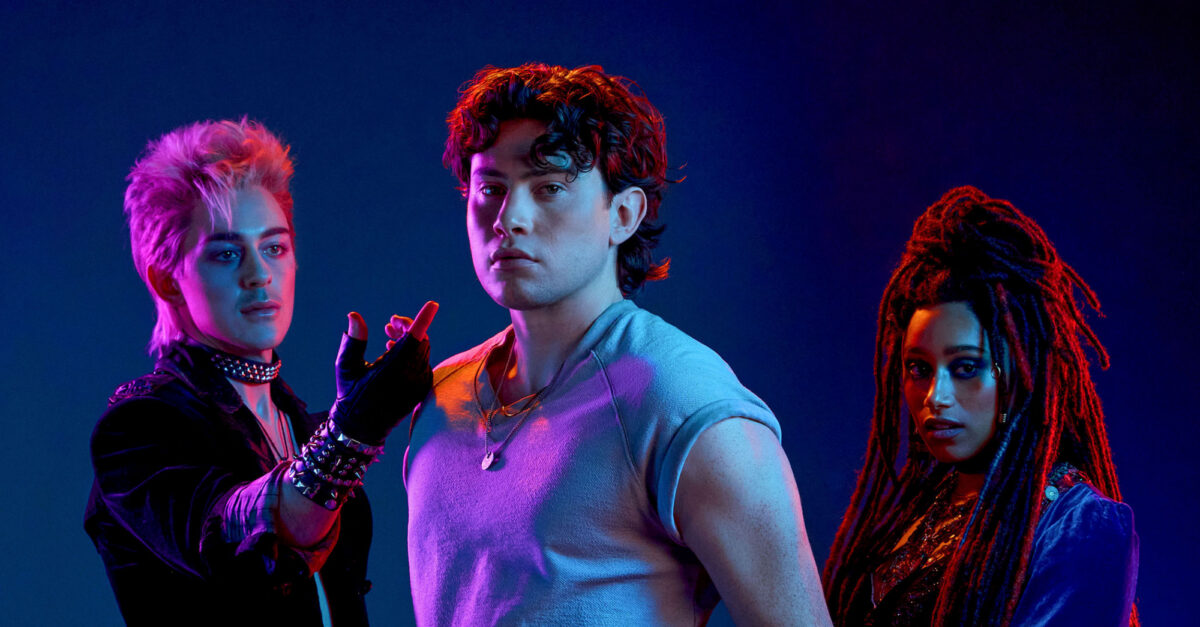
As Halloweekend descends upon Manhattan, the staff at Playbill are not the only ones attuned to all things frightful. This year’s spooky season marks a momentous milestone for Broadway’s reigning box-office titan, the smash-hit musical The Lost Boys. Having recently celebrated its 30th preview and upward of 200 regular performances at the Palace Theatre without a single sign of slowing down, the production has officially clinched an unprecedented the longest-running vampire musical in Broadway history.
For decades, industry prognosticators viewed the intersection of musical theatre and the undead as an unholy alliance doomed to eternal failure. From lavish European imports gone awry to high-profile pop-collaborations derailed by backroom interference, vampires on the Main Stem were thought to possess a fatal allergy to the footlights. Time and again, bloodsuckers would step onto Broadway’s stages only to face swift, merciless stakes.
The Lost Boys, however, has thoroughly shattered this once-immortal theatrical curse. By combining a contemporary pop-rock soundscape, razor-sharp narrative pacing, and an unabashed embrace of gothic-youth melodrama, the production has rewritten the rules of engagement for genre fiction in the theatre district. As we examine this watershed moment in modern entertainment, we must look backward through the shadows of Broadway history to unpack the spectacular failures that paved the way for this triumph—and explore the precise alchemy that allowed The Lost Boys to finally pierce the jugular of Broadway success.
Detailed Chronology: A History of Fangs and Footlights
To understand the magnitude of The Lost Boys‘ current reign, one must first traverse the graveyard of its predecessors. Historically, theatrical adaptations of vampire lore have enjoyed a bizarre dichotomy: straight plays about the charismatic Count Dracula have consistently thrived on Broadway, whereas their musical counterparts have met catastrophic demises.
Bela Lugosi famously originated the role of Count Dracula on Broadway in 1927, cementing a legacy that would see the character return in 1931, 1937, and a triumphant 1977 revival starring Frank Langella, David Dukes, Raúl Juliá, and Jean LeClerc. Regional circuits and Off-Broadway hits like Dracula, A Comedy of Terrors and Drunk Dracula have routinely proven that audiences crave theatrical fangs. Yet, when composers attempted to set the nocturnal adventures of vampires to music on the grand stages of Broadway, the results were nothing short of apocalyptic.
1. Dance of the Vampires (2002): The Night from Hell
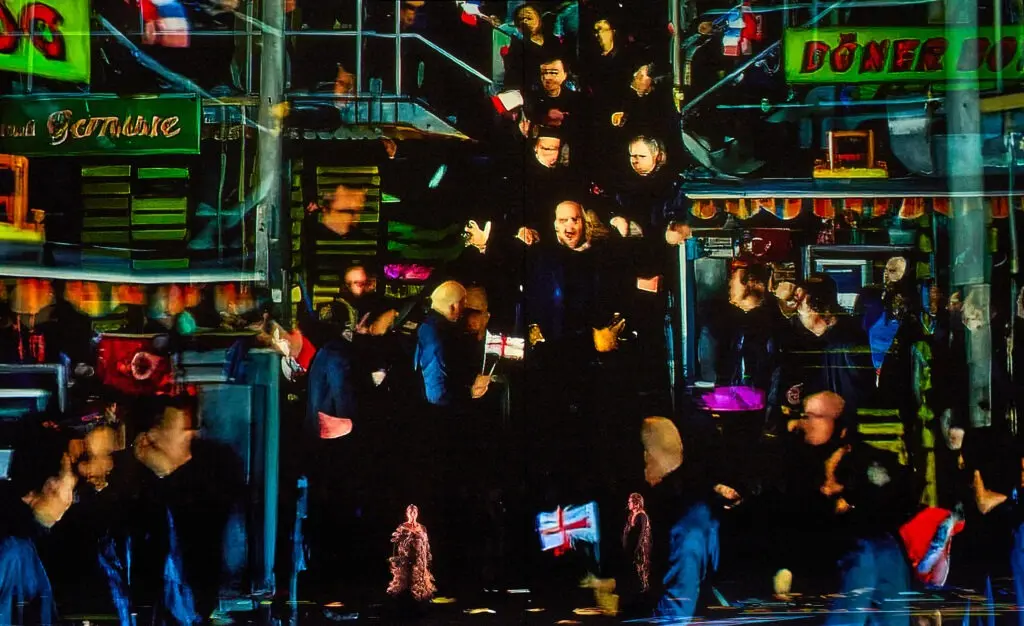
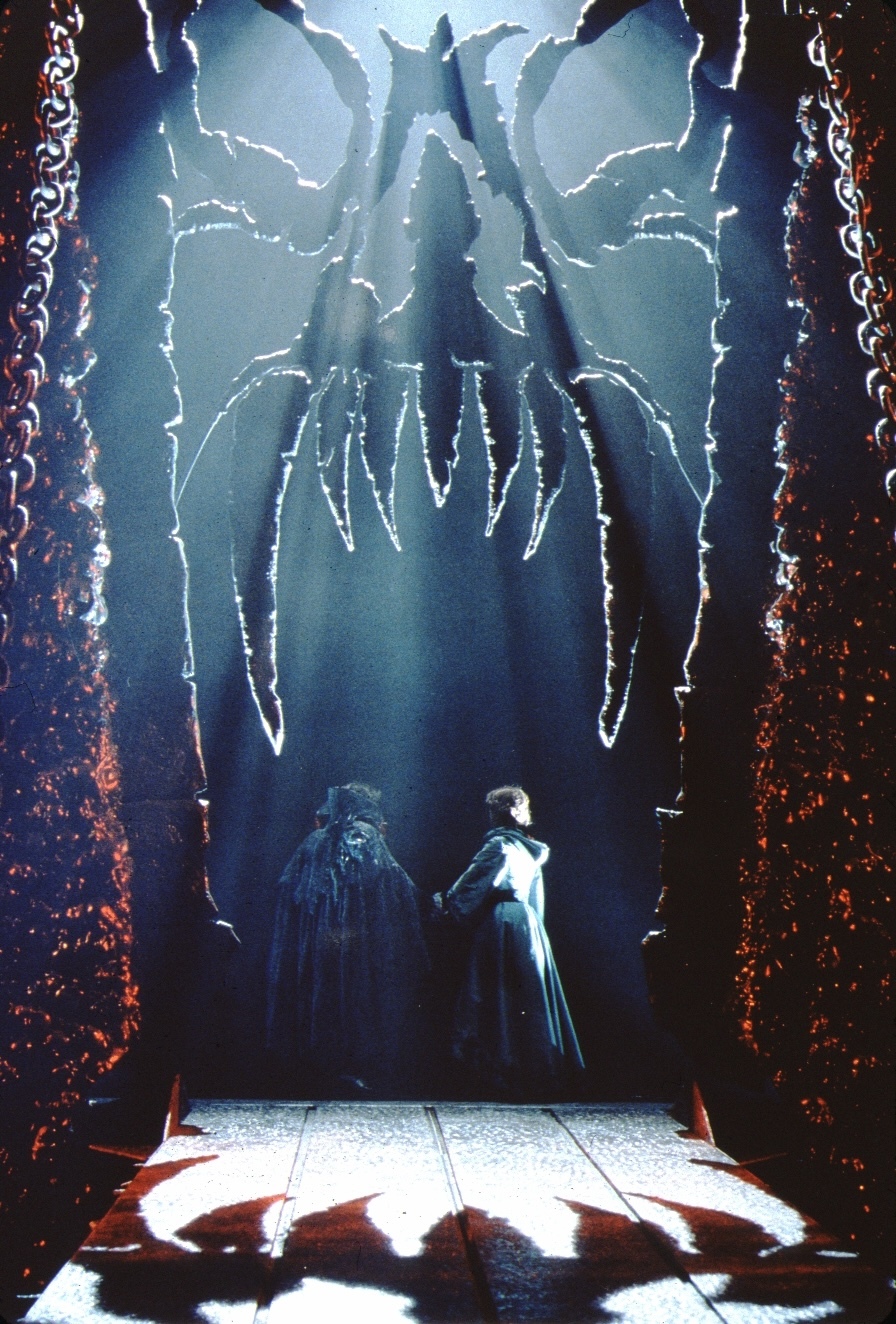
The modern era of vampire musical casualties began with Dance of the Vampires, an adaptation of Roman Polanski’s 1967 cult spoof film The Fearless Vampire Killers. Premiering in Vienna in 1997 as Tanz der Vampire, the show was an unmitigated blockbuster across Europe. Featuring a soaring, operatic-rock score by Jim Steinman—the master of the theatrical power ballad—and starring The Phantom of the Opera alumnus Steve Barton as the darkly alluring Count Krolock, the European iteration was a masterclass in gothic romance and grand melodrama.
However, the 2002 Broadway transfer became one of the most confounding trainwrecks in theatrical history. With Polanski unable to enter the United States as a fugitive sex offender, a profound leadership vacuum crippled the production. What began as a lush, dark romance akin to The Phantom of the Opera was systematically dismantled and transformed into a crude, slapstick Mel Brooks-style comedy. Steve Barton was ousted and replaced by Michael Crawford—another Phantom legend—while the English-language book accumulated a bizarre, misogynistic, and homophobic veneer.
Despite the systemic rot, the production yielded one moment of genuine theatrical transcendence: Mandy Gonzalez, making her triumphant Broadway debut, brought the house down night after night with her powerhouse rendition of "Total Eclipse of the Heart." Originally penned by Steinman for an abandoned silent-film adaptation of Nosferatu, the ballad initially drew snickers from an audience bewildered by the evening’s tone, but Gonzalez’s searing vocals unfailingly commanded total, mesmerized silence by the final note.
Unfortunately, one celestial performance could not salvage a sinking ship. Following 61 previews and 56 regular performances, Dance of the Vampires shuttered with a staggering $12 million loss—ranking among the largest financial bloodbaths in Broadway history. Ironically, the European iteration of Tanz der Vampire continues to play to sold-out houses abroad.
2. Dracula, the Musical (2004): A Giant Stuffed Bat on a Stick
Undeterred by the carnage of 2002, Broadway producers reasoned that perhaps the issue had been comedy itself. Surely, a return to straight-faced gothic romance based on Bram Stoker’s foundational text, paired with a powerhouse composer, would turn the tide.
Enter Frank Wildhorn in 2004 with Dracula the Musical. Fresh off his triumphs with Jekyll & Hyde, Wildhorn appeared uniquely equipped to harness the dark, sweeping passions of Stoker’s literature. Regrettably, personal turmoil—including a concurrent divorce from his longtime muse and vocal powerhouse Linda Eder—compromised Wildhorn’s output, yielding a score widely criticized as derivative and flat.
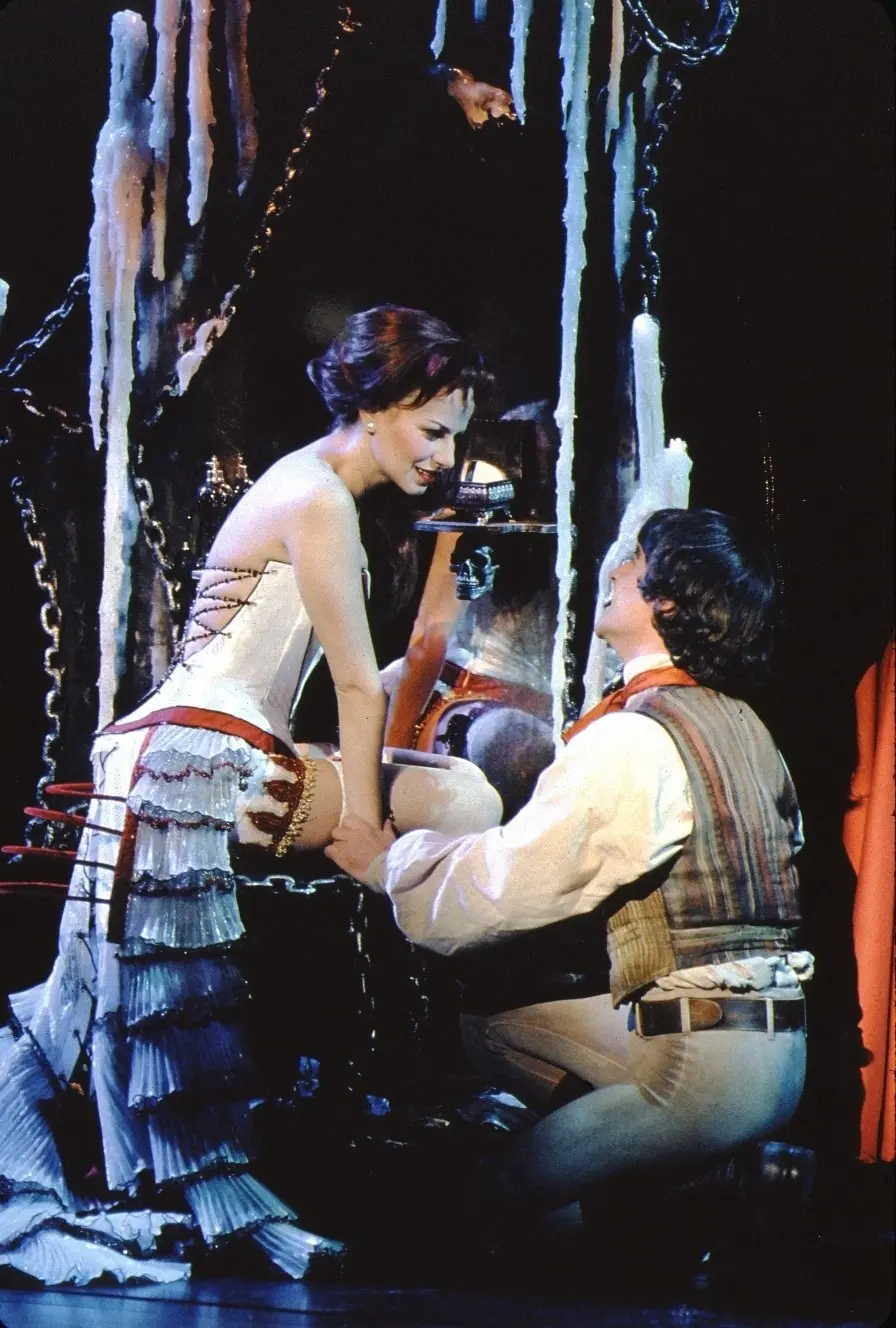
Director Des McAnuff fought valiantly to mask the structural deficiencies of the book. He deployed yards of heavy fabric draped over every stationary object, turned up the sound design to deafening decibels, and even engineered a memorable, fully nude seduction scene for stars Kelli O’Hara and Melissa Errico. Yet, toxic word-of-mouth staked the production upon arrival.
Particular scorn was reserved for the show’s lyrical choices. One couplet in particular—“Give me your mouth upon my mouth / Give me your skin to savor / Give me your breath upon my breast / Taste our immortal flavor”—earned a permanent spot on New York magazine’s registry of "songs to make your blood curdle."
In his review for The New York Times, chief critic Ben Brantley famously declared: "And here it is, looming like a giant stuffed bat on a stick, the easiest target on Broadway." Dracula hemorrhaged $7.5 million before closing within five months of its August opening. Much like its predecessor, however, a heavily revised iteration of the score found a vibrant second life overseas, frequently mounted in Asian markets starring prominent J-Pop and K-Pop idols.
3. Lestat (2005): Elton John’s Missing Masterpiece
Attempting a third major vampire musical in consecutive seasons was an act of theatrical hubris. Yet, Lestat possessed credentials that suggested it was entirely immune to the emerging curse. Based on Anne Rice’s immensely popular Vampire Chronicles, the project united rock royalty Elton John with his legendary lyricist Bernie Taupin for their sole theatrical venture together.
During its out-of-town tryout in San Francisco, Lestat shattered box-office records, out-earning the pre-Broadway runs of both Wicked and Cats. Hugh Panaro and Carolee Carmello delivered searing, emotionally complex portrayals of Lestat de Lioncourt and his mother, Gabrielle, earning immediate, fervent devotion from Rice’s global fanbase.
Then, institutional panic set in. Without Elton John’s knowledge or consent, executive producers drastically overhauled the production prior to its Broadway bow. They gutted much of the sweeping mythos John had meticulously constructed, molding the narrative to mirror the aesthetics of the 1994 cinematic adaptation of Interview with the Vampire.
By the time Lestat opened at the Palace Theatre in April 2005, it was creatively dead on arrival—a victim of too many executive hands in its surgical cavity. Despite Tony Award nominations for Carolee Carmello and costume designer Susan Hilferty, the production closed after just 39 regular performances.
The experience proved so deeply humiliating for Elton John that he actively blocked the release of the official cast recording, consigning the score to an eternity in the shadows. Despite two decades of impassioned public pleas from fans and cast members alike—including Carmello herself—John has remained steadfast: Lestat will never be heard again unless it is revived in the pristine form he originally composed. It remains the ultimate "what-if" of 21st-century musical theatre.
Supporting Context & Metrics: The Cultural Shift
Following the catastrophic closures of Dance of the Vampires, Dracula, and Lestat, the Broadway community tacitly agreed that vampires were box-office poison. Two decades elapsed without a single bloodsucker treading the Main Stem in a musical capacity.
Yet, the cultural landscape outside the theatre district underwent a seismic transformation. Two massive pop-culture vampire renaissances—ushered in first by Twilight and True Blood, and subsequently sustained by modern prestige television like AMC’s Interview with the Vampire and The Vampire Lestat, alongside cinematic entries like Sinners—reshaped public appetites. Concurrently, technological advancements in stagecraft rendered the manifestation of theatrical fantasy more seamless and visceral than ever before.
Most importantly, the demographics of Broadway audiences shifted dramatically. Younger generations flooded the stalls, bringing with them an insatiable appetite for genre fiction. Horror, fantasy, and science fiction transitioned from niche subcultures to dominant mainstream artistic pillars. Shows exploring youthful angst and coming-of-age narratives within dark environments—such as The Outsiders and Stranger Things: The First Shadow—demonstrated that contemporary theatregoers craved visceral, high-stakes storytelling.
The Lost Boys arrived at the Palace Theatre precisely at this cultural intersection, armed with institutional wisdom gleaned from the failures of its forebears.
Official Statements and Production Insights
The historic success of The Lost Boys is no accident of timing; it is the result of disciplined, visionary leadership. Speaking on the production’s development, industry insiders note that the creative team deliberately avoided the pitfalls that doomed Lestat and Dance of the Vampires.
- A Unified Vision: Unlike the fractured leadership that plagued Dance of the Vampires or the executive interference that ruined Lestat, The Lost Boys was steered by a singular, cohesive creative force. Tony-winning director Michael Arden maintained absolute artistic clarity from workshop to Broadway bow.
- Adaptation vs. Imitation: Rather than slavishly recreating the 1987 Joel Schumacher film or trying to cram decades of dense literary mythos into a two-hour window, the creative team utilized the source material as an inspirational springboard, crafting a self-contained theatrical narrative that respects the medium.
- Embracing the Melodrama: Previous productions often stumbled by apologizing for their own premise—either leaning too hard into self-parody (as seen in Dance of the Vampires) or suffocating under the weight of self-seriousness (Dracula). The Lost Boys liberated its cast to embrace the inherent theatricality and grand melodrama of playing singing, blood-drinking immortals.
Breakout performances have anchored this tonal balance. Ali Louis Bourzgui delivers a magnetic, star-making turn that earned him universal critical acclaim and a Tony Award, alongside Shoshana Bean, whose powerhouse vocals provide the emotional, maternal anchor of the production.
Future Outlook: A New Era for the Undead on Broadway
As The Lost Boys continues to pack the Palace Theatre night after night, its historic milestone fundamentally recalibrates the economics of genre storytelling on Broadway. It has proven once and for all that musical theatre audiences do not reject vampires; they reject cynicism, structural confusion, and corporate interference.
In an era where theatrical marketing frequently relies on ironic detachment and aloof nonchalance, The Lost Boys offers a liberating counter-experience. It is a show unafraid to be lush, larger-than-life, and earnest-to-a-fault. Backed by Dane Laffrey’s mind-bending, Tony-winning set design and the Rescues’ enchantingly intricate, rock-infused harmonies, the production demonstrates that when emotions are treated as the very lifeblood of existence, audiences will eagerly line up to enter the spell.
Bravo, The Lost Boys. It turns out the fourth time was indeed the charm, proving that Broadway’s vampire curse wasn’t immortal after all—it was simply waiting for the right bloodline to wake it from the dead.