
Executive Overview
When Wicker—the highly anticipated cinematic adaptation starring Academy Award winner Olivia Colman, Emmy winner Alexander Skarsgård, and stage and screen luminary Peter Dinklage—premieres on October 23, audiences will file into theaters expecting a darkly whimsical romance. Early industry buzz from The Hollywood Reporter has already anointed the project as "the horniest, most tender film of the year," generating considerable pre-release momentum. Yet, while cinephiles prepare to be charmed and unsettled by this cinematic fable, musical theatre aficionados and literary historians recognize that the journey of this unusual romance began long before cameras rolled on a Hollywood set.
Before it was reimagined for the silver screen, Wicker existed as a celebrated, albeit under-produced, stage musical titled The Wicker Husband. And before it took its first breath in theatrical workshops and folk-infused song, it was a poignant, biting 2008 short story penned by British author Ursula Wills-Jones.
This comprehensive investigative feature explores the fascinating, multi-decade trajectory of a modern folk fable. We examine how a whimsical piece of internet-discovered prose blossomed into a bawdy adult musical theatre production—surviving industry hurdles, workshop showcases, and pandemic-era closures—before finally capturing the attention of major Hollywood heavyweights. As the cultural zeitgeist prepares to embrace the cinematic iteration of this straw-and-willow romance, we trace the creative lineage that brought a man made of wicker from the pages of indie literature to the international theatrical and cinematic spotlight.
Detailed Chronology: From Prose to the Silver Screen
The evolution of Wicker is a masterclass in cross-medium adaptation, illustrating how a solitary literary spark can ignite a chain reaction across entirely different artistic disciplines.
2008: The Literary Seed
The narrative genesis of the phenomenon lies in Ursula Wills-Jones’ 2008 short story, The Wicker Husband. Set within a insular, gossipy, and deeply unforgiving rural community, the story centers on an unnamed protagonist—frequently referred to in subsequent adaptations as the "Ugly Girl"—who is ruthlessly ostracized by her fellow villagers due to her non-conforming appearance.
Profoundly lonely and desperate for companionship in a society that has marginalized her, the protagonist takes a radical step. She approaches a local basket maker and commissions him to weave her a husband out of willow and straw. To the shock of the village, the wicker creation miraculously comes to life. Far from being a monstrous golem, the wicker husband proves to be remarkably gentle, attentive, and deeply loving. However, his presence quickly breeds resentment and bitter jealousy among the other women of the village. The satirical, heartbreaking undercurrent of Wills-Jones’ original text hits a universal nerve: a man constructed entirely out of plant fibers proves to be immeasurably kinder, more emotionally intelligent, and more considerate than the human husbands populating the town.
The Discovery and Musical Adaptation
Wills-Jones’ story might have remained a beloved, obscure piece of internet fiction had it not been for actor and writer Rhys Jennings. While browsing online, Jennings stumbled upon the short story and immediately recognized its theatrical potential. Captivated by its unique blend of dark folklore, emotional vulnerability, and sharp social commentary, Jennings reached out directly to the author.
According to composer Darren Clark, who later joined the creative team, Wills-Jones gave the adaptation her blessing with characteristic ease, telling Jennings, "Absolutely, go ahead, run with it, do what you like."
Two years after securing the rights, Jennings approached Clark to collaborate on a musical adaptation. Clark, whose work includes the celebrated musical The Curious Case of Benjamin Button, immediately understood the project’s sonic possibilities. The duo set about transforming the compact prose into a full-scale theatrical piece, infusing the narrative with a rich, folk-inspired score that mirrored the rustic, earthy themes of the original story. Because the source material was not widely known outside of niche literary circles, Clark and Jennings enjoyed a rare creative freedom, crafting a world entirely their own without the crushing weight of pre-existing fandom expectations.
2018: The New York Showcase
As The Wicker Husband developed, it caught the attention of industry tastemakers. In 2018, the musical took a massive step forward when it was selected for a high-profile workshop in New York City as part of the prestigious National Alliance for Musical Theatre (NAMT) Festival of New Musicals.
The NAMT showcase serves as an essential incubator for new theatrical works, connecting visionary writers with Broadway producers, regional theatre artistic directors, and top-tier talent. The industry-only presentation of The Wicker Husband boasted an exceptional cast featuring stage veterans Kerstin Anderson, Jordan Donica, and Clifton Davis. This showcase proved instrumental in proving that the idiosyncratic, folk-driven British musical could resonate with American audiences and industry professionals alike.
2020–2022: The Pandemic and the Watermill Theatre World Premiere
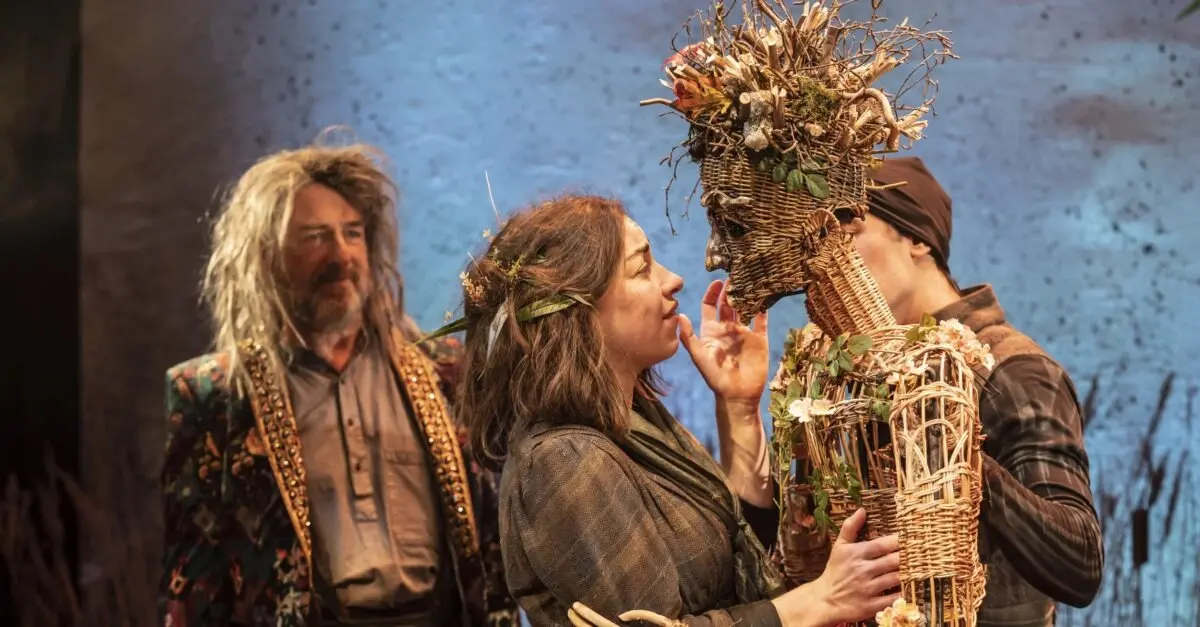
Buoyed by positive industry response, The Wicker Husband finally secured its long-awaited world premiere production at the renowned Watermill Theatre in the United Kingdom, slated for the spring of 2020. Under the visionary direction of Charlotte Westenra, the production featured Laura Johnson as the protagonist, with the titular wicker husband brought to life via ingenious puppetry.
However, historical circumstances intervened in the cruelest possible manner for live theatre. The production celebrated its official opening night on March 18, 2020—precisely as the global COVID-19 pandemic forced the unprecedented closure of theatres worldwide. After a single night of sharing its unique brand of folk magic with the public, the production was forced to shut its doors indefinitely.
Refusing to let the production vanish into theatrical folklore, the Watermill Theatre triumphantly remounted the musical in 2022 for a fully realized run. Featuring Gemma Sutton stepping into the central role, this revival allowed the creative team to finally realize their artistic vision. Both iterations of the Watermill staging received critical acclaim, cementing the show’s reputation as a daring, unconventional theatrical triumph.
October 2023 and Beyond: The Cinematic Transformation
Following the 2022 Watermill run, high-profile theatrical productions of The Wicker Husband paused, leaving fans to content themselves with the haunting folk score preserved on the musical’s official YouTube channel. Yet, the underlying IP was far from dormant.
The transition from stage musical to major motion picture represents the culmination of a fifteen-year journey. Retitled simply Wicker and featuring an A-list cast of Olivia Colman, Alexander Skarsgård, and Peter Dinklage, the film promises to introduce the dark, tender, and bizarrely romantic fable to a massive global audience.
Supporting Context & Metrics: The Scale of Adaptation
To fully appreciate the trajectory of Wicker, it is essential to examine the quantitative and qualitative milestones that marked its journey across three distinct mediums:
- Literary Footprint (2008): Ursula Wills-Jones’ original short story began as a digital narrative, circulating primarily through niche online literary communities before catching the eye of independent theatre creators. Its lack of mainstream saturation paradoxically granted adapters the creative canvas needed to expand the universe organically.
- Theatrical Incubation (2018): Out of hundreds of submissions globally, The Wicker Husband was handpicked for the National Alliance for Musical Theatre (NAMT) Festival of New Musicals, an elite cohort where roughly 70% of showcased musicals eventually receive full professional productions.
- Critical Reception: Reviewers consistently praised the stage adaptation for defying traditional musical theatre tropes. The Stage famously categorized it as "a fun and bawdy fairytale for adults," highlighting its ability to balance bawdy folk humor with genuine emotional pathos.
- Cinematic Star Power (2023–2024): The transition to film escalated the project’s profile exponentially. Recruiting Olivia Colman (Academy Award winner for The Favourite), Alexander Skarsgård (Emmy winner for Big Little Lies), and Peter Dinklage (four-time Emmy winner for Game of Thrones) instantly elevated Wicker from an indie folk curiosity into a major prestige film release.
Official Statements & Creative Insights
The creative minds behind the various iterations of Wicker have consistently emphasized the story’s unique blend of emotional vulnerability and dark, rustic humor.
Reflecting on how the adaptation came to fruition, composer Darren Clark recalled the early days of development in a 2016 interview with Musical Theatre Review:
"Rhys first read the story, I think, about four years ago. He just found it—it’s a short story—on the internet. He approached the author Ursula Wills-Jones and said: ‘I love your story, would you mind if I did something with it for the stage?’ Ursula said: ‘Absolutely, go ahead, run with it, do what you like.’"
Clark also noted the rarity of adapting such an obscure piece of literature:
"It’s a beautiful story, but I think because the story’s not all that well known, it’s difficult to come by unless you know what you’re looking for. So I don’t think that Ursula has been approached by any other people wanting to adapt it into a stage show. I’ve noticed that it’s been made into a couple of short films for the internet, but ours was the first to approach her for a stage adaptation."
Meanwhile, early critical reception for the upcoming film adaptation—dubbed by The Hollywood Reporter as "the horniest, most tender film of the year"—demonstrates that the core thematic DNA of Wills-Jones’ original 2008 text remains intact: an exploration of profound human loneliness, societal cruelty, and the unexpected capacity for love found in the most artificial of constructs.
Future Outlook: A New Dawn for Wicker
As the October 23 release date for Wicker approaches, industry analysts and theatre historians are watching closely to see how the film impacts the broader legacy of the property.
While the Watermill Theatre production in 2022 marked the last major high-profile theatrical staging of The Wicker Husband, the cinematic release presents an unprecedented opportunity for cross-pollination. Historically, major film adaptations frequently spark renewed interest in their source material and theatrical antecedents—a phenomenon witnessed repeatedly when screen adaptations drive audiences back to original plays, musicals, and novels.
Will the massive commercial footprint of a movie starring Olivia Colman and Alexander Skarsgård prompt regional theatres to revisit Darren Clark and Rhys Jennings’ folk musical? Could international licensing requests for The Wicker Husband surge as viewers look to explore the musical roots of the cinematic fable?
For now, fans of the property can immerse themselves in the rich, acoustic world of the musical via its dedicated digital archives, while preparing to experience a fresh, star-studded interpretation on the big screen. Whether encountered as a biting piece of internet fiction, an earthy British folk musical, or a prestige Hollywood romantic dark comedy, the enduring appeal of a woman who chose a man made of straw over the cruelty of human society proves that true tenderness can be woven from the most unexpected materials.