
Executive Overview
The contemporary jazz landscape is constantly engaged in a dual-directional dialogue: looking backward to unearth historic, seminal performances long lost to physical obscurity, and looking sideways to reimagine the familiar through contemporary compositional lenses. Recent releases from independent and international labels offer a striking juxtaposition of these two impulses.
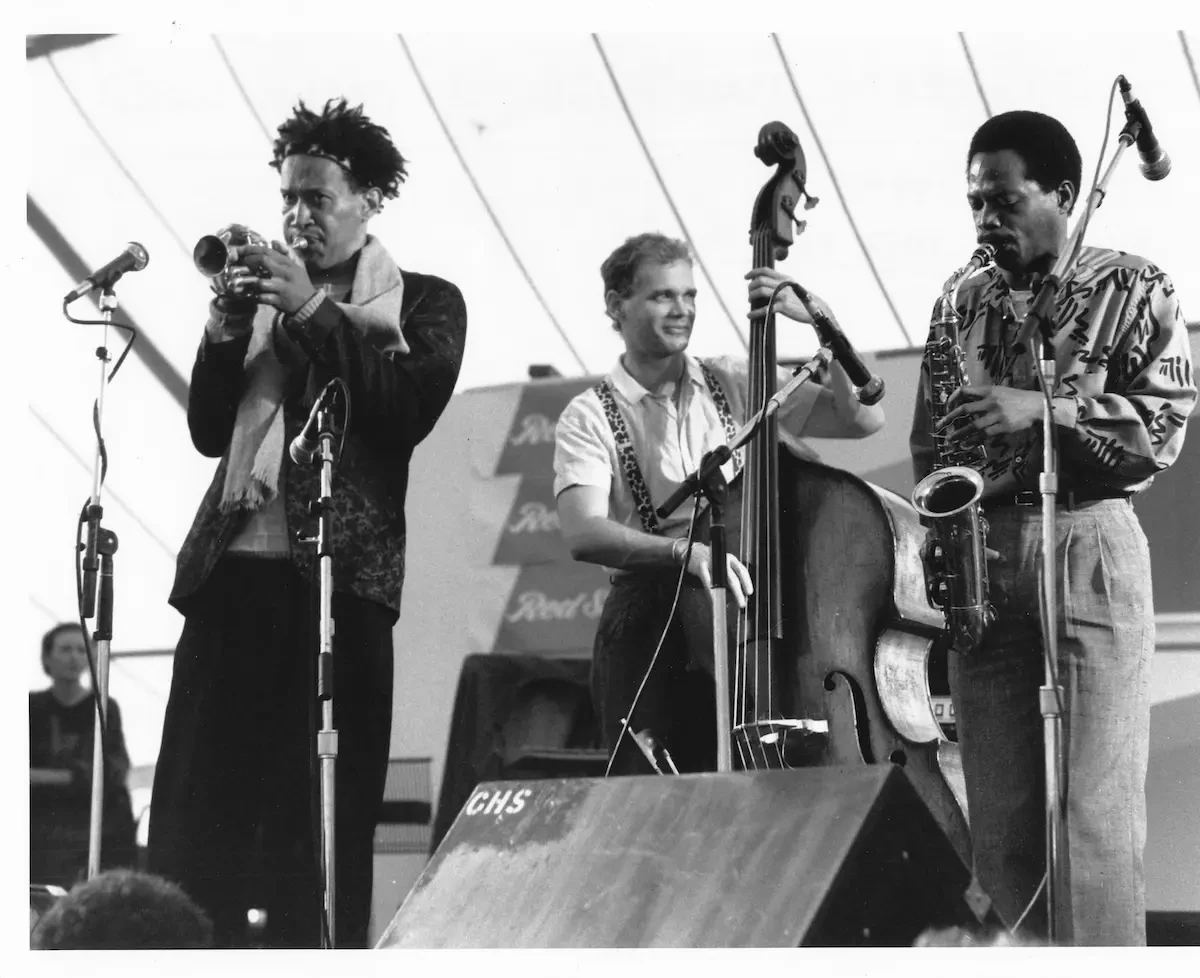
At the vanguard of historical rediscovery is the international reissue of The Third World-Underground, a legendary 1972 live recording capturing pianist Dollar Brand (later known as Abdullah Ibrahim), trumpeter Don Cherry, and saxophonist/flutist Carlos Ward at Copenhagen’s famed Jazzhus Montmartre. Originally pressed in limited quantities in 1974 by the Japanese Trio Records label, this recording has spent half a century largely inaccessible to the global jazz community outside of dedicated collector circles. Its wide international release via Wewantsounds marks a watershed moment for jazz scholarship and listening audiences alike, offering a pristine document of three idiosyncratic improvisers operating at the intersection of free jazz, post-bop, and traditional African idioms.
Conversely, the contemporary side of the ledger is represented by guitarist James Chadwick’s quintet album Walrws (released via 33 Records). Subtitled "60s Pop Classics with a Jazz Twist," Chadwick’s project tackles the well-worn tradition of transforming popular song canons into vehicles for jazz improvisation. Featuring a heavy emphasis on the songwriting partnership of John Lennon and Paul McCartney alongside other 1960s anthems, the album attempts to breathe new life into ubiquitous cultural artifacts through reharmonization and arrangement. However, as critical analysis reveals, the execution exposes the peril inherent in translating familiar melodies without sufficient harmonic drive or rhythmic urgency, raising broader questions about the viability of pop-to-jazz adaptations in the modern era.
By examining these two disparate releases—one a long-awaited archival holy grail, the other a contemporary studio experiment—we gain valuable insight into the mechanics of jazz interpretation, historical preservation, and the enduring tension between avant-garde exploration and pop accessibility.
Detailed Chronology: From the Montmartre Stage to the Modern Studio
Part I: November 14, 1972 – Dollar Brand, Don Cherry, and Carlos Ward Live in Copenhagen
To fully understand the weight of The Third World-Underground, one must trace the cultural and geographic trajectories of its principal architects. By late 1972, the global jazz ecosystem was undergoing a profound decentralization. American artists, facing systemic economic marginalization and racialized barriers within the United States, were increasingly finding creative refuge in Europe. Simultaneously, South African musicians displaced by the brutal apartheid regime were establishing hubs of cultural resistance and artistic innovation in European capitals, particularly Copenhagen, which boasted institutions like the Jazzhus Montmartre—a crucible for cross-cultural collaboration.
Dollar Brand, who would formally convert to Islam in 1968 and adopt the name Abdullah Ibrahim (though he is billed here under his birth name due to the 1972 recording date), was a profoundly singular voice. Deeply influenced by the stride and compositional sophistication of Duke Ellington and the angularity of Thelonious Monk, Brand nevertheless retained an unshakeable anchor in the indigenous rhythms, church hymns, and township music of South Africa.
Don Cherry, meanwhile, was one of the foundational architects of the free jazz movement. Having risen to international prominence alongside Ornette Coleman in the late 1950s and early 1960s, Cherry championed a brand of open, lyrical avant-garde music that transcended traditional chord changes in favor of modal exploration, global folk traditions, and pocket-trumpet mastery. Carlos Ward, an alto saxophonist and flutist of extraordinary dexterity, had already logged significant tenure working alongside Brand, developing a telepathic rapport that allowed them to navigate abrupt tempo shifts and dense polyrhythms with ease.
On November 14, 1972, these three musical titans converged on the stage of the Jazzhus Montmartre. The resulting performance, captured on tape and initially shelved until its Japanese-exclusive 1974 release on Trio Records, begins in media res.
The album opens with Don Cherry’s composition Don’s Song. Rather than easing the audience into the set, Brand kicks the performance into high gear, hammering out bold, percussive themes. Cherry enters with his trademark sonic architecture—delivering two distinct solos, the second characterized by sustained, floating notes embellished with fluttering vibratos and microtonal trills. In a classic live-jazz maneuver, the piece is abruptly terminated, cutting straight into Brand’s own medium-tempo composition, Cherry. Here, the composer establishes a hypnotic, repetitive keyboard figure that serves as a protective harbor for the horns. Both Cherry and Ward lean into a melodic approach, locking into a cyclical call-and-response dynamic with Brand’s piano before the track dissolves into further exploration.
The stylistic diversity of the set is further demonstrated on Bra Joe From Kilimanjaro, a masterclass in left-hand mastery. Brand utilizes a measured, heavy-footed stride-and-blues hybrid to anchor the rhythm section, weaving percussive flourishes with expansive, exploratory right-hand lines. Without pause, the ensemble executes another sharp transition into Jabulani-Easter Joy. The track’s jagged, unpredictable opening serves as a sparring ring for Cherry and Ward, who trade sharp phrases that dance around the central motif.
As the performance progresses, the collaborative spirit expands to incorporate vocal elements. Waya-Wa-Egoli and Swazi both feature brief vocalizations from the trio, grounding the avant-garde excursions in communal, folkloric expression. The set concludes with Wayeah-Wayeah-O, a stately, regal composition that bears all the hallmarks of a Brand original, though it was actually penned by Victor Ndilzwana. Across its forty-minute runtime, the recording captures an unrepeatable lightning-in-a-bottle moment where American free-jazz idioms and South African liberation grooves intersect seamlessly.
Part II: September 3–4, 2025 – James Chadwick’s Walrws in Abergavenny
Fast-forward more than half a century to early September 2025 in Abergavenny, Wales. Guitarist and arranger James Chadwick enters the studio with a clearly defined mandate: to bridge the gap between 1960s pop hegemony and contemporary jazz improvisation.
The resulting album, Walrws (issued via 33 Records with a deliberately eccentric spelling that nods to the Beatles’ "I Am the Walrus"), comprises thirteen tracks dominated heavily by the Lennon-McCartney songbook. Out of the 13 selections, seven originate from the Beatles, alongside canonical pop-rock benchmarks from Simon & Garfunkel, The Beach Boys, Burt Bacharach, and Bob Dylan.
Chadwick’s quintet—featuring Mark Sambell on piano, Aidan Thorne on bass, Liz Exell on drums, and Josh Heaton on tenor saxophone—approaches these universally recognized melodies with a stated goal of reharmonization and personalized arrangement. Given the history of jazz, this is hardly a novel endeavor; jazz musicians have plundered the pop charts since the era of Tin Pan Alley, treating popular songs as raw melodic clay. Icons ranging from John Coltrane ("My Favorite Things") to Bill Evans and Herbie Hancock have demonstrated that pop material can be transformed into profound vehicles for modal and harmonic stretching.
However, the execution on Walrws reveals the treacherous line between respectful homage and creative anemia. As the recording sessions unfolded over two days in September, the ensemble grappled with arrangements that frequently struggled to establish internal momentum. While tracks like Lennon and McCartney’s I Am The Walrys, Paul Simon’s Bridge Over Troubled Water (implied via the broader repertoire), Bacharach’s Walk On By, and Brian Wilson’s God Only Knows possess immense foundational harmonic structural integrity, Chadwick’s quintet often opts for safe, predictable reharmonizations.
The ensemble sections lack the driving propulsion necessary to lift the material out of lounge-jazz territory, while the soloing is executed with a technical proficiency that fails to generate genuine risk or surprise. Melodies are stated with a cautious deference that borders on timidity, denying the listener the thrill of radical deconstruction or transcendent elevation. Furthermore, the physical presentation of the album—marred by untidy track listings and typographical inconsistencies on the CD packaging—underscores a production cycle that lacked the meticulous editorial oversight required to match the ambition of its source material.
Supporting Context & Metrics: Cultural Impact and Technical Specifications
To fully evaluate the significance of these two releases, it is instructive to examine their technical parameters, production lineages, and structural metrics.
Release Metrics and Technical Data
| Attribute | The Third World-Underground | Walrws |
|---|---|---|
| Artist(s) | Dollar Brand, Don Cherry, Carlos Ward | James Chadwick Quintet |
| Primary Genre | Free Jazz / Post-Bop / South African Jazz | Contemporary Pop-Jazz Reinterpretation |
| Recording Date | November 14, 1972 | September 3–4, 2025 |
| Recording Location | Jazzhus Montmartre, Copenhagen | Abergavenny, Wales |
| Original Release | 1974 (Trio Records, Japan) | 2025 (33 Records, Cat: 33JAZZ321) |
| Current Label | Wewantsounds (Cat: WWSCD125) | 33 Records |
| Total Runtime | 40 minutes, 03 seconds | 69 minutes, 44 seconds |
| Track Count | 7 tracks | 13 tracks |
| Core Instruments | Piano, Voice, Trumpet, Pocket Cornet, Alto Saxophone, Percussion | Guitar, Arranger, Piano, Bass, Drums, Tenor Saxophone |
Contextual Analysis of the Pop-Jazz Continuum
The disparity in reception between the Dollar Brand archival release and the James Chadwick contemporary album highlights a persistent debate within jazz criticism: the tension between internal necessity and commercial/thematic conceptualization.
When Dollar Brand, Don Cherry, and Carlos Ward stepped onto the stage in Copenhagen in 1972, their music was driven by urgent personal, cultural, and political imperatives. Brand’s infusion of South African township rhythms into the vocabulary of post-bop was not an academic exercise; it was an act of cultural preservation and diasporic expression. Cherry’s pocket trumpet and Ward’s alto saxophone served as extensions of a global free-jazz community dismantling institutional and racial boundaries. The music was inherently risky, prone to abrupt transitions, volatile energy shifts, and raw emotional power.
Conversely, projects like Walrws often suffer from what musicologists term "the conceptual trap." By organizing an entire recording around a rigid thematic gimmick—taking 1960s pop hits and applying a "jazz twist"—the project risks prioritizing the familiar brand recognition of the source material over the organic development of the music. When jazz arrangements rely solely on the audience’s preexisting emotional attachment to a Lennon-McCartney melody without injecting fresh harmonic danger or rhythmic subversion, the performance risks collapsing under the weight of its own nostalgia.
Official Statements and Critical Reception
The resurrection of The Third World-Underground has been met with widespread critical acclaim from jazz historians and archival curators, who view the release as a vital missing puzzle piece in the discographies of all three participating artists.
In promotional materials accompanying the international reissue, Wewantsounds emphasized the rarity and historical weight of the master tapes:
"Originally released in 1974 on Trio Records—a Japanese imprint celebrated during the 1970s and 1980s for curating some of the most adventurous and uncompromising jazz discs of the era—this album has remained virtually locked away from the international market for half a century. Making its first-ever worldwide appearance, the recording captures Abdullah Ibrahim (billed under his birth name, Dollar Brand, reflecting the exact temporal milestone of his life four years following his conversion to Islam) at his absolute improvisational peak, locked in symbiotic dialogue with global free-jazz luminaries Don Cherry and Carlos Ward."
Jazz critics reviewing the album have universally praised the telepathic interplay between the horn players and the pianist. A prominent European jazz reviewer noted:
"The music arrives with a breathtaking velocity, as if the tape machine caught the musicians mid-thought during a heated backstage conversation. Brand’s percussive, Ellington-infused left hand provides an unyielding tectonic plate beneath Cherry’s fluttering, microtonal trumpet lines and Ward’s sharp alto interventions. It is a masterclass in how disparate improvisational backgrounds—American avant-garde, South African township jazz, and modal post-bop—can merge into a singular, cohesive language without sacrificing individual idiosyncrasy."
In stark contrast, critical appraisal of James Chadwick’s Walrws has highlighted the pitfalls of over-familiarity and undercooked execution. Reviewing the 33 Records release, jazz critics have pointed to a distinct lack of structural tension within the ensemble’s arrangements.
One prominent reviewer offered this assessment:
"Like it or not, the popular song has long served as fertile soil for jazz improvisation, stretching back to the earliest days of recorded sound. However, translating the pop canon requires either total deconstruction or profound harmonic recontextualization. While guitarist James Chadwick and his quintet—featuring Mark Sambell, Aidan Thorne, Liz Exell, and Josh Heaton—manfully attempt to expand upon Lennon-McCartney classics and 60s pop staples, the project ultimately falls short of its ambitions. The ensemble passages lack rhythmic drive, the solos tread familiar, routine paths, and the melodies are delivered with an almost apologetic lack of boldness. Furthermore, basic packaging oversights—such as the disorganized track listings on the physical CD case—reflect a lack of curatorial polish that mirrors the cautious nature of the music within."
Future Outlook: Archival Preservation vs. Contemporary Innovation
As the global music industry continues to navigate the digital streaming era alongside a booming physical vinyl and CD renaissance, the lessons offered by these contrasting releases point toward distinct trajectories for the future of jazz.
1. The Imperative of Archival Preservation
The successful international rescue of The Third World-Underground underscores the immense value locked away in obscure regional catalogs—particularly Japanese and European pressings from the 1970s and 80s. Labels like Wewantsounds perform an invaluable cultural service by rescuing these out-of-print masterworks, remastering them for modern audiophile standards, and making them accessible to younger generations of listeners.
Looking forward, jazz archivists and independent labels are expected to intensify efforts to unearth live radio broadcasts, private rehearsal tapes, and limited-run international pressings from the golden age of free and post-bop jazz. As streaming algorithms homogenize contemporary listening habits, the appetite for raw, uncompromised historical documents like the Brand/Cherry/Ward Montmartre session will only grow, serving as an antidote to over-produced, hyper-sanitized modern recordings.
2. The Crossroads of Contemporary Pop-Jazz
For contemporary artists attempting to bridge the gap between pop music and jazz—such as James Chadwick and his contemporaries—the critical reception of Walrws serves as both a cautionary tale and a diagnostic challenge.
Simply applying a "jazz rhythm section" and a set of minor-seventh chords to a famous 1960s melody is no longer sufficient to capture the modern listener’s attention or satisfy critical standards. To succeed in an oversaturated market, contemporary arrangers must be willing to take genuine artistic risks: dismantling pop structures beyond immediate recognition, injecting polyrhythmic complexity, or finding genuine emotional dissonance within the source material.
The future of pop-jazz integration depends on moving away from safe, nostalgic pastiche and toward the kind of fearless, boundary-pushing exploration that characterized Dollar Brand, Don Cherry, and Carlos Ward on that freezing November night in Copenhagen over fifty years ago. Whether modern artists will rise to that challenge remains one of the most compelling questions facing the contemporary jazz community.