
Executive Overview
Forty years ago, a quartet of musicians draped in striking yellow-and-black spandex unleashed an auditory experiment that, on paper, defied the laws of the 1980s entertainment industry. They fused the thunderous, high-gain guitar onslaught of 1980s heavy metal with the grand theatricality of arena rock, injecting the entire package with an uncompromised, explicitly Christian message. The resulting album, released in October 1986, was titled To Hell with the Devil.
It permanently altered the landscape of Christian rock, challenged the gatekeepers of the mainstream recording industry, and proved that a faith-based band could stand shoulder-to-shoulder with the era’s biggest secular titans without diluting its core theology.
Four decades later, the seismic reverberations of that record are still felt across the global music ecosystem. Stryper—comprising brothers Michael and Robert Sweet alongside their bandmates—did not merely carve out a niche; they kicked down industry doors that had long remained locked to overt expressions of Christian faith. In doing so, they invited a storm of controversy that came from both secular critics and, paradoxically, the very religious communities they sought to reach.
Today, as the band continues to tour, record, and expand its footprint well into the 2020s, the story of To Hell with the Devil remains a masterclass in artistic resilience, cultural disruption, and the unexpected longevity of a band that was once told they were an impossibility.
Detailed Chronology: From the Garages of Orange County to MTV Stardom
The Genesis of a Sound
In the early 1980s, the Sunset Strip and the broader Southern California rock scene were dominated by hedonism, leather, hairspray, and anthems dedicated to nightlife and excess. Into this hyper-secularized arena stepped Roxx Regime, a band formed by brothers Michael and Robert Sweet. Upon embracing Christianity, the members rebranded as Stryper—a name derived from the biblical passage Isaiah 53:5 ("By his stripes we are healed")—and adopted their iconic yellow-and-black color scheme, symbolizing warning, caution, and spiritual alertness.
Following their 1984 debut EP The Yellow and Black Attack and the 1985 full-length album Soldiers Under Command, the band entered the studio to craft what would become their masterwork. Recording To Hell with the Devil required a delicate balance: the music had to possess the teeth, crunch, and technical precision of contemporary heavy metal while maintaining production values that could rival acts like Mötley Crüe, Iron Maiden, and Ratt.
The "Holy Moly" Moments
The validation of their hard work came in sudden, cinematic flashes. Reflecting on the creative process, drummer Robert Sweet remembered the visceral thrill of hearing the finished tracks for the first time.
"I remember driving home in my IROC-Z Camaro and popping in ‘Sing-Along Song,’ and I was just like, wow, something’s going to happen here," Robert recalled.
Frontman Michael Sweet shared a similarly electric memory involving the album’s title track. Sitting in a modest black Ford Escort, the brothers popped a cassette into the car’s factory player and listened to the first mix of "To Hell with the Devil."
"We popped it in and we were both listening, and we kind of looked at each other," Michael said, describing it as a "holy moly moment." "We got something going on here. And you could just feel it. It was definitely a God thing. It was anointed, and the power came out of that album. God’s power, unlike anything else."
Breaking the MTV Barrier
In 1986, MTV was the undisputed kingmaker of the music industry. Heavy rotation on the network translated directly into multi-platinum record sales, sold-out arena tours, and generational cultural dominance. For a Christian band, penetrating MTV’s heavy-metal rotation felt like scaling a sheer glass wall. Yet, Stryper accomplished the unthinkable through Dial MTV, a daily viewer-voted countdown show.
"Here is the difference with us," Michael explained. "We were on a countdown of ten videos, ten songs up in the countdown against Mötley, Bon Jovi, Poison, and going to number one. It was unheard of. I even think MTV was floored by that. They didn’t know what to think about that."
Sonically, the band fit comfortably within the melodic metal landscape of 1986, characterized by soaring multi-part vocal harmonies, neoclassical guitar solos, and driving double-bass drumming. Lyrically, however, they operated on an entirely different frequency. Yet, music consumers proved remarkably willing to bypass industry categorization. If the hook was strong, the guitars were loud, and the musicianship was elite, fans tuned in—regardless of whether the lyrics praised God or celebrated the weekend.
Supporting Context & Metrics: Cultural Impact and the Irony of Opposition
The Statistics of Disruption
To Hell with the Devil achieved what no Christian rock album had done before it. In 1987, the album officially achieved platinum status from the Recording Industry Association of America (RIAA), marking the first time a Christian metal album crossed the one-million-sales threshold. It also earned a Grammy nomination for Best Gospel/Contemporary Christian Music Performance in 1988.
The Paradox of Church Opposition
Perhaps the most enduring irony of Stryper’s meteoric rise in the mid-1980s was the fierce backlash they faced not from secular critics, but from conservative Christian communities. While mainstream teenagers embraced the band’s high-energy message, many traditional churchgoers viewed heavy metal music—regardless of its lyrical content—as inherently demonic.
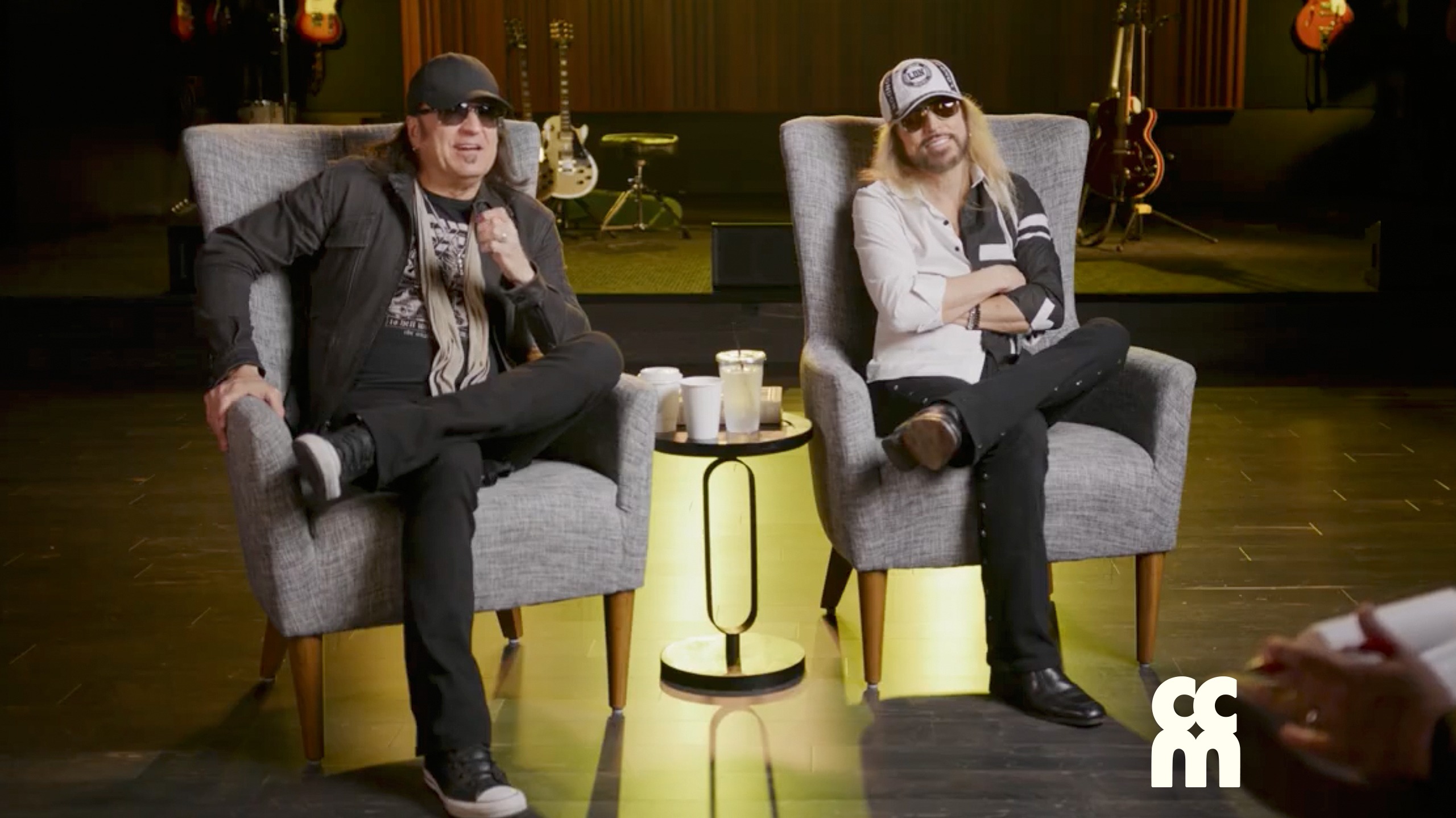
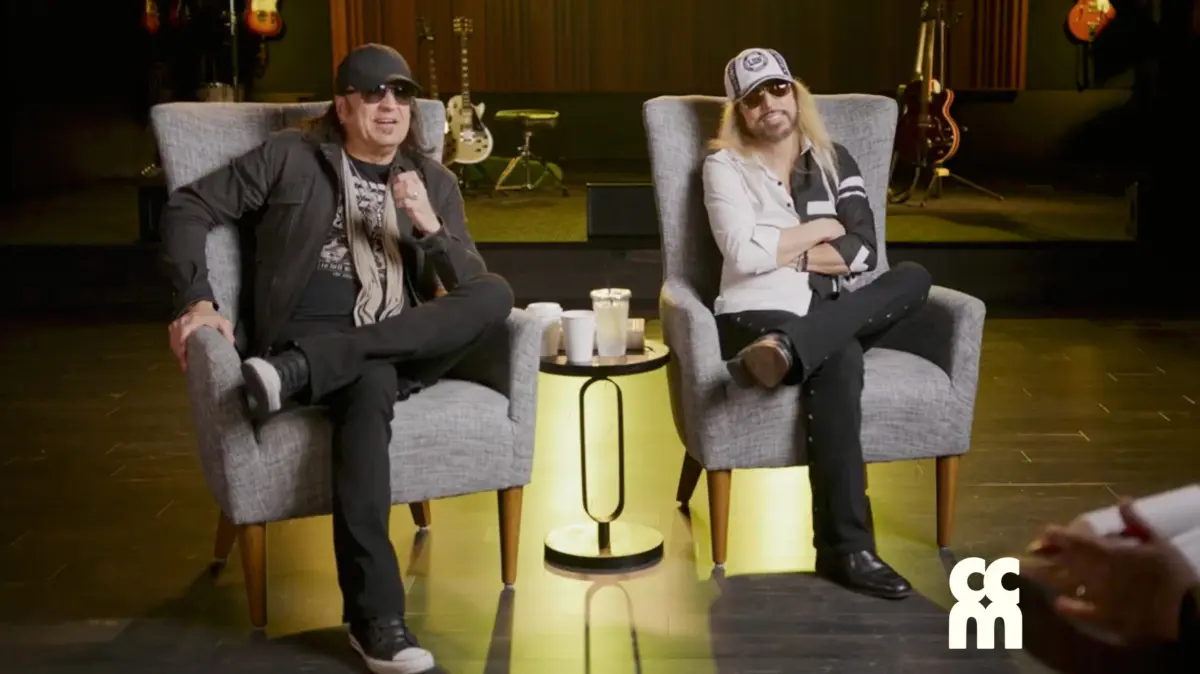
"Back then, you had a lot of people going, These guys are the devil, you know, have nothing to do with these guys," Robert recalled, with Michael chiming in: "Preaching against us."
The cognitive dissonance of this opposition reached farcical heights on tour. Robert Sweet recalled pulling up to a major arena venue to find a large, vocal crowd of Christians picketing the Stryper concert. In a twist of dark irony, the hard-rock band AC/DC was performing in a venue right next door, entirely un-picketed by the same protesters.
"How many people would have been touched if they could have understood what we were saying?" Robert pondered decades later. "And we were legitimate. We were sincere. We meant it. And it’s so out front. It’s right there. You can’t deny it."
The cultural paranoia surrounding the genre extended deeply into the next generation of musicians. John Cooper, frontman of modern Christian rock heavyweights Skillet, famously revealed that he was forbidden from listening to Stryper growing up due to the perceived evils of the heavy metal aesthetic. The fact that one of modern Christian rock’s biggest stars was once barred from listening to its foundational pioneers underscores the rigid, defensive posture of the religious counter-culture of that era.
Official Statements & Reflections
Reflecting on four decades of ups, downs, and historical milestones, the Sweet brothers offer a perspective rooted in endurance and divine purpose. The journey was not linear; burnout, shifting musical trends of the 1990s grunge era, and personal friction ultimately led to the band’s dissolution in 1991.
"I thought it was over in ’91 when we went our separate ways… and I really, truly thought that that was one part of my life," Michael confessed.
However, the 2003 reunion proved to be the catalyst for a second act that has vastly outpaced their initial run.
"We got back together in ’03, and we’ve done more now from ’03 to ’26 than ’84 to ’91—and I mean way more, three times as much," Robert noted with amazement.
Neither brother could have foreseen that they would still be recording aggressive, melodic heavy metal in their sixties.
"I don’t think Michael and I sat down and went, wow, we’re going to be doing this when we’re 66 and 63," Robert reflected. "Mainly, God’s given us the ability to do it."
For Michael, the longevity of Stryper is the ultimate fulfillment of a lifelong vocation:
"This is what we do. This is what we were born to do. This is what we always dreamed about doing. So let’s enjoy the ride… the ride is still going. It’s not over."
Future Outlook: The Enduring Legacy of the Yellow and Black Attack
The landscape that Stryper helped forge in 1986 looks vastly different today. Modern Christian artists routinely cross over into mainstream spaces, share festival stages with secular acts, and compete within the broader entertainment industry without facing the existential panic that once surrounded faith-based musicians.
That normalization did not happen by accident. It happened because Stryper refused to be sequestered in Christian bookstores or relegated to late-night religious television slots. They plugged in their amplifiers, turned the gain knobs all the way up, and delivered a product so professionally executed that the mainstream industry had no choice but to let them through the gates.
Forty years after To Hell with the Devil captured the imagination of a generation, the yellow and black attack remains a defining symbol of artistic courage. Stryper proved that uncompromising faith and top-tier heavy metal are not mutually exclusive—leaving an indelible mark on music history that continues to echo down the halls of rock and roll.