
EXECUTIVE OVERVIEW
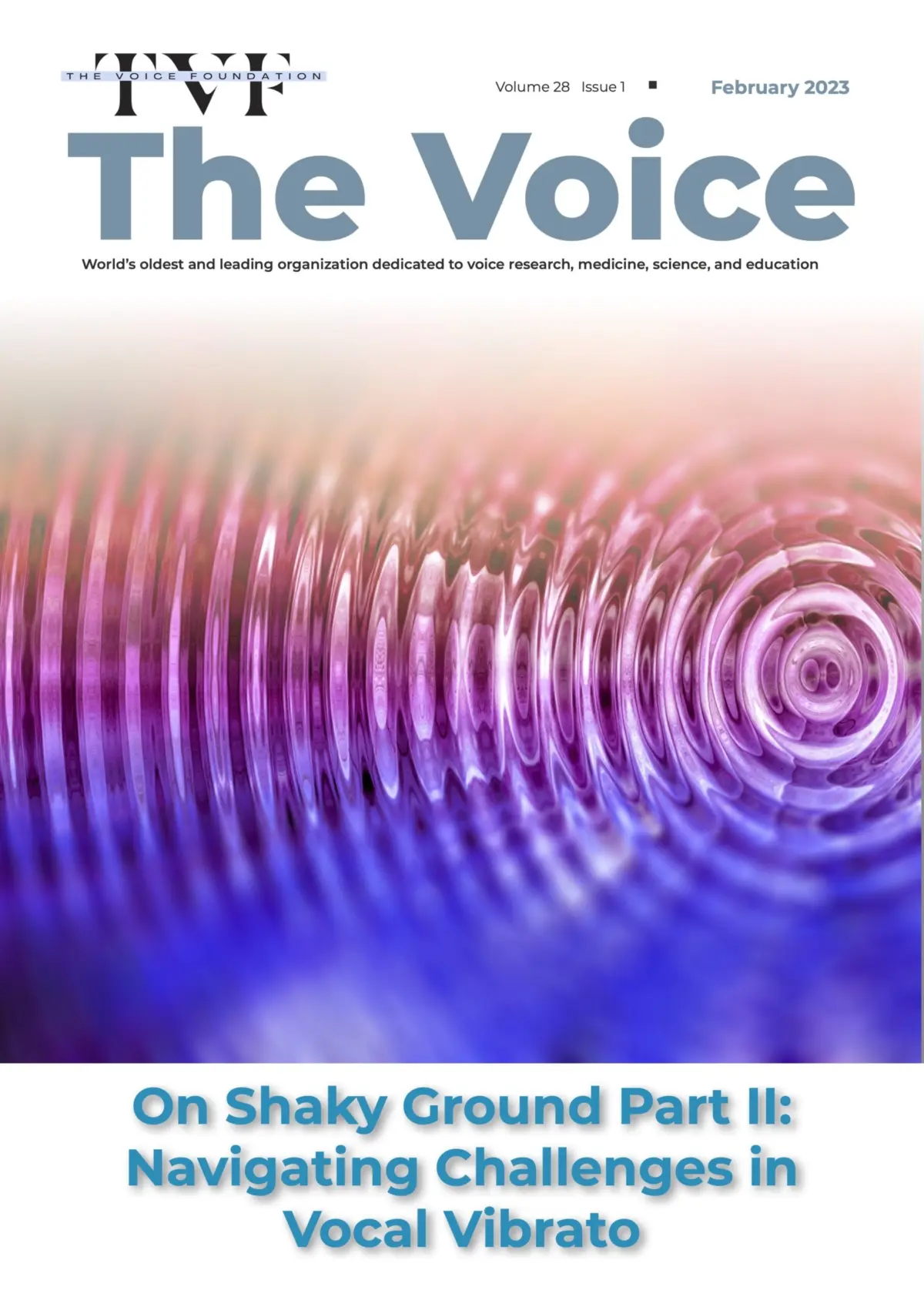
In the realm of vocal arts and medical science, few phenomena remain as captivating, fiercely debated, and complex as vocal vibrato. On February 24, 2023, The Voice Foundation published its highly anticipated February 2023 Newsletter, authored and curated by Ian DeNolfo. This edition serves as a critical milestone for vocal pedagogues, otolaryngologists, speech-language pathologists, and professional vocalists alike. Centered around the compelling feature "On Shaky Ground Part II," this issue dives deep into the physiological, pedagogical, and clinical dimensions of vibrato, exploring how this foundational element of vocal expression is researched, taught, and therapeutically treated.
As vocal science intersects increasingly with advanced empirical research, understanding the mechanics of vibrato—and managing its anomalies—has never been more vital. This comprehensive overview examines the core themes of the February 2023 publication, contextualizes its significance within the broader landscape of voice science, and details the multifaceted perspectives presented by leading researchers and clinicians in the field.
DETAILED CHRONOLOGY: THE EVOLUTION OF VIBRATO RESEARCH AND THE FEBRUARY 2023 RELEASE
The journey toward understanding vocal vibrato is centuries old, transitioning from empirical observation by master singing teachers to rigorous, peer-reviewed scientific inquiry facilitated by modern technology. The release of the February 2023 Newsletter by The Voice Foundation represents the latest chapter in a long-standing tradition of bridging the gap between artistic practice and medical science.
The Buildup to Part II
To fully appreciate the significance of "On Shaky Ground Part II," one must understand the foundational groundwork laid by preceding discourse within the vocal community. Historically, vibrato—defined medically as a slight, regular fluctuation in pitch and intensity—was viewed primarily through an artistic lens. However, as vocal pathologies and technical inconsistencies began to be analyzed using high-speed laryngeal imaging, electromyography, and acoustic analysis, researchers realized that the boundary between healthy vibrato, excessive vibrato (such as a wobble or tremolo), and a straight, rigid tone is remarkably delicate.
"On Shaky Ground Part I" (published in preceding dialogues within the vocal science community) established the baseline parameters of vocal instability. It raised critical questions regarding laryngeal muscle balance, respiratory support, and neurological coordination.
By February 24, 2023, the discourse matured significantly. The release of the February 2023 Newsletter shifted the conversation from mere identification of instability to an interdisciplinary synthesis. Authored under the editorial guidance of Ian DeNolfo, the publication arrived at a time when vocalists returning to rigorous performance schedules post-pandemic were increasingly reporting stamina issues, pitch fluctuations, and technical inconsistencies. The timing cemented the newsletter not just as an academic artifact, but as a timely clinical and pedagogical manual.

SUPPORTING CONTEXT & METRICS: DECONSTRUCTING "ON SHAKY GROUND PART II"
The core feature of the February 2023 issue, "On Shaky Ground Part II," breaks down the mechanics of vibrato through a triple-lens approach: Research, Teaching, and Treatment.
1. The Research Perspective: Empirical Insights into Laryngeal Oscillation
From a scientific standpoint, vibrato is not merely an aesthetic choice; it is the natural byproduct of an oscillating laryngeal mechanism operating under optimal aerodynamic and myoelastic conditions.
- Frequency and Rate: Normal vibrato typically oscillates at a rate of 5.5 to 7 cycles per second (Hz), with a pitch fluctuation of approximately a quarter to a half-step.
- The Pathology of Instability: When this rate drops below 5 Hz, it is frequently classified as a "wobble," often pointing to muscular fatigue, poor breath management, or neurological tremors. Conversely, rates exceeding 8 Hz manifest as a "tremolo," frequently linked to excessive laryngeal tension or hyperadduction of the vocal folds.
- Acoustic Data: Articles highlighted in the February 2023 newsletter draw upon recent spectrographic analyses that demonstrate how acoustic feedback loops between the vocal tract and the vocal folds stabilize or destabilize the vibrato cycle. Researchers utilized advanced mucosal wave tracking to show how minor perturbations in subglottic pressure instantly disrupt the rhythmic modulation of the voice.
2. The Pedagogical Perspective: Cultivating Vibrato in the Studio
For voice teachers, managing vibrato is one of the most delicate challenges in studio pedagogy. A forced vibrato sounds manufactured and lacks artistic integrity, while an absent vibrato results in a "straight tone" that can strain the vocal mechanism if sustained improperly.
- Balancing Coordination and Relaxation: The contributors to the February 2023 issue emphasize that vibrato cannot be "pushed" or artificially constructed. Instead, it is the emergent property of dynamic equilibrium between the thyroarytenoid and cricothyroid muscles, supported by an elastic, responsive breath mechanism.
- Pedagogical Strategies: Teachers are provided with practical frameworks to address "straight-toned" students or those struggling with an unstable wobble. Rather than prescribing mechanical fixes to the throat, pedagogues are encouraged to re-evaluate breath cadence, posture, and mental imagery associated with release and resonance.
3. The Clinical Perspective: Medical Intervention and Voice Therapy
When vibrato degradation crosses the threshold from a technical habit into a functional dysphonia or neurological symptom, clinical intervention becomes necessary.
- Interdisciplinary Care: Otolaryngologists and speech-language pathologists (SLPs) collaborating within the pages of the newsletter outline diagnostic protocols for identifying pathological tremors. Utilizing stroboscopy and electromyography, clinicians can differentiate between functional tension-induced vibrato irregularities and underlying spasmodic dysphonia or essential tremors.
- Rehabilitation Modalities: The treatment protocols discussed emphasize targeted vocal function exercises (VFEs), semi-occluded vocal tract (SOVT) therapies, and, where appropriate, medical interventions such as botulinum toxin injections for spasmodic conditions. The newsletter serves as an indispensable bridge, ensuring that voice therapists understand the artistic goals of the singer while helping medical professionals appreciate the nuances of vocal performance.
OFFICIAL STATEMENTS & EDITORIAL INSIGHTS
The release of the February 2023 Newsletter underscores the enduring mission of The Voice Foundation: to advance the science and care of the human voice through interdisciplinary collaboration.
Ian DeNolfo, in framing the contents of the newsletter, highlighted the necessity of breaking down silos between the artistic community and the medical establishment. "The human voice is simultaneously a high-performance athletic instrument and an intricate biological system," editorial notes suggest. "When a singer experiences instability in their vibrato, they are encountering a multifaceted puzzle that cannot be solved by technical instruction alone, nor by medical diagnosis alone. It requires a holistic, tripartite approach uniting the researcher, the teacher, and the clinician."
Furthermore, contributions from leading voice scientists featured within the publication emphasize that vibrato is the ultimate indicator of vocal health. When the neuromuscular system is balanced, respiratory pressures are optimized, and laryngeal tension is mitigated, vibrato manifests naturally as a sign of vocal freedom. Any deviation from this baseline serves as an early-warning indicator of fatigue, technique breakdown, or developing pathology—a thesis that forms the backbone of "On Shaky Ground Part II."
FUTURE OUTLOOK: THE TRAJECTORY OF VOICE SCIENCE AND PEDAGOGY
As the medical and artistic communities digest the insights presented in the February 2023 Newsletter, the implications for future research and training are profound. "On Shaky Ground Part II" is not merely an endpoint, but a springboard for ongoing investigations into vocal health and performance longevity.
1. Technological Integration in Voice Studios
Looking ahead, the integration of real-time biofeedback tools—such as portable spectral analysis software, acoustic imaging, and electromyographic monitoring—is poised to move from clinical settings directly into advanced voice studios. Teachers equipped with the insights from publications like The Voice Foundation’s newsletter will increasingly utilize objective data to complement subjective auditory feedback, helping students correct vibrato anomalies before they develop into chronic pathologies.
2. Advanced Clinical Protocols
In the clinical arena, the differentiation between performance-related vocal instability and neurological disorders will continue to be refined. As machine learning and artificial intelligence begin to assist in the analysis of laryngeal stroboscopy and acoustic voice samples, early detection of conditions affecting vocal modulation will become faster and more precise.
3. Educational Outreach and Collaborative Models
The Voice Foundation remains committed to expanding access to this vital interdisciplinary knowledge. Through publications, symposia, and ongoing newsletters, the organization champions a collaborative future where voice scientists, educators, and medical practitioners speak a unified language.
The February 2023 Newsletter stands as a testament to this mission. By tackling complex topics like vibrato instability with scientific rigor and pedagogical empathy, it equips professionals across disciplines with the tools necessary to protect, nurture, and elevate the human voice for generations to come.
For those seeking to explore the full depth of the research, teaching strategies, and clinical treatments outlined in this edition, the complete February 2023 Newsletter remains accessible through The Voice Foundation’s official digital archive.