
Executive Overview
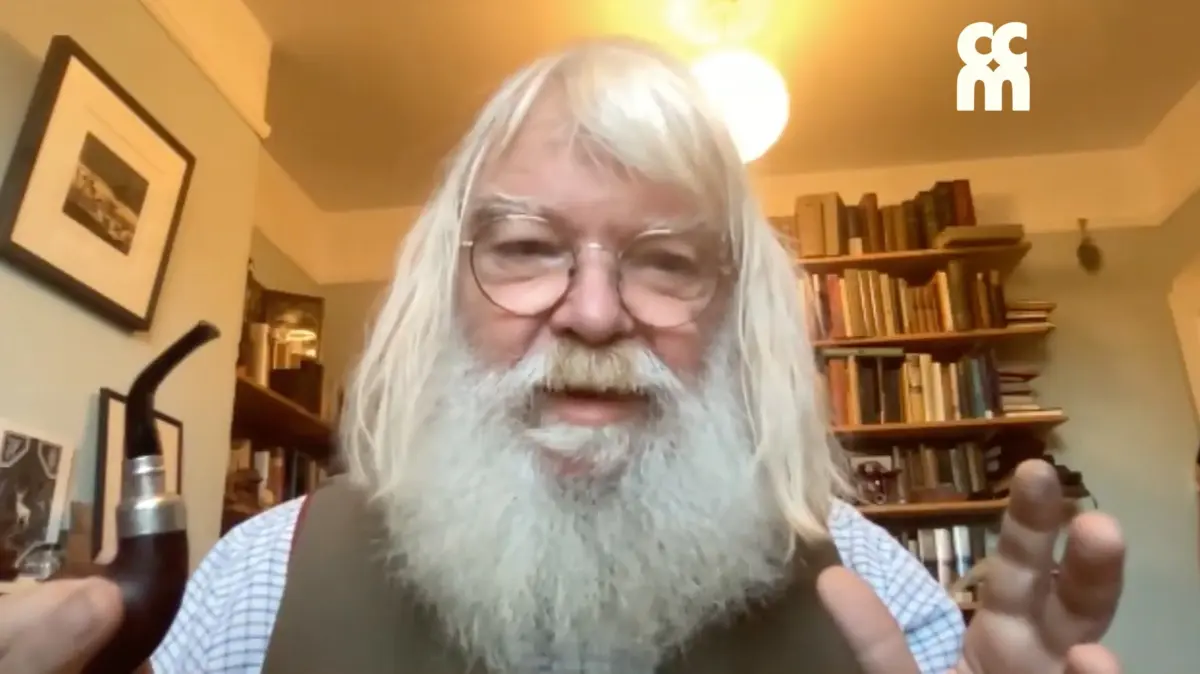
In an era defined by hyper-accelerated algorithms, short-form video clips, and the looming existential shadow of artificial intelligence, a quiet cultural paradox is unfolding across the internet. Young men aged 18 to 30—the primary demographic supposedly tethered to fast-paced, high-stimulation digital media—are voluntarily spending hours listening to a bearded, pipe-smoking Cambridge priest, poet, and chaplain recite traditional verse and discourse on the literary legacy of C.S. Lewis.
That man is Malcolm Guite. Once considered a niche academic curiosity within literary and theological circles, Guite has organically evolved into an improbable digital sensation, boasting a quarter of a million subscribers on YouTube. His appeal lies not in pandering to the modern attention span, but in offering a direct antidote to it: depth, slowness, human craftsmanship, and timeless myth.
This cultural moment serves as the backdrop for Guite’s most ambitious literary endeavor to date: Merlin’s Isle: An Arthurian Epic, published by Nashville-based Rabbit Room Press. Following the breakout success of the first volume, Galahad and the Grail—which cracked Amazon’s Top 50 bestsellers list and sold tens of thousands of copies—Guite has returned with the second installment, The Coming of Arthur. Written entirely longhand with a fountain pen in traditional ballad form, the 372-page epic aims to restore the foundational Christian mysteries obscured by modern secular retellings of the Arthurian legend.
Beyond his own poetry, Guite is weighing in on major cultural touchstones, including the internet controversy surrounding Greta Gerwig’s upcoming Netflix adaptation of The Chronicles of Narnia: The Magician’s Nephew. Far from joining the chorus of preemptive online cynicism, Guite—who has spoken directly with Gerwig—urges audiences to trust the narrative power of the source material. As modern culture wrestles with the friction between technological homogenization and the human soul, Guite’s resurgence suggests a profound, unquenchable thirst for stories that do more than merely entertain: stories that open, in his words, "a wardrobe door into the kingdom of God."
Detailed Chronology: From Cambridge Cloisters to Digital Stardom
The trajectory of Malcolm Guite’s public footprint reveals a fascinating collision between traditional scholarship and modern media mechanics.
- The Early Vision (Late 2023 / Early 2024): Long before Guite’s subscriber count surged, cultural observers within faith-based media recognized his unique communicative gravity. When he visited Nashville for media engagements, producers debated whether an aging British poet focusing on Arthurian legend and C.S. Lewis could resonate with audiences accustomed to pop stars, hip-hop artists, and Hollywood actors. Scheduling conflicts delayed the interview, but the delay proved prophetic.
- The Digital Inflection Point (2024–2025): Within months of initial broadcast and podcast experiments, Guite’s YouTube analytics revealed a shocking demographic skew. Approximately 80% of his rapidly growing audience consisted of young men aged 18 to 30. The algorithm, usually optimized for shock value and high-velocity dopamine loops, found itself funneling young adults toward contemplative literary analysis, theological discourse, and the rhythmic cadence of spoken-word poetry.
- Literary Milestones and Merlin’s Isle (2024–Present): Building on his academic reputation, Guite launched Merlin’s Isle: An Arthurian Epic with Rabbit Room Press. The first volume, Galahad and the Grail, exceeded commercial expectations, cementing a place in the Amazon Top 50.
- The Release of The Coming of Arthur (Late 2026): Guite expanded his four-volume epic with the publication of the 372-page second volume, The Coming of Arthur. Simultaneously, a companion documentary, Merlin’s Isle: The Tale This Land Still Keeps, was released online, offering visual context to the poetic landscapes.
- Looking Ahead (2027–2028): The roadmap for Rabbit Room Press includes the third volume, Days of the Round Table, slated for 2027, followed by the concluding epic volume, The Passing of Arthur, in 2028.
Supporting Context & Metrics: The Anatomy of an Anti-Algorithm Movement
To understand Malcolm Guite’s cultural resonance, one must examine the quantitative and qualitative metrics driving his digital footprint.
The Demographic Shift
The revelation that 80% of Guite’s quarter-million YouTube subscribers are young men between 18 and 30 upends conventional media wisdom. Sociologists and cultural critics have increasingly noted a distinct counter-cultural movement among young men seeking stability, traditional virtue, and intellectual rigor. In a landscape saturated with hyper-individualistic self-help gurus and digital noise, Guite presents an archetype of the "old wizardly gentleman"—a figure rooted in mentorship, wisdom, and historical continuity.
The Death of "AI Slop" and the Return of the Fountain Pen
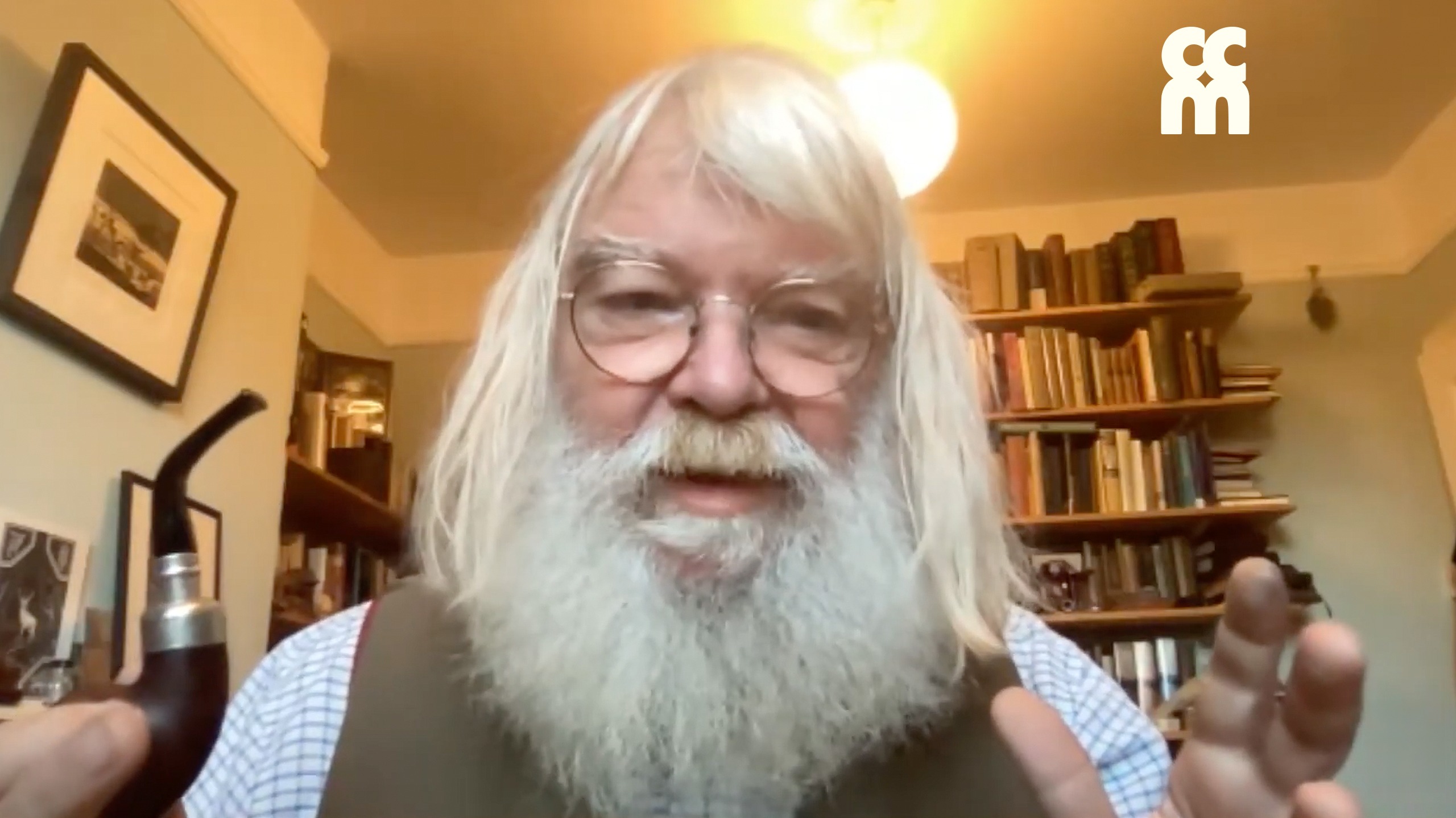
In an age where text, imagery, and even music can be generated instantaneously by large language models, the physical process of creation has taken on sacred significance. Guite’s methodology stands as a direct rebuke to automation: he writes his massive epic longhand using a fountain pen.
This analog commitment did not go unnoticed by mainstream literary critics. When The Times of London reviewed the first volume of his Arthurian cycle, the publication praised it as "the exact opposite of AI slop." This phrase captures the core of Guite’s appeal: consumers are suffering from synthetic fatigue. They yearn for the friction of human thought, the weight of ink on paper, and the deliberate restraint of traditional poetic meters.
Official Statements and Perspectives
Malcolm Guite on Modern Accelerated Culture and the Arthurian Legend
Reflecting on the psychological and spiritual state of contemporary society, Guite diagnoses a culture that has flattened its worldview through speed and superficiality:
"I had a hunch that we needed this. We live in a world that is increasingly flattened and accelerated."
Rather than calling for a wholesale rejection of technology, Guite advocates for a reclamation of human interiority. His Arthurian project is specifically designed to combat the erosion of Christian themes in modern fantasy.
"I also wanted to restore the heart of the Christian mystery in the stories. This is a coming of age story, where a young man learns to accept his destiny, but also learns that leadership is service."
Navigating the Narnia Controversy: A Defense of Greta Gerwig
Few cultural announcements in recent years have generated as much immediate online polarization as Netflix’s announcement of Greta Gerwig’s upcoming adaptation of The Chronicles of Narnia: The Magician’s Nephew. Fueled by brief teaser trailers—featuring unexpected musical choices like Led Zeppelin’s "Stairway to Heaven" set against imagery of Aslan—internet commentators rushed to condemnation or uncritical praise.
Guite, drawing on personal conversations with Gerwig during the early developmental phases of her cinematic vision, offers a measured, authoritative counterweight to the online outrage:
"I’m slightly taken aback by the way a lot of Christians have rushed to judgment on the basis of a few minutes of trailer. She loves Lewis and she loves these stories. Trust the story. The story knows more than either of us do. Let the story be the story."
For Guite, the ultimate value of C.S. Lewis’s work transcends cinematic fidelity or cultural curation. Describing his own spiritual awakening and lifelong engagement with the material, Guite encapsulates Lewis’s enduring legacy with striking simplicity:
"He opened a wardrobe door into the kingdom of God."
Future Outlook: The Resurgence of Myth in Modern Media
As publishing houses, filmmakers, and digital creators navigate an increasingly fractured media ecosystem, the success of Malcolm Guite offers a clear blueprint for the future. The prevailing industry assumption that modern audiences—particularly younger generations—will only engage with truncated, gamified, and digitally optimized content is being systematically dismantled by reality.
The ongoing rollout of the Merlin’s Isle series through Rabbit Room Press—culminating in Days of the Round Table (2027) and The Passing of Arthur (2028)—indicates a robust commercial appetite for long-form, spiritually grounded epic poetry. Furthermore, as high-profile adaptations like Greta Gerwig’s Narnia make their way to screens, the dialogue between traditional literary scholars and modern auteurs will likely intensify.
Ultimately, Guite’s cross-pollination of ancient myth, Christian mystery, traditional poetics, and modern digital platforms demonstrates that the human hunger for transcendence cannot be permanently satisfied by algorithms. By stubbornly insisting on slowness, depth, and the beauty of the written word, Malcolm Guite has proven that the oldest stories, retold with integrity, remain the most revolutionary tools for a new generation.