
Executive Overview
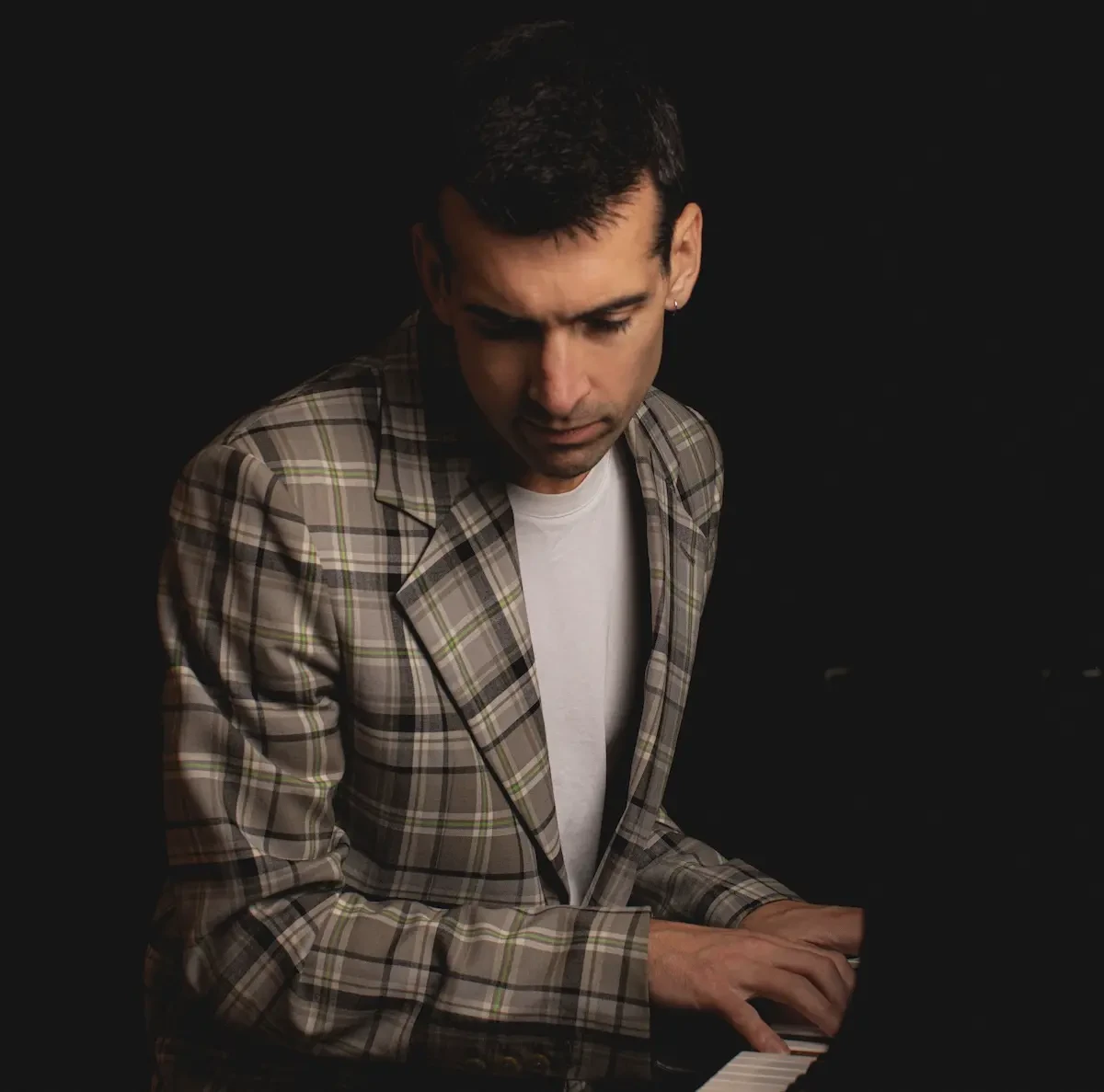
The contemporary jazz landscape is defined by a dynamic tension between reverence for foundational traditions and the relentless pursuit of individual sonic identity. In the contemporary vanguard of this artistic tug-of-war, two distinct artists have recently delivered career-defining statements that demand the attention of critics and aficionados alike. Mancunian pianist and heavyweight sideman Jamie Safir has stepped out from the shadows of some of pop and jazz’s most celebrated vocalists to claim his rightful place at the helm. His latest project, Momentism, is a deeply introspective, compositionally ambitious suite of modern acoustic jazz that balances classical discipline with contemporary harmonic explorations.
Conversely, American percussionist Brandon Sanders has charted a markedly different trajectory, solidifying his status as a modern jazz powerhouse with his fourth release as a bandleader, The Game Changer. Having arrived at the drum kit relatively late in life after a background in collegiate athletics, Sanders has quickly ascended to become one of the most sought-after session and touring drummers in New York City. His latest Savant Records release is a high-octane, stylistically diverse masterclass that bridges the gap between hard-bop fire and contemporary introspection.
While Safir’s Momentism leans into a moody, impressionistic, and deeply emotive soundscape characterized by delicate pianism and sophisticated interplay, Sanders’ The Game Changer is an exuberant celebration of groove, swing, and stylistic breadth. Together, these two releases offer a fascinating cross-section of modern jazz in 2026—one looking inward through cinematic melancholy, the other outward through high-energy collective expression.
Detailed Chronology
Jamie Safir’s Momentism: A Portrait in Introspection
For the past dozen years, Manchester-born pianist Jamie Safir has been a ubiquitous and dependable presence on the UK and international music scenes. Renowned for his exquisite touch and harmonic sophistication, he has spent his career lending his talents as an accompanist to an elite tier of vocalists and pop royalty, including Annie Lennox, Veronica Swift, Will Young, and Kylie Minogue. However, artistic maturation often demands autonomy. With the release of Momentism on Chill Tone Records, Safir has finally stepped into the leadership role, curating a definitive artistic statement that showcases his distinct compositional voice.
Recorded in London on February 16, 2026, the album features an empathetic and telepathic rhythm section comprising Conor Chaplin on double bass and Luke Tomlinson on drums. Adding a vital textural layer to the proceedings is esteemed tenor saxophonist Iain Ballamy, who graces five of the album’s eleven tracks.
The stylistic architecture of Momentism is established right from the start. The title track opens and closes with melodic solo piano passages that bear a striking, distinctly classical gravity. Safir’s classical sensibilities inform much of the album’s formal structure. However, the mood shifts immediately with Boulevardier, a chirpy, light-footed composition that marks Iain Ballamy’s first entrance on the record. Ballamy’s tenor sax glides effortlessly over the intricate rhythm section before pivoting into a deeply plaintive, elegiac mode on the subsequent track, Zacharius.
As the album progresses, Safir explores varying textures and emotional shades. Hirsute Pursuit breaks the melodic flow with a more angular, repetitive piano motif that challenges the listener’s ear, though balance is swiftly restored with Amethyst. Co-written with vocalist Emma Smith, this track bears a distinct stylistic kinship to the talented pianism of Magnus Hjorth during his tenure in Snorre Kirk’s various ensembles. Here, drummer Luke Tomlinson shines, adopting Kirk’s tasteful, understated, and historically resonant rhythmic approach.
The middle sequence of the album pays homage to jazz royalty through subtle conceptual nods. Duke Balington—a clever phonetic play on Duke Ellington’s name—features Ballamy leading a slow-paced blues anchored by a delightfully convoluted melody line. This is followed immediately by Black Star Sapphire, subtitled For Strayhorn, which captures the sophisticated, bittersweet harmonic DNA of Billy Strayhorn with uncanny precision. Safir and Ballamy then inject a burst of adrenaline into the sequence with Clocker, a driving number highlighted by an intricate, acrobatic bass interlude from Conor Chaplin.
The latter half of the album retreats into a more contemplative, nocturnal atmosphere. Consecutive tracks The World In The Evening and Mad Sad Bad feature hypnotic, repetitive piano figures paired with Ballamy’s languid, breathy tenor work. Safir brings the curtain down with Esprit D’Escalier, a brief, wistful solo piano miniature that slowly and quietly dissolves into silence, leaving the listener suspended in a state of emotional reflection.
Brandon Sanders’ The Game Changer: Momentum and Mastery
If Jamie Safir’s journey is one of quiet introspection, Brandon Sanders’ The Game Changer is an explosive testament to accelerated mastery and unyielding momentum. Sanders’ entry into the professional jazz world is the stuff of modern legend: a former college basketball player, he did not sit behind a drum kit for the first time until he was 25 years old. Yet, through sheer dedication and natural affinity, he bypassed the traditional developmental timeline to become a first-call collaborator for jazz titans such as Joe Lovano, Peter Bernstein, Mike LeDonne, and Esperanza Spalding.
The Game Changer marks Sanders’ fourth outing as a bandleader, arriving in rapid succession after an extraordinarily productive period that yielded Compton’s Finest in 2023, The Tables Will Turn in 2024, and Lasting Impression in 2025. Recorded across two sessions in New York City on March 9 and April 14, 2026, the album finds Sanders surrounded by a stellar cast of long-time musical companions and elite special guests.
The core ensemble features vibraphonist Warren Wolf and bassist Eric Wheeler—both veterans of all Sanders’ previous leadership projects—alongside rising-star tenor saxophonist Stacy Dillard and 22-year-old piano prodigy William Hill III. To elevate the session further, Sanders enlisted trumpet virtuoso Jeremy Pelt and vocalist Briana Swann as special guests.
The stylistic scope of the album is broad, featuring five compositions penned by Sanders alongside contributions from Pelt and carefully curated covers spanning Cole Porter, Billy Strayhorn, Tom Jobim, and, most unexpectedly, R&B icons The Isley Brothers.
The title track, The Game Changer, sets the tone: a punchy, hard-bop burner composed by Sanders as a direct and swinging tribute to the legendary Art Blakey. This high-energy kickoff is followed by a breathtaking, sax-led reimagining of Cole Porter’s What Is This Thing Called Love, propelled by a breakneck tempo and fearless improvisational flights.
Family and personal narrative play a heavy role in Sanders’ compositional choices. James Arthur, a catchy and buoyant number, honors his stepfather, spotlighting Warren Wolf’s shimmering vibes alongside sparkling solos from the bass and piano. Later, the delicate ballad Pamela The Queen—driven by the warm interplay of the vibraphone and supported by eloquent piano and bass passages—serves as a touching dedication to the bandleader’s mother.
The album effortlessly navigates diverse geographical and stylistic soundscapes. Sunsets In Santa Monica introduces a breezy Latin flavor punctuated by uncommon, highly musical drum soloing from the leader. This flows seamlessly into Strayhorn’s Isfahan, performed with a swooning, vocal-like saxophone delivery that approaches the classic melody with an unusually buoyant breeze.
Vocal performances add emotional anchor points throughout the tracklist. Briana Swann delivers a soul-stirring vocal turn on Tom Jobim’s Quiet Nights Of Quiet Stars, providing a lush contrast to the second Blakey-esque burner on the album, Sanders’ own Shrimp And Grits. Jeremy Pelt steps up as both composer and soloist on S.M.B., contributing a melodic, harmonically rich piece featuring his trademark muted trumpet. Finally, the album closes with a haunting, masterclass vocal performance by Swann on a striking interpretation of The Isley Brothers’ Footsteps In The Dark, sealing the album’s reputation as a triumph of stylistic range and cohesion.
Supporting Context & Metrics
To fully understand the cultural and artistic weight of these releases, it is necessary to examine the broader ecosystems from which they emerge—the contemporary UK acoustic jazz scene and the fiercely competitive modern New York hard-bop circuit.
Production and Instrumentation Metrics
| Metric / Parameter | Jamie Safir – Momentism | Brandon Sanders – The Game Changer |
|---|---|---|
| Release Label | Chill Tone Records (CT0009) | Savant Records (SCD2235) |
| Recording Location | London, United Kingdom | New York City, USA |
| Recording Date | February 16, 2026 | March 9 & April 14, 2026 |
| Total Runtime | 51 minutes, 09 seconds | 52 minutes, 17 seconds |
| Total Tracks | 11 tracks | 10 tracks |
| Core Instrumentation | Piano, Double Bass, Drums, Tenor Saxophone (Guest) | Drums, Tenor Saxophone, Trumpet, Vibraphone, Piano, Bass, Vocals |
| Primary Aesthetic | Classical-leaning Impressionism, Cinematic Moods | Hard-Bop, Latin Jazz, Soul-Jazz, Contemporary Mainstream |
The stark differences in instrumentation highlight the divergent philosophies of the two albums. Safir relies on a traditional piano trio framework, augmented on nearly half the tracks by a single horn (tenor saxophone), creating an intimate, chamber-jazz atmosphere where every note carries monumental weight. Sanders, conversely, utilizes a larger, more colorful ensemble. The integration of the vibraphone (Warren Wolf) alongside piano, horns, and occasional vocal performances creates a rich orchestral texture reminiscent of the classic Blue Note records of the 1960s, while remaining entirely contemporary in its execution.
Official Statements and Critical Perspectives
The Art of the Sideman Stepping Out
The transition from esteemed sideman to album leader is fraught with artistic and commercial challenges. Both Jamie Safir and Brandon Sanders have navigated this rite of passage by leaning heavily into their accumulated industry experience.
In discussions surrounding the release of Momentism, industry analysts have noted the immense pressure placed upon artists who spent over a decade supporting major vocal talents like Annie Lennox and Kylie Minogue. Safir’s decision to avoid commercial pandering in favor of an uncompromisingly serious, classically tinged suite of original compositions has been met with critical intrigue.
"When you spend years in the service of other artists’ visions, your own internal voice accumulates a tremendous amount of pressure," notes contemporary jazz critic Thomas Sterling. "With Momentism, Safir hasn’t just released an album of tunes; he has purged an entire aesthetic vocabulary that has been waiting decades to find the light."
Similarly, Brandon Sanders has frequently addressed the unconventional timeline of his musical development. Beginning his journey on the drum kit at age 25 after years spent on the basketball court, Sanders has often spoken about the urgency that defines his playing and recording schedule. With four albums as a leader in just four years (Compton’s Finest, The Tables Will Turn, Lasting Impression, and now The Game Changer), Sanders is making up for lost time with terrifying efficiency.
"I don’t take a single session, a single bar, or a single tune for granted," Sanders remarked in a recent interview regarding his prolific output. "When you find your calling later in life, the margin for complacency disappears. Every record has to be a definitive statement of where you are right at that second."
Future Outlook
As the global jazz community looks toward the remainder of 2026 and beyond, the trajectories of Jamie Safir and Brandon Sanders offer a compelling preview of where the genre’s creative energy is channeled.
For Jamie Safir, Momentism establishes a high watermark for British contemporary piano-trio and small-ensemble jazz. While some critics have noted that the album’s prevailing melancholia and heavy reliance on slow-to-mid tempos can occasionally leave the listener seeking a more aggressive release of tension, the sheer beauty of the musicianship cannot be overstated. Moving forward, Safir’s challenge—and opportunity—will lie in expanding his compositional palette to include a broader dynamic range, potentially blending his formidable classical impressionism with more visceral, high-tempo excursions. Should he choose to tour Momentism extensively, audiences can expect an evening of spellbinding, deeply sophisticated acoustic jazz that rewards close, rapt attention.
For Brandon Sanders, The Game Changer cements his status as an indispensable anchor of the modern New York jazz scene. By successfully bridging hard-bop tradition with contemporary soul, Latin grooves, and unexpected vocal covers (such as The Isley Brothers’ Footsteps In The Dark), Sanders has proven that he is not merely a dependable time-keeper, but a visionary bandleader capable of coaxing career-best performances from an ensemble of veteran masters and rising stars alike. The high commercial and critical acclaim surrounding his four-album run suggests that Sanders will continue to be a dominant force in modern mainstream jazz, likely expanding his footprint on international festival stages throughout the coming seasons.
Ultimately, these two distinct releases—Safir’s nocturnal London meditation and Sanders’ vibrant New York masterclass—demonstrate that modern jazz is in an exceptionally robust state of health. Whether listeners seek the quiet, classical grace of a solitary piano fading into silence or the thunderous, hard-swinging pulse of a Blakey-inspired drum cadence, the current landscape offers profound artistic rewards for those willing to listen.