

Executive Overview
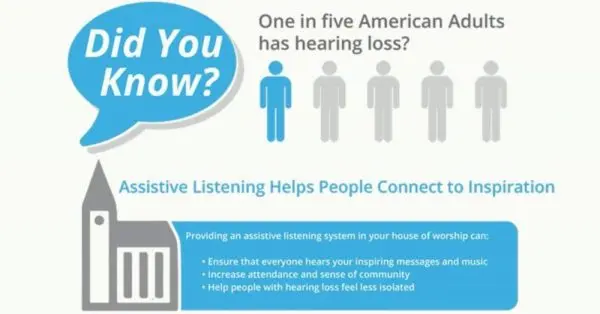
In an era where houses of worship strive to cultivate environments of radical hospitality and inclusivity, physical architecture and digital streaming often receive the lion’s share of attention. Yet, one of the most pervasive barriers to full participation in religious services remains largely invisible: hearing loss. For millions of congregants globally, Sunday services, midweek studies, and celebratory gatherings are muted experiences, characterized by straining to catch the nuances of a sermon, the soaring notes of a choir, or the quiet intimacy of a prayer.
The implementation of an Assistive Listening System (ALS) is no longer merely an accommodation for a marginalized demographic; it is a vital ministry tool that ensures every member of a congregation can fully engage with the life and message of the church. However, procuring and installing such technology requires a deliberate, strategic approach. Moving beyond a simple hardware purchase, successful integration demands a thorough understanding of congregational demographics, careful budgetary planning, comprehensive staff and volunteer training, and proactive community-wide awareness campaigns.
This report provides an authoritative, step-by-step framework for religious leaders, facility managers, and AV technicians aiming to bridge the acoustic divide. Drawing on insights from audio integration experts and industry toolkits—such as those provided by Listen Technologies and CCI Solutions—this guide outlines how houses of worship can systematically assess, deploy, and promote assistive listening technology to foster a truly connected, accessible community.
Detailed Chronology: The Four-Step Implementation Framework
Implementing an Assistive Listening System requires a structured methodology to ensure that resources are allocated efficiently and that the technology is warmly embraced by both staff and congregants. Transitioning a church toward total acoustic accessibility can be broken down into four distinct operational phases.
Phase 1: Needs Assessment and Congregational Discovery
Before exploring hardware options, amplifiers, or radio frequencies, leadership must first diagnose the specific acoustic landscape and demographic needs of their congregation. Assuming what a community needs often leads to underutilized technology or wasted financial resources.
- Deploying Congregational Surveys: The most scientifically and practically effective starting point is a targeted survey. Leadership should distribute questionnaires asking members about their personal experiences during services. Key metrics to capture include whether respondents experience difficulty understanding speech over the sound system, if they currently utilize hearing aids, and crucially, whether those hearing aids are equipped with telecoils (t-coils).
- Analyzing Acoustic Environments: Beyond self-reported data, facility teams must evaluate the acoustic properties of the sanctuary. High ceilings, large open spaces, and hard architectural surfaces create reverberation that degrades speech intelligibility, affecting not only those with diagnosed hearing loss but also elderly members and non-native speakers.
- Mapping the Data: Compiling survey responses and acoustic assessments provides a clear baseline. If a significant percentage of the congregation utilizes t-coil-equipped hearing aids, loop systems may take precedence. If users prefer lightweight, standalone receivers with individual ear-pieces, radio frequency (RF) or Wi-Fi streaming solutions might be more appropriate.
Phase 2: Financial Planning and Solution Engineering
Once the demographic and technical parameters are defined, the next phase involves estimating costs and mapping out acquisition strategies. Budgetary constraints are a reality for nearly every house of worship, making careful financial planning essential.
- Consultation and Cost Estimation: Houses of worship must evaluate the total cost of ownership, which includes transmitters, receivers, neck loops, charging stations, and signage. Professional AV partners, such as CCI Solutions, offer specialized assistance in this area, frequently providing free consultations to help churches navigate hardware expenses and integrate them into existing operational budgets.
- Exploring Funding Avenues: Because assistive listening directly ties to community inclusion and accessibility standards, funding can sometimes be sourced through creative avenues. Special capital campaigns, designated benevolence funds, or targeted fundraising drives within the congregation often resonate deeply with donors who understand the personal impact of hearing loss.
- Right-Sizing the System: Avoid the trap of over-purchasing or under-purchasing. A mid-sized church may only need a starter pack of four to six receivers, while larger multi-venue campuses will require scalable systems that can expand as ministries grow.
Phase 3: Operational Readiness and Staff Training
The finest audio technology in the world will fail if the personnel responsible for distributing and managing it are unprepared. Operational success hinges on transforming staff and volunteers into passionate advocates for accessibility.
- Designating "Assisted Listening Ambassadors": Ushers, greeters, and welcome desk volunteers are the frontline operators of the ALS. They must receive formal training on how to turn on, sanitize, store, and troubleshoot the listening devices.
- Creating Frictionless Check-Out Procedures: The process of acquiring a device should be seamless. Volunteers must be trained not just in the mechanics of the hardware, but in the empathy required to offer them discreetly and respectfully.
- Establishing Reference Materials: To ensure consistency across different volunteer teams, facilities should maintain laminated, step-by-step troubleshooting guides and Frequently Asked Questions (FAQs) at the distribution desk. Quick-reference cards detailing how to pair neck loops with t-coil hearing aids or how to adjust volume levels will empower volunteers to assist users with confidence.
Phase 4: Community Awareness and Marketing Integration
Deploying an ALS in secret defeats its purpose. Congregants cannot utilize technology they do not know exists. This phase focuses on internal communication and external outreach.
- Signage and Visual Cues: Universal accessibility signage must be prominently displayed at all main entrances, welcome desks, and sanctuary doors, indicating that Assisted Listening Devices are available and directing patrons to their location.
- Multi-Channel Promotion: Awareness must be reinforced continually. Bulletins, digital slide decks before services, church websites, and weekly email newsletters should feature brief, welcoming reminders about the availability of the system.
- Hosting Live Demonstrations: To demystify the technology, churches can host a dedicated demonstration day during a fellowship hour. Allowing curious members to test receivers, experience the clarity of the audio feed, and learn how the system integrates with their existing hearing aids removes the intimidation factor.
- Community Outreach: Word travels fast. Letting the broader geographical community know that the worship facility is fully accessible can serve as a powerful catalyst for church growth. Many individuals have stopped attending physical worship services simply because they could no longer follow the spoken word; advertising an inclusive acoustic environment can draw them back.
Supporting Context & Metrics: The Scale of the Challenge
To fully grasp the urgency of implementing Assistive Listening Systems, one must examine the broader socio-acoustic context of modern populations and the mechanics of hearing loss within communal spaces.

The Demographics of Hearing Loss
According to global health organizations, hearing loss is one of the most common physical conditions affecting adults, with prevalence increasing significantly with age. In a typical congregational setting—skewed heavily toward families, multi-generational groups, and aging demographics—the statistical likelihood of unaddressed hearing impairment is high.
- The Clarity vs. Volume Dilemma: A common misconception among church sound engineers is that simply turning up the master volume solves acoustic issues. In reality, amplifying a reverberant room often increases distortion rather than clarity. For an individual with sensorineural hearing loss, turning up a muddy audio mix only results in louder, less intelligible noise. Assistive listening systems bypass room acoustics entirely, delivering a clean, direct feed from the soundboard straight to the user’s ear or hearing aid.
- The T-Coil Revolution: Telecoils (t-coils) are tiny copper wires built into many modern hearing aids and cochlear implants. When activated, they act as wireless antennas that pick up electromagnetic signals from induction loops or neck loops, turning personal hearing aids into customized wireless speakers. Understanding the saturation of t-coil technology within a congregation dictates whether a facility should invest in an induction hearing loop or an RF/Wi-Fi receiver model.
Comparative Metrics of ALS Technologies
| Technology Type | Best Suited For | Advantages | Potential Limitations |
|---|---|---|---|
| Radio Frequency (RF) | Large spaces, multiple rooms | Long range, reliable signal, cost-effective for large groups. | Requires physical receivers and headsets; users must manage equipment. |
| Induction Hearing Loops | Dedicated sanctuaries with high t-coil usage | Direct-to-hearing-aid connection; no extra receivers needed for loop users. | High installation cost; requires tearing up flooring or routing around architectural boundaries. |
| Wi-Fi / IP Streaming | Tech-savvy congregations, BYOD (Bring Your Own Device) | Utilizes users’ personal smartphones; highly sanitary and scalable. | Requires robust Wi-Fi infrastructure, low latency routing, and user familiarity with smartphone apps. |
Official Statements and Industry Insights
Industry leaders and ministry consultants emphasize that accessibility is fundamentally an extension of pastoral care. Technology is merely the medium through which hospitality is expressed.
"Reaching out to those who feel disconnected from your community due to hearing loss is central to sharing the message of inclusion. Genuinely compassionate service involves being aware of and caring for the needs of everyone, especially those dealing with impairments. Make sure they are able to hear the beauty and emotion of the spoken word in your church by providing them with the equipment they need to stay connected."
— Audio Accessibility & Ministry Integration Experts
Furthermore, organizations specializing in house of worship AV integration note that accessibility upgrades often yield unexpected cultural benefits within a congregation. When a church invests visibly in the comfort and inclusion of its senior or hearing-impaired members, it communicates a powerful message of generational value and respect. It signals that every individual—regardless of physical ability—plays an irreplaceable role in the body of believers.
Resource publishers, including Listen Technologies through their comprehensive House of Worship Assistive Listening Toolkit, reinforce that success is rarely accidental. Access to standardized resources—such as template surveys, high-contrast signage templates, and bulletin copy—drastically reduces the administrative burden on church staff, allowing them to focus on pastoral execution rather than administrative guesswork.
Future Outlook: The Horizon of Accessible Worship
As acoustic engineering and assistive technology continue to converge, the future of accessible worship holds even greater promise. Houses of worship are increasingly transitioning from reactive compliance to proactive, universal design.
Emerging Trends in Worship Audio Accessibility
- Direct-to-Smartphone Streaming: The proliferation of ultra-low latency Wi-Fi audio protocols means that congregants will increasingly use their own smartphones as listening receivers. By downloading a church-specific app or joining a local network stream, users can adjust volume, balance, and even access real-time automated transcription directly on their personal devices.
- AI-Driven Speech Enhancement: Future audio systems will incorporate artificial intelligence algorithms capable of isolating speech frequencies from ambient room noise in real-time, feeding pristine, crystal-clear audio to assistive listening devices even in highly reverberant, architecturally challenging cathedrals and historic chapels.
- Regulatory Evolution: As digital accessibility standards tighten globally, municipal and national building codes are expected to place stricter mandates on public assembly spaces regarding hearing accessibility. Houses of worship that voluntarily adopt robust ALS frameworks today are not only future-proofing their facilities but are also positioning themselves as leaders in civic and moral responsibility.
Conclusion
The integration of an Assistive Listening System is far more than an AV project; it is an act of profound pastoral dedication. By systematically assessing congregational needs, engineering cost-effective solutions, empowering well-trained volunteers, and promoting awareness across all communication channels, houses of worship can dismantle the barriers of isolation. Ensuring that every sermon, prayer, and song can be heard in all its emotional and spiritual depth allows every attendee to remain fully connected to the heart of the community.
For more detailed information on choosing the right Assistive Listening System and tools to ensure your success—including sample surveys, signage, and announcements—download a copy of the Listen Technologies Church Assistive Listening Toolkit.