The opening weeks of a new academic year represent a high-stakes balancing act for music educators across the globe. While the podium pulses with the renewed energy, enthusiasm, and potential of eager students, the backstage reality of music education remains daunting. Directors and teachers are routinely confronted with an administrative marathon: finalizing shifting rosters, evaluating the inevitable summer regression in musical proficiency, establishing complex classroom routines, and organizing comprehensive curricula. For decades, this operational friction has pulled talented educators away from their true calling—directing, teaching, and inspiring.
Recognizing this enduring challenge, MakeMusic has introduced a robust, comprehensive suite of updates to its flagship platform, MakeMusic Cloud. Engineered specifically to eliminate redundant administrative hurdles, dramatically reduce grading overhead, and empower educators to start their semesters with maximum momentum, the new features target the most persistent pain points of the early-school-year cycle.
From automated LMS integrations and intelligent gradebook overhauls to flexible co-teaching environments and specialized audio-visual diagnostic tools, MakeMusic Cloud’s latest release reimagines how digital platforms can support music instructors. This report provides an exhaustive, authoritative breakdown of these new capabilities, examining their technical architecture, classroom utility, and the broader implications for the future of music pedagogy.
Detailed Chronology: The Evolution of Classroom Efficiency
To understand the significance of MakeMusic Cloud’s latest platform enhancements, it is essential to contextualize the historical evolution of music classroom management. For years, digital music education tools focused heavily on the interactive practice experience—providing backing tracks, pitch-detection feedback, and digital sheet music libraries. However, the administrative burdens of managing multiple classes, manually transcribing grades, and assessing fundamental physical mechanics (such as posture, embouchure, and bow hold) remained squarely on the shoulders of the instructor.
Phase One: Recognizing the Administrative Bottleneck
As schools rapidly adopted blended learning environments and Learning Management Systems (LMS) like Canvas and Schoology over the past decade, music teachers found themselves trapped in a cycle of double data entry. Scores generated in specialized music software had to be manually re-entered into institutional gradebooks, consuming precious weekend and evening hours. MakeMusic’s product development teams identified this friction as a primary barrier to educator retention and instructional effectiveness.
Phase Two: Development of Seamless Integrations
The rollout of enhanced LMS integrations and, crucially, the new Google Grade Passback functionality marks a major evolutionary milestone. By bridging the architectural gap between MakeMusic Cloud and Google Classroom, the platform now automates the movement of assessment data. When a student completes and submits an assignment within MakeMusic Cloud, the score instantly and autonomously populates the connected Google Classroom gradebook. The elimination of manual tab-toggling and end-of-week score transcriptions represents a fundamental shift toward truly integrated educational technology.
Phase Three: Holistic Assessment and Collaborative Workflows
Simultaneously, MakeMusic expanded the platform’s utility beyond traditional pitch-and-rhythm automated scoring. Recognizing that the critical first weeks of school require careful monitoring of physical habits to prevent injury and bad practices, the company developed targeted Audio/Video and Multiple Choice assignments.
Furthermore, acknowledging that large ensembles cannot be effectively managed by a single educator in isolation, the platform introduced advanced Co-Teaching architecture. This chronology of feature deployment underscores a strategic transition: MakeMusic Cloud has evolved from a standalone practice utility into an all-encompassing, collaborative digital campus for music programs.
Supporting Context & Metrics: The Modern Music Educator’s Burden
To appreciate the quantitative impact of these platform updates, one must examine the operational realities facing modern music programs. Industry surveys consistently indicate that instrumental and vocal directors spend up to 35% of their contracted hours on non-instructional tasks, including grading, attendance tracking, repertoire organization, and institutional reporting.
Quantitative Impact of Automation
Grading Time Reduction: Early adopters of the redesigned MakeMusic Cloud Gradebook and automated grade passback features report an estimated reduction of 3 to 5 hours per week spent on administrative data entry.
Diagnostic Speed: By leveraging pre-configured Sight-Reading Templates mapped directly to regional standards (such as NYSSMA and Texas UIL) alongside established method books (Sing at First Sight, Habits of a Successful Musician, Sound Innovations), directors can execute ensemble-wide sight-reading diagnostics in a single class period—a process that previously required hours of manual score preparation and photocopying.
Collaborative Scalability: In large high school band, orchestra, and choral programs often exceeding 150 to 200 students, the new Co-Teaching feature allows assistant directors, student teachers, and specialized sectional coaches to divide grading responsibilities, reducing the teacher-to-student grading bottleneck by up to 50%.
Addressing Summer Learning Loss
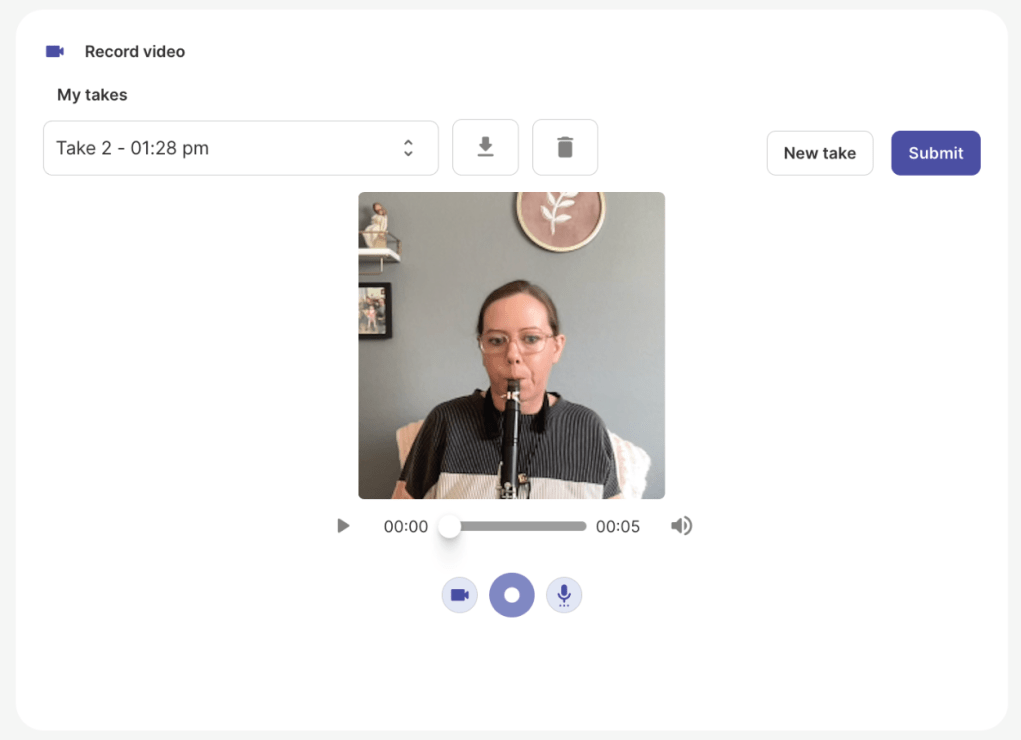
The transition from June to September frequently introduces a regression in student technical proficiency. MakeMusic Cloud’s new multimodal assignment framework directly addresses this statistical dip. By utilizing Audio/Video Assignments, directors can immediately capture high-definition recordings to evaluate critical physical mechanics that automated pitch-detection software cannot assess:
Instrumental Posture & Ergonomics: Monitoring wind player breath support, string player shoulder rests, and percussionist grip techniques.
Embouchure & Bow Control: Inspecting mouth positioning for brass and woodwinds, as well as bow distribution and attack for string sections.
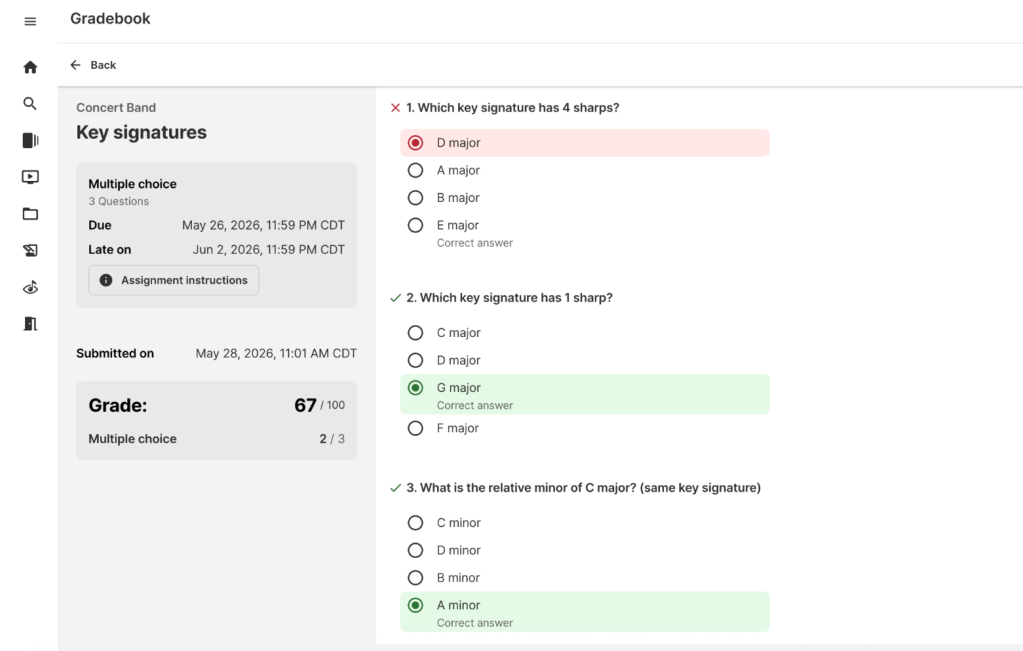
Literacy Retention: Deploying Multiple Choice Assignments to instantly verify student retention of foundational music theory, note names, and dynamic markings without waiting for lengthy one-on-one playing tests.
Official Statements & Platform Features Breakdown
MakeMusic’s leadership and product development divisions emphasize that every enhancement was built directly in response to feedback from active educators. The core features designed to save hours on back-to-school prep include:
1. Advanced LMS Integration & Google Grade Passback
"Say goodbye to the soul-crushing task of double data entry. With our enhanced LMS integration, connecting MakeMusic Cloud to platforms like Canvas and Schoology is more seamless than ever, streamlining your back-to-school onboarding."
The inclusion of automated Google Grade Passback ensures that student achievement data flows invisibly and securely from practice room to official institutional gradebook, eliminating human error and reclaiming valuable instructional time.
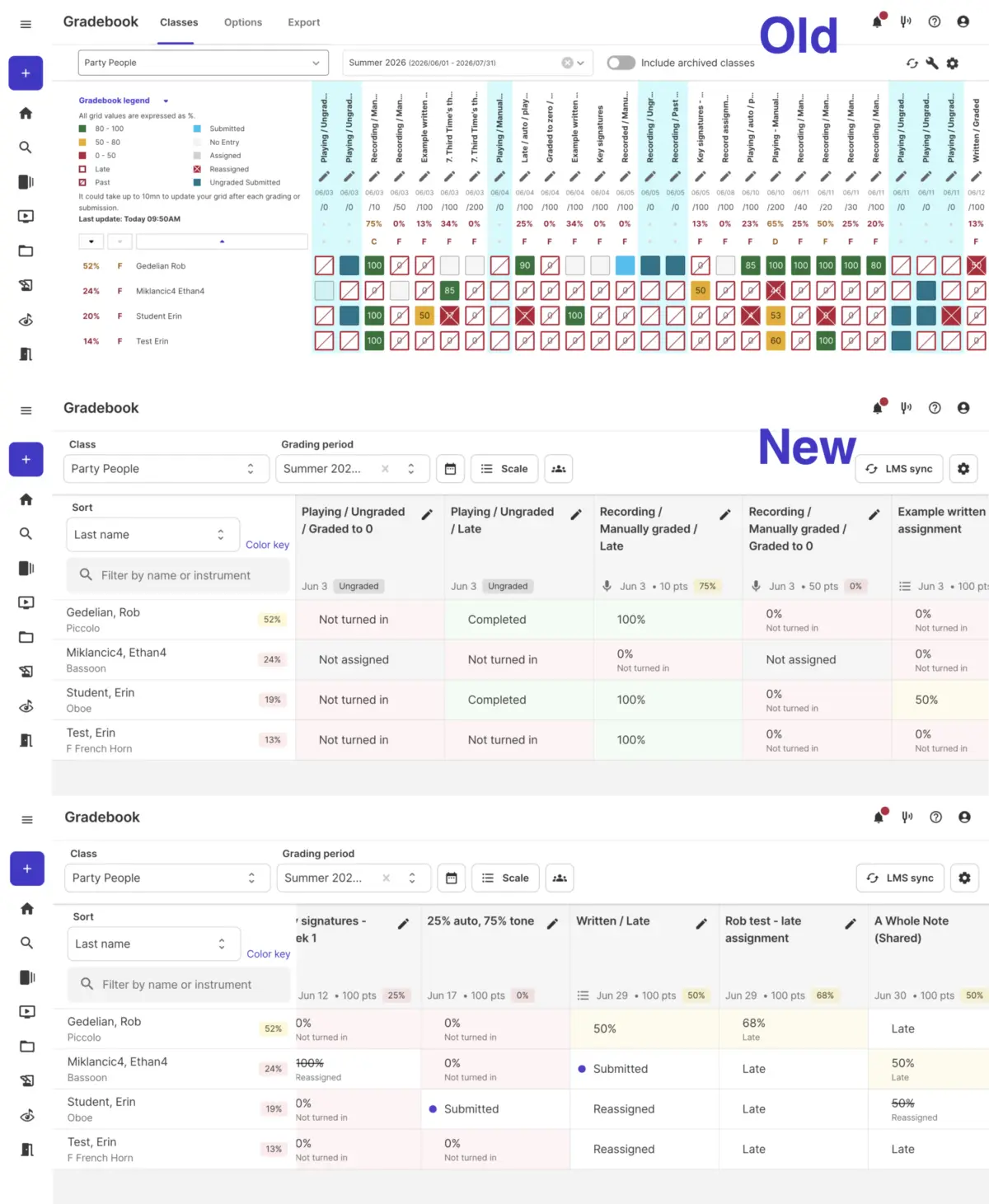
2. The Overhauled Gradebook Interface
The MakeMusic Cloud gradebook has been rebuilt from the ground up to prioritize visual clarity and rapid data interpretation. Featuring clean, modern layouts and at-a-glance analytics, the interface allows directors to instantly identify high-performing students while flagging individuals who require immediate intervention during the delicate first month of instruction.
3. Comprehensive Co-Teaching Architecture
Managing sprawling performing ensembles requires coordinated teamwork. The new Co-Teaching capability permits lead directors to seamlessly integrate assistant directors, collegiate student teachers, and professional sectional coaches into their digital classrooms. Co-teachers possess full authorization to assign exercises, review student submissions, and input grades, transforming classroom management into a truly collaborative enterprise.
Beyond standard repertoire assessment, the new assignment modalities offer unprecedented versatility:
Audio/Video Only: Ideal for marching band stand tunes, non-catalog repertoire, and physical technique checks.
Multiple Choice: Perfect for rapid theory quizzes, note identification, and musical symbol literacy checks.
5. Integrated Theory Worksheets & Sight-Reading Templates
To build robust musical literacy from day one, MakeMusic Cloud now embeds ready-to-use Theory Worksheets directly into the digital ecosystem. Furthermore, directors can deploy standardized Sight-Reading Templates mapped to rigorous state frameworks (NYSSMA, Texas UIL) or prominent pedagogical method books instantly, bypassing hours of manual composition or library searches.
6. Expanded Pinning Capabilities for Method Books and Playlists
A highly anticipated update for veteran users, the ability to pin multiple method books and playlists to a single class keeps essential instructional materials permanently visible to students. Educators can now pin resources such as Bethany Main’s newly released interactive volume Choir Up! alongside traditional texts like Sing at First Sight or specialized guides from The Foundations Series, ensuring unified curricular focus.
Future Outlook: The Horizon of Digital Music Pedagogy
As educational technology continues its rapid maturation, platforms like MakeMusic Cloud are transitioning from supplementary digital tools into the central operating systems of modern school music departments. The integration of automated administrative workflows, intelligent diagnostic analytics, and collaborative multi-instructor frameworks points toward an increasingly sophisticated future for music education.
Predictive Analytics and Individualized Instruction
Looking ahead, the vast store of performance and assessment data aggregated through MakeMusic Cloud’s modernized gradebook paves the way for predictive machine-learning applications. Future iterations of the platform may soon offer automated early-warning indicators for student disengagement, suggest customized repertoire based on ensemble-wide technical strengths and weaknesses, and dynamically adjust practice loops to match individual learning curves.
Eliminating Administrative Friction Permanently
The overarching objective of these technological advancements remains steadfast: to protect and preserve the sacred instructional space between teacher and student. By systematically dismantling the administrative barriers that consume evenings and weekends, platforms like MakeMusic Cloud are empowering a new generation of music educators to focus entirely on their artistic mission—fostering a lifelong love of music and cultivating technical excellence in their ensembles.
For educators eager to experience a streamlined transition into the new academic year, MakeMusic Cloud’s comprehensive suite of back-to-school tools is available immediately. Teachers are encouraged to log in to their accounts, configure their updated digital classrooms, and embrace a semester defined not by paperwork, but by the power of music.