
Executive Overview
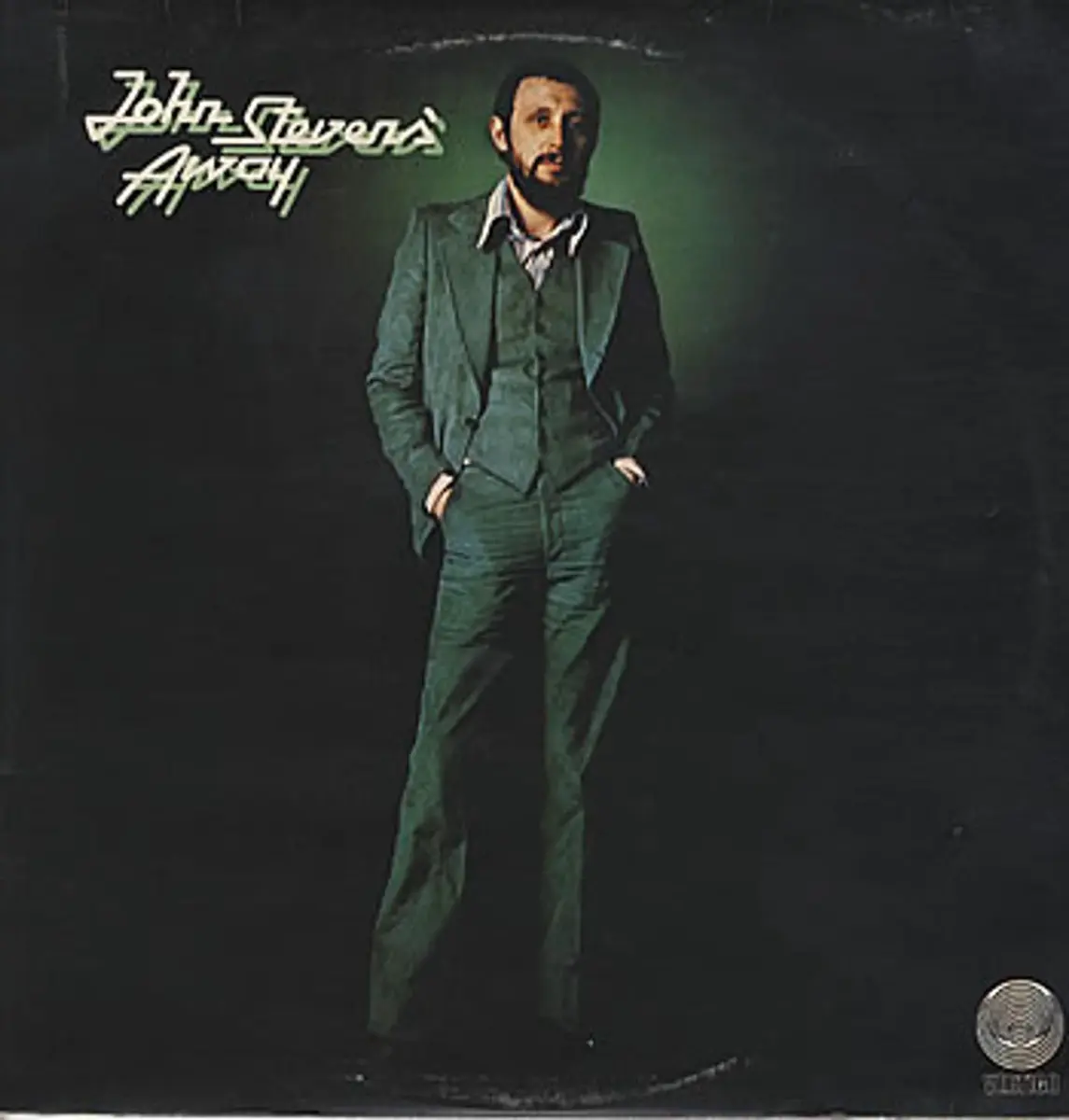
Half a century ago, the pages of Jazz Journal (August 1976 issue) played host to a critical appraisal by eminent jazz writer Barry McRae concerning a curious, transitional artifact of British improvised music: the album Away by drummer John Stevens and his ensemble. Recorded live in Berlin in November 1975 and released on the progressive Vertigo imprint, the record captured a legendary acoustic purist stepping tentatively—and controversially—into the electrified realm of rock rhythms and amplified textures.
McRae’s original critique was a study in paradox. He identified all the necessary raw materials for a masterclass in modern European jazz: the fiery yet lyrical alto saxophone of Trevor Watts, the rhythmically elastic and inventive drumming of leader John Stevens, the understated country-jazz hybrid guitar work of Steve Hayton, and the grounded, if occasionally static, bass foundations of Peter Cowling. Yet, despite these formidable ingredients, McRae concluded that the project ultimately foundered under the weight of its own ambitions, bogged down by extended formats that stretched the group’s exploratory style past its breaking point.
This retrospective feature explores the legacy of Away fifty years after its initial critique. By diving deep into the socio-musical climate of mid-1970s European jazz, the internal dynamics of the Spontaneous Music Ensemble (S.M.E.) diaspora, the technical realities of the Vertigo pressing (Vertigo 6360 131, retailed at £2.99), and the shifting paradigms of jazz-rock fusion, we reexamine whether McRae’s contemporary verdict was an act of prescient critique or a premature dismissal of a bold, transitional masterpiece.
Detailed Chronology: The Road to Berlin and the Genesis of Away
To understand the friction that defined Away, one must trace the trajectory of John Stevens and Trevor Watts through the crucible of the British avant-garde during the late 1960s and early 1970s.
The Acoustic Purism of the Spontaneous Music Ensemble
Founded in 1966 by John Stevens and Trevor Watts, the Spontaneous Music Ensemble (S.M.E.) stood as the absolute vanguard of British free improvisation. Stripping away the standard European adherence to American hard-bop templates, the S.M.E. pioneered a microscopic approach to sound. Stevens, working primarily with an unconventional, stripped-down drum kit emphasizing micro-dynamics, space, and tonal color, trained players to listen with unprecedented intensity. Watts, with his piercing, blues-inflected yet rigorously abstract alto saxophone lines, became a foundational voice in European free jazz.
For nearly a decade, Stevens was viewed as a committed acoustic champion—a guardian of unamplified, spontaneous interaction where every breath, stick click, and cymbal shimmer carried immense structural weight. Thus, when rumors began to circulate in late 1974 and 1975 that Stevens was incorporating electricity, rock backbeats, and structured song forms into his work, it sent shockwaves through the orthodox factions of the UK jazz community.
The Berlin Session (November 1975)
The lineup that coalesced in Berlin in November 1975 represented a fascinating bridge between disparate musical worlds. Alongside core S.M.E. stalwart Trevor Watts on alto saxophone, Stevens recruited guitarist Steve Hayton and bassist Peter Cowling.
Hayton’s inclusion was particularly telling. Eschewing the distortion-heavy, high-gain pyrotechnics common among fusion guitarists of the mid-1970s (such as John McLaughlin or Larry Coryell), Hayton brought an understated sensibility that fused elements of traditional country picking with modal jazz textures. Cowling provided a sturdy, if at times rigid, low-end anchor, contrasting sharply with the fluid, telepathic interplay traditionally expected of a Stevens-led rhythm section.
Captured live in the German capital—a fertile hub for European free improvisation and progressive rock crossover experiments—the ensemble set out to reconcile the unyielding intellectual rigor of free jazz with the visceral, physical pull of rock dynamics. The resulting tracks, partitioned across two substantial suites on the original Vertigo LP, documented a band wrestling with its own identity in real time.
Supporting Context & Metrics: Deconstructing Away
To fully appreciate the critical discourse surrounding Away, we must examine the specific architecture of the album, the economic and cultural realities of its release, and the stylistic tensions that galvanized reviewers like Barry McRae.
Track Breakdown and Structural Analysis
The original Vertigo pressing (catalog number 6360 131) organized the Berlin performances into two expansive suites:
- Side One: It Will Never Be The Same; Tumble (Total duration: approx. 20 minutes)
- Side Two: Anni; C Hear Taylor; What’s That? (Total duration: approx. 23 minutes)
+-----------------------------------------------------------------------------------+
|                            ALBUM METRICS: "AWAY" (1975/1976)                      |
+-------------------+---------------------------------------------------------------+
| Artist            | John Stevens (with Trevor Watts, Steve Hayton, Peter Cowling) |
| Label / Cat No.   | Vertigo (6360 131)                                            |
| Original Price    | £2.99                                                         |
| Recording Locale  | Berlin, Germany (November 1975)                               |
| Key Compositions  | "Tumble" (Notable for Watts' emotional alto solo)             |
|                   | "What's That?" (Noted by critics for structural fatigue)      |
+-------------------+---------------------------------------------------------------+
The S.M.E. Aesthetic Versus Electric Fusion
McRae’s core critique rested upon a fundamental structural mismatch: the tension between the micro-improvisational ethos of the S.M.E. and the macro-arrangements demanded by long-form electric jazz-rock.
- The Rhythm Section Dynamic: Cowling’s bass playing tended toward a static, anchoring function. In a traditional acoustic free jazz setting, this would have felt restrictive; however, Stevens’s rhythmically alert, constantly shifting drum patterns actively compensated for Cowling’s rigidity, creating an internal push-and-pull that kept listeners on edge.
- Watts’ Melodic and Emotional Peak: On tracks like Tumble, Watts remained true to his melodic roots, delivering a deeply felt, highly emotional solo that justified McRae’s assertion that "the ingredients for success are there." Here, the fusion of electric textures and free-flowing melodicism clicked into place, validating Stevens’s exploratory leap.
- The Pitfall of Extended Treatments: Conversely, on pieces like What’s That?, the momentum faltered. McRae noted that both Stevens and Watts occasionally lapsed into uncharacteristic monotony. The underlying issue was one of pacing and vocabulary; the idiom the band had chosen—a hybrid of rock propulsion and jazz phrasing—did not yet possess the internal variety required to sustain lengthy, uninterrupted improvisational flights.
The Vertigo Label Context
Released on Vertigo, a label legendary for its iconic "Swirl" design and its roster of progressive rock titans (such as Colosseum, Gentle Giant, and Black Sabbath), Away occupied a strange commercial and artistic netherworld. Priced competitively at £2.99, the album was clearly marketed toward the burgeoning progressive rock audience rather than orthodox jazz aficionados. This positioning explains the stylistic compromises observed by critics—the inclusion of rock rhythms and electric guitars was an explicit attempt to bridge the gap between avant-garde jazz credibility and prog-rock commercial viability.
Official Perspectives & Critical Reception
Looking back across fifty years of jazz criticism, Away occupies a fascinating space in the historiography of British improvised music. While contemporary reviewers like Barry McRae expressed reservations about its structural consistency, subsequent generations of musicologists and jazz historians have viewed such transitional records as essential stepping stones.
Barry McRae’s 1976 Assessment Reconsidered
McRae’s critique in the August 1976 issue of Jazz Journal was emblematic of a critical establishment grappling with the stylistic fragmentation of the 1970s. Reviewers trained in the linear developments of bebop, cool jazz, and early free jazz often found themselves disoriented by the cross-pollination of genres.
"This group is not what it seems, and that is a very good thing. Stevens… has taken on electricity and the implication is that he has a rock group. Certainly, there are some rock rhythms, but there is a great deal of old S.M.E. subtlety as well… Unfortunately, this is a concert programme in the worst sense, and I can rarely recall having heard both Stevens and Watts as boring as they are on What’s That?" — Barry McRae, Jazz Journal, August 1976
McRae’s evaluation was neither a blanket condemnation nor uncritical praise; it was an honest engagement with an ensemble in transition. His observation that "the next album will probably be much better" highlighted the experimental nature of the period—artists were throwing ideas against the wall, testing the limits of acoustic purity versus electric power.
The Musicians’ Perspective on Genre Boundaries
John Stevens never viewed his acoustic purity as a prison. Throughout his career, he continually sought ways to democratize music-making, bridging the gap between high-art free improvisation and accessible, rhythm-driven community music (such as his work with *Free Music and community drumming projects). Introducing electric instruments was, for Stevens, a natural expansion of his sonic palette rather than a betrayal of first principles.
Trevor Watts similarly maintained a restless creative spirit, moving effortlessly between the austere chamber jazz of the S.M.E., the high-energy electric jazz-rock of Amalgam, and global music collaborations. For Watts, the emotional intensity highlighted by McRae on Tumble was the true measure of success, transcending whatever stylistic discomfort the extended formats might have caused purists.
Future Outlook: The Enduring Legacy of Away in Modern Improvised Music
As we cross the fifty-year threshold since its recording in Berlin, Away deserves a comprehensive critical reassessment. Far from being merely a flawed experiment or an interesting footnote in the discographies of John Stevens and Trevor Watts, the album stands as a vital document of the pressures facing European jazz musicians in the mid-1970s.
The Modern Revaluation of 1970s Hybrid Jazz
Today, contemporary listeners and younger generations of improvisers no longer view the boundary between acoustic free jazz and electric rock fusion as an ideological battleground. The rigid purism that characterized much of 1970s jazz criticism has given way to a more holistic appreciation of genre fluidity. In this light, the perceived flaws of Away—its sprawling structures, its tension between static basslines and hyper-alert drumming, its uneasy alliance with rock idioms—appear not as weaknesses, but as the very characteristics that make it compelling. It captures master musicians in the uncomfortable, productive act of unlearning and rebuilding.
Archival Preservation and Rediscovery
As classic progressive jazz and improvised music continue to find new audiences through archival reissues, digital streaming platforms, and specialized vinyl revivals, records like Away serve as crucial historical waypoints. They remind us that the evolution of jazz in the UK was not a straight, unblemished line of masterworks, but a messy, courageous, and endlessly fascinating laboratory of sound.
Fifty years after Barry McRae penned his initial review in Jazz Journal, Away invites us to listen past its structural imperfections and appreciate the raw, daring spirit of an ensemble that refused to stay where it was safe. Whether viewed through the skeptical lens of 1976 or the celebratory perspective of the present day, John Stevens’s electric excursion remains an essential chapter in the ongoing history of European creative music.