
Executive Overview
In the ever-evolving landscape of American musical theater, few crossovers have proven as culturally electrifying or critically triumphant as the recent off-Broadway-to-Broadway-style phenomenon that is Cats: The Jellicle Ball. Breathing radical new life into Andrew Lloyd Webber’s 1981 mega-hit, this reimagined production transformed the quintessential theatrical warhorse into a vibrant, high-stakes celebration of Black and Latino queer ballroom culture. At the epicenter of this cultural collision is Broadway favorite Sydney James Harcourt, whose magnetic, physically demanding portrayal of Rum Tum Tugger captured the imagination of audiences and critics alike.
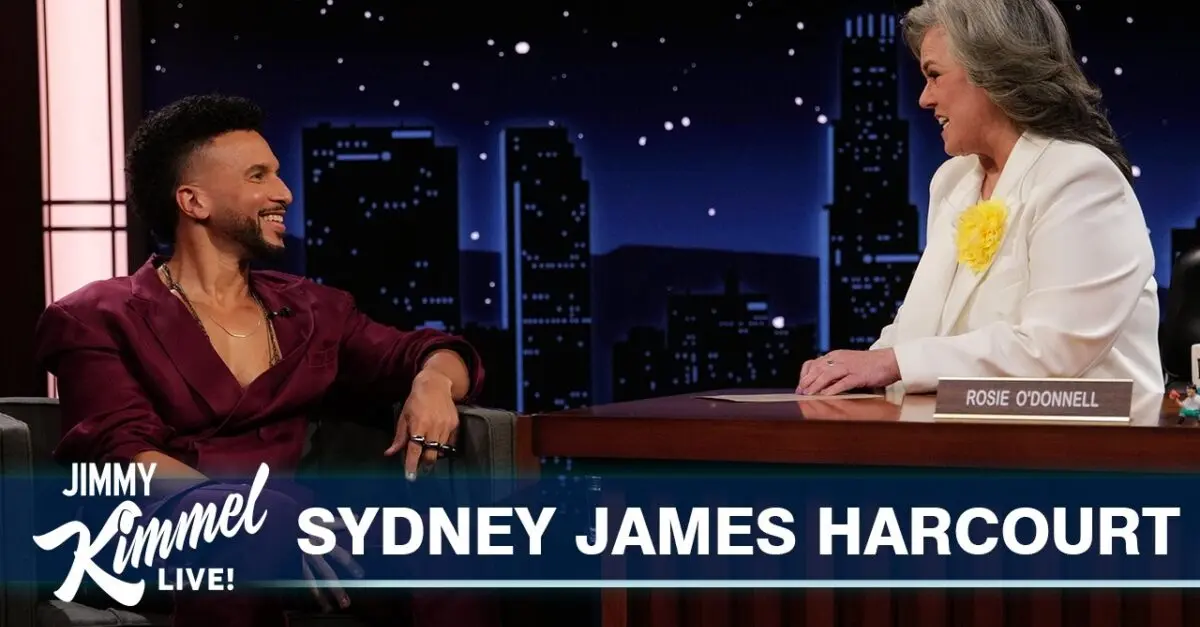
Harcourt’s star turn recently spilled over from the theater district into late-night television, culminating in a viral, highly publicized appearance on Jimmy Kimmel Live—guest-hosted by theater royalty and vocal Cats superfan Rosie O’Donnell. The August 21 broadcast captured O’Donnell unabashedly crowning Harcourt as her official new celebrity crush, underscoring the intoxicating blend of elite stage talent and fierce, runway-ready sexuality that defined the production.
Beyond late-night banter and viral media moments, the success of Cats: The Jellicle Ball marks a watershed moment for theatrical adaptation. Co-directed by Zhailon Levingston and Bill Rauch, and featuring pulse-pounding, vogueing-infused choreography by Omari Wiles and Arturo Lyons, the production successfully bridged the gap between elite musical theater and underground LGBTQIA+ history. As the production celebrates the preservation of its legacy through an upcoming Atlantic Records cast recording—spurred by an overwhelming online fan campaign—this report provides a comprehensive, authoritative examination of Harcourt’s late-night splash, the structural anatomy of the revival, the rich history of ballroom culture that informed its creation, and the broader future outlook for inclusive, boundary-pushing theatrical revivals.
Detailed Chronology: From the Broadhurst Stage to Late-Night Television
The trajectory of Sydney James Harcourt’s recent cultural dominance is intrinsically linked to the meteoric rise and triumphant run of Cats: The Jellicle Ball. To understand how a cisgender Broadway veteran became the object of affection for one of entertainment’s most iconic figures, one must trace the meticulous timeline of the production’s journey, its triumphant Broadway-adjacent presence, and its subsequent crossover into mainstream television culture.
The Genesis and Run of a Reimagined Masterpiece
The journey of this specific iteration of Cats began long before its final curtain call at the Broadhurst Theatre. Following critical acclaim and a devout following, the production officially began its preview run on March 18, officially opening on April 7. From its first performance, it was clear that this was not the traditional, leg-warmer-clad spectacle that had dominated global stages for four decades. Instead, audiences were invited into a world where the Jellicle cats convened not in a derelict junkyard, but in an authentic, high-energy ballroom competition.
Throughout its spring and summer engagement, the production became a cultural touchstone for New York City’s theatergoers, drawing praise for its fierce aesthetic, high-fashion costuming, and breathtaking choreography. At the center of this ensemble was Sydney James Harcourt. Stepping into the iconic role of the rebellious, charismatic Rum Tum Tugger, Harcourt brought a potent mix of vocal prowess, razor-sharp comedic timing, and unapologetic physical swagger. His performance of the character—traditionally played with a wild, rock-and-roll eccentricity—was retooled through the lens of ballroom archetype categories, positioning Tugger as an undeniable sex symbol of the Jellicle tribe.
The Final Curtain and Fan Mobilization
All theatrical runs must eventually come to an end. On August 8, the Tony-nominated revival played its final, emotionally charged performance at the Broadhurst. The closing night marked the conclusion of a run that had fundamentally altered the conversation surrounding how classic musicals could be reinterpreted for modern, diverse audiences.
However, the conclusion of the live run did not spell the end for the production’s cultural footprint. Recognizing that the radically altered orchestrations—infused with dance music beats by arranger and producer Trevor Holder—and the stellar vocal performances risked being lost to memory, the theater community mobilized. An intensive, highly organized online fan campaign swept across social media platforms, demanding that Atlantic Records preserve the production’s unique sonic identity. The campaign proved successful: shortly after closing, it was announced that an official cast recording would drop this winter, ensuring that this historic staging would be permanently etched into the musical theater canon.
The Jimmy Kimmel Live Phenomenon
Thirteen days after the final curtain fell at the Broadhurst, the spirit of Cats: The Jellicle Ball swaggered onto television screens nationwide. On August 21, Sydney James Harcourt appeared as a guest on Jimmy Kimmel Live. The episode carried extra theatrical weight, as it was currently being guest-hosted by none other than Rosie O’Donnell—a noted Broadway aficionado, producer, and outspoken champion of the arts.
What transpired on live television was a masterclass in charm and cultural synergy. O’Donnell, visibly captivated by Harcourt’s stage presence, physical conditioning, and undeniable charisma, publicly anointed the Broadway favorite as her official new celebrity crush. The "meet cute" between the theater icon and the dashing revival star quickly became viral fodder, bridging the gap between niche theatrical circles and mainstream pop culture. The segment not only celebrated the artistic achievements of Cats: The Jellicle Ball but also highlighted the powerful, charismatic draw of its principal cast members, solidifying Harcourt’s status as a bona fide star of both stage and screen.
Supporting Context & Metrics: Anatomy of a Cultural Revolution
To fully grasp the magnitude of Sydney James Harcourt’s late-night splash and the cultural resonance of Cats: The Jellicle Ball, one must examine the metrics of its creative architecture, its historical roots in New York City’s underground scenes, and the distinct artistic choices that drove its critical acclaim.
Creative Architecture and Award-Winning Craftsmanship
The success of the revival was not a matter of mere novelty; it was built upon an uncompromising foundation of world-class theatrical craftsmanship. Co-directed by Zhailon Levingston and Bill Rauch—whose collaborative vision earned them historic Tony recognition—the production reimagined T.S. Eliot’s feline poetry as a narrative vehicle for marginalized identities.
At the structural core of the revival was its groundbreaking choreography, spearheaded by Omari Wiles and Arturo Lyons. Moving away from the traditional, balletic movement vocabulary established by Gillian Lynne in the 1979 London and 1982 Broadway productions, Wiles and Lyons infused the entire score with authentic vogueing. Every feline stretch, pounce, and strut was translated into the language of the ballroom runway—duckwalks, dips, catwalks, and dramatic floor performance that honored the physical traditions of queer Black and Latino dancers.
Furthermore, Andrew Lloyd Webber’s iconic, Tony-winning score underwent a radical sonic metamorphosis. While retaining timeless melodies such as the seminal "Memory," the orchestrations were systematically augmented by beats arranger and producer Trevor Holder. By weaving contemporary dance music beats, house rhythms, and club-ready soundscapes into the musical fabric, the production transformed the theater into an immersive house music sanctuary.
The Historical Context of the Ballroom Scene
The decision to set Cats within the world of ball culture was an inspired stroke of historical and cultural alignment. Originating in Harlem during the 1920s and reaching its cultural zenith throughout the 1980s, the Ballroom scene is an underground LGBTQIA+ subculture forged primarily by Black and Latino queer communities.
As famously documented in Jennie Livingston’s seminal 1990 film Paris Is Burning and more recently popularized by mainstream television series like FX’s Pose, the ballroom scene provided a safe harbor, a chosen family, and a competitive outlet for individuals marginalized by mainstream society. Participants gathered in underground venues to compete in extravagant runway walk categories—ranging from high-fashion executiveness to military drag—where they were judged on authenticity, performance, and runway presence.
Crucially, the ballroom scene is the birthplace of real vogueing—a dance style characterized by linear, rigid, and dramatic arm and body movements reminiscent of fashion models posing for magazine covers, distinct from the commercialized version popularized by Madonna in her 1990 chart-topping hit. By mapping this rich, resilient subculture onto Lloyd Webber’s tribe of "Jellicle" cats, the creative team drew a brilliant parallel: both the Jellicle tribe and the houses of the ballroom scene are groups of outcasts, societal rejects, and misunderstood individuals who gather annually to present their true selves, vie for recognition, and seek transformation or rebirth into a new life.
Comparative Theatrical Metrics
| Production Metric | Original 1981 London / 1982 Broadway | Cats: The Jellicle Ball (2024 Revival) |
|---|---|---|
| Director(s) | Trevor Nunn | Zhailon Levingston & Bill Rauch |
| Choreographer(s) | Gillian Lynne | Omari Wiles & Arturo Lyons |
| Primary Dance Vocabulary | Quasi-modern ballet, jazz, and athletic feline movement | Authentic vogueing, runway performance, and ballroom-infused choreography |
| Musical Arrangement | Traditional symphonic/rock-pop Lloyd Webber orchestrations | Augmented with contemporary dance music and house beats by Trevor Holder |
| Thematic Setting | A derelict London junkyard | An annual ballroom competition celebrating queer subculture |
| Cultural Impact | Mainstream mega-musical dominance; global commercial juggernaut | Radical queer inclusivity; historical bridge between musical theater and ballroom subculture |
Official Statements and Industry Reception
The critical and public reception of Cats: The Jellicle Ball—culminating in Sydney James Harcourt’s star-making turn and subsequent media appearances—generated widespread commentary from industry leaders, cultural historians, and the artists themselves.
Industry analysts have widely praised the production for revitalizing a property that many critics considered creatively exhausted after decades of commercial saturation. By shifting the lens from literal felines to human embodiments of ballroom royalty, the creative team demonstrated that classic intellectual property can be successfully re-engineered to speak directly to contemporary social justice movements and queer representation.
Reflecting on the production’s closing and the announcement of the upcoming Atlantic Records cast album, co-director Zhailon Levingston noted the profound responsibility of translating such an iconic piece of musical theater history for a new generation:
"We set out to honor the structural integrity of Andrew’s timeless music while casting an authentic light on a foundational pillar of Black and Latino queer history. The reception from audiences—from our first preview to our emotional final night at the Broadhurst—exceeded our wildest expectations. Knowing that this sonic and cultural milestone is being preserved for posterity through our upcoming Atlantic Records release is the ultimate validation of our cast and creative team’s tireless dedication."
Rosie O’Donnell, speaking during her guest-hosting stint on Jimmy Kimmel Live, offered an impassioned endorsement of the revival’s artistic merit and directed effusive praise toward Sydney James Harcourt. Highlighting the physical demands and raw magnetism required to command the stage as Rum Tum Tugger, O’Donnell remarked on air:
"There is theater, and then there is transcendent theater. What this company achieved at the Broadhurst was nothing short of revolutionary. And let’s be honest—watching Sydney James Harcourt strut across that stage as Rum Tum Tugger is a masterclass in talent, charisma, and undeniable sex appeal. He is officially my new celebrity crush, and America is about to find out why Broadway has been cheering for him for years."
Harcourt himself, during his interview segment on the late-night program, expressed deep gratitude for the theatrical community’s embrace of the project and the overwhelming response from fans who championed the production from its underground origins to its triumphant commercial run. The symbiotic relationship between the stage actors, the creative visionaries, and vocal advocates like O’Donnell illustrates a healthy, dynamic ecosystem where traditional Broadway prestige intersects with vibrant, modern cultural narratives.
Future Outlook: The Legacy of a Feline Revolution
As the dust settles on the physical run of Cats: The Jellicle Ball at the Broadhurst Theatre, the long-term implications for the American theater industry are profound. The production has established a powerful new benchmark for how legacy musicals can be approached by contemporary directors and choreographers. Rather than defaulting to nostalgic preservation—replicating historic choreography and design choices verbatim—theater producers are increasingly recognizing the artistic and commercial viability of radical reinvention.
The Impact of the Upcoming Cast Recording
The forthcoming Atlantic Records cast album, slated for release this winter, will serve as a vital artifact for theater historians, educators, and fans alike. By capturing Trevor Holder’s house-music-infused beats alongside the powerhouse vocal performances of Harcourt and the ensemble, the recording ensures that the sonic innovations of the production will enter the global streaming ecosystem. This permanence is crucial; theatrical revivals of this magnitude often risk fading into theatrical lore once the physical set is struck, but a dedicated studio cast recording guarantees that future generations of performers and directors can study and draw inspiration from its unique musical architecture.
Broadening Horizons for Queer Representation on Broadway
Furthermore, the unprecedented success of Cats: The Jellicle Ball signals a permanent shift in what mainstream Broadway audiences are willing to embrace and celebrate. By centering Black and Latino queer ballroom culture within a traditionally mainstream, commercial property, the production proved that intersectional storytelling is not a niche market, but a potent engine for theatrical excitement.
For performers like Sydney James Harcourt, this cultural watershed opens new doors across mediums. Harcourt’s seamless transition from executing complex vogue-infused choreography on a Broadway stage to charming millions on late-night television demonstrates the immense marketability and versatility of top-tier stage talent. As casting directors and television producers take note of the magnetic screen presence honed in theatrical hothouses like Cats, artists with roots in rigorous stage performance are increasingly positioned to cross over into mainstream film and television franchises.
Ultimately, the journey of Cats: The Jellicle Ball—from its initial conceptualization to its final curtain call, its viral late-night validation by Rosie O’Donnell, and its upcoming recorded legacy—serves as an inspiring testament to the power of artistic reinvention. It proves that when history, high camp, world-class musicianship, and unbridled physical talent collide, the theater remains one of the most vital, transformative cultural spaces in modern society.