
Executive Overview
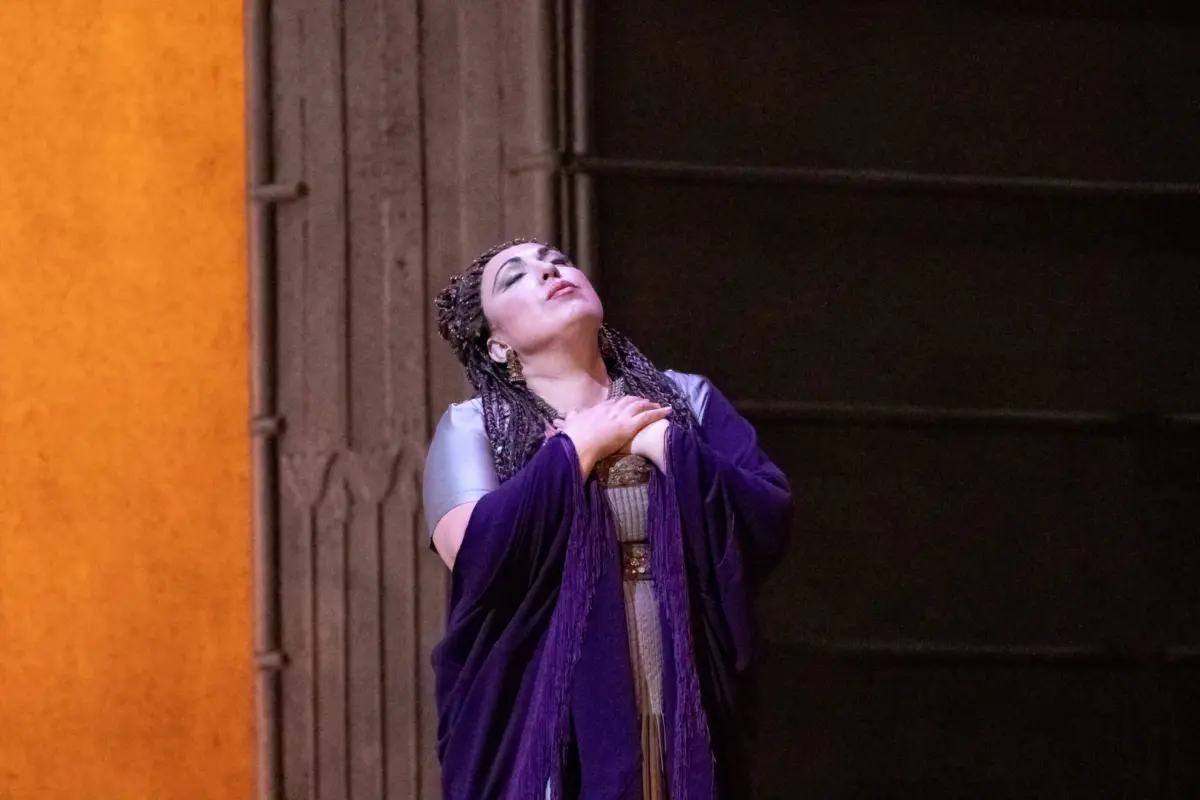
For an opera singer, longevity is rarely a matter of mere survival; it is an ongoing artistic negotiation between the physical demands of the human instrument and the immutable weight of the repertoire. On September 10, acclaimed Uruguayan-Italian soprano Maria José Siri reached a rare and monumental plateau: her 200th performance in the title role of Giuseppe Verdi’s monumental opera, Aida.
First assumed in Argentina in 2003, the role has served as the spine of Siri’s international career, accompanying her across the globe to the world’s most prestigious stages, including Teatro alla Scala, the Arena di Verona, Staatsoper Stuttgart, the Israeli Opera, and the Théâtre des Champs-Élysées. To mark this milestone at the historic Arena di Verona—performing within Franco Zeffirelli’s legendary, cinematic production alongside star tenor Jonas Kaufmann—is not only a personal triumph for Siri, but a masterclass in vocal preservation and interpretive evolution.
In a wide-ranging, reflective interview with OperaWire, Siri discussed the lifelong journey of inhabiting an iconic Egyptian slave-princess. She explored the architectural shifts in her voice over two decades, the contrasting demands of Zeffirelli’s traditional staging versus Stefano Poda’s surrealist vision, her collaborations with legendary conductors and colleagues, and her fearless expansion into other formidable Verdi and bel canto roles, such as Abigaille in Nabucco.
Detailed Chronology: Two Decades of Aida
Siri’s relationship with Aida began under conditions that most vocal pedagogues would caution against. Debuting the role as only her third theatrical opera assignment, she prepared the monumental score entirely on her own.
"I debuted as Aida far too early," Siri recalls. "It was my third opera. I prepared it entirely on my own, and we had three performances with one day of rest in between. I even did the high E-flats because I thought they sounded good, without even knowing that Maria Callas did it in Mexico. I mean, it was really at the very beginning of my career, and it went very well."
That nascent spark ignited a global journey. Over the next twenty years, Siri’s calendar mapped a grand tour of operatic capitals. She brought her distinct, unfaltering soprano to the Teatro Massimo, the Arena di Verona, Staatsoper Stuttgart, the Israeli Opera, the Palau de Les Arts in Valencia, the Théâtre des Champs-Élysées in Paris, the Semperoper Dresden, the Staatsoper Unter den Linden in Berlin, the Ópera de Las Palmas, and the Teatro Verdi in Salerno, among numerous others.
Yet, despite the geographic breadth and the passage of time, Siri finds profound comfort when looking backward. Reviewing archival video recordings of her early performances, she notes a clear maturation in color, dynamic shading, and musical refinement, yet her fundamental vocal core remains unchanged:
"When I listen to the voice, on the one hand, I hear that the interpretation has evolved a great deal and that it is more refined in terms of the musicality, the colors, the dynamics, and everything that Verdi requires. But the heart of the voice—the pulp of the voice, the flesh of the voice, as we say—is the same. And that makes me very happy, because it means that my voice, after more than 20 years since I first sang it, has evolved but is still my true voice. I never wanted to be someone else. I never wanted to sing Aida as someone else would."
While drawing early inspiration from legendary sopranos—noting that her ultimate reference for the role is the great María Chiara—Siri steadfastly resisted the temptation of mimicry, forging an interpretation anchored entirely in her own physical and emotional truth.
Supporting Context & Metrics: Navigating the Score and the Stage
Verdi’s Aida is notoriously unforgiving. It demands a dramatic soprano capable of soaring over massive choral forces and a roaring orchestra, yet it simultaneously requires the delicate, ethereal pianissimi of a lyric instrument, spanning an enormous vocal range over a grueling narrative arc.
For Siri, the primary hurdle is not simply a single high note or a dramatic climax, but the structural pacing of the opera itself.
"What I’ve learned over the years is that Aida is a long role," she notes. "It’s a role that begins with a very aggressive, combative, powerful soprano aria, ‘Ritorna vincitor,’ which people tend to take for granted, as if it were easy to sing."
This delicate equilibrium of power and control becomes even more pronounced when a singer transitions between wildly contrasting theatrical mountings. At the Arena di Verona, Siri has navigated two vastly different conceptual universes for Aida: the grand, hyper-realistic cinematic pageantry of Franco Zeffirelli and the ethereal, surrealist dreamscape of Stefano Poda.
Discussing Poda’s production, Siri highlights how physical staging radically recalibrates vocal intention:
"Aida in the Poda production is almost magical, more surreal, more lunar, and much more intimate. And the character of Aida in the Poda production is much more contained and restrained. The emotions are obviously expressed through the voice, but not through the body language… Vocally, nothing really changes, and it doesn’t either in the orchestra. But obviously, when you change the body language, something changes in the voice too—the energy and even the intention."
She adds with a wry laugh, detailing the physical hurdles of modern regietheater: "For example, there’s a part of the duet with Amneris where I have to make myself into a cross on the floor, and the stage is slanted, so everything is sliding down onto my neck and I’m thinking, ‘Oh my God, I have to turn around’—it has its complications, but of course, it’s more peaceful."
Contrasting this with Zeffirelli’s iconic vision—a production rooted in her Italian debut at La Scala under Daniel Barenboim—Siri views her Verona milestone as a poetic full-circle moment. Working previously with Zeffirelli in Palermo, she absorbed invaluable lessons from the titan of film and opera: "He always had words of wisdom for me and gave me advice that I will carry with me for the rest of my life—from a visionary, from someone who made his mark in both film and opera."
Official Statements: Collaborations and Artistic Philosophy
Reaching a 200-performance milestone is rarely a solitary endeavor; it is sustained by the caliber of artistic partnerships on stage and in the pit. Over her career, Siri has collaborated with a pantheon of legendary conductors, including Riccardo Muti, Daniel Oren, Zubin Mehta, Marco Armiliato, Daniel Barenboim, Andrea Battistoni, Gustavo Dudamel, Michele Mariotti, Christian Thielemann, and Omer Meir Wellber.
Equally vital is the synergy shared with her tenor counterparts. Her milestone Verona performances alongside world-renowned tenor Jonas Kaufmann highlight the rare artistic rewards of shared vocal discipline:
"It’s an absolute pleasure. He’s a great musician and a very collaborative person on stage. It’s really wonderful to sing the duets with him because he truly sings piano, and it’s not easy to find tenors who actually sing piano. The final duet is a real pleasure because he does all the piano dynamics that are written in the score—and so do I. You don’t always have that good fortune, so I’m very happy to be able to sing with him again."
Siri’s artistic philosophy rejects stagnation. When asked about her ongoing relationship with her craft, she emphasizes humility over ego:
"My goal in life, ever since I started studying, has been to sing better and better. I study so that I can keep improving as a singer—not to be the best. I want to become better and better at being myself."
Future Outlook: Beyond Aida into the Realm of Bel Canto Verdi
While Aida remains the flagship of her career—outpacing even her growing list of performances as Puccini’s Tosca—Siri’s artistic horizons continue to expand into other formidable Verdi heroines. Chief among them is Abigaille in Nabucco, a role she initially approached with extreme caution.
"When it came to singing Abigaille, I said no for many, many years. I didn’t accept the role. I waited until I had first sung Odabella and Norma before singing Abigaille. And I think I did it at exactly the right moment. Since then, I’ve been singing it quite a lot, and it’s a role that is truly giving me an enormous amount of satisfaction."
Siri approaches Abigaille not as an excuse for unbridled vocal screaming—a traditional trap for dramatic sopranos—but through the lens of bel canto architecture:
"I sing bel canto. The way I sing and the way I approach the music, and especially Verdi, is bel canto. For me, Abigaille is pure bel canto. It’s written that way. So, the fact that in the tradition there have been sopranos who used to scream the role doesn’t help."
Looking toward the future of the operatic landscape, Siri champions diversity in vocal interpretation and casting. She believes that the ongoing evolution of operatic voices enriches the art form, allowing audiences to experience familiar masterpieces through fresh, multifaceted lenses rather than rigid historical templates.
As Maria José Siri looks past her 200th Aida, her legacy is already secure. She stands as a beacon of artistic integrity, proving that true vocal longevity is achieved not by locking the voice in amber, but by allowing it to mature, breathe, and deepen alongside the soul of the artist who yields it.