
In the hyper-competitive, often insular ecosystem of New York City’s jazz scene, securing a candid interview with a major headliner can be an exercise in frustration. While the metropolis remains the undisputed global capital of jazz, many of its greatest practitioners maintain a low profile—residing outside the city limits, retreating into anonymous recording studios, or simply viewing verbal discourse as a distraction from their craft.
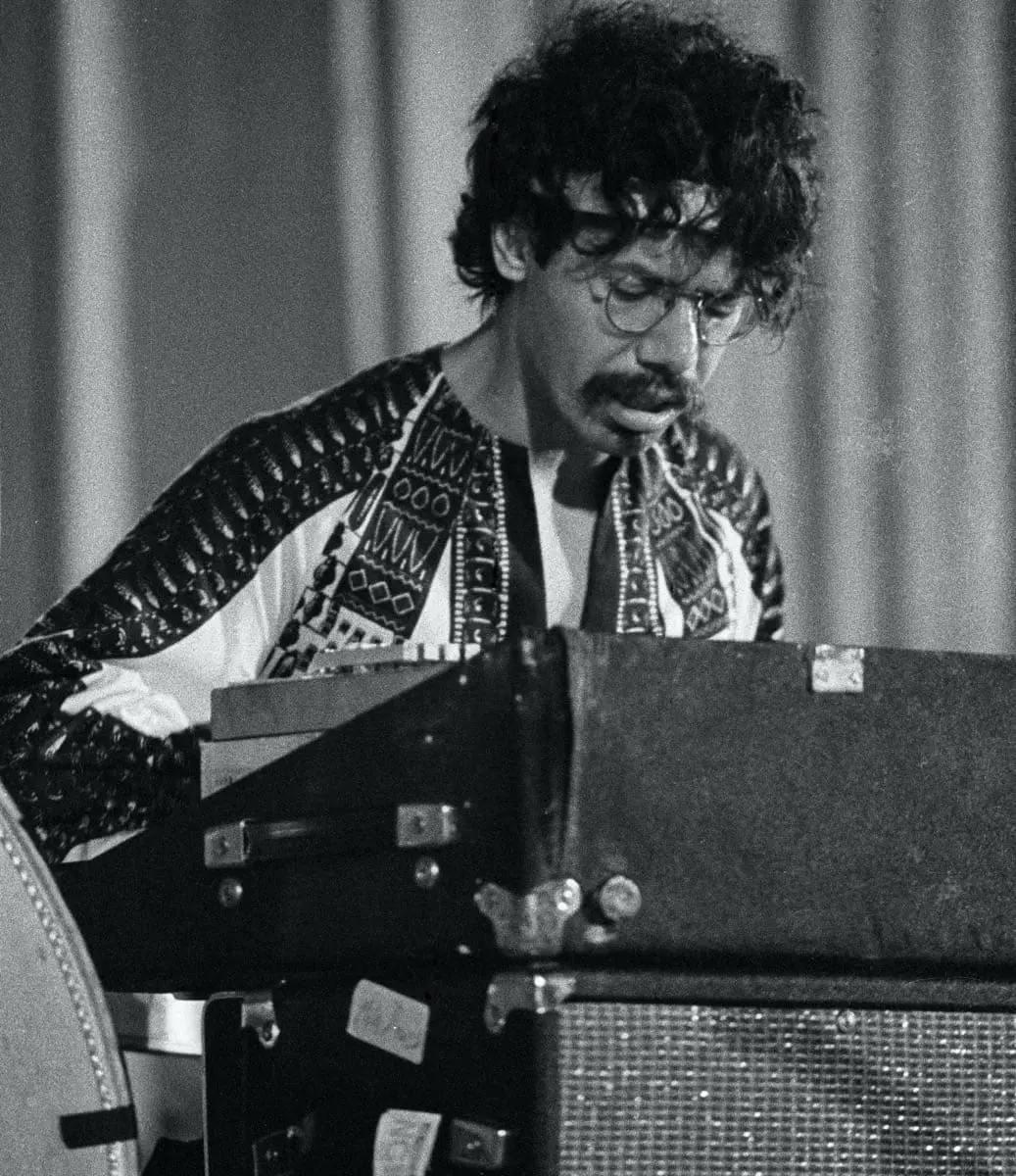
Yet, against this backdrop of guarded mystique stands Armando Anthony "Chick" Corea: an interviewer’s ultimate asset. Articulate, exceptionally talented, and commercially successful, Corea possesses a razor-sharp clarity regarding the trajectory of his personal philosophy and musical output. More importantly, he views the friction between artist and audience not as an inevitable barrier, but as a communication crisis waiting to be solved.
For decades, jazz criticism has relied on industry polls as barometers of shifting tides. Few artists illustrate the volatility of these metrics quite like Corea. Within a single 12-month span in the mid-1970s, he experienced both a sharp rebuke from elite critics and a sweeping endorsement from the listening public. Yet, far from retreating into academic purity, Corea embraced a philosophy of artistic availability.
This deep-seated desire to connect has driven one of the most remarkable stylistic evolutions in modern music history. From the orthodox, breath-taking acoustic mastery of Now He Sings, Now He Sobs, through the cerebral avant-garde explorations of the collective Circle, to the lyrical optimism of early Return to Forever and the high-octane electric-rock fusions of its later iterations, Corea has defied categorization.
Behind this sonic metamorphosis lies a profound personal evolution. Influenced heavily by years of yoga, meditation, and his ongoing involvement with the Scientology movement, Corea’s music is the direct result of an internal spiritual awakening. By rejecting the ivory-tower isolation of "art for art’s sake," he has positioned himself at the center of a cultural debate over the role of the musician in modern society: is art an elitist sanctuary, or is it a universal tool for human connection?
Detailed Chronology: From Boston Bebop to Electric Pioneers
Roots in the Boston Jazz Community (1941–1958)
Chick Corea’s musical DNA was forged long before he stepped onto a professional stage. Born in the Boston area in 1941, he was immersed in the genre from infancy. His father, a professional trumpeter and working jazz musician, filled their home with the foundational sounds of the 78-rpm era.
"I was just surrounded by jazz," Corea recalled. "My father had all kinds of 78 records around the place. At that time he was listening to Dizzy Gillespie’s big band, Bud Powell, Charlie Parker, the Billy Eckstine band and Sarah Vaughan."
Boston in the 1950s offered a thriving, localized ecosystem for a young prodigy. The city’s cultural landscape was anchored by legendary venues such as The Stables—where Herby Pomeroy helmed a hard-swinging big band and organized developmental jazz workshops—and George Wein’s iconic club, Storyville, which regularly imported heavyweights like Miles Davis and Horace Silver.
While Silver and Bud Powell served as his primary initial inspirations on the piano bench, Corea’s education was broad. He voraciously studied the architectural genius of the bebop movement, dissecting the phrasing of Charlie Parker, Dizzy Gillespie, and Fats Navarro. Simultaneously, his formal education followed a rigorous, orthodox path. For three years, he studied under a classical pianist who harbored a strict disdain for jazz, yet instilled in the young musician an immaculate foundation in classical technique and repertoire.
Professional Apprenticeships and Sideman Years (1959–1971)
Upon graduating from high school, Corea immediately transitioned into the professional sphere. He spent his first summer working with a Dixieland show band in Las Vegas, quickly learning the grueling realities of the road. Over the next few years, he made a steady living touring with various dance bands and Latin ensembles led by luminaries such as Mongo Santamaria and Willie Bobo, expanding his rhythmic vocabulary.
The turning point toward full-time jazz came in 1964 when Corea joined trumpeter Blue Mitchell’s quintet. This engagement opened doors to the upper echelons of the industry. Between 1965 and 1971, Corea’s resume read like a who’s who of modern jazz royalty, featuring extended tenures and high-profile collaborations with Herbie Mann, Stan Getz, vocal legend Sarah Vaughan, and, most notably, trumpet innovator Miles Davis.
The Birth of Return to Forever and Electric Fusion (1972–Present)
As Corea stepped out from the shadow of Miles Davis’s electric band to form his own groups, his stylistic shifts accelerated. The formation of Return to Forever marked a decisive break from the esoteric, atonal experiments of his avant-garde period with Circle. The band’s initial incarnation combined acoustic lyricism with Latin-infused rhythms, which eventually morphed into a high-energy, synthesizer-heavy, electric-rock fusion engine.
Supporting Context & Metrics: The Critical Dichotomy and Commercial Realities
Jazz polls are historically erratic guides to artistic intrinsic value, yet they serve as fascinating barometers of cultural weather. Chick Corea’s trajectory within Down Beat magazine’s annual surveys during the early 1970s provides a textbook case study in the friction between critical consensus and popular acclaim.
The Down Beat Poll Shift (1973–1974)
| Poll Category | Summer 1973 (Critics Poll) | Summer 1974 (Critics Poll) | Recent Readers Poll |
|---|---|---|---|
| Piano Category | 2nd Place | 5th Place | Winner |
| Composer Section | 1st Place | 5th Place | Winner |
| Jazzman of the Year | — | — | Winner (by +176 votes) |
The data reveals a dramatic alienation of the critical establishment between the summers of 1973 and 1974, during which Corea plummeted from the top tier down to fifth place in both piano and composition categories. Yet, precisely as the critics grew cold, the general listenership rallied. In the subsequent Down Beat Readers Poll, Corea swept both top awards and claimed the title of Jazzman of the Year, defeating his nearest rival by a decisive margin of 176 votes.
Audience Demographics and Retention
Far from lamenting the loss of purist jazz critics, Corea analyzed the demographic shift of his live audiences with clinical precision. Far from alienating his core fanbase entirely, his pivot toward an accessible, high-energy fusion sound yielded a net expansion.
"Our audience has changed vastly," Corea noted. "Maybe it’s not so much changed as expanded. I don’t feel we’ve lost too many old fans. We have lost some jazz fans, at a rough guess maybe about 20% of the people who liked my earlier records and the first version of Return to Forever. We’re now commercial in their eyes. But we’ve retained 80% of them and we’ve reached a whole new group of people, especially the young rock audience."
Official Statements: Philosophy, Communication, and Race
Corea’s interviews are remarkable for their philosophical depth. Below are core tenets extracted from his public discourses regarding education, commercialism, societal contribution, and racial politics.
On Musical Literacy and Education
Corea holds uncompromising views on the necessity of formal proficiency, warning against the romanticized myth of the self-taught prodigy who requires no structural discipline.
"Education is the thing which enables us to grow and become more aware. A person becomes freer in any subject if he is literate in it. In music, illiteracy is simply the inability to read and write musical notation… The ideal situation is to have some sort of balance between literacy in a subject and actual creative talent. People like Charlie Parker and Erroll Garner, who say they learnt on their own, give the impression that they had no education. But the fact is that they studied and worked hard… If they practised for eight hours a day, they were educating themselves."
On "Art for Art’s Sake" Versus Communication
Addressing the accusations of "selling out" leveled by jazz purists, Corea dismantles the boundary between artistic integrity and mass accessibility.
"If everyone is interested only in their own creation we will continue to have chaos on this planet. There are basically two approaches to music. It can be art for art’s sake, music for music’s sake, or it can be music in order to communicate, music designed to enable people to experience pleasure and beauty, and to rekindle their own desire to communicate… Commerciality simply means availability to numbers of people, something that can be exchanged. Because there are artists who are money and success motivated, there is a tendency to equate success with dishonesty. But I propose to break that illusion down in this lifetime."
On Race and Modern Identity
Unlike many of his contemporaries in the 1970s who utilized their platforms to fuel socio-political protest and black nationalist consciousness, Corea views racial categorization as an obsolete construct, particularly within the meritocratic environment of professional music.
"In this country I think the black and white issue is really over, it’s very passé right now, certainly among musicians. I never think about it. If you just look at our group… there are about eleven people in it including management and musicians, and this includes Black people, English people and Italian people. Colour of skin, ethnic origin or educational background are simply non-issues. We laugh about it sometimes when we see people attempting to determine the value of someone by his ethnic background, because it’s so ridiculous, it’s an insane attitude."
Future Outlook: The Horizon of Accessible Mastery
As Chick Corea looks toward the future, his ambitions extend far beyond personal chart success or financial enrichment. Influenced heavily by contemporary pop and soul innovators like Stevie Wonder and Sly Stone—artists who possess the rare gift of packaging complex musical structures into universally understood emotional language—Corea has set a high bar for his ensemble.
"Technically we can do anything in this band," Corea reflects. "We’re musical professionals with a high level of technique on our instruments. But it’s sometimes difficult for us to play something very simply, that can be directly communicated, but it’s our goal to succeed in doing that."
By leveraging commercial success as a practical tool rather than an end in itself, Corea hopes to fund expanded compositional projects, deeper explorations of the synthesizer, and larger ensemble arrangements. Ultimately, his mission is pedagogical and humanistic: to prove that artistic excellence does not require isolation, and that an artist can remain profoundly true to themselves while opening the doors wide enough for the entire world to enter.