
Executive Overview
Broadway has officially unlocked a new realm of psychological terror. On August 14, 2026, the long-awaited stage adaptation of Paranormal Activity began its terrifying preview performances at the August Wilson Theatre, setting the stage for an official opening night on August 25. Promising a strictly limited 20-week engagement, the production marks a major milestone for the theatrical landscape, bridging the gap between mainstream cinematic horror and high-concept live performance.
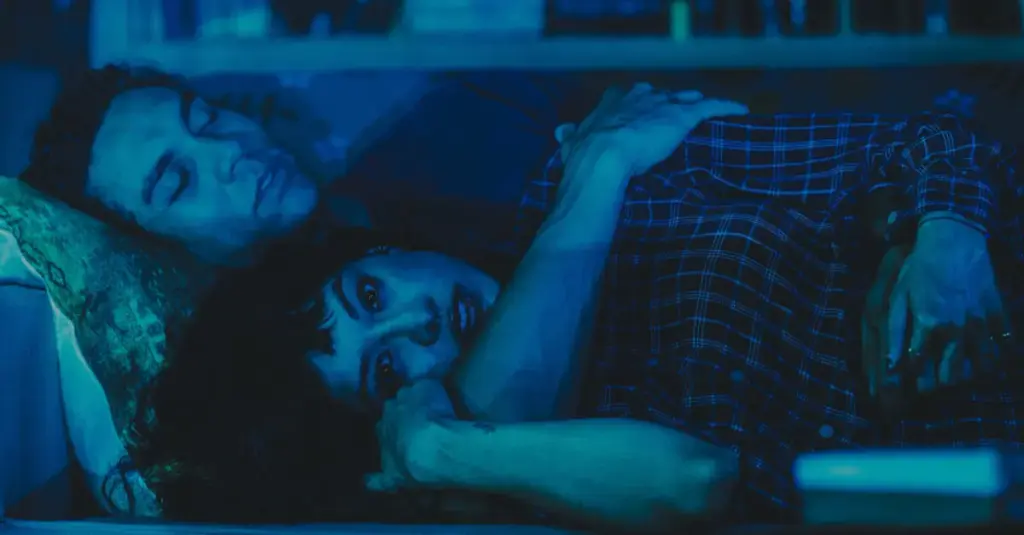
Following a string of completely sold-out runs across international cultural capitals—stretching from London to Los Angeles—this spine-chilling adaptation arrives on the Main Stem with considerable momentum. Helmed by acclaimed director Felix Barrett and penned by playwright Levi Holloway, the production departs from a straight retread of the 2007 cinematic phenomenon that terrified global audiences. Instead, it offers an entirely distinct narrative arc. The story focuses on a couple, Lou and James, who relocate from Chicago to London to escape their troubled pasts, only to discover a devastating realization: places are not haunted; people are.
As the production gears up for its official opening, it brings with it a wave of excitement, featuring a mix of fresh-faced Broadway debuts and seasoned talent, backed by a powerhouse roster of commercial producers, regional theatre heavyweights, and Blumhouse founder Jason Blum. This article examines the comprehensive journey of Paranormal Activity to Broadway, exploring its creative anatomy, the logistics of its limited engagement, the collaborative artistic team behind its chilling illusions, and what its arrival signifies for the future of commercial horror on the Great White Way.
Detailed Chronology: From Leeds Playhouse to the Main Stem
The genesis of Paranormal Activity as a theatrical entity did not happen overnight. The project’s trajectory spans years of meticulous development, regional testing, and international refinement before securing its coveted Broadway home at the August Wilson Theatre.
The Regional Roots and International Trials
The stage adaptation of Paranormal Activity was originally conceptualized and produced at the Leeds Playhouse in the United Kingdom. Transforming a micro-budget, found-footage horror film into an immersive, live theatrical experience required a complete reimagining of spatial awareness, psychological pacing, and sensory manipulation.
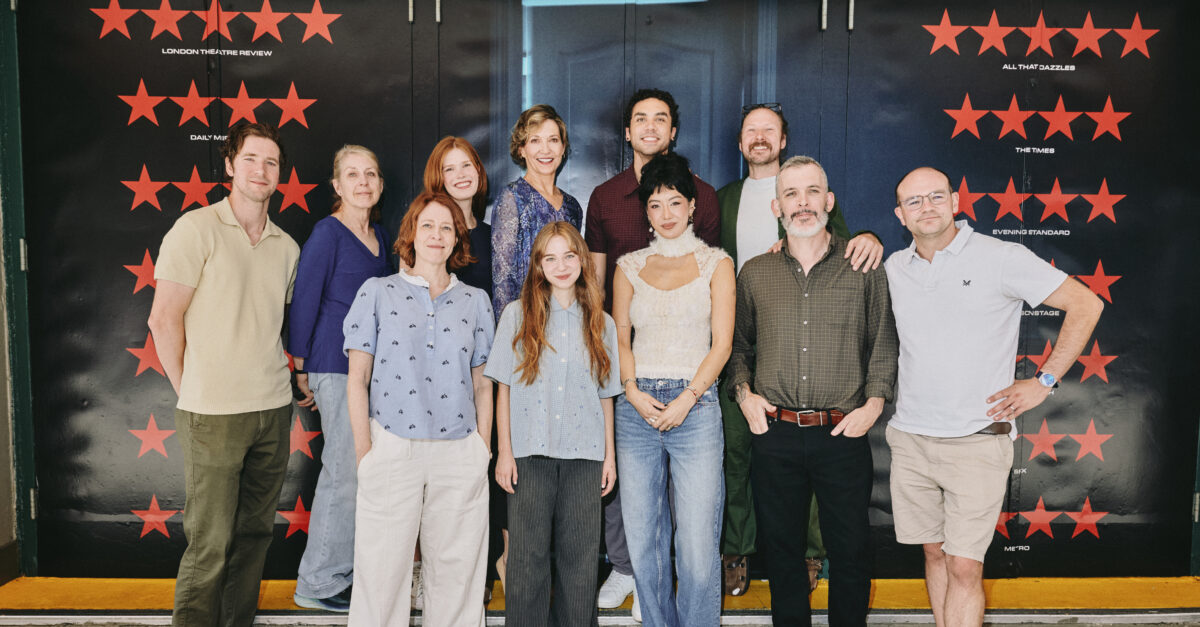
Following its initial UK development, the production embarked on a trajectory of sold-out runs that proved the commercial viability of horror on stage. Audiences in London and, subsequently, Los Angeles flocked to the production, challenging the traditional demographic boundaries of theatrical ticket buyers by drawing in younger, genre-film enthusiasts alongside traditional theatergoers. Each iteration of the show allowed director Felix Barrett and playwright Levi Holloway to refine the pacing of the scares, the emotional stakes of the central characters, and the intricate technical machinery required to sustain a state of mounting dread over the course of two hours.
The Summer 2026 Transfer
By the summer of 2026, the production secured the August Wilson Theatre for its high-profile Broadway bow. Load-in and technical rehearsals preceded the first public preview performance on August 14, 2026.
The timeline leading up to the August 25 opening night represents a concentrated sprint of press events, technical adjustments, and promotional rollouts. With a strictly limited 20-week engagement announced, the production is operating with a built-in scarcity model designed to drive immediate ticket sales and cement its status as a must-see theatrical event of the late summer and fall season.
Supporting Context & Metrics: The Anatomy of a Broadway Horror Event
Bringing a cinematic universe built on jump scares and spectral manifestations into a live proscenium theatre requires an extraordinary intersection of design, capital, and talent.
The Creative and Technical Blueprint
The world-building of Paranormal Activity relies heavily on an elite roster of contemporary theatrical designers.
- Scenic and Costume Design: Fly Davis crafts a physical environment that feels both intimately domestic and suffocatingly inescapable, anchoring the supernatural occurrences in recognizable, lived-in reality before dismantling it.
- Illusion Design: Central to the production’s success is illusion designer Chris Fisher, whose work ensures that the supernatural phenomena—manifesting in real-time before a live audience without the benefit of cinematic editing or camera tricks—achieve maximum visceral impact.
- Lighting and Sound: Anna Watson’s lighting design weaponizes shadows and negative space, while Gareth Fry’s sound design constructs an auditory landscape of low frequencies, sudden spikes, and atmospheric dread that reverberates through the bones of the audience.
- Video and Projection: Luke Halls integrates video and projection design to blur the lines between recorded reality and live performance, nodding to the franchise’s cinematic roots while forging a distinct theatrical grammar.
Cast and Company Demographics
The production features a tight, focused ensemble that balances veteran stage presence with exciting milestone moments:
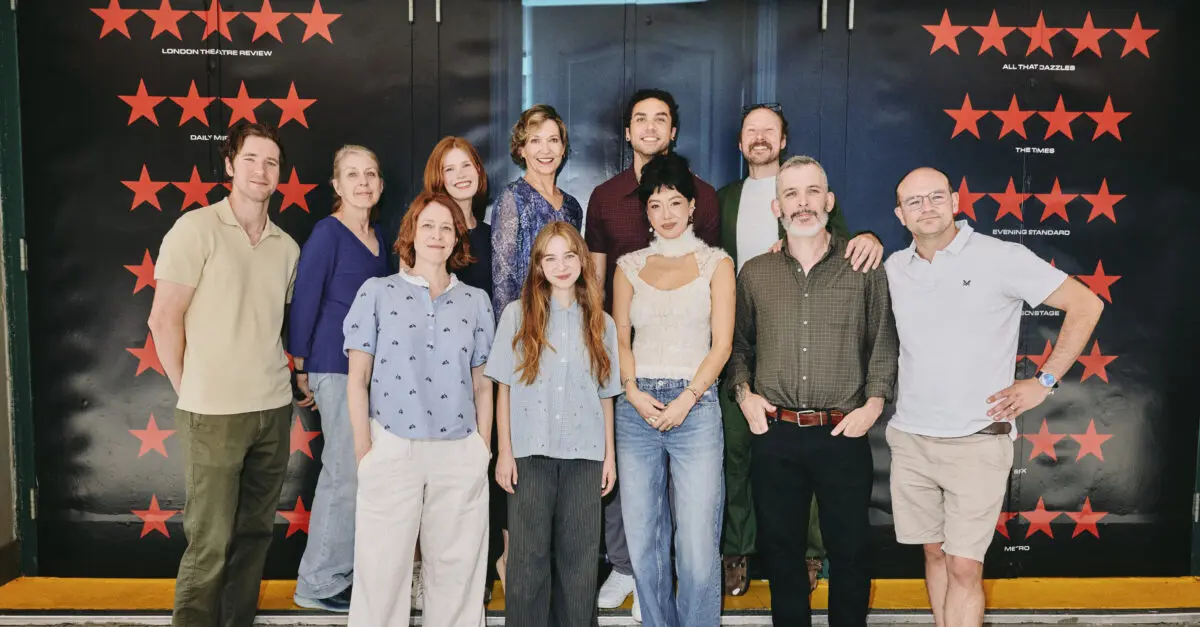
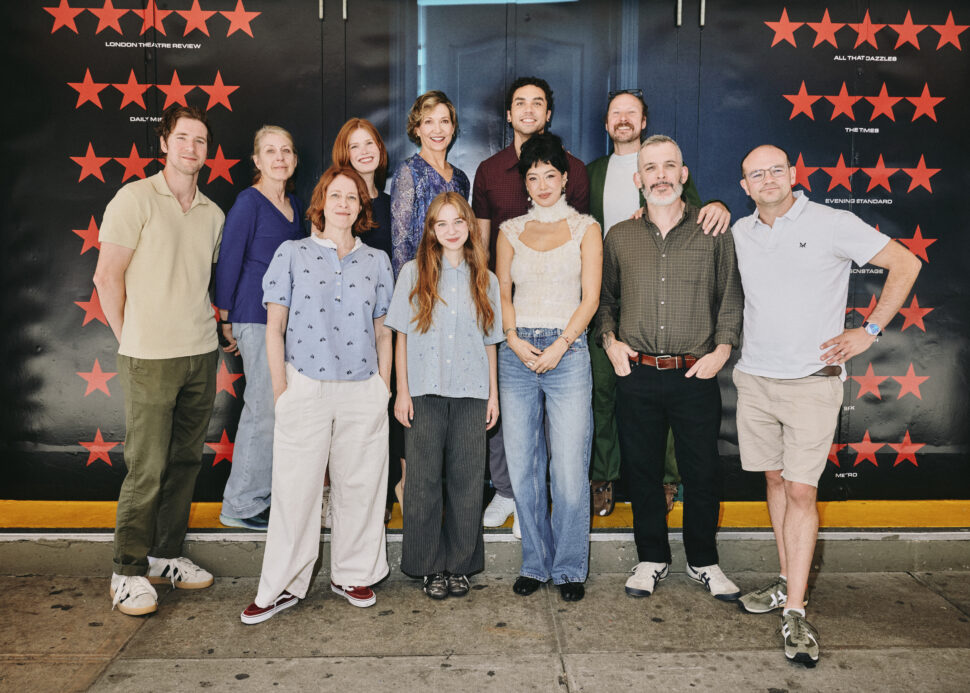
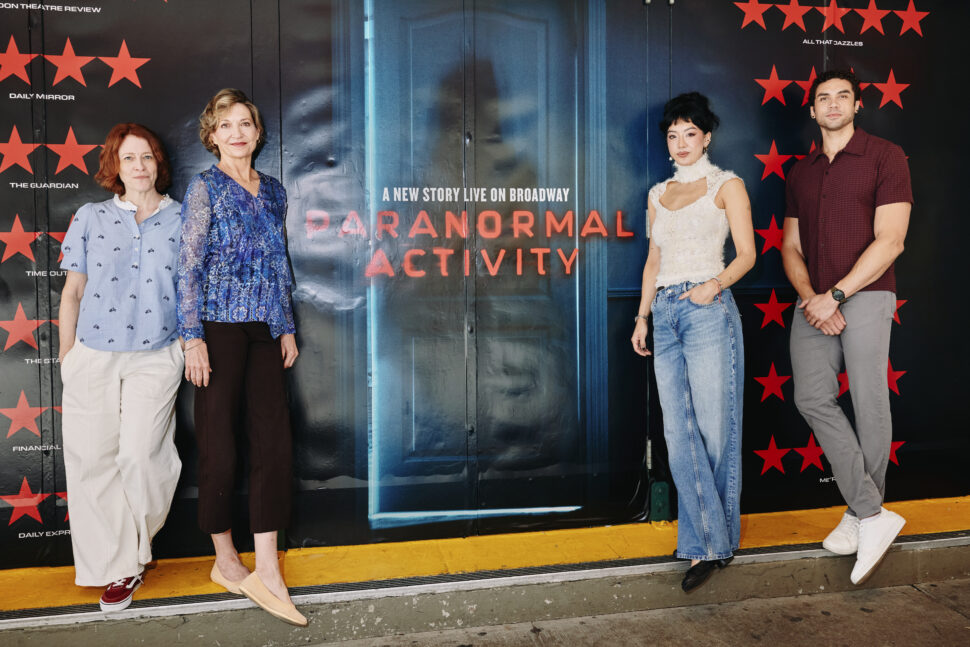
- Cher Álvarez stars as Lou, leading a cast that brings intense emotional grounding to the supernatural turmoil.
- Travis A. Knight stars as James, completing the central couple whose past haunts them across continents.
- Shannon Cochran takes on the role of Carolanne.
- Eva Kaminsky rounds out the principal company as Etheline Cotgrave.
Notably, the production serves as a significant platform for Broadway debuts. Álvarez, Knight, Cochran, alongside understudies Caron Buinis, Caroline Hendricks, and Michael Holding, are all making their historic first appearances on the Broadway stage while seamlessly reprising the roles they originated and refined during the show’s North American and international touring iterations.
Official Statements & Industry Collaboration
The commercial and artistic framework behind Paranormal Activity on Broadway represents a massive coalition of Hollywood muscle and regional theatre pedigree. Jason Blum, founder and CEO of Blumhouse—the studio behind the multi-billion-dollar film franchise—has stepped directly into the Broadway producing ring.
"Bringing Paranormal Activity to the stage has been an exercise in translating visceral fear from the silver screen into the immediate, breathing space of a live theatre," production representatives noted during recent press previews. The project’s collaborative spirit is further underscored by its co-producers, which include Paramount Pictures alongside foundational regional theatres: the Chicago Shakespeare Theatre, Center Theatre Group, the Shakespeare Theatre Company, and the American Conservatory Theater.
General management for the Broadway engagement is handled by Samuel Dallas and Marty McGuire of Envoy Theatricals, with Seaview acting as executive producer. The sprawling commercial producing team also features Simon Friend, Hanna Osmolska, Ken Davenport, Gavin Kalin Productions, Crooked Letter, John Gore Organization, Michael Ngo, David Thomas Tao, Olympus Theatricals, FineWomen Productions, Amplify Pictures, Robina Riccitiello, and Lone Pine Theatricals.
This vast coalition indicates an evolving model for theatrical production—one where intellectual property originating in cinema is co-developed with major regional institutions before making a calculated, high-capital leap to Broadway under the stewardship of experienced commercial lead producers.
Future Outlook: What Paranormal Activity Means for Broadway’s Genre Landscape
As Paranormal Activity officially opens its doors for its 20-week limited engagement at the August Wilson Theatre, industry analysts and theatre creators will be watching closely to evaluate its cultural and financial footprint.
Historically, traditional Broadway audiences have favored sweeping musicals, classic revivals, and high-minded dramatic plays. However, the commercial success of genre-driven thrillers and horror-adjacent works on London’s West End and in select regional houses points to a lucrative, untapped demographic of younger, digitally native, and genre-loyal ticket buyers.
If Paranormal Activity successfully sustains its box office momentum throughout its 20-week run, it could permanently alter the risk appetite of Broadway commercial producers. The production serves as a litmus test for whether high-concept, technically demanding theatrical horror can sustain a profitable Main Stem run without relying on star-studded stunt casting of traditional dramatic actors. Instead, the "star" of the evening is the terror itself—engineered by Barrett, Holloway, and a formidable design team.
For theatregoers seeking an alternative to the standard theatrical fare, Paranormal Activity offers an invitation to step into the dark, suspend their disbelief, and test their nerves. Tickets and further information for the strictly limited engagement are currently available via ParanormalBroadway.com.